
Aoun Rules Out New Israel Talks as Israel Detonates 1,100 Tonnes Under Ali al-Taher Ridge
Lebanon's president has ruled out new talks with Israel and its parliament speaker says the US-brokered framework is gone, hours after Israel detonated more than 1,100 tonnes of explosives under the Ali al-Taher ridge.
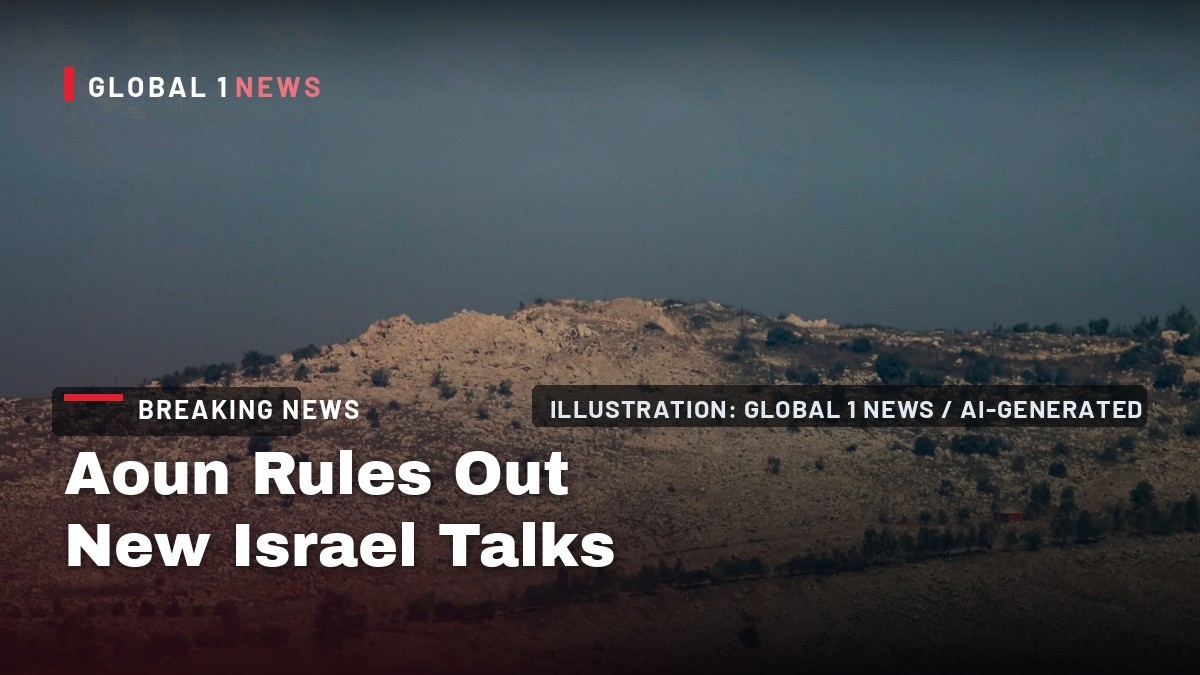
Lebanon's president has ruled out new negotiations with Israel for the time being, speaking from the southern city of Nabatieh hours after Israel detonated more than 1,100 tonnes of explosives beneath the Ali al-Taher ridge. Parliament Speaker Nabih Berri declared the US-brokered framework agreement "gone" a day earlier.
AOUN RULES OUT TALKS AS ISRAEL DETONATES 1,100 TONNES UNDER ALI AL-TAHER RIDGE
Nabatieh, Lebanon - Lebanese President Joseph Aoun said on Saturday that no new negotiations with Israel are taking place at the moment, delivering the statement during a visit to Nabatieh in southern Lebanon with army commander Gen Rodolph Haykal. The visit came hours after Israel bombed the Ali al-Taher ridge with more than 1,100 tonnes of explosives to destroy tunnels used by Hezbollah. Local media quoted Aoun saying: "No new negotiations with Israel are taking place at the moment." The president's remarks, and Berri's declaration a day earlier that the framework agreement is gone, place both of Lebanon's most senior political figures at a distance from the negotiating table at the same moment Israel is carrying out the largest single explosive operation of this phase of the war.
Aoun's Three National Principles
Speaking in Nabatieh, Aoun set out what he described as fixed national commitments. "The withdrawal [of Israeli forces], the return of prisoners and displaced people, and reconstruction are national principles that we pledge to uphold," he said, according to local media.
The statement was made alongside Gen Haykal, the army commander, whose institution is central to the US-brokered framework's design. Under that agreement, the Lebanese army is to control areas where Israeli forces have withdrawn and Hezbollah is to be disarmed.
A Lebanese source close to the negotiations said on Friday that "the timing doesn't suit us," after reports emerged that a new round of discussions could be held in Rome in the coming days. The National reported on 11 September that negotiations were not expected to resume in September, under the headline: "Israel-Lebanon talks in Rome delayed until October, US says." Israeli public broadcaster Kan reported that an eighth round of US-sponsored Lebanon-Israel negotiations would take place in Rome on 15-16 September and could address a proposed mechanism to verify that designated areas were free of Hezbollah personnel.
Berri Declares the Framework 'Gone'
Parliament Speaker Nabih Berri said on Friday that the situation had become "dangerous" and declared that, in his view, the US-brokered framework agreement had effectively collapsed. "The framework agreement is gone," Berri told Al-Joumhouria, adding that he was not optimistic about a political solution amid continuing killings, demolitions and Israeli military activity.
Berri's assessment and Aoun's statement were delivered within roughly 24 hours of each other. Both point away from the diplomatic track rather than toward it, even as Israeli officials describe the question of withdrawal as a matter for ongoing negotiations.
The Detonation: 1,100 Tonnes, Magnitude 4.1
Israel's military blew up Hezbollah tunnels under the Ali al-Taher ridge on Thursday night at 21:08 local time, "completing the establishment of the security zone in southern Lebanon," according to a statement from Prime Minister Benjamin Netanyahu's office. The Israeli military said it used more than 1,000 tonnes of explosives to demolish two tunnels that extended for more than 2 km combined. Israeli Army Radio correspondent Doron Kadosh reported more than 1,100 metric tons.
The US Geological Survey recorded a magnitude-4.1 seismic event near Nabatieh. Libnanews reported that seismological stations recorded the signal at 21:08, about 13 km west-southwest of Nabatieh, and cautioned that the 10 km depth figure is a manual or automatic default rather than the explosion's actual depth, and that magnitude should not be mechanically converted into a tonnage of explosives.
AFP journalists in south Lebanon heard "huge explosions." AFP also reported further "huge explosions" heard Thursday evening, and a huge fireball visible in a video shared by Defence Minister Israel Katz. Joelle Fares, who recently moved to Majayoun, told AFP: "We were sitting there and everything shook." Lebanon's state-run National News Agency reported Israel carried out a "massive explosion" on the Ali al-Taher ridge in the Nabatieh region, "causing tremors and a powerful rumble."
What Israel Says It Found Under the Ridge
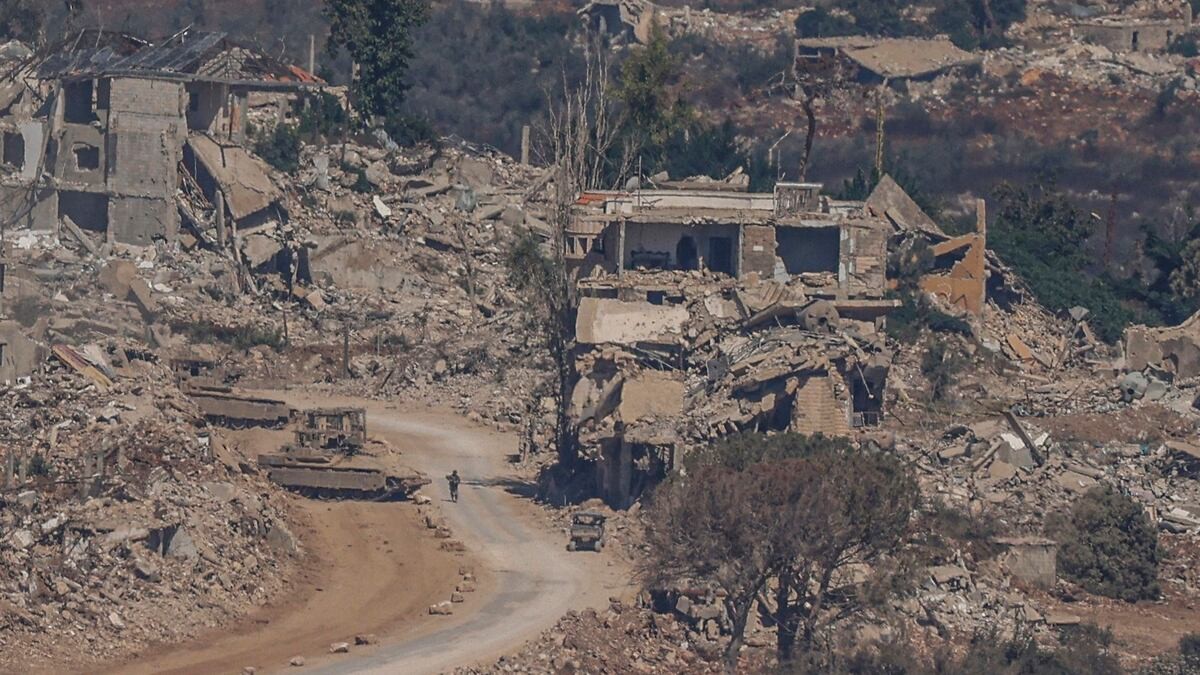
In a joint statement, Netanyahu and Katz said the ridge contained "strategic terrorist infrastructure that was built over two decades, with Iranian funding and planning." Their statement added that its destruction "completes the achievement of operational control over the Ali al-Taher ridge - above and below ground." They said Israeli forces would continue to occupy southern Lebanon in the "security zone."
Netanyahu and Katz said the site was "designed to serve as the staging base for the conquest of the Galilee, and had observation and fire dominance over Metula and Kiryat Shmona." The Israeli army said the infrastructure extended more than 2 kilometres and contained "dozens of Iranian-made rockets, missiles, and UAVs, as well as machine guns, dozens of anti-tank missiles, and hundreds of mines and explosive devices."
The underground compound included a command centre of Hezbollah's Badr unit, and contained command rooms, weapons storage facilities and living quarters for extended stays underground. The IDF identified the facility as a central command complex and "nerve centre" of Hezbollah's Badr Unit. The IDF's 36th Division destroyed more than two kilometres of Hezbollah underground infrastructure. Kadosh reported the wider Ali al-Taher-Beaufort network comprised eight underground routes totalling more than 5.4 kilometres.
A military official told AFP some of the militants who had operated in the area had abandoned it, while others were "eliminated by aerial strikes and artillery fire." Hezbollah members had dug eight underground routes; several dozen explosive drones and hundreds of mines were seized by the Israeli army.
Katz and Zamir Warn of Further Strikes
Defence Minister Israel Katz said in a video message on Friday: "We are ready and prepared to continue the campaign, to continue striking Hezbollah and at additional locations."
Israeli army chief of staff Eyal Zamir said in a video message published Friday that "any attack on the communities in northern Israel or on the IDF troops defending them will be met with an immediate and forceful response." He said there is "a strong security zone, stronger than ever before, which protects the communities from attack and direct fire, and enables us to maintain control and threaten Hezbollah deep inside the area."
Israeli Army Radio said troops had withdrawn from the ridge itself and repositioned in rear lines around the Shaqif/Beaufort area, retaining "fire control" over Ali al-Taher and intending to strike any attempt by Hezbollah to re-establish a presence there.
Israel Signals No Withdrawal
IDF officials reemphasized on Friday that they have no intention of withdrawing from areas Israel holds in southern Lebanon, noting that the subject is a matter for ongoing diplomatic negotiations, according to Haaretz.
IDF sources said Hezbollah has no other facilities of a similar scale south of Beirut's Dahiyeh suburb, where the organisation's headquarters are located. The sources denied reports that Iranian Revolutionary Guards personnel were present in the Ali Taher ridge, saying a few dozen Hezbollah operatives were in the area, most of them killed in the strike.
In Lebanon, Hezbollah stated that the government is failing to fulfil its duties amid intensifying Israeli attacks in the south of the country, via Times of Israel and AFP. Aoun met State Security Director-General Maj. Gen. Edgar Lawandos on Friday to discuss security conditions and strengthening the agency's presence in southern Lebanon, particularly Nabatieh. He also met Civil Defense chief Brig. Gen. Imad Khreish to review emergency operations in towns repeatedly hit by Israeli attacks.
The Framework: Two Pilot Zones and Little Else
Lebanon and Israel signed a US-brokered framework agreement in June 2026, announced on 26 June, with talks to move it into implementation held at the US embassy in Rome on 14-15 July. Under the framework, the Lebanese army is to control areas where Israeli forces have withdrawn and Hezbollah is to be disarmed. There is a phased Israeli withdrawal beginning with two "pilot zones."
The National reported on 12 September: "Little progress has been made beyond establishing two 'pilot zones' for Israel to withdraw - one where there was no Israeli military presence in the first place, and another where Israeli troops occupied only the outskirts." Talks have failed to halt Israeli military advances in southern Lebanon, and discussions have stalled on how a verification committee could ensure the deal is adhered to.
The National reported on 20 August that talks appeared to have stalled over the composition of a committee to oversee progress on the ground. Israel Hayom, citing Lebanese newspaper Al-Modon on 5 August, reported that the first day of Rome talks ended without a breakthrough and no progress on a verification mechanism for disarming Hezbollah in the pilot areas. The only development was Israeli agreement to discuss the border dispute, with no practical results. The Lebanese delegation proposed alternatives to controlled explosions, including the Lebanese Armed Forces taking control of tunnels and sealing them with concrete. Lebanon asked to add new pilot locations including Bint Jbeil and Khiam, and to propose another in Zawtar al-Sharqiya in Nabatiyeh Governorate.
Verification Deadlock and the Rome Track
Reuters reported on 14 July that Hezbollah has rejected the agreement, as well as efforts to disarm it. Israel has said its troops would remain in southern Lebanon as long as Hezbollah remained armed. Israeli Foreign Minister Gideon Saar said implementing the framework was "the only way forward" and Israel would "demonstrate goodwill in Rome." Aoun said he had asked the Lebanese delegation to demand the "immediate start" of Israel's withdrawal from the two pilot zones "before any other discussion."
Reuters reported in early September that Iran had warned the United States against an Israeli attack on the ridge. Aoun met US President Donald Trump at the White House in July 2026. He met Pope Leo XIV at the Vatican, plus Italian President Sergio Mattarella and Prime Minister Giorgia Meloni, on 20 August 2026.
The National reported on 2 September that Israeli forces have continued operations in areas beyond the boundaries of the security zone previously established, while strikes and demolitions have continued alongside the negotiations.
Scale of the War and the Road to Ali al-Taher
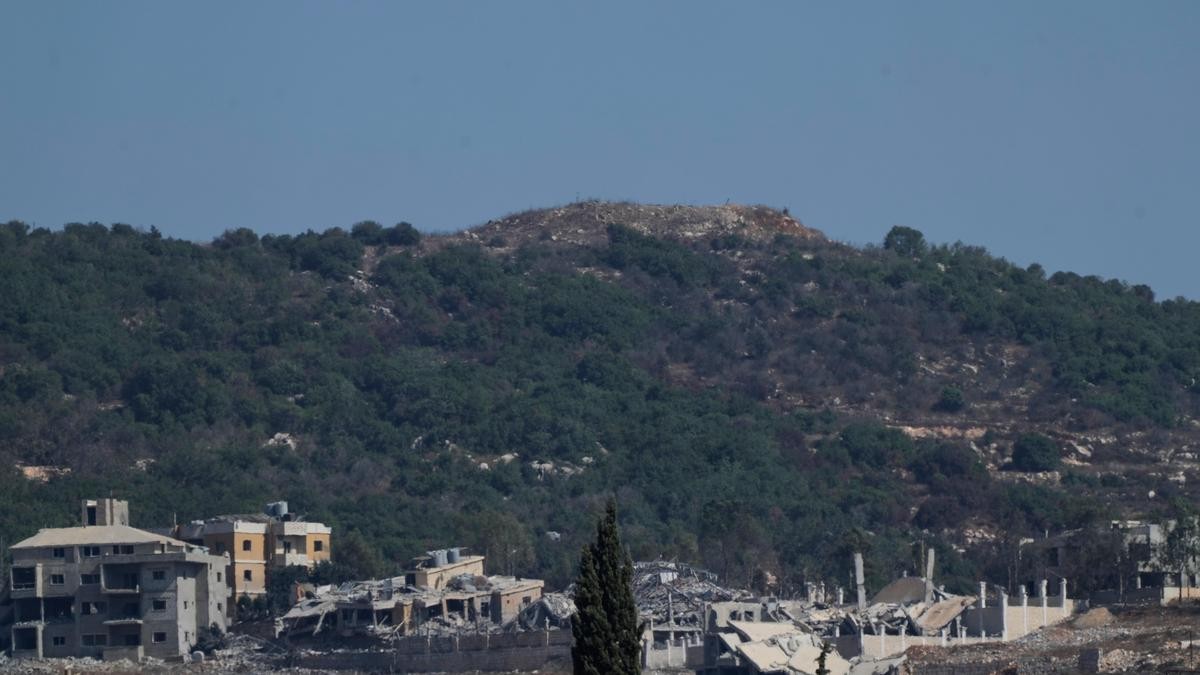
The Ali al-Taher ridge is about 15 km from the Israeli border and has become one of the most contested areas of the war between Israel and Hezbollah. It was controlled by the Israeli military from 1982 to 2000 during its occupation of southern Lebanon. Hezbollah is believed to have built an extensive underground network there following the Israeli withdrawal.
A June 19 ceasefire sharply reduced fighting but did not end clashes around Ali al Taher. Israel announced "operational control" of the ridge on 3-4 September after weeks of fighting. On 4 September it said it had taken operational control of the heights and tunnel access, that Hezbollah fighters had been killed or fled, and that the destruction process was incomplete.
Israel and the United States attacked Iran in late February 2026, sparking the Middle East war. Hezbollah, founded to oppose the earlier Israeli occupation of southern Lebanon that began in 1982, dragged Lebanon into the wider conflict when it fired rockets at Israel in solidarity with Iran in March. Lebanese authorities say Israeli military operations in the country have killed more than 4,300 people since March.
Katz announced last week that Hezbollah fighters previously entrenched in the tunnels had been killed or fled. A Lebanese military official said Israeli forces controlled southern access to the tunnels, among other points, and monitored other entrances. On 6 September more than 15 tunnels had already been blown up simultaneously in the Nabatieh area between the Beaufort Castle area and Ali al-Taher.
NNA reported that the Khardali road was completely blocked after rocks and debris fell onto the route following the Ali Al-Taher explosions. The road had already been closed to civilian traffic, with only a Lebanese Army bus permitted to use it, forcing the military to reroute through the Beqaa Valley.
By Jessica Ali, Staff Writer
This article was produced with AI-assisted research and editorial support. Sources: The National, Agence France-Presse, Reuters, Times of Israel, Haaretz, Al-Monitor, Naharnet/National News Agency (NNA), US Geological Survey, Israeli Army Radio.
What's Your Reaction?
 Like
0
Like
0
 Dislike
0
Dislike
0
 Love
0
Love
0
 Funny
0
Funny
0
 Wow
0
Wow
0
 Sad
0
Sad
0
 Angry
0
Angry
0

Editor-in-Chief at Global1.News. Atlanta-based journalist who cuts through the BS and tells it like it is. Lead anchor, host, and the voice you hear when the spin stops and the truth starts.















Comments (0)