
Tesla workers balk at training Optimus humanoid robots as replacements
Tesla’s lofty promise to turn its Fremont plant from a car‑building hub into a robot factory is hitting a wall of very human problems. The clash between Musk’s AI‑fueled vision and the gritty details of manufacturing is reshaping what the future of work could look like for ordinary people.
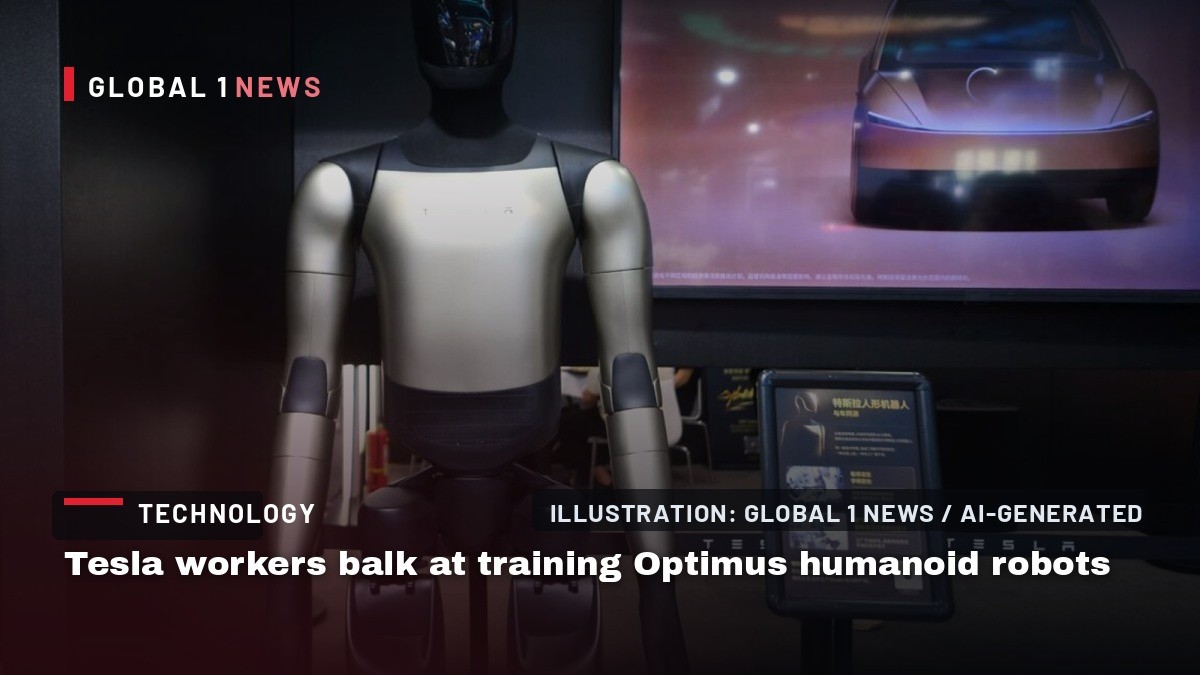
Tesla’s lofty promise to turn its Fremont plant from a car‑building hub into a robot factory is hitting a wall of very human problems. The company’s newest Optimus V3 humanoid is supposed to be the “biggest product ever,” a claim Elon Musk repeated on the Q2 2026 earnings call, but the reality on the shop floor is far messier. Workers are being asked to train the very machines that could replace them, while engineers wrestle with robot hands that still need a human’s steady fingers to assemble. The clash between Musk’s AI‑fueled vision and the gritty details of manufacturing is reshaping what the future of work could look like for ordinary people.
From Model S to Model X to Optimus: A factory in transition
In May 2026 Tesla halted production of the Model S sedan and Model X SUV at its Fremont, California plant, diverting both line workers and engineers to the Optimus project, according to The Information. The shift was meant to accelerate the rollout of the humanoid robot, but the transition has exposed how different building a car is from building a robot. While the auto line could be fine‑tuned over years, the robot assembly line is still struggling to line up components precisely, and the speed of the line can’t be pushed as fast as Tesla hoped.
Despite these hiccups, Tesla has reportedly managed to crank out “hundreds of robots per week.” The company’s target, however, is to exceed 1,000 units weekly by the end of 2026. Hitting that mark will require solving bottlenecks that are still very much in the realm of manual labor, especially when it comes to the robot’s hands.
The hand‑hold problem: Why robot fingers are a nightmare
One of the most stubborn technical hurdles is the robot’s hand. Each Optimus hand and forearm contains more than 100 tiny components—screws, sensors, linkages—that must be assembled by hand. The manual nature of this work means each new robot often arrives on the line with defects that need immediate fixes. Touch sensors, meant to give the robot a sense of “feel,” have proven unreliable, prompting Tesla to add a glove‑like sensor layer that can be swapped out without scrapping the entire hand.
This hands‑on approach undercuts the economies of scale Tesla hopes to achieve. While traditional industrial robots rely on simple grippers, a humanoid needs dexterity comparable to a human hand, and that complexity translates into longer assembly times and higher labor costs. For workers, it means more time spent on repetitive, detail‑oriented tasks that feel far removed from the high‑tech image of a futuristic robot workforce.
Training the trainers: Workers become data collectors
Beyond the hardware, Optimus’s AI still falls short of the general‑purpose intelligence Musk envisions. The robots currently need explicit programming for each task in controlled environments, a limitation shared across the robotics industry. To bridge the gap, Tesla has leaned on its human workforce to generate training data. Employees in Texas and California have been asked to wear motion‑capture suits that record their movements, feeding the data into the robot’s imitation‑learning pipelines.
That data‑gathering role has sparked unrest. Some workers complained that they “knew the robots were designed to eventually replace them,” prompting Tesla to shift the responsibility to dedicated “training hubs” staffed by separate teams. The move reflects a delicate balancing act: Tesla needs massive datasets to teach robots how to manipulate objects, but the very act of collecting that data fuels employee anxiety about job security.
Supply chain knots: China’s lingering grip on robot parts
Even as Tesla tries to domesticate its robot production, the supply chain remains tethered to China. The Information notes that Tesla still relies on Chinese suppliers for many robot components, a pattern echoed across the U.S. robotics sector. Earlier reports highlighted Silicon Valley startups smuggling parts from China in personal luggage, underscoring how entrenched these dependencies are.
The reliance has political overtones. In July, the Federal Communications Commission banned new foreign‑made robots—including humanoids and robot dogs—from entering the U.S. market. While the ban aims to protect domestic manufacturing, it does little to untangle the existing web of Chinese parts that already sit in Tesla’s factories. For the average consumer, this means any cost savings from “Made in America” robots could be offset by the higher price of imported components.
Global competition: Humanoids are a crowded arena
Tesla isn’t the only player betting on humanoid robots. Automakers in China, Japan, and South Korea are also pouring resources into the technology. Toyota, for instance, plans to invest billions in upgrading its factories with robots, including humanoids. Hyundai’s U.S. subsidiary, Boston Dynamics, is slated to deploy up to 25,000 Atlas humanoid robots over the next several years.
Beyond the automotive giants, specialized firms like Oregon‑based Agility Robotics have already fielded humanoids in real‑world settings. Their robots have been operating in a GXO Logistics warehouse in the Atlanta area since 2024, offering a concrete example of how a humanoid can be integrated into a supply‑chain workflow. Yet even Agility’s deployments highlight the broader challenge: the business case for humanoids remains unproven, with cost‑effectiveness and safety still under scrutiny.
What the rollout means for workers and wages
The push to replace human labor with Optimus raises a stark question for the workforce: will the robot’s arrival translate into higher wages, or simply a reshuffling of low‑skill tasks? So far, the answer leans toward the latter. Workers are being repurposed from assembling cars to assembling robot hands—a shift that demands more precision but offers little in the way of skill advancement or pay raises.
Moreover, the data‑collection role that some employees have taken on is unlikely to be a long‑term career path. As the robots become more capable, the need for human‑recorded motion data will shrink, potentially leaving those workers without a clear next step. The tension between Tesla’s AI‑driven optimism and the on‑the‑ground reality could set a precedent for how other firms handle automation transitions, making the outcome of Optimus a bellwether for broader labor market trends.
Looking ahead: Will Optimus deliver on the hype?
Elon Musk’s claim that Optimus could become “the biggest product ever” rests on solving two massive puzzles: perfecting a dexterous, reliable hand and achieving truly general‑purpose AI. The Information’s reporting shows that both hurdles remain far from solved. Production bottlenecks, unreliable sensors, and a reliance on human‑generated training data keep the robot in a semi‑manual, semi‑automated limbo.
For now, Tesla’s weekly output of “hundreds of robots” is a modest start, and the target of over 1,000 units by year‑end hinges on breakthroughs that have yet to materialize. As other automakers and robotics firms race ahead with their own humanoid projects, the market will likely reward the first to prove a viable, cost‑effective use case. Until then, ordinary workers watching the Fremont line shift from car seats to robot arms will see a cautionary tale of how grand tech visions can collide with the stubborn realities of manufacturing and labor.
This article was produced with AI-assisted research and editorial support. Reporting is based on the source material cited below. Sources: Ars Technica; arstechnica.com; Global1.News (28 September 2026).
By Nova Chen, Staff Writer
What's Your Reaction?
 Like
0
Like
0
 Dislike
0
Dislike
0
 Love
0
Love
0
 Funny
0
Funny
0
 Wow
0
Wow
0
 Sad
0
Sad
0
 Angry
0
Angry
0

Trend Reporter at Global1.News. Based in San Francisco, tracking the stories crossing from social platforms, forums, and community discussions into mainstream news — tech breakthroughs, cultural shifts, and world events that real people are engaging with right now.














Comments (0)