
Gaza restaurants raise questions about the famine narrative
Recent social‑media footage showing bustling restaurants, operating businesses and festive gatherings in Gaza has sparked a fresh debate over the prevailing narrative of famine and deprivation that dominates much of the international coverage of the territory.
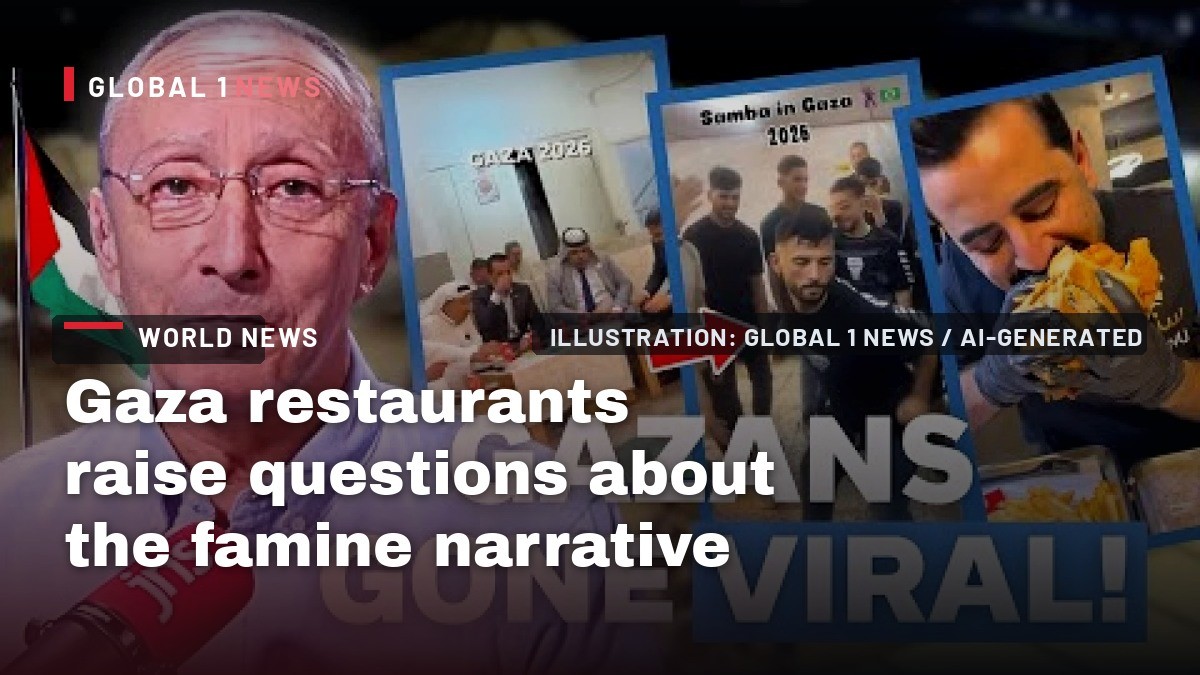
Recent social‑media footage showing bustling restaurants, operating businesses and festive gatherings in Gaza has sparked a fresh debate over the prevailing narrative of famine and deprivation that dominates much of the international coverage of the territory. The images, widely shared across platforms, have been highlighted by analyst Daniel Seaman, who argues that they raise important questions about how media outlets and global institutions portray conditions inside Gaza. While the footage does not resolve the complex humanitarian picture, it does underscore the need for a more nuanced understanding of everyday life amid conflict, and it invites scrutiny of the broader strategic context that shapes the region’s security dynamics.
Visual evidence versus prevailing narratives
The videos in question depict a variety of Gaza’s civilian spaces—restaurants serving meals, shops with open doors and families gathering for celebrations. These scenes contrast sharply with the stark images of destruction that have dominated headlines since the October 7 war began. Seaman points out that the juxtaposition of these lively moments against the backdrop of widespread reports of famine creates a tension that warrants closer examination.
He cautions that visual evidence, while powerful, must be contextualized. The presence of operating establishments does not automatically negate the existence of hardship elsewhere, but it does suggest that the situation on the ground is more heterogeneous than a single, monolithic narrative can capture. The footage therefore serves as a reminder that Gaza’s reality is layered, with pockets of resilience coexisting alongside areas of severe need.
Media framing and its impact
Seaman’s critique extends to the way international media frame the Gaza story. He argues that many outlets rely on a limited set of sources and images that emphasize devastation, often without integrating the broader spectrum of daily life that persists despite the conflict. This framing, he suggests, can shape public perception and policy responses in ways that may not fully reflect the lived experiences of Gazans.
He also notes that institutions such as humanitarian agencies and diplomatic bodies sometimes adopt the same simplified narratives, which can influence aid allocation and diplomatic pressure. By highlighting the restaurant footage, Seaman encourages journalists and policymakers to seek a more balanced set of data points, acknowledging both hardship and moments of normalcy.
Broader war consequences
The discussion of the footage naturally expands to the larger consequences of the October 7 war. The conflict has resulted in extensive destruction across Gaza, with infrastructure, housing and essential services severely damaged. Seaman emphasizes that the war’s aftermath has created a complex environment where reconstruction efforts, humanitarian aid and security concerns intersect.
He also draws attention to the ongoing debate over civilian responsibility in wartime. The question of how combatants and governing authorities protect—or fail to protect—civilians remains central to international discourse. The restaurant images, in Seaman’s view, add a layer to this debate by illustrating that civilian life continues in some form, even as the broader humanitarian situation remains precarious.
Deterrence and regional security dynamics
Seaman concludes his analysis by linking Israel’s military actions in Gaza, Lebanon, Syria and against the Houthis to a broader strategy of regional deterrence. He argues that the series of operations, conducted across multiple fronts, has reinforced Israel’s deterrent posture throughout the Middle East. The implication is that Israel’s ability to project force in several theaters simultaneously serves as a warning to adversaries about the costs of aggression.
This perspective frames Israel’s security actions as part of a comprehensive approach aimed at preserving national safety while managing a volatile neighborhood. By tying the Gaza conflict to operations in Lebanon, Syria and the Red Sea, Seaman suggests that Israel’s strategic calculus is oriented toward maintaining a credible deterrent across the entire region.
Implications for Israeli policy and innovation
From an Israeli standpoint, the evolving narrative around Gaza has implications for domestic policy, especially in the realms of technology and innovation. Israel’s Ministry of Economy and the Israel Innovation Authority continue to promote resilience and self‑reliance, emphasizing the development of technologies that can operate under conflict conditions. The visibility of civilian activity in Gaza, as highlighted by the restaurant footage, underscores the importance of dual‑use technologies that can support both civilian infrastructure and security needs.
Furthermore, the debate over media representation influences diplomatic outreach. Israeli officials often stress the need for accurate reporting to counter what they view as misinformation that can affect international support for Israel’s security measures. The conversation sparked by Seaman’s analysis therefore feeds into broader efforts by Israeli ministries to shape the narrative through factual, on‑the‑ground evidence.
Humanitarian considerations and future outlook
While the restaurant footage offers a glimpse of normalcy, humanitarian organizations continue to warn of significant needs in Gaza. The coexistence of operational businesses and areas of severe deprivation highlights the uneven distribution of aid and reconstruction resources. Seaman’s observations encourage a more differentiated approach to assistance, one that recognizes pockets of resilience while addressing the deep‑seated gaps that persist.
Looking ahead, the balance between security imperatives and humanitarian obligations will remain a central tension. Israel’s deterrence strategy, as articulated by Seaman, will likely continue to shape its engagements across the region, while the international community grapples with how best to support civilian populations caught in the crossfire. The ongoing dialogue about media framing, therefore, is not merely academic—it directly influences the allocation of aid, the formulation of policy and the broader perception of the conflict.
Conclusion: The need for nuanced reporting
In sum, the recent visual evidence from Gaza’s restaurants and celebrations invites a re‑examination of the dominant famine narrative. Daniel Seaman’s analysis underscores that while hardship remains a stark reality, the picture on the ground is more complex than a single, uniform storyline can convey. For Israeli journalists, policymakers and international observers, the challenge is to integrate these diverse strands—media framing, humanitarian needs, security strategy and technological resilience—into a coherent, fact‑based discourse.
Accurate, nuanced reporting is essential not only for informing public opinion but also for guiding effective policy responses that balance Israel’s security concerns with the humanitarian imperative to alleviate civilian suffering. As the region continues to navigate the aftermath of the October 7 war and the broader dynamics of deterrence, the conversation sparked by a handful of restaurant videos may prove pivotal in shaping a more comprehensive understanding of the realities on the ground.
This article was produced with AI-assisted research and editorial support. Reporting is based on the source material cited below. Sources: JNS (Jewish News Syndicate); jns.org; Global1.News (28 September 2026).
By Hannah Berg, Staff Writer
What's Your Reaction?
 Like
0
Like
0
 Dislike
0
Dislike
0
 Love
0
Love
0
 Funny
0
Funny
0
 Wow
0
Wow
0
 Sad
0
Sad
0
 Angry
0
Angry
0

Israel Correspondent at Global1.News. Based in Tel Aviv, covering Israeli politics, security, technology, and society. Provides balanced, deeply-sourced reporting on one of the most closely-watched regions in the world.














Comments (0)