
Kids starting a fire, taking a vehicle set off warning from Mounties in B.C.
Parents across Canada are being reminded of the surprising ingenuity of young children after two unsettling incidents unfolded in Mission, British Columbia, last week.
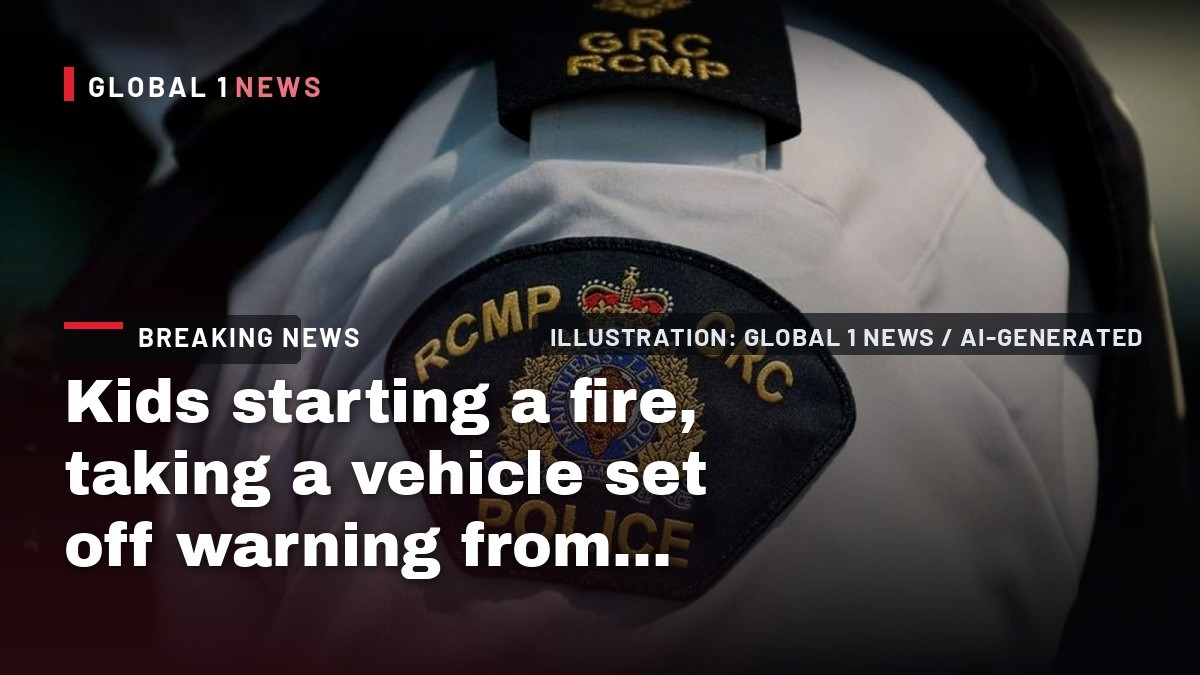
Parents across Canada are being reminded of the surprising ingenuity of young children after two unsettling incidents unfolded in Mission, British Columbia, last week. On 18 September, a seven‑year‑old discovered a small blow torch in his home, rigged it to a propane cylinder and ignited a fire inside the house. Later that same day, a four‑year‑old took the keys to his parents’ Cadillac Escalade, climbed into the vehicle and, according to RCMP footage, drove it into two parked cars. While no injuries were reported, the events have sparked a conversation about household safety, child supervision and the role of community policing in preventing accidents.
What happened on 18 September
The Royal Canadian Mounted Police (RCMP) in Mission reported that the seven‑year‑old found a small blow torch—a tool typically used for metalwork or small‑scale heating—in his home. He managed to connect the torch to a propane cylinder, a combination that created a flame capable of igniting household materials. The local fire department responded quickly, containing what officials described as a small blaze. The fire was extinguished without damage to the surrounding neighbourhood, but the incident highlighted how easily a child can access potentially hazardous equipment left unsecured.
Later that afternoon, a separate incident involved a four‑year‑old boy who, without adult supervision, obtained the keys to his parents’ Cadillac Escalade. CCTV footage captured the child climbing into the driver’s seat, starting the vehicle and steering it into two parked cars nearby. The RCMP confirmed that the vehicle was moved without any adult assistance, underscoring the child’s ability to operate a modern automobile with minimal instruction. No one was hurt in the collision, and the cars sustained only minor damage, but the episode raised concerns about the security of vehicle keys and the accessibility of motorised transport in family homes.
Police and fire services response
Both incidents were addressed by local emergency services. The fire department’s rapid deployment ensured the blaze was contained before it could spread beyond the initial room. Their after‑action report, as referenced by the RCMP, indicated that the fire was small and did not threaten the structural integrity of the home. The RCMP’s involvement centred on gathering evidence, reviewing CCTV footage and issuing a public safety advisory. Their statements emphasized that while the children were not harmed, the potential for serious injury or property loss was significant.
In a news release, the RCMP urged parents to conduct a thorough sweep of their homes for items that could pose a risk if mishandled by children. They highlighted that the incidents were unrelated but occurred on the same day, suggesting a broader pattern of children encountering unsecured tools and vehicles in domestic settings. The police message was clear: proactive risk assessment by caregivers is essential to prevent similar occurrences.
Understanding child curiosity and resourcefulness
Child development experts note that children at the ages of four and seven are naturally curious and often test the limits of their environment. The ability of a seven‑year‑old to connect a blow torch to a propane cylinder demonstrates a level of problem‑solving skill that, while impressive, can be dangerous when applied to hazardous objects. Likewise, a four‑year‑old’s capacity to operate a vehicle, even briefly, reflects an intuitive grasp of basic controls, especially when keys are readily accessible.
These behaviours are not unusual in the context of early childhood development, where experimentation is a core learning method. However, the incidents in Mission illustrate the fine line between curiosity and risk. When households contain tools, chemicals or vehicles, the temptation for a child to explore can quickly become a safety hazard. The RCMP’s advisory aligns with broader public‑health guidance that encourages parents to child‑proof homes in a manner comparable to securing firearms or medications.
Implications for parental supervision
The events have prompted many parents to reconsider the adequacy of their supervision strategies. While it is impossible to monitor children at every moment, experts suggest establishing clear boundaries and storing potentially dangerous items out of reach. In the case of the blow torch, keeping it locked away or in a tool shed could have prevented the child’s access. For vehicle keys, many families now use magnetic key holders or lockboxes to reduce the chance of a child finding them.
Beyond physical safeguards, the incidents underscore the importance of open communication with children about household safety. Teaching children that certain objects are “off‑limits” and explaining the reasons can foster a respect for boundaries. Moreover, regular checks of the home environment—particularly after holidays or when new equipment is brought in—can help parents identify and mitigate emerging hazards before they become a problem.
Community policing and public safety messaging
The RCMP’s decision to issue a public warning reflects a broader trend in Canadian law enforcement to engage communities proactively. By highlighting real‑world examples, police aim to translate abstract safety advice into tangible, relatable scenarios. In Mission, the police release was accompanied by a reminder that “resourceful” children can sometimes outwit adult expectations, prompting a call for vigilance.
Such messaging is part of a collaborative approach that involves local fire services, schools and community groups. In many provinces, fire departments conduct home‑inspection programmes that advise residents on fire‑prevention measures, while school curricula increasingly incorporate basic safety education. The Mission incidents could serve as case studies in these programmes, illustrating how everyday objects can become hazards when left unsecured.
Broader Canadian context: safety standards and legislation
Canada’s regulatory framework already imposes strict standards on the sale and storage of propane cylinders and other combustible gases. However, the responsibility for safe storage rests largely with homeowners. Provincial fire codes require that propane tanks be stored outdoors or in well‑ventilated areas, yet many families keep small cylinders for barbeques or hobby projects inside their homes. The Mission incident suggests a need for renewed public awareness about these regulations.
Similarly, vehicle safety legislation focuses on driver licensing and roadworthiness, but does not directly address the security of keys within private residences. Some provinces have introduced guidelines encouraging the use of lockable key cabinets, especially in households with young children. The RCMP’s warning may spur further discussion among policymakers about whether additional measures—such as mandatory key‑storage solutions for families with children under a certain age—should be considered.
Practical steps for families
In light of the Mission events, families can adopt several practical measures to reduce risk. First, conduct a walk‑through of every room to identify tools, chemicals or equipment that could be hazardous if mishandled. Store items like blow torches, propane cylinders, power tools and cleaning agents in locked cabinets or out of reach. Second, implement a secure key‑storage system for vehicles, such as a magnetic box attached to a wall at a height inaccessible to children.
Third, establish a family safety plan that includes regular safety drills, similar to fire‑escape rehearsals, to ensure children understand how to respond in an emergency. Finally, maintain open lines of communication with children about the dangers of certain objects, reinforcing the message that curiosity should be balanced with caution. By taking these steps, parents can help ensure that the resourcefulness of their children remains a positive trait rather than a source of danger.
This article was produced with AI-assisted research and editorial support. Reporting is based on the source material cited below. Sources: Global News Canada; globalnews.ca; Global1.News (26 September 2026).
By Alex Thompson, Staff Writer
What's Your Reaction?
 Like
0
Like
0
 Dislike
0
Dislike
0
 Love
0
Love
0
 Funny
0
Funny
0
 Wow
0
Wow
0
 Sad
0
Sad
0
 Angry
0
Angry
0

Canada Correspondent at Global1.News. Based in Toronto, covering Canadian politics, energy, trade, and US-Canada relations. Provides the Canadian perspective on North American and global affairs.















Comments (0)