
Trump-Xi Summit: Heavy of Vibes, Light on Substance
The summit between U.S. President Donald Trump and Chinese President Xi Jinping on 24 September 2026 was marked by ceremony rather than concrete policy breakthroughs.
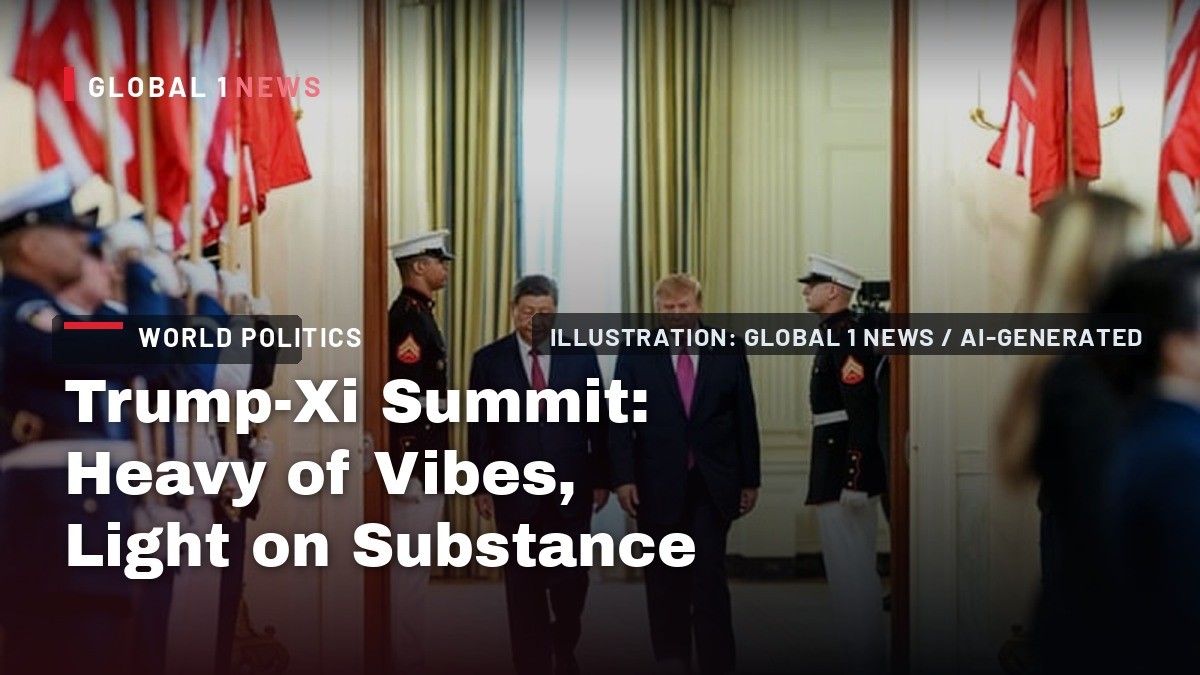
The summit between U.S. President Donald Trump and Chinese President Xi Jinping on 24 September 2026 was marked by ceremony rather than concrete policy breakthroughs. While both leaders exchanged courteous remarks, the substantive outcomes were limited to a modest extension of an existing trade truce and reaffirmations of long‑standing positions on Taiwan, artificial intelligence and arms sales. For observers of Japan and the broader Asia‑Pacific region, the meeting offers a clear illustration of how high‑level diplomacy can be shaped more by optics than by decisive action, and it underscores the constraints that both Washington and Beijing face in managing their strategic rivalry.
Symbolic gestures set the tone
From the outset, President Trump emphasized the personal honor of hosting President Xi, repeating the word “honor” three times within the first minute of their joint remarks. In contrast, Xi’s language was restrained, describing his presence in Washington simply as “glad.” This asymmetry in tone reflected the broader dynamic of the summit: Trump eager to showcase hospitality, Xi focused on business matters.
The state dinner highlighted another symbolic element. Xi noted the “unprecedented” frequency of reciprocal state visits, pointing to his own trip to Washington just weeks after Trump’s earlier visit to Beijing in May. The rapid succession of high‑profile exchanges suggests both sides are keen to signal a willingness to engage, even as substantive progress remains elusive.
Trade truce extension – the only tangible result
The most concrete achievement was an agreement to extend the existing trade truce by two months, from its original November expiry to 10 January 2027. This extension was negotiated in economic talks on 20 September, prior to the summit, and reflects the framework established at the first Trump‑Xi summit in Busan in October 2025. That earlier deal saw the United States lower tariffs on Chinese goods while China paused enforcement of export controls on certain critical minerals, a compromise that was only intended to last a year.
While the extension was expected, its brevity was noteworthy. Analysts cited in the source material suggested that without at least a short renewal, there would have been little justification for the Washington meeting. The Chinese foreign ministry’s readout referred to a “new joint arrangement” in trade discussions but did not detail the terms, leaving the exact scope of the extension ambiguous.
Artificial intelligence – rhetoric without commitment
Artificial intelligence dominated pre‑summit speculation, with expectations that the United States and China might announce a joint safety mechanism. However, President Trump’s public stance on AI, expressed on his Truth Social platform, was to keep the issue “exactly where it is,” aligning with China’s position of maintaining the status quo. He framed AI as “super intelligence” and emphasized rapid development rather than regulatory oversight.
President Xi, while echoing concerns about misuse and insisting that AI remain under human control, also framed the discussion in terms of competition. He warned against U.S. export controls that could hinder Chinese AI progress, a theme echoed by analysts who note Beijing’s awareness that Washington often cloaks restriction measures in safety language.
Taiwan – a core demand with limited leverage
Xi used the summit to press the United States for a stronger verbal commitment on Taiwan. He explicitly asked the “U.S. side” to “adhere to the correct position of opposing ‘Taiwan independence.’” The usual U.S. phrasing—“does not support Taiwan independence”—falls short of the outright opposition Beijing seeks. An explicit statement would represent a diplomatic win for Beijing, reinforcing its narrative that Taiwan’s ruling party aligns with “independence forces.”
Despite this request, no new language was adopted. The United States has continued its longstanding policy of strategic ambiguity, avoiding a direct repudiation of Taiwan’s de facto independence while maintaining arms sales and diplomatic support. This diplomatic tightrope reflects the broader challenge for Washington in balancing Beijing’s pressure with commitments to regional partners, including Japan, which closely monitors any shift in U.S. Taiwan policy.
Arms sales to Taiwan – stalemate persists
The summit did not produce any movement on the long‑standing “freeze” of U.S. arms sales to Taiwan. The current pause, described by the U.S.–Taiwan Business Council as the “fourth Taiwan arms sale freeze,” follows similar periods under previous administrations but has not led to a de facto moratorium. Beijing continues to press for a formal extension of the freeze, while U.S. officials have left the policy unchanged since before the May 2026 summit.
Critics, such as Rupert Hammond‑Chambers, argue that the freeze merely emboldens Beijing without delivering substantive security benefits for Taiwan. The lack of progress at the Trump‑Xi meeting underscores the limited leverage the United States possesses when domestic political considerations—particularly President Trump’s desire to avoid antagonizing China—override strategic imperatives in the Indo‑Pacific.
Broader geopolitical dialogues – brief and vague
Beyond trade, AI and Taiwan, the leaders exchanged views on a range of regional issues, including the Middle East, the Ukraine crisis and the Korean Peninsula. The source material notes that these references were brief and did not yield any announced initiatives. The limited depth of discussion suggests that the summit served more as a platform for reaffirming existing positions than for launching new cooperative frameworks.
For Japan, the absence of concrete outcomes in these areas means continued uncertainty. The Japanese government must navigate a U.S.–China relationship that remains competitive yet constrained by mutual interests, while also managing its own security concerns in the East China Sea and its economic ties to both powers.
Implications for Japan and the Asia‑Pacific
The Trump‑Xi summit illustrates a pattern of high‑level engagements that prioritize symbolism over substantive policy shifts. While the modest trade truce extension provides short‑term stability for supply chains that include Japanese manufacturers, the lack of progress on AI governance, Taiwan, and arms sales leaves key risk factors unchanged.
Japan’s strategic calculus will likely continue to emphasize diversification of trade partners, investment in domestic AI capabilities, and reinforcement of its security alliance with the United States. At the same time, Tokyo must remain vigilant to any future U.S. policy adjustments that could arise from domestic political pressures similar to those evident in President Trump’s approach to the summit.
This article was produced with AI-assisted research and editorial support. Reporting is based on the source material cited below. Sources: The Diplomat; thediplomat.com; Global1.News (28 September 2026).
By Kenji Tanaka, Staff Writer
What's Your Reaction?
 Like
0
Like
0
 Dislike
0
Dislike
0
 Love
0
Love
0
 Funny
0
Funny
0
 Wow
0
Wow
0
 Sad
0
Sad
0
 Angry
0
Angry
0
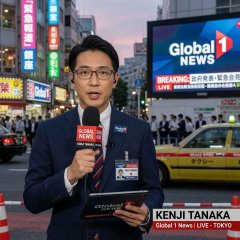
Japan Correspondent at Global1.News. Tokyo-based voice covering Japanese politics, technology, economy, and culture. Tracks the intersection of tradition and innovation in one of the world's most dynamic societies.











Comments (0)