
Microsoft stops insisting you need a "Copilot+ PC"
Microsoft’s once‑bold “Copilot+ PC” push is quietly slipping off the radar, and the change is raising eyebrows across the industry. Now, the branding is absent from the latest Surface lineup, and the company’s top Surface executive confirms the shift.
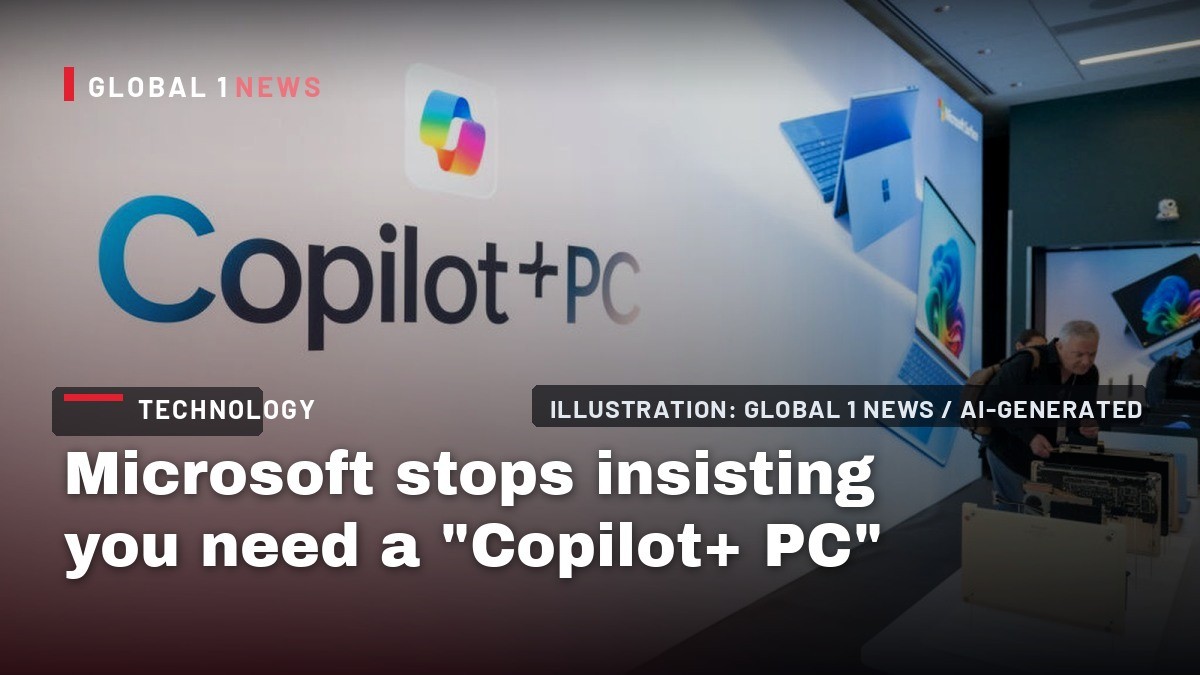
Microsoft’s once‑bold “Copilot+ PC” push is quietly slipping off the radar, and the change is raising eyebrows across the industry. Since the program’s debut in 2024, the tech giant tried to give consumers a clear label for Windows machines capable of handling AI‑accelerated workloads on the edge. Now, the branding is absent from the latest Surface lineup, and the company’s top Surface executive confirms the shift. The move signals more than a simple marketing tweak; it reflects a broader recalibration of how the PC world views on‑device artificial intelligence.
From a Clear Label to a Vanishing Tag
When Microsoft first rolled out the Copilot+ PC label in 2024, the goal was straightforward: help shoppers identify Windows devices that met a specific performance threshold for AI tasks. The criteria were concrete—16 GB of RAM, 256 GB of storage, and an integrated neural processing unit (NPU) capable of at least 40 trillion operations per second (TOPS). Those specs were meant to guarantee a baseline AI experience without relying on the cloud.
Fast forward to the October 13 launch of the new Surface Pro 12‑inch (2nd Edition) and Surface Laptop 13‑inch (2nd Edition). Both models ship with Qualcomm Snapdragon X2 Plus processors and Hexagon NPUs rated at 80 TOPS—well above the Copilot+ threshold. Yet, as Brett Ostrum, corporate VP of Surface, told Windows Central, the devices “are not called Copilot+ PCs,” even though they meet every technical requirement. The omission of the brand from packaging and marketing materials is a stark departure from the earlier, highly visible Copilot+ campaigns.
Technical Foundations Remain Intact
Despite the branding retreat, the hardware fundamentals that defined Copilot+ PCs are still in play. The Snapdragon X2 Plus platform, paired with an 80 TOPS Hexagon NPU, delivers twice the processing power stipulated by the original Copilot+ bar. Qualcomm’s SVP of compute, Kedar Kondap, explained that the NPU’s purpose was always to “deliver [NPU] experience,” and that the performance metric—once framed as a 45 TOPS benchmark—remains the same even if the Copilot+ moniker is dropped.
In practical terms, these Surface devices can run AI models locally, reducing latency and dependence on cloud services. That capability aligns with Microsoft’s longstanding narrative of “AI on the edge,” a theme that continues to shape its hardware roadmap, even if the specific label is being phased out.
Why the Branding Backtrack?
Several factors appear to be nudging Microsoft away from the Copilot+ badge. First, the label was tainted by security concerns tied to the Recall feature, a privacy‑focused mechanism that sparked alarm among advocates. The lingering unease over that feature has likely made the company cautious about foregrounding a brand associated with potential vulnerabilities.
Second, the marketing campaign may have simply run its course. In October 2024, CEO Satya Nadella hailed Copilot+ PCs as “winning new customers,” and by January 2025, he claimed they accounted for 15 percent of premium laptop sales in the United States during the holiday season. Those statements suggest the label achieved short‑term traction, but the longer‑term relevance of on‑device AI has been called into question.
Shifting Consumer Appetite for On‑Device AI
Industry analysts note a waning enthusiasm for AI‑centric PCs. Jitesh Ubrani of IDC told Ars Technica that “general interest in AI PCs has been wavering” because cloud‑based AI services are widely available and the practical use cases for on‑device AI remain limited. This ambivalence, he argued, may actually benefit OEMs: they can avoid the cost and supply‑chain pressures of provisioning large RAM pools, a concern that was magnified during the RAM shortage that hit the market earlier in the decade.
The sentiment is echoed by Dell’s recent product strategy. After launching an AI‑focused branding effort in 2025, Dell’s 2026 laptop lineup barely mentions AI at all, signaling that even the company’s own marketing teams see the AI PC narrative losing steam. Microsoft’s retreat from the Copilot+ tag appears to be part of this broader industry recalibration.
The Rise of Competing AI Hardware
Another catalyst for the branding shift is the emergence of Nvidia’s RTX Spark GPUs for laptops. Microsoft has confirmed a “Surface Laptop Ultra” equipped with RTX Spark will hit the market this fall. Nvidia’s Spark architecture promises high‑throughput AI inference, potentially eclipsing the capabilities of integrated NPUs like the Hexagon. As Microsoft pivots to highlight RTX Spark in its next‑generation devices, the emphasis on a distinct “Copilot+” label may seem redundant.
From a marketing perspective, the allure of a high‑profile partnership with Nvidia—an industry heavyweight in AI acceleration—offers a more compelling story than a label that has already been diluted by security concerns and mixed consumer reception. The shift suggests Microsoft is betting on hardware performance and strategic alliances rather than a proprietary branding scheme.
What This Means for Consumers and the PC Landscape
For shoppers, the disappearance of the Copilot+ badge does not mean a loss of capability. The new Surface models still meet, and in many cases exceed, the original performance thresholds. However, the lack of a clear, unified label could make it harder for average consumers to differentiate AI‑ready devices from standard PCs, especially as on‑device AI becomes a more nuanced value proposition.
For the broader market, Microsoft’s retreat may signal the end of a short‑lived era where AI‑centric branding was a primary sales driver. As cloud services continue to dominate AI workloads and hardware vendors pivot toward more powerful discrete GPUs, the industry may settle into a hybrid model: high‑performance AI acceleration on select premium devices, while the majority of PCs remain focused on traditional productivity tasks.
Looking Ahead: The Future of AI‑Enabled PCs
While the Copilot+ label fades, the underlying technology is far from obsolete. Integrated NPUs, high‑capacity RAM, and fast storage will remain essential components for any device that aspires to run sophisticated AI models locally. Microsoft’s upcoming Surface Laptop Ultra, featuring Nvidia’s RTX Spark, will likely set a new benchmark for on‑device AI performance, potentially redefining what “AI‑ready” means in the consumer space.
In the meantime, analysts will watch how Microsoft balances its dual strategy of promoting powerful AI hardware while avoiding the pitfalls that hampered the Copilot+ campaign. The company’s ability to translate raw performance into clear, trustworthy messaging will be crucial if it hopes to maintain leadership in the evolving AI PC market. As the industry navigates this transition, one thing is clear: the conversation has moved from branding gimmicks to genuine performance battles, and the winners will be the devices that can deliver real AI value without compromising security or user trust.
This article was produced with AI-assisted research and editorial support. Reporting is based on the source material cited below. Sources: Ars Technica; arstechnica.com; Global1.News (28 September 2026).
By Jessica Ali, Staff Writer
What's Your Reaction?
 Like
0
Like
0
 Dislike
0
Dislike
0
 Love
0
Love
0
 Funny
0
Funny
0
 Wow
0
Wow
0
 Sad
0
Sad
0
 Angry
0
Angry
0

Editor-in-Chief at Global1.News. Atlanta-based journalist who cuts through the BS and tells it like it is. Lead anchor, host, and the voice you hear when the spin stops and the truth starts.











Comments (0)