
Starship Reaches Orbit for the First Time — Then SpaceX Brings It Home Early
SpaceX's Starship reached orbit for the first time Monday, released 26 next-generation Starlink satellites and splashed down in the Pacific north of Hawaii, hours ahead of schedule.

SpaceX flew its giant Starship rocket to orbit for the first time Monday, then brought it home hours ahead of schedule. The ship released 26 next-generation Starlink satellites before splashing down in the Pacific north of Hawaii. It ended with fire on the water.
Starship Reaches Orbit for the First Time — Then SpaceX Brings It Home Early
Starbase, Texas — SpaceX launched its enormous Starship into orbit for the first time Monday and successfully delivered the most advanced Starlinks yet, but cut the flight short to ensure safety, the Associated Press reported. The spacecraft reentered over the Pacific and splashed down north of Hawaii three hours after blasting off from Texas. The company had been aiming for a 10-hour flight, spanning six full laps around Earth, to prove its readiness for NASA's Artemis moon program. Starship tipped over and erupted in flames upon splashdown, a dramatic end to the mission.
The Line That Ended a Four-Year Wait
Mission Control had one sentence ready. "Starship is orbital," controllers announced to cheers, according to the Associated Press. The call marked the first time the full stack — a Super Heavy booster topped by the Starship upper stage — reached orbit rather than skimming space on a suborbital arc. Reuters reported that reaching orbit is a primary benchmark for any new rocket designed to deliver payloads to space, and that it was a long-delayed feat for Starship. Elon Musk once predicted the milestone would be achieved in 2022, to be followed by satellite deployments in 2023. All 13 of Starship's previous test flights since 2023 were limited to suborbital space, despite a nearly decade-long development campaign. NASA Administrator Jared Isaacman congratulated SpaceX on reaching orbit and on "managing every step in a safe, responsible and especially inspirational way." In its own mission summary, SpaceX framed the milestone plainly: "By going to orbit, the next phase of developing Starship to be fully and rapidly reusable can begin."
An Engine Shuts Down, and SpaceX Almost Turns Back
The flight nearly ended before it began its climb. Musk's Starship almost did not make it to orbit when one of its engines shut down too soon, the Associated Press reported. Reuters described the same moment more precisely: upon reaching space, one of Starship's three main engines shut down prematurely, a development that led SpaceX spokesperson Dan Huot to tell the company's live stream that the craft would be unable to reach orbit. "The team has made the call not to commit to orbit," Huot said. Huot reversed course minutes later after engineers confirmed the craft could still attempt an engine firing to boost it into orbit, which Starship successfully did. The Associated Press reported that with everything else working well and the failed engine no longer needed, flight controllers decided after several tense minutes to proceed as planned. ABC News reported the spacecraft lost one engine during the ascent, which was not needed to achieve orbit, and that it still executed its orbital insertion burn.
26 Satellites and the First Paying Cargo
The rocket — the biggest and most powerful ever built — carried 26 of the latest Starlink satellites to join the 11,000 older models already providing internet service, the Associated Press reported. They popped out of the spacecraft one by one, drawing more cheers from the SpaceX crowds looking on from the launch site at Starbase. ABC News reported that the 14th test flight was also the first Starship mission to make money for SpaceX, because the payload built out the satellite internet division that has become the company's primary revenue generator. Just over a half-hour into the mission, Starship began releasing the 26 Starlink V3 satellites — the first time those satellites have been placed into orbit for ongoing use. Earlier missions deployed either simulators or satellites that burned up in the atmosphere. "All 26 Starlink V3 operational satellites deployed and operating nominally," Musk wrote on X. SpaceX says the V3 spacecraft can handle 10 times more data than the V2 mini-sats it has been launching 20 or 30 at a time on Falcon 9. Musk wants to fly them 60 at a time once Starship is in routine operation.
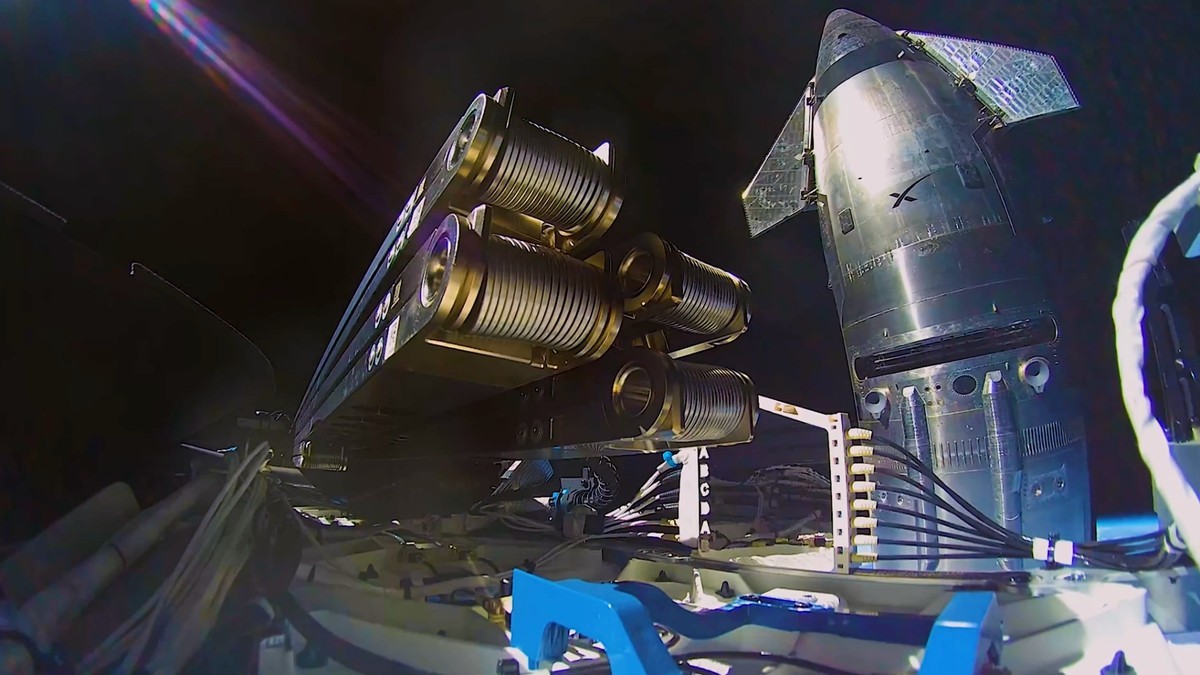
What Actually Left the Pad
The uncrewed 40-story-tall vehicle, a Super Heavy booster rocket topped by the main upper-stage Starship vessel, thundered off its launch pad from SpaceX's Starbase complex along the Gulf of Mexico near Brownsville, Reuters reported. ABC News reported the flight lifted off shortly before 9 a.m. ET from Starbase in Cameron County, Texas, after the launch window slipped from an earlier attempt; flight controllers had 75 minutes to get the spacecraft off the pad. The 407-foot (124-metre) rocket was designed from the start to be fully reusable — a key to lowering launch costs, the Associated Press reported. SpaceX says the ship carries more than 500 sensors measuring temperature, pressure and acceleration during a mission, plus continuous telemetry. Aviation Week reported the Federal Aviation Administration cleared the flight for launch and reentry. The booster also flew hardware and software changes addressing ice clogging that cut short a landing burn on the previous flight, Axios reported. SpaceX's own mission summary noted that "flight tests until this point have intentionally flown passively safe suborbital trajectories to maximize public safety while allowing for maximum learning."
Three Hours Instead of Ten
This time, SpaceX was intent on circling the globe from an altitude of 170 miles (275 kilometres) — not just once but six times over almost 10 hours, ending with a Pacific splashdown near Chile, the Associated Press reported. Starship achieved the proper orbit, zipping along at 17,500 m.p.h. (28,000 km/h), but flight controllers opted to play it safe and bring it back hours sooner, after just a couple of laps. Reuters reported the mission was reduced to three hours after the engine problem. ABC News reported SpaceX took advantage of its first scheduled checkpoint and ended the flight after the satellite deployment, making the total duration about three hours from launch to splashdown, and noted the company did not say what factored into the decision but pointed out that this was the longest SpaceX mission to date. The Associated Press reported the decision to end the flight early came soon afterward, and that no reason was provided.
The Booster Came Home, Just Not to the Tower
The first-stage booster was never meant to return to the Starbase launch site, instead dropping into the Gulf of Mexico within minutes of the morning liftoff, the Associated Press reported. Reuters reported the Super Heavy booster lofted the upper stage into space before returning itself to Gulf waters for an engine-controlled splashdown, following hard landings on two previous missions, and that some engines stopped working during its descent. ABC News reported the booster separated after launch, performed a boostback burn to reverse its direction and splashed down successfully after its landing burn. SpaceX plans to eventually "catch" Starship in the arms of its launch tower — a feat it has accomplished with Super Heavy, but not Starship — and is not attempting that this time, according to Axios. Axios also reported that this Super Heavy flew modifications made after ice clogging issues interfered with a splashdown attempt on the last test flight.
Why NASA Is Watching Every Frame
Starship is set to play a pivotal role in NASA's Artemis program, which aims to return astronauts to the moon's surface for the first time since 1972 and build a long-term lunar presence as a stepping stone to eventual human exploration of Mars, Reuters reported. The Associated Press reported that Artemis III is coming up as soon as next summer: a triple-launch docking exercise in Earth orbit between an Orion capsule full of astronauts and competing lunar landers. Blue Origin's Blue Moon would blast off first, then Orion would close in for a linkup, then SpaceX's Starship for a docking with Orion once Blue Moon is released. Startup Fortune reported NASA's 2026 architecture no longer uses Artemis III as the first crewed lunar landing, and that NASA has targeted Artemis III for mid-to-late 2027 with the first crewed landing in 2028. The Associated Press reported the following mission, Artemis IV, slated for no sooner than 2028, would land astronauts in either Blue Moon or Starship, whichever is ready first, with later moonshots alternating between the two landers.
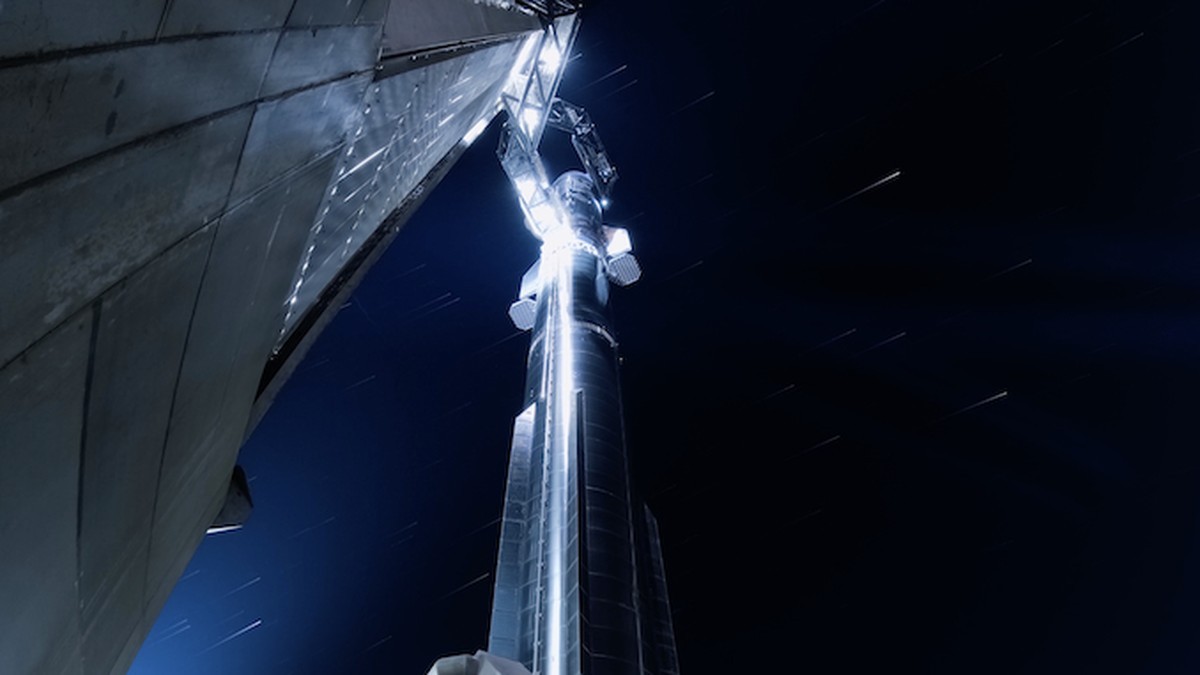
The Company That Spent $15 Billion Getting Here
Starship's orbital debut came three months after SpaceX went public with a record-shattering IPO in June that made it the sixth-biggest US company by value and turned Musk, who founded the company in 2002, into the world's first trillionaire, Reuters reported. SpaceX shares, which were up nearly 9% from the IPO price, were down about 1% on Monday, and the company was valued at $2 trillion as of Friday's close. Much of that worth and continued investor confidence ride on the success of Starship, designed as the world's first fully reusable spacecraft. The development campaign has cost SpaceX more than $15 billion to date, according to Reuters. Analysts estimate Monday's launch alone equals hundreds of millions of dollars in projected revenue for the Starlink unit, based on the network's added customer capacity. Musk has said he envisions ultimately flying hundreds or thousands of Starship missions a year, a launch pace unprecedented in the space industry.
Musk's Own Yardstick for Caution
SpaceX wants to ensure that everything works before flying Starship back to Starbase. If the spacecraft breaks apart over land and rains debris onto people, "our popularity would diminish very rapidly," Musk said at a business summit earlier this month, according to the Associated Press. "That's why we're being extremely cautious here." Depending on the findings from Monday's orbital debut, the next Starship could return to the launch pad with giant mechanical arms grabbing the hovering spacecraft, the Associated Press reported. If the catch works — Musk gives it even or slightly better odds — SpaceX would refly the spacecraft by year's end or early next year. SpaceX salvaged the last Starship from the Indian Ocean in July, and engineers modified the newly launched ship's heat shield based on hands-on inspections of the recovered vehicle, which is being tugged back to Starbase. SpaceQ reported that ship, Ship 40, floated for weeks before recovery, and that two of its tiles were bolted onto the newly launched Ship 41 — the first tiles SpaceX has reflown on Starship.
What Comes Next
SpaceX has not said when Flight 15 will fly, or whether it will attempt the full 10-hour, six-orbit profile that Monday's mission was cut short of completing, Startup Fortune reported. The company has said its first orbital propellant-transfer demonstration between two Starships and a long-duration flight test of the lunar lander version are both targeted for 2026, with timing driven by the V3 test campaign. Those tests matter because NASA's Aerospace Safety Advisory Panel has warned that Starship lander development may not be achievable on the earlier lunar-landing timetable, and the agency's inspector general has identified ship-to-ship cryogenic propellant transfer as a major remaining milestone, Startup Fortune reported. Musk originally developed Starship for Mars, intending to launch scores of them with the red planet's first settlers. For now he plans to focus on the moon and to haul satellites into orbit by the truckload — phasing out the company's frailer Falcon 9 within several years. A second Starship launch site is nearing completion at Florida's Kennedy Space Center and a third is planned for Louisiana.
By Jessica Ali, Staff Writer
This article was produced with AI-assisted research and editorial support. Sources: the Associated Press, Reuters, ABC News, Axios, Aviation Week, Startup Fortune, SpaceX and SpaceQ.
What's Your Reaction?
 Like
0
Like
0
 Dislike
0
Dislike
0
 Love
0
Love
0
 Funny
0
Funny
0
 Wow
0
Wow
0
 Sad
0
Sad
0
 Angry
0
Angry
0

Editor-in-Chief at Global1.News. Atlanta-based journalist who cuts through the BS and tells it like it is. Lead anchor, host, and the voice you hear when the spin stops and the truth starts.















Comments (0)