
'Fashion victims': Fur protests hit Milan Fashion Week
Hundreds of demonstrators gathered in the streets of Milan on Saturday, turning the city’s famed fashion week into a stage for animal‑rights activism.
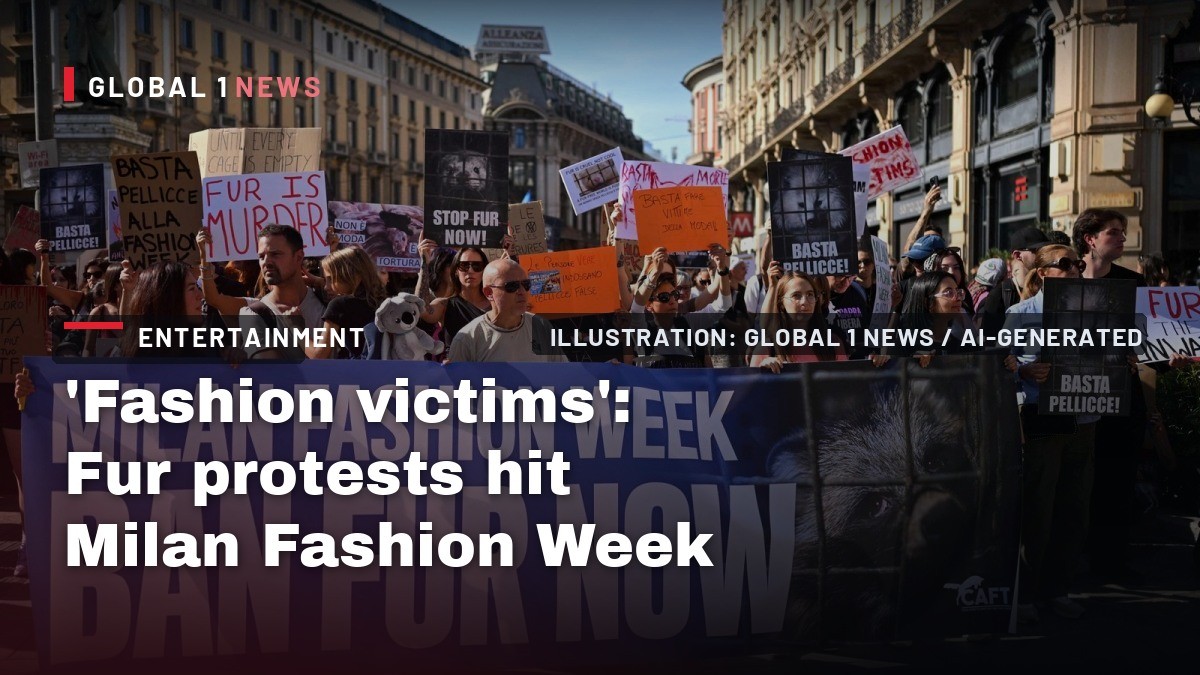
Hundreds of demonstrators gathered in the streets of Milan on Saturday, turning the city’s famed fashion week into a stage for animal‑rights activism. Their placards, emblazoned with slogans such as “Fashion Victims” and “Their Lives Are Worth More Than Your Outfit,” called on the event’s organizers to impose an outright ban on fur. The protest underscores a growing tension between the luxury fashion sector and a global consumer base increasingly sensitive to animal welfare, a dynamic that reverberates far beyond Italy’s borders.
From runway to rally: the immediate context of the Milan protest
The demonstration took place amid the bustling schedule of Milan Fashion Week, a marquee event that draws designers, buyers, and media from around the world. While the rally was localized, its message echoed broader campaigns that have targeted the four major fashion weeks in the city over recent years. Activists have consistently highlighted the cruelty involved in breeding animals for fur and the often‑inhumane conditions in which they are kept, seeking to pressure both brands and regulators.
Organisers of Milan Fashion Week have, to date, limited their response to fur to a request that brands simply avoid using the material, rather than imposing a categorical prohibition. This stance contrasts sharply with the policies adopted by the fashion weeks in London and New York, where fur has been formally banned from the catwalks. The disparity has become a focal point for campaigners, who argue that a uniform ban across the major fashion capitals would more effectively address the ethical concerns they raise.
The role of the Coalition to Abolish the Fur Trade (CAFT)
The Coalition to Abolish the Fur Trade (CAFT) emerged as the principal voice behind Saturday’s protest, urging the Milan Fashion Week organisers to adopt a stricter policy. By framing the issue as a matter of moral responsibility—“Their Lives Are Worth More Than Your Outfit”—the coalition seeks to shift public perception of fur from a luxury commodity to a symbol of animal exploitation.
CAFT’s strategy reflects a broader trend within civil‑society movements that leverage high‑visibility events to amplify their cause. By targeting a globally watched fashion week, the coalition aims to generate media coverage that extends beyond Italy, thereby pressuring multinational brands that operate in markets where animal‑rights sentiment is gaining traction.
Industry response: compliance and resistance within Italian fashion
Within Italy’s luxury sector, reactions to the fur debate are not monolithic. Prominent houses such as Armani, Prada, and Dolce & Gabbana have already announced that they no longer use fur in their collections, aligning themselves with the growing consumer demand for cruelty‑free fashion. Their decisions signal an acknowledgement of shifting market preferences and a desire to preserve brand reputation amid heightened scrutiny.
Conversely, notable exceptions persist. Fendi, a historic Italian label now owned by France’s LVMH conglomerate, continues to feature fur in its offerings. This divergence illustrates the tension between tradition‑laden heritage brands and the evolving ethical standards that many consumers now expect. The presence of such outliers fuels the activists’ argument that a voluntary approach is insufficient and that a regulatory ban is necessary to ensure a level playing field.
Global trends influencing the fur debate
Beyond the immediate Italian context, the use of fur in fashion has been declining sharply in recent years. This downward trajectory is attributed to a confluence of factors: heightened public concern for animal welfare, a shift in consumer habits toward more ethical purchasing decisions, and the emergence of synthetic alternatives that mimic the aesthetic qualities of real fur without the associated cruelty.
These trends are not confined to Western markets. In the Middle East, for instance, a growing segment of affluent consumers is increasingly aware of global animal‑rights campaigns, influencing local luxury retailers to reconsider their product lines. While the region remains a significant market for high‑end fashion, the diffusion of ethical considerations mirrors the broader global shift that activists in Milan are seeking to accelerate.
Economic implications for the fashion sector
The push to eliminate fur carries both reputational and financial implications for fashion houses. Brands that have proactively discontinued fur may benefit from enhanced brand equity among ethically minded consumers, potentially offsetting any short‑term loss of revenue from fur‑based products. Moreover, the development and adoption of high‑quality synthetic fur present new avenues for product differentiation and market expansion.
For houses that continue to rely on fur, the risk lies in potential consumer backlash and the possibility of being excluded from markets where fur bans are already in place. As London and New York have already instituted formal prohibitions, designers seeking to showcase at those events must adapt their collections accordingly, which could pressure Italian brands to align with international standards to maintain global relevance.
Strategic considerations for policymakers and industry leaders
Policymakers overseeing fashion weeks and related events face a delicate balancing act. On one hand, they must respect the creative autonomy of designers and the economic interests of the fashion industry. On the other, they are increasingly called upon to enforce ethical standards that reflect contemporary societal values. The divergent approaches taken by Milan, London, and New York illustrate the lack of a unified regulatory framework across the major fashion capitals.
Industry leaders, particularly those heading multinational conglomerates, must navigate these regulatory variances while maintaining brand coherence. The decision by LVMH‑owned Fendi to retain fur, despite broader industry movement away from the material, suggests that corporate strategies may weigh heritage and market segmentation differently. Nonetheless, the growing activism and consumer awareness could compel even the most traditional houses to reassess their stance.
Looking ahead: the potential trajectory of fur in fashion
The Milan protest serves as a barometer of the intensifying debate over fur in luxury fashion. As animal‑rights groups continue to leverage high‑profile events to amplify their message, the pressure on fashion weeks to adopt uniform bans is likely to increase. Should Milan align its policy with London and New York, it would signal a decisive shift toward a fur‑free future for the global fashion industry.
In the meantime, the interplay between consumer sentiment, activist campaigns, and corporate strategy will shape the next chapter of this debate. Brands that anticipate and adapt to these evolving expectations may secure a competitive advantage, while those that resist could find themselves increasingly marginalized in a market that values ethical responsibility as much as aesthetic innovation.
This article was produced with AI-assisted research and editorial support. Reporting is based on the source material cited below. Sources: Daily Sabah Middle East; dailysabah.com; Global1.News (27 September 2026).
By Malik Hassan, Staff Writer
What's Your Reaction?
 Like
0
Like
0
 Dislike
0
Dislike
0
 Love
0
Love
0
 Funny
0
Funny
0
 Wow
0
Wow
0
 Sad
0
Sad
0
 Angry
0
Angry
0

Middle East Correspondent at Global1.News. Based in Beirut, covering politics, conflict, energy, and society across the Middle East. Brings context and depth to a region often reduced to headlines.














Comments (0)