
Philippines Transport Strike: Diesel at P103, Fares Raised, and Drivers Say It Is Not Enough
Jeepney drivers across the Philippines struck for three days against diesel prices that reached a national average of P103 a litre, while a one-peso fare increase failed to satisfy them and the government insisted the crisis began in the Middle East.
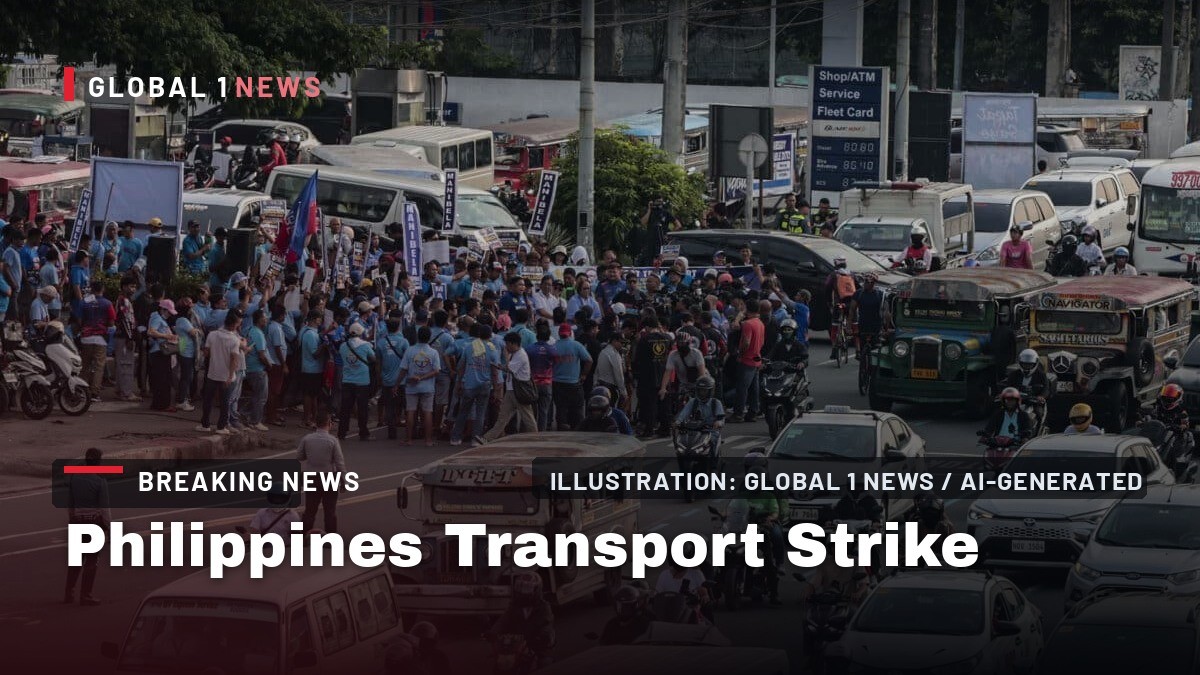
Jeepney drivers across the Philippines walked off the job on Monday in a three-day nationwide strike against fuel prices that have driven diesel past a hundred pesos a litre. By Tuesday morning the walkout had changed hands: the group that called it was back on the road, and the country's other big drivers' federation was still out.
Philippines Transport Strike: Diesel at P103, Fares Raised, and Drivers Say It Is Not Enough
Manila, Philippines - Jeepney operators and drivers are in open revolt over the cost of diesel, and the government's answer, a one-peso fare increase, has not bought peace.
The Walkout on University Avenue
Manibela, one of the country's two largest transport federations, launched a three-day nationwide strike on Monday 28 September. Jeepney drivers, operators and supporters assembled along University Avenue in Quezon City at about six in the morning, then moved to Philcoa for a programme. Manibela chairperson Mar Valbuena said around 20,000 to 25,000 drivers from different Metro Manila routes were expected to take part; the Inquirer put the group's participation above 20,000. The federation said drivers and operators "can no longer shoulder the burden of the continuous rise in fuel prices." In its statement it wrote that "with every hike in diesel prices, operating costs rise while the take-home pay for families shrinks." It posted images it said showed passengers stranded for want of jeepneys, and apologised to them. "Fuel prices remain heavy," Manibela told the commuters it had left standing.
Diesel at P103, and a Tuesday Reprieve
Oil companies raised pump prices as the strike began. Diesel rose by P8.82 a litre to a national average of P103, gasoline by P4.88 to P98 and kerosene by P6.47 to P130, the Inquirer reported. The increase followed three straight weeks of hikes, and the previous week's was the steepest: prices climbed as high as P8.80 a litre, with the biggest jump logged in diesel. Valbuena put the cumulative diesel rise at a net P50 a litre. Relief arrived on Tuesday, when diesel and kerosene were rolled back by as much as P7.57 and P5.85 a litre respectively, while gasoline fell by only 24 centavos. Rino Abad, director of the Oil Industry Management Bureau at the Department of Energy, attributed the easing to an improving supply picture, particularly in Saudi Arabia, which resumed operations after its pipeline was struck by drones from Yemen's Houthi movement, and to a French commitment to deploy defence systems protecting Saudi crude loadings.
The One-Peso Fare Rise That Lit the Match
The strike coincided with a fare increase taking effect. Under rates approved by the Land Transportation Franchising and Regulatory Board, the minimum fare for ordinary jeepneys rose from P13 to P14 for the first four kilometres, with P2 for each succeeding kilometre. Modern jeepney fares rose by P2 to P17, with P2.40 for succeeding kilometres. Ordinary city bus fares rose by P2 to P15 for the first five kilometres, and air-conditioned city bus fares by P3 to P18. Transportation Secretary Giovanni Z. Lopez approved the board's recommendation to implement an increase that had been suspended in March. Manibela had asked for P2, and Valbuena called the P1 rise "inadequate." The Inquirer described commuters facing "the double whammy of a transport strike and fare hike increases."
Manibela Goes Home; Piston Says the Strike Continues
On Monday the strike split. Manibela said it would not push through with the remaining two days, after a dialogue with Land Transportation Office chief Markus Lacanilao. "We thank everyone who joined. Our call and our protest continue," Valbuena said. "We are back on the road tomorrow." Piston, the other large federation, refused to follow. Its national president, Mody Floranda, said the group expected 70,000 to 100,000 drivers and operators, including workers' groups and urban poor organisations, and would strike on Tuesday and Wednesday in Metro Manila, in nearby provinces and in Iloilo, Aklan, Capiz, Bacolod, Cebu, General Santos, Legazpi and Baguio. Its main protest centre in the capital region is the corner of Cubao-Westpoint and Aurora. "No threats can stop the people's anger," Floranda said. "The strike continues."
A Crisis the Government Says It Did Not Cause
The Palace answered with balance. Press officer Claire Castro said the fare increase was designed to weigh the needs of public utility vehicle drivers against the burden on commuters, and that it followed from the conflict in the Middle East. "This is a crisis stemming from what is happening in the Middle East, so the government should not be blamed for rising fuel prices," she said. "The fares had to be increased because the conflict in the Middle East has not stopped." Castro said the increase "may not be at the amount they wanted, but at a price or amount that is reasonable so that our other fellow Filipinos will not be overly burdened," adding that "it cannot be that only one group wins." Fuel subsidies and cash assistance for drivers would continue, she said, while the government assesses the revenue implications of suspending fuel excise taxes.

Fines, Franchises and Photographs of Licence Plates
Not everyone in the dispute was on the street. The board warned operators that franchises could be at risk if most of their fleets failed to operate. Acting chairperson Greg Pua Jr. said operators could first receive a show-cause order and a fine of at least P5,000, with succeeding violations leading to suspension and the eventual cancellation of a franchise, though the board said penalties would depend on evidence that an operator had failed to provide the required service. The warning drew criticism from Manibela. During Monday's demonstration, Valbuena confronted a person aboard a vehicle carrying a board sticker, accusing the person of photographing the licence plates of jeepneys taking part in the strike. On the other side, Piston accused state-owned and private oil companies of profiting from the price surge, calling the government "complicit in the profiteering scheme."
A Country That Imports 98 Percent of Its Oil
The Philippines is unusually exposed to the war that set this off. It imports 98 percent of its oil from the Middle East, and in March President Ferdinand Marcos Jr. signed Executive Order No. 110, placing the country under a state of national energy emergency. By 20 March the Department of Energy said national stocks had fallen to an average of 45 days' supply, down from 55 to 57 days a month earlier. By 27 March, 425 filling stations had closed, out of the 14,485 the Philippine National Police was monitoring. The Energy Regulatory Commission suspended electricity sales on the Wholesale Electricity Spot Market. On 25 March Marcos signed Republic Act 12316, which lets him suspend or cut petroleum excise for up to three months until the end of 2028. The Philippine Institute for Development Studies warned the crisis could push up to 3.1 million Filipinos into poverty.
The Arithmetic of a Jeepney Driver's Day
Piston put the daily diesel bill at P3,000 for a traditional jeepney driver and P6,000 for a driver of a modern public utility vehicle. BusinessWorld reported those figures but noted it could not independently verify them. Floranda offered his own arithmetic: "Our diesel expenses will reach P3,000. But the additional income we will earn from 200 passengers a day is only P200." On the fare rise he was blunter still. "You can't even buy a piece of candy for one peso anymore, yet they're giving us a P1 fare increase." That gap is the argument the strike is built on, and it is why Piston is asking for more than a fare adjustment: it wants value-added tax and excise removed from all oil products, and prices returned to the P55 a litre that prevailed before the crisis began in February.
Schools Close, Free Rides Roll, Commuters Pay Twice
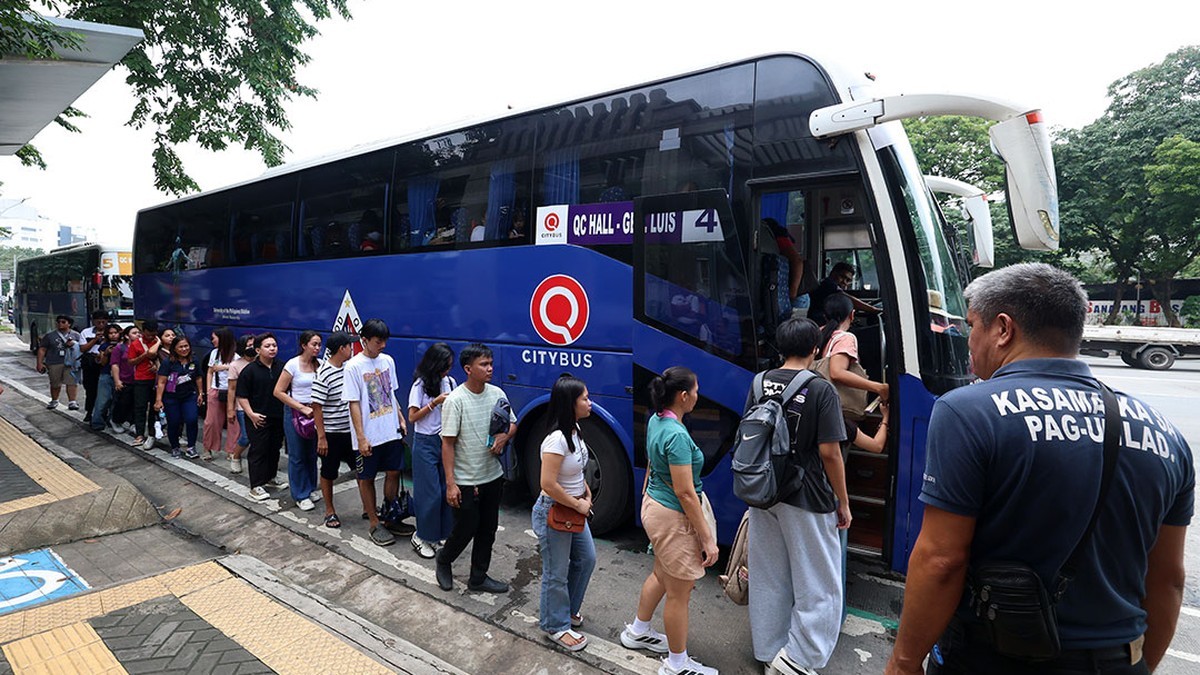
Commuters absorbed the cost first, and the state moved to cushion them. National police chief Gen. Jose Melencio Nartatez Jr. ordered units to raise their presence at terminals, major roads and convergence points, and said "Libreng Sakay" free-ride programmes would run with local authorities. In Albay, the provincial disaster council suspended in-person classes at all levels in public and private schools for 29 and 30 September, shifting to alternative learning modalities until 1 October. Governor Noel Rosal said the suspension was meant to keep students safe and to address "possible transportation difficulties." Bicol police committed two pickup trucks to free rides in Legazpi and Albay, and the Land Transportation Office-5 offered free rides on the Daraga-Legazpi route. Cebu City did not suspend classes, saying it would consult schools first.
What the Drivers Actually Want
Stripped of the placards, Piston's demands are three. Remove the value-added tax and excise on oil products, especially diesel and gasoline, to bring prices down at once. Repeal the Oil Deregulation Law, Republic Act 8479, which freed the downstream sector to set prices and, officials concede, leaves the Department of Energy unable to cap them. And roll fuel back to P55 a litre. None of it is on the table. Marcos has suspended excise on cooking gas and kerosene and left gasoline and diesel excise in place. Energy Secretary Sharon Garin has said prices are not going back to pre-war levels. Floranda's answer was to promise more: "He should expect us to meet him with bigger protests and strikes, not only on Sept. 29-30, but until we get what rightfully belongs to the people."
By Jessica Ali, Staff Writer
This article was produced with AI-assisted research and editorial support. Sources: Philippine Daily Inquirer, Philstar.com, GMA News Online, BusinessWorld Online, Philippine News Agency, Khaleej Times and Manila Times.
What's Your Reaction?
 Like
0
Like
0
 Dislike
0
Dislike
0
 Love
0
Love
0
 Funny
0
Funny
0
 Wow
0
Wow
0
 Sad
0
Sad
0
 Angry
0
Angry
0

Editor-in-Chief at Global1.News. Atlanta-based journalist who cuts through the BS and tells it like it is. Lead anchor, host, and the voice you hear when the spin stops and the truth starts.












Comments (0)