
Israel's Opposition Signs a 'Repair and Hope' Pact and Leaves the Premier Question Open
Five opposition leaders signed a 'repair and hope' pact one month before Israel's October 27 election, pledging not to attack each other. A day later they split over whether an Arab party should join the government, while three Arab lists fight disqualification at the Supreme Court.
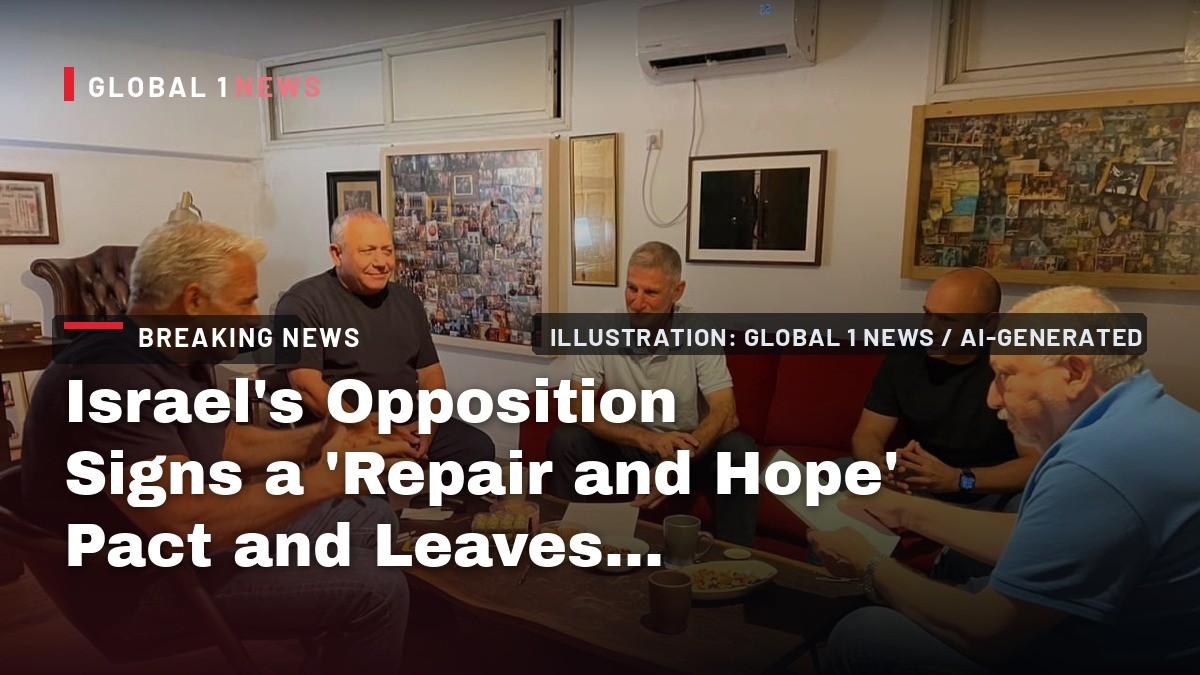
Five opposition leaders sat in a Tel Aviv living room on Saturday night and signed a promise to stop fighting each other for the next month. One day later, the fight they had agreed to shelve was back in the open. With four weeks until Israelis vote, the men who want to replace Benjamin Netanyahu have papered over their differences on everything except the one question that decides who becomes prime minister.
Opposition Signs Pact, Leaves Premier Question Open
Jerusalem — The declaration runs to a single page of principles. It does not name the man they are trying to defeat, and it does not name the man who would replace him. That may be the whole story of the "repair and hope" pact.
A Pact Built To Stop The Infighting
The five leaders met Saturday evening at opposition leader Yair Lapid's home in Tel Aviv. Around the table were Lapid of Yesh Atid, Gadi Eisenkot of Yashar, Naftali Bennett of Together, Avigdor Liberman of Yisrael Beiteinu and Yair Golan of The Democrats. Between them they represent four electoral lists: the joint B'Yachad list shared by Bennett and Lapid, Eisenkot's Yashar, Liberman's Yisrael Beiteinu and Golan's The Democrats.
What they signed is titled the "Statement of Principles of the Leaders of the Repair and Hope Parties." All Israel News described the signatories as the heads of the Zionist opposition parties, known in Israel as the "Change Bloc" - a label The Media Line noted the document quietly moves away from.
Bennett framed the evening personally. "Tonight I was filled again with hope," he wrote on X. "I am confident in our ability to win 63 seats and together fix Israel."
What The Document Actually Commits Them To
The text is short and its central promise is blunt. "From today until the formation of the government, none of us, nor anyone acting on our behalf, will attack a partner party in the bloc or its leader," it reads. The opening lines acknowledge the obvious: "Although there are ideological disagreements between us, establishing a Zionist and statesmanlike government of repair and rebuilding is our shared overriding goal."
The leaders pledge to "expand the electorate, attract voters from all parts of the nation, secure a majority in the election and establish a government that will preserve and strengthen Israel as a Jewish and democratic state." The document calls for "the establishment of a government of repair and rebuilding, Zionist and statist."
Liberman, who holds Netanyahu's government responsible for the October 7, 2023 attacks, was direct about the goal. "On Oct. 27 we will topple the massacre government and return the State of Israel to normal life and the right path," he said. Golan, arriving before the meeting, put it shorter still: "We have one shared mission, and it is to save Israel."
The Question They Left For After The Vote
Here is what the document does not do. It does not mention Netanyahu by name. It does not choose a common candidate for prime minister. And it does not resolve the differences over potential coalition partners. Those questions were left until after the October 27 vote.
Under the agreement, three joint working groups are to be created within 48 hours. The first is to raise the bloc's turnout and safeguard "the integrity of the election." The second is to draft the next government's guidelines, including "equality in the burden" of military service, a state commission of inquiry into the October 7 attack, a term limit for the prime minister and a constitution. The third is to coordinate communications and fight "fake news and smear campaigns."
The Media Line put the gap plainly: no comparable timetable has been announced for choosing a candidate for prime minister, or for settling which parties would be in the government the bloc hopes to form.
Twenty-Four Hours Later, The Fault Line Reopened
By Sunday, the question the leaders had parked was back on the table. Democrats chairman Yair Golan said he believes an Arab party should be included in the government. "My position is well known," he said. "We are working internally to ensure appropriate Arab representation, and we also believe that an Arab party can be part of the government."
Netanyahu's Likud party responded by posting accusations that Golan would "bring an enemy into the government." The contrast with Eisenkot was stark. Eisenkot, the bloc's leading contender in the polls, said shortly before the meeting that Mansour Abbas' United Arab List, Ra'am, would not be part of a government he leads, Haaretz reported. Eisenkot has said parties seeking to join his coalition would need to accept Israel as a Jewish and democratic state, back universal national service, and recognize Hamas as a terrorist organization that must be defeated.
Yoav Segalovitz, a former Yesh Atid lawmaker who switched to Ra'am's parliamentary faction on August 31, answered him on X: "Eisenkot will not have a government without Ra'am." The Likud then turned his words back on Eisenkot, posting on its own X account: "Don't listen to our Likud fear campaign, listen to Segalovitz! There is no government for Eisenkot and Liberman without Ra'am."
Netanyahu's Answer: An Altered Photograph
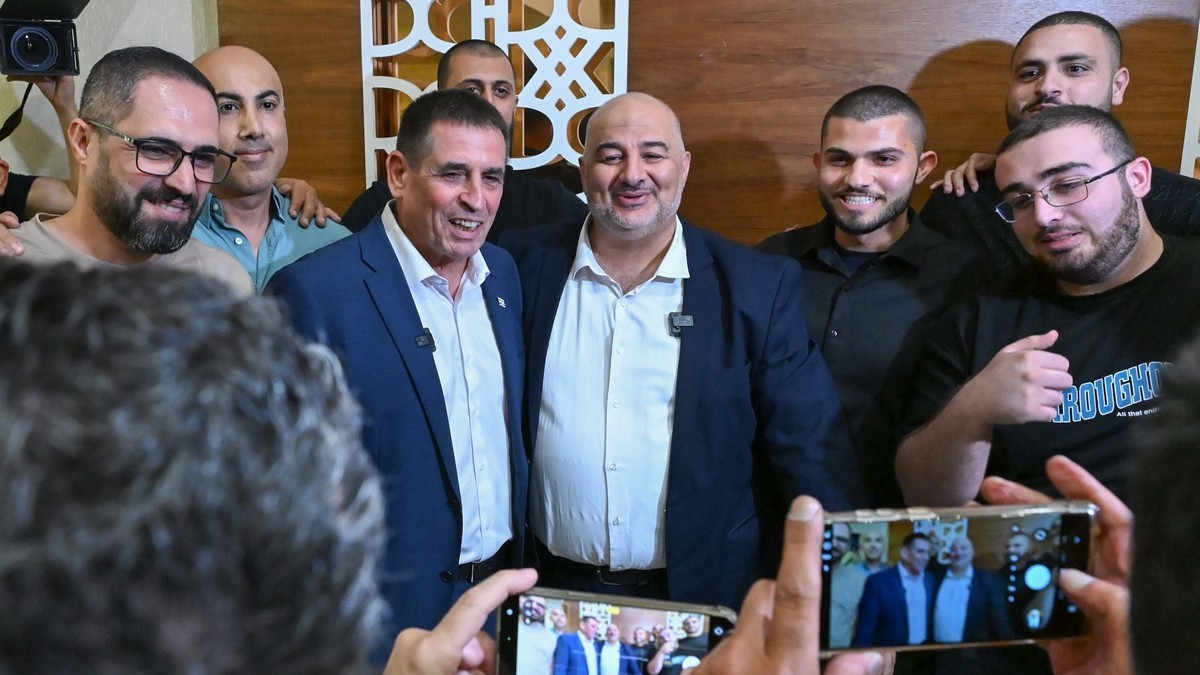
The prime minister's counter-move came in the form of an image. Netanyahu posted an AI-altered version of the opposition leaders' group photograph on X, adding United Arab List leader Mansour Abbas and Hadash-Ta'al leader Ahmad Tibi to the frame. His caption: "Eisenkot will form a left-wing government with Lieberman, Yair Golan, Bennett, and the Arab parties. Only a large Likud will stop them."
He accused Eisenkot of seeking to form a governing coalition relying on Arab parties, Anadolu reported. Religious Zionism leader Bezalel Smotrich had earlier shared the same photograph with the comment: "This is dangerous."
The backdrop is a prime minister under pressure. Netanyahu has headed the current right-wing administration since December 2022, and TRT World notes he trails in recent surveys while facing an International Criminal Court arrest warrant over Gaza.
What The Polls Actually Say
The numbers do not settle it. A Kan 11 poll published Sunday evening, conducted by Kantar under Dudi Hassid among 552 respondents with a margin of error of 4.2 percent, found the bloc led by Eisenkot and the bloc led by Netanyahu tied at 52 seats each, Haaretz reported. Eisenkot's Yashar loses one seat from the previous Kan poll and is projected at 23. Netanyahu's Likud gains one and stands at 21. Bennett's Together loses one and is projected at 11. Haaretz headlined the result: "Eisenkot-Netanyahu tie as Smotrich hits new high."
A Maariv poll published Friday, reported by The Jerusalem Post, told a different story. There the coalition bloc fell by one seat to just 49, as both haredi parties lost one seat each. Likud remained at 18, and Eisenkot's Yashar slipped another seat to 22. Overall the Zionist opposition bloc gained one seat, rising to 55, with three parties failing to cross the electoral threshold.
Turkiye Today summed up the recent trend: "Recent polls show the opposition winning 54 to 56 seats and Netanyahu's bloc 50 to 52, short of the 61 needed for a majority in the 120-seat Knesset."
The Arab Parties Are Not On The Ballot - For Now
While the opposition argued over Arab representation, the Arab parties were fighting for their place on the ballot at all. On Wednesday, September 23, after a full day of hearings, Israel's Central Elections Committee voted to disqualify the United Arab List, led by Mansour Abbas; the Joint List, led by Yousef Jabareen and made up of candidates from Hadash/Jabha, Balad/Tajammu' and Ta'al; MK Ofer Cassif; and former MK Dr. Sami Abu Shehadeh, Adalah reported.
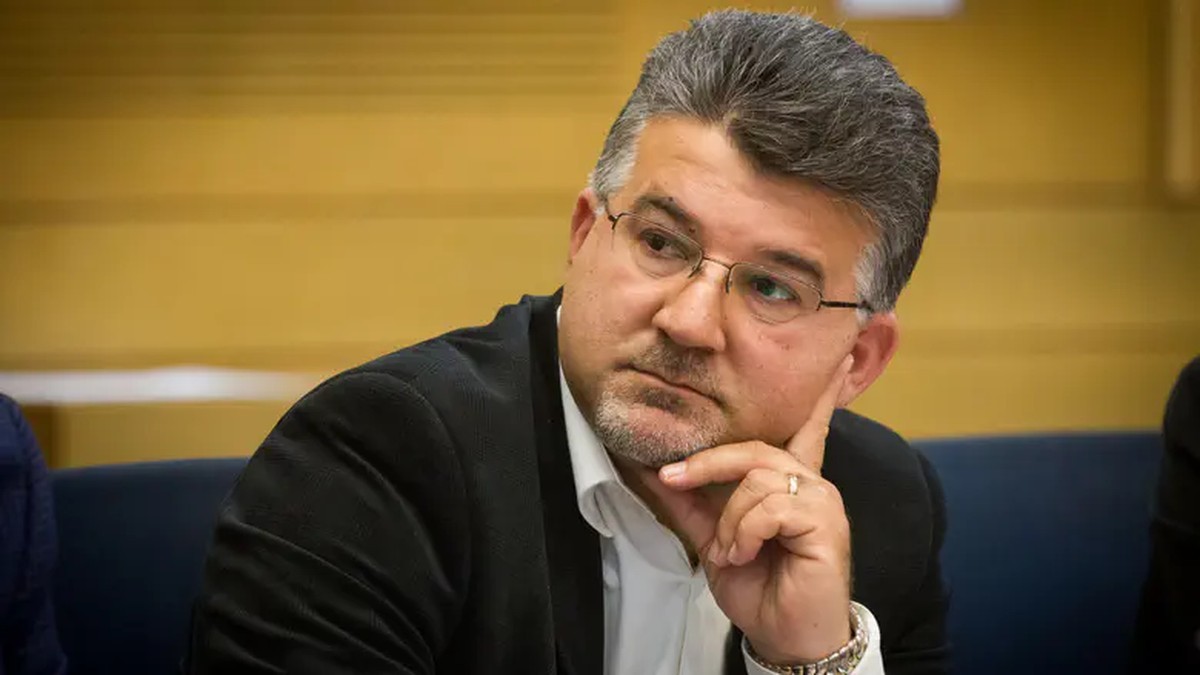
The committee voted 18 to 5, with one abstention, to disqualify Ra'am, and 18 to 5 to disqualify the Joint List. It voted 31 to 4 to disqualify Balad chairman Abu Shehadeh, whose case turned on an article he published one day after the October 7, 2023 Hamas attacks. In an unusual move, committee chairman Justice Noam Sohlberg, its only nonpartisan member, voted for that disqualification himself, departing from the custom of chairmen staying neutral.
The next day, the same committee allowed far-right Jewish parties to remain on the ballot, voting against barring National Security Minister Itamar Ben-Gvir's Otzma Yehudit and the Religious Zionism-Zehut party. An attorney general's representative said the evidence against Ben-Gvir's party was "very troubling and very close to the prohibited zone," but concluded it should not be barred. Ben-Gvir called the effort an attempt at "political assassination."
The Joint List called the decision "political, racist, and anti-democratic," describing it as "an attempt to disqualify the political representatives of more than one million voters, who constitute 20% of the country's citizens." Mansour Abbas called the move "political, illegitimate and anti-democratic." Adalah, which represented the lists and candidates, said it will argue before the Supreme Court, "which is due to hear the cases next week."
The split ran through the bloc itself. Haaretz reported that Liberman's Yisrael Beiteinu backed the ban on Arab parties, a position Golan's Democrats opposed - one day after the two men signed a pledge not to attack their partners.
Three Contenders, One Seat At The Table
The bloc has three contenders for the premiership: Gadi Eisenkot, Naftali Bennett and Avigdor Liberman. The pact did nothing to choose between them. About a week before the signing, Eisenkot said Bennett and Lieberman were hurting the bloc by not backing his candidacy. "A rotation is not on the table. I oppose an alternate prime minister. It's undemocratic," he said. Liberman had called for focusing on the bloc's overall result rather than who ranks first or second, according to Yeni Safak.
MK Oded Forer, one of Yisrael Beiteinu's senior figures, said last week that Eisenkot was "fueling Bibi's campaign," The Jerusalem Post reported. Its analysis noted that Eisenkot "has ruled out a coalition with either the haredi or Arab parties unless they accept the principles he has laid down."
The arithmetic leaves little room. The Knesset has 120 seats and a governing coalition needs 61. An estimated 550,000 to 600,000 young people aged 18 to 22 will be eligible to vote for the first time, The Jerusalem Post reported.
Gantz Stands Outside The Tent
Not everyone was in the room. Former Defense Minister Benny Gantz, whose Blue and White party did not participate, sent a mobile billboard to Lapid's residence criticizing the division of Israeli politics into competing blocs. The truck's slogan: "The blocs are stalling Israel."
All Israel News reported that Eisenkot's former partner Gantz was not invited to the talks, and that it is unclear whether his party will clear the election threshold. Both the Kan and Maariv polls put Blue and White below it. The Arab parties were not invited either, as none of them affirms a Zionist position.
What Happens Next
Monday is the first test. The 48-hour deadline for the three working groups runs out today, and the parties have not said publicly whether the groups have been stood up. The Supreme Court is due to hear the disqualification cases next week. The election is October 27. And the question of who leads the bloc - Eisenkot, Bennett or Liberman - remains exactly where the five leaders left it Saturday night: after the vote.
Monday also marks a cumulative 19 years of Benjamin Netanyahu as prime minister, spread across three periods in office since 1996, The Jerusalem Post notes. His opponents have four weeks to turn a one-page declaration into a government. The document says they are "united and determined to bring repair and hope to the State of Israel." What it does not say is who gets to run it.
By Jessica Ali, Staff Writer
This article was produced with AI-assisted research and editorial support. Sources: The Media Line, The Jerusalem Post, All Israel News, TRT World, Yeni Safak, Anadolu via Hurriyet Daily News, Turkiye Today, Haaretz, Adalah, Israel National News, Jewish Telegraphic Agency, Jewish News Syndicate.
What's Your Reaction?
 Like
0
Like
0
 Dislike
0
Dislike
0
 Love
0
Love
0
 Funny
0
Funny
0
 Wow
0
Wow
0
 Sad
0
Sad
0
 Angry
0
Angry
0

Editor-in-Chief at Global1.News. Atlanta-based journalist who cuts through the BS and tells it like it is. Lead anchor, host, and the voice you hear when the spin stops and the truth starts.













Comments (0)