
Petrol, diesel prices today, September 28: How much does fuel cost in Delhi, Mumbai, Bengaluru?
India’s fuel market displayed a rare moment of stability on Monday, 28 September 2026, as the retail prices of petrol and diesel held steady despite a noticeable rise in global crude benchmarks.
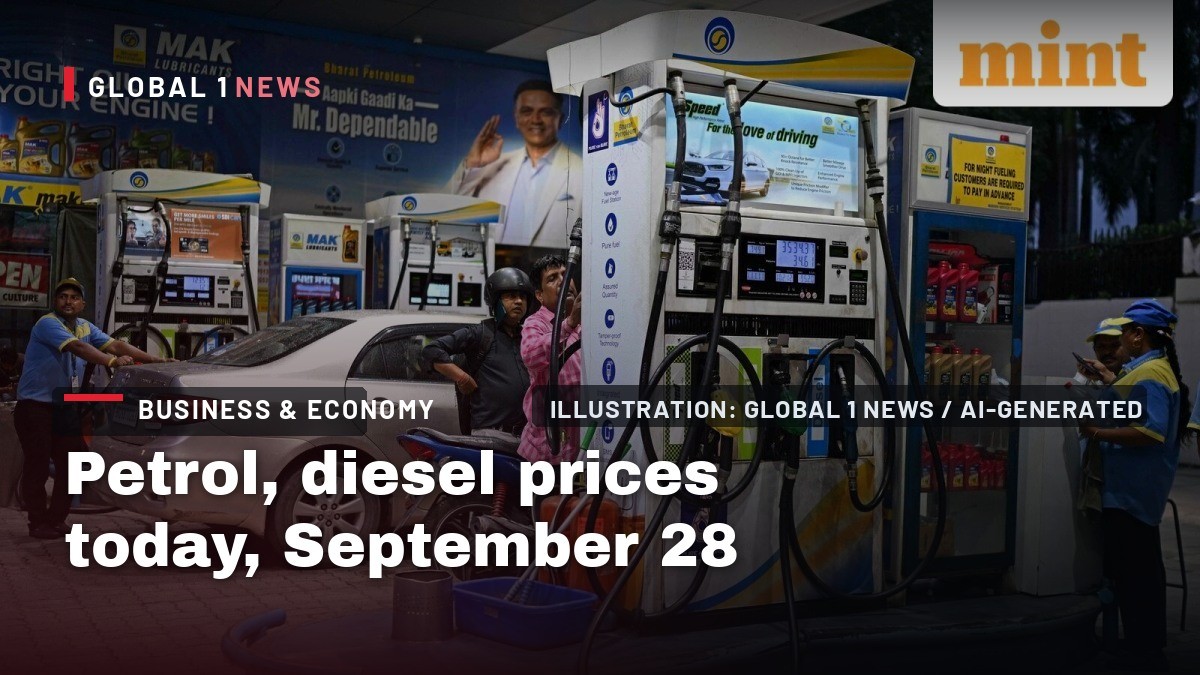
India’s fuel market displayed a rare moment of stability on Monday, 28 September 2026, as the retail prices of petrol and diesel held steady despite a noticeable rise in global crude benchmarks. The state‑run oil marketing companies (OMCs) adhered to their routine 6 a.m. price revision, leaving consumers in Delhi, Mumbai and Bengaluru with unchanged pump numbers. This pause in price volatility arrives against a backdrop of heightened geopolitical tension in the Middle East, where President Donald Trump’s rejection of Iran’s proposal to reopen the Strait of Hormuz sparked a rebound in crude oil prices. The episode underscores the delicate interplay between global oil dynamics, Indian fiscal policy, and the everyday cost of mobility for millions of Indians.
Global oil price shock and its domestic transmission
On Monday, Brent crude climbed 1.3 percent to roughly $105.70 a barrel, while the U.S. West Texas Intermediate (WTI) benchmark rose 0.76 percent to $93.11 per barrel. The uptick followed President Trump’s dismissal of Iran’s seven‑day proposal to reopen the strategic Strait of Hormuz, a vital conduit for roughly a fifth of the world’s oil trade. Iran’s foreign minister, Abbas Araqchi, reiterated that any reopening would hinge on “clear conditions,” signalling that diplomatic resolution remained elusive.
In India, the transmission of such global price movements to retail fuel rates is mediated by the OMCs’ daily price‑setting mechanism, which factors in international crude, exchange rates, and taxes. Despite the rise in Brent and WTI, the OMCs chose not to adjust the retail pump price on Monday, keeping the cost of petrol in Mumbai at ₹111.21 per litre – unchanged from the previous day. This decision reflects a short‑term buffer against volatile international markets, a practice that has become more common as the government seeks to shield consumers from sudden price spikes.
Current retail fuel rates across major metros
In Mumbai, the capital of India’s financial sector, the petrol price settled at ₹111.21 per litre, a figure that has hovered between ₹111.18 and ₹111.21 over the past few days. While the article does not provide the exact diesel price for the city, the pattern of minimal fluctuation mirrors the broader national trend of price steadiness.
Delhi and Bengaluru, two other major consumption hubs, also experienced unchanged rates on Monday. Although specific litre‑wise numbers for these cities are not disclosed in the source, the consistent national stance by OMCs suggests that commuters in the capital and the tech‑driven south Indian metropolis faced the same price stability as their western counterparts.
Implications for Indian inflation and monetary policy
The rise in global crude added pressure to India’s inflation outlook, a key concern for the Reserve Bank of India (RBI). Higher oil prices traditionally feed into headline inflation through transport costs and the price of goods that rely on logistics. However, the RBI’s recent monetary stance has been cautious, balancing the need to curb inflation with the goal of supporting economic growth.
On the same day, the 10‑year U.S. Treasury yield rose four basis points to 5.20 percent, a signal of tightening global financial conditions. While the RBI’s policy rates are set independently, the spill‑over effect of higher global yields can influence capital flows and the rupee’s exchange rate, which in turn affect the cost of imported crude. By keeping retail fuel prices unchanged, the Indian government temporarily insulated consumers, but the underlying exposure to global oil price volatility remains a structural challenge for monetary policy.
Strategic considerations for India’s energy security
Iran’s insistence on conditional reopening, coupled with President Trump’s outright rejection, highlights the geopolitical risk that India must factor into its long‑term energy strategy.
Policy responses have included diversifying import sources, expanding strategic petroleum reserves, and accelerating the shift toward alternative fuels. The steadiness of retail prices on Monday reflects short‑term policy tools, but the broader strategic imperative is to reduce exposure to Middle‑East supply shocks through domestic refining capacity upgrades and the promotion of electric mobility, especially in urban centres like Delhi and Bengaluru.
Impact on the Indian consumer and transport sector
For the average commuter, a stable petrol price of ₹111.21 per litre translates to predictable daily commuting costs, a welcome relief amid rising food and housing expenses. The transport sector, which includes passenger taxis, ride‑hailing services, and freight logistics, benefits from price certainty, allowing operators to plan routes and pricing without the fear of sudden fuel cost surges.
However, the underlying global price rise still looms large. If Brent continues its upward trajectory, OMCs may eventually adjust retail rates, which could compress margins for small transport operators and increase freight charges for goods. This could, in turn, feed back into consumer price indices, especially for essential commodities that rely on road transport.
Government’s fiscal response and tax considerations
The Indian government’s decision to hold fuel prices steady is partly a fiscal maneuver. Fuel taxes constitute a substantial revenue stream, and any increase would directly boost fiscal receipts but at the cost of public discontent. Conversely, keeping taxes unchanged while global crude rises can strain the fiscal balance if OMCs incur higher procurement costs without passing them on.
In the current scenario, the government appears to have prioritized consumer protection over immediate fiscal gains, a stance that aligns with the political calculus ahead of upcoming state elections in several fuel‑sensitive regions. Maintaining price stability also helps temper inflationary pressures, which the Ministry of Finance monitors closely as part of its broader macro‑economic management framework.
Looking ahead: potential scenarios for fuel pricing
Should the Strait of Hormuz remain closed or face renewed tension, Brent and WTI could experience further upward pressure, compelling OMCs to revisit their price‑setting calculus. In such a scenario, the government may resort to targeted subsidies for essential transport sectors or accelerate the rollout of alternative fuel incentives to mitigate the impact on consumers.
Conversely, if diplomatic efforts succeed and the waterway reopens, a stabilization or decline in global crude prices could allow OMCs to maintain or even reduce retail fuel rates, providing a boost to consumer confidence and supporting demand in the automotive and logistics sectors. Continuous monitoring of geopolitical developments, coupled with agile policy responses, will be crucial for India to navigate the volatile oil market while safeguarding economic stability.
This article was produced with AI-assisted research and editorial support. Reporting is based on the source material cited below. Sources: Livemint; livemint.com; Global1.News (28 September 2026).
By Dr. Raj Patel, Staff Writer
What's Your Reaction?
 Like
0
Like
0
 Dislike
0
Dislike
0
 Love
0
Love
0
 Funny
0
Funny
0
 Wow
0
Wow
0
 Sad
0
Sad
0
 Angry
0
Angry
0

India/South Asia Correspondent at Global1.News. Analytical voice with a background in science and health journalism. Based in New Delhi, covering Indian politics, education, healthcare, technology, and policy. Breaks down complex data into clear, actionable reporting.















Comments (0)