
Vice-Mayor Accused of Diverting Health Funds for a 'Love-Binding' Ritual Dies in Car Crash at 40
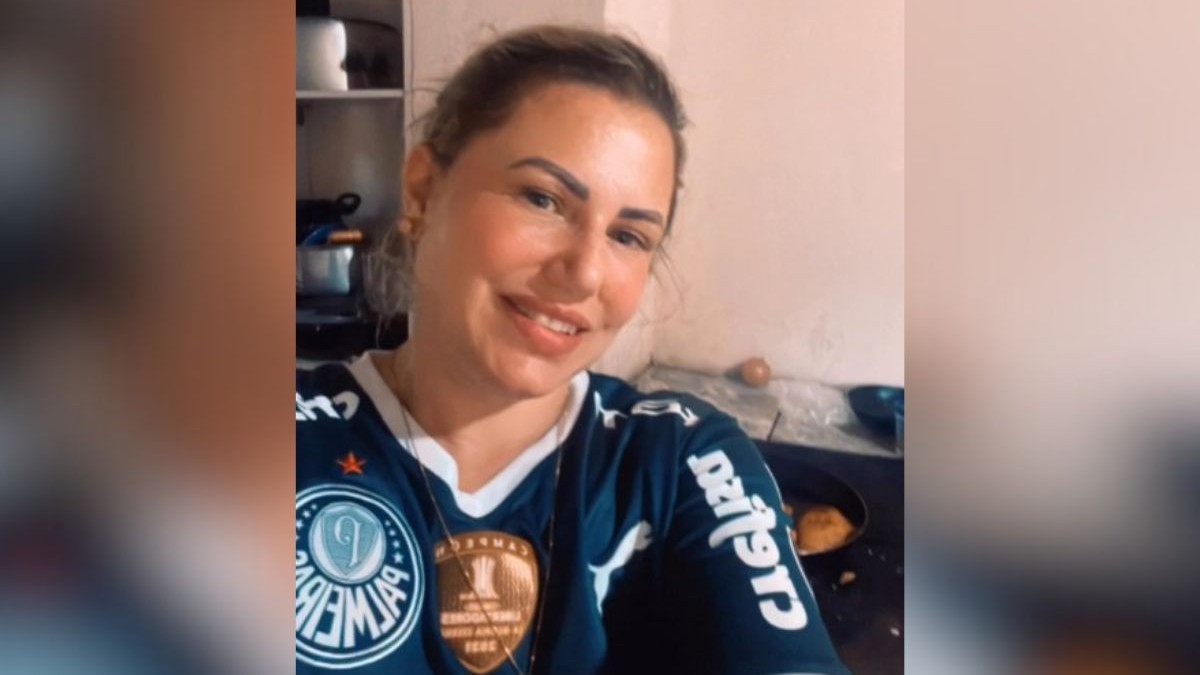
Juliana Maria Teixeira da Costa, 40, vice-mayor of Ribeira, Brazil, suspended over an alleged R$41,200 health-fund diversion for a love-binding ritual, died in a car crash on 26 September 2026.

She was 40 years old, suspended from office, and fighting a prosecution case that alleged she used public health money to pay for a love spell. On the morning of Saturday 26 September 2026, Juliana Maria Teixeira da Costa, vice-mayor of Ribeira in the interior of São Paulo state, died in a car crash.
The case against her was still running. No court had convicted her of anything.
Vice-Mayor Accused of Diverting Health Funds for a 'Love-Binding' Ritual Dies in Car Crash at 40
Ribeira, Brazil — The vice-mayor of a small São Paulo state town, suspended from office and facing prosecution over an alleged scheme to divert municipal health money to a priestess, has died in a car accident. She was 40. The case against her had not reached a verdict.
A Death That Interrupted the Case Against Her
Juliana Maria Teixeira da Costa died in a car crash on the morning of Saturday 26 September 2026, according to G1. She was 40 years old. The death was announced by the Prefeitura de Ribeira, the town hall, on social media.
The town hall's statement did not describe the accident. Metrópoles noted that the note gave no account of how the crash happened. No outlet reported where it took place or what caused it, and no police investigation into the crash has been reported. She leaves two children.
The note, published in full by Veja, was a farewell rather than an announcement. "Today Ribeira says goodbye with a pain that is hard to put into words," it read. "In a tragic and early way, we take leave of our vice-mayor Juliana Maria Teixeira, who leaves two children, her family, many friends, and hundreds of ribeirenses who along her path found in her much more than a vice-mayor or a public figure. They found a friend, a person who cared, welcomed, listened, respected and made a point of being close."
It went on: "The projects remain, the achievements, the shared stories and, above all, the memory of a woman who made a difference in the lives of so many people." It closed: "Ribeira will never forget you, Juliana."
A Vice-Mayor, and the Health Ministry She Ran
Ribeira sits in the Vale do Ribeira region, about 354 km from the city of São Paulo, at an altitude of 167 metres. The municipality was founded on 20 October 1910. It covers 335.759 square kilometres and had a population of 3,132 at the 2022 census, with an estimated 3,158 people in 2025, according to IBGE. The density is 9.33 people per square kilometre, and residents are called ribeirenses.
Its neighbours include Itapirapuã Paulista, Adrianópolis in neighbouring Paraná state, Barra do Chapéu, Apiaí and Itaóca. Juliana was the town's vice-mayor. She had earlier headed its municipal health secretariat, the secretária municipal de Saúde.
Those were the two positions from which she was later suspended. At the time of her death she was exercising neither. She had been barred from both since August 2025, and a state court had upheld that suspension in June 2026.
What the Prosecutors Allege
The Ministério Público de São Paulo, the state's public prosecutors' office, filed a denúncia against her. The criminal complaint was presented on 30 July 2025, according to SP Diário.
The charges named in the denúncia include associação criminosa, or criminal association; peculato, embezzlement by a public official; fraude à licitação, public-tender fraud; use of a false document; and falsidade ideológica, ideological falsity.
Prosecutors allege the group operated as a criminal association between 2021 and 2024, defrauding health-sector public tenders in Ribeira, using false invoices and diverting money. G1 reported that the complaint involves tender fraud, false invoices and the diversion of funds.
Three people were denounced: Juliana; Lauro Olegário da Silva Filho; and the company owner, William Felipe Da Silva. Prosecutors accuse all three of improbidade administrativa, or administrative misconduct, and seek their conviction, according to Metrópoles.
None of them had been convicted. The case had not been judged.
R$41,200 and a 'Spiritual Marriage'
The specific alleged diversion is R$41,200 from the Fundo Municipal de Saúde, the municipal health fund. Prosecutors say the money was used to pay a mãe de santo, a priestess, for an amarração amorosa, a love-binding spell. The outlets also described it as a casamento espiritual, a spiritual marriage.
The alleged purpose, according to G1 and Metrópoles, was to push Lauro away from his wife and establish an affective relationship with him. He was the municipal health coordinator at the time and a former employee of the company that received the money.
The money was passed through the company W. F. Da Silva Treinamentos Ltda., which had a contract with the Prefeitura de Ribeira.
The case surfaced after the Instagram profile "Mentora Samantha" posted payment receipts on 21 August 2024, according to BNews São Paulo. The mãe de santo said the spiritual work cost R$380,000, Metrópoles reported. G1 reported she said she lost more than R$300,000. The amount was not paid in full, which Metrópoles said enraged the religious leader.
Twelve Minutes, Two Receipts, One Paper Trail
BNews São Paulo reported a timestamp sequence it described as reinforcing the diversion hypothesis. The town hall paid W.F. the same R$41,200, nominally for hospital, dental and laboratory medical services, only twelve minutes before W.F. transferred the sum to the mãe de santo.
Two receipts were reported: one for R$6,000 in the vice-mayor's name, and another for R$41,200 in the company's name, according to BNews São Paulo and Metrópoles.
On 30 July 2025, prosecutors also filed an ação civil pública, a public civil action, against the Ribeira municipal administration over the contract. Metrópoles reported it seeks annulment of the administrative contracts and restitution of the public money paid to W. F. Da Silva Treinamentos Ltda. The minimum reparation sought is R$41,200. It also alleges unlawful enrichment by Juliana in collusion with William Felipe Da Silva.
On 1 August 2025, the Tribunal de Justiça de São Paulo ordered the suspension of the municipal contracts with W. F. Da Silva Treinamentos because of the fraud suspicion, according to BNews and G1.
The Suspension, and the Court That Held It
On 4 August 2025, Juliana was suspended from the vice-mayoralty and the health secretariat. The precautionary measures were imposed by the Comarca de Apiaí in São Paulo state. They also barred her from receiving her salary and from entering any town hall building. They extended to Lauro as well, according to Metrópoles and CBN Santos.
In June 2026, the Tribunal de Justiça de São Paulo unanimously upheld the suspension. The court rejected a habeas corpus in which her defence argued the measures were unnecessary and disproportionate, and amounted to unlawful restraint.
The court found there were sufficient indications of the crimes and that the restrictions were justified to preserve public order and the evidentiary process. It found they were less severe than preventive detention. The habeas corpus was denied unanimously. Its reporting judge was Ronaldo Sérgio Moreira da Silva, according to G1.
G1 also reported that in a separate process Juliana is accused of hiring a "servidora fantasma," a ghost public employee.
A 'Smear Campaign': Her Answer to All of It
After the case became public, Juliana issued a statement denying everything. She said she was the victim of a politically motivated smear campaign based on distorted facts, and that she intended to take legal action to protect her name.
"I am being targeted by a defamatory campaign based on distorted facts and frivolous accusations," she said, according to SP Diário. "I have confidence in the courts and I believe the truth will prevail."
She said she had filed a police report against the authors of the complaints and was available to the authorities. G1 reported that it contacted her defence for comment on the June 2026 decision and had received no reply by its last update.
She was never convicted of any charge. Every allegation in the prosecution's case remained exactly that.
What Was Still Waiting in Court
At her death, the criminal case was still running. It had not ended, been archived or been judged, and the suspension she was under had been upheld rather than lifted.
Two lawyers with no connection to the case, Thyago Garcia and Matheus Tamada, gave G1 a theoretical projection of her legal exposure. If every charge were confirmed, they said, the combined sentences would reach roughly 12 years of imprisonment. A sentence above eight years could begin in a closed regime.
A conviction could also bring loss of office, restitution of the sums and, under Brazil's Lei da Ficha Limpa, the Clean Record Act, ineligibility to run for office.
G1 described the projection as a hypothesis and a purely theoretical and academic exercise. The lawyers stressed that the central question was not what the money was spent on, but whether public funds were used for private ends.
A Town of 3,158 People
Ribeira is small even by the standards of Brazil's interior. The 2025 estimate of 3,158 residents is barely more than the 3,132 recorded three years earlier, and the town covers a territory larger than many European cities at nine people per square kilometre.

In a municipality that size, a vice-mayor is not an abstract figure. The town hall's own farewell note described a woman who headed the health service of a community where everyone is, in practice, reachable.
The practical effect of the suspension was severe. For more than a year before her death, the town's elected deputy leader could not enter a single municipal building, could not draw her salary, and could not speak to witnesses in the case.
None of that had been resolved when she died. The suspension was still in force, and the file was still open.
What Happens Now
No funeral details have been released. No burial date has been announced. No statement from her children or family beyond the town hall's note has been published, and no federal or state politician has commented.
No cause or location of the crash is known, and no police investigation into it has been reported. It is not known who else, if anyone, was in the car, or whether anyone else was hurt.
What is known is that a 40-year-old vice-mayor, suspended from office and awaiting judgment on accusations she denied, is dead. The civil action seeking restitution of R$41,200 was still before the courts. The criminal complaint had produced no verdict.
Ribeira, a town of 3,158 people, is left with a statement on social media and a case file that never reached its end.
By Jessica Ali, Staff Writer
This article was produced with AI-assisted research and editorial support. Sources: G1 Santos e Região; Metrópoles; Veja; BNews São Paulo; CBN Santos; SP Diário; Jornal Opção; IBGE Cidades.
What's Your Reaction?
 Like
0
Like
0
 Dislike
0
Dislike
0
 Love
0
Love
0
 Funny
0
Funny
0
 Wow
0
Wow
0
 Sad
0
Sad
0
 Angry
0
Angry
0

Editor-in-Chief at Global1.News. Atlanta-based journalist who cuts through the BS and tells it like it is. Lead anchor, host, and the voice you hear when the spin stops and the truth starts.














Comments (0)