
Cave Divers Rescue Man Alive After 15 Days in Mexican Cave
A Voice in the Darkness: The Miraculous Rescue of Erasto Crisanto Valdez UXPANAPA, Veracruz — For 15 days, the family of Erasto Crisanto Valdez held onto a thread of hope that most would have called unreasonable. The 31-year-old spearfisherman had vanished on July 23, 2026, swallowed by the earth in an unexplored underwater cave system in the rugged, dense Selva Zoque, the largest expanse of tropical rain forest remaining in Mexico.

A Voice in the Darkness: The Miraculous Rescue of Erasto Crisanto Valdez
UXPANAPA, Veracruz — For 15 days, the family of Erasto Crisanto Valdez held onto a thread of hope that most would have called unreasonable. The 31-year-old spearfisherman had vanished on July 23, 2026, swallowed by the earth in an unexplored underwater cave system in the rugged, dense Selva Zoque, the largest expanse of tropical rain forest remaining in Mexico. Search teams, including Mexican Navy divers, had scoured the depths and found nothing but his harpoon. The official search was called off. Then, on Aug. 7, a team of specialist cave divers heard a faint word echo from the darkness: "Sí."
Tags: cave rescue, Erasto Crisanto Valdez, Uxpanapa, Harry Gust, cave diving Mexico, Selva Zoque, Veracruz, Oaxaca, spearfishing accident, underwater cave, rescue mission, Mexican Navy, cenote
The Disappearance: A Father's Vigil at La Cueva
The ordeal began on a seemingly ordinary Thursday, July 23, when Erasto went spearfishing with his father at a natural spring in the San Francisco La Paz area, in the municipality of Santa María Chimalapa. What locals called a cenote was, in reality, a powerful spring pouring out of a hillside, a place known simply as La Cueva. It sits on the border between the states of Veracruz and Oaxaca, a region of breathtaking beauty and formidable wilderness.
According to accounts from the Uxpanapa municipal government and the divers who would later rescue him, Erasto entered the water with a small breathing cylinder and a spear, pursuing a robalo, or common snook, into the cave's mouth. The fish led him deeper into the labyrinth. When he turned to return, the exit was gone. "I remained in shock because I couldn't find the exit," he reportedly said after his rescue. "It was a lapse of time that was cut off, as if time had stopped."
His father searched frantically before raising the alarm. The Uxpanapa municipal government was notified at approximately 7:10 pm, and a formal missing-person report was filed on July 26. What followed was a desperate, community-wide effort. Relatives, local residents, and civil-protection personnel joined Mexican Navy divers in the search. Navy divers conducted multiple underwater searches, with some accounts reporting depths of around 120 meters, but the cave system was unforgiving. They found his harpoon about 65 meters into the system, a grim sign that offered little comfort. On July 30, the Navy concluded its search phase. The municipality, however, refused to give up and requested help from experienced cave divers the very next day.
A Body Recovery Mission Becomes Something More
That call reached Harry Gust, an American cave-diving instructor of 16 years' standing based near Tulum, more than 1,000 kilometers to the east. Gust, who runs Cave Explorations, and his colleague Rosalino "Rosso" Rivera, a Mexican cave diver, received the news on Aug. 4 while in Playa del Carmen. The mission was presented to them not as a rescue, but as a body recovery. The expectation was to find Erasto and bring him home for his family to bury.
"It took us two days to drive all the way to Uxpanapa," Gust recounted in a first-person account published by Mexico News Daily. "The next morning they told us we only had to walk 900 meters to reach what they were calling a cenote. The local people were really great about helping us carry our gear, but there were lots of surprises." The first surprise was a river that was meant to be a minor obstacle. "The river turned out to be 100 meters wide, and the canoe was a wee bit overloaded. Another 10 centimeters and we would have been underwater."
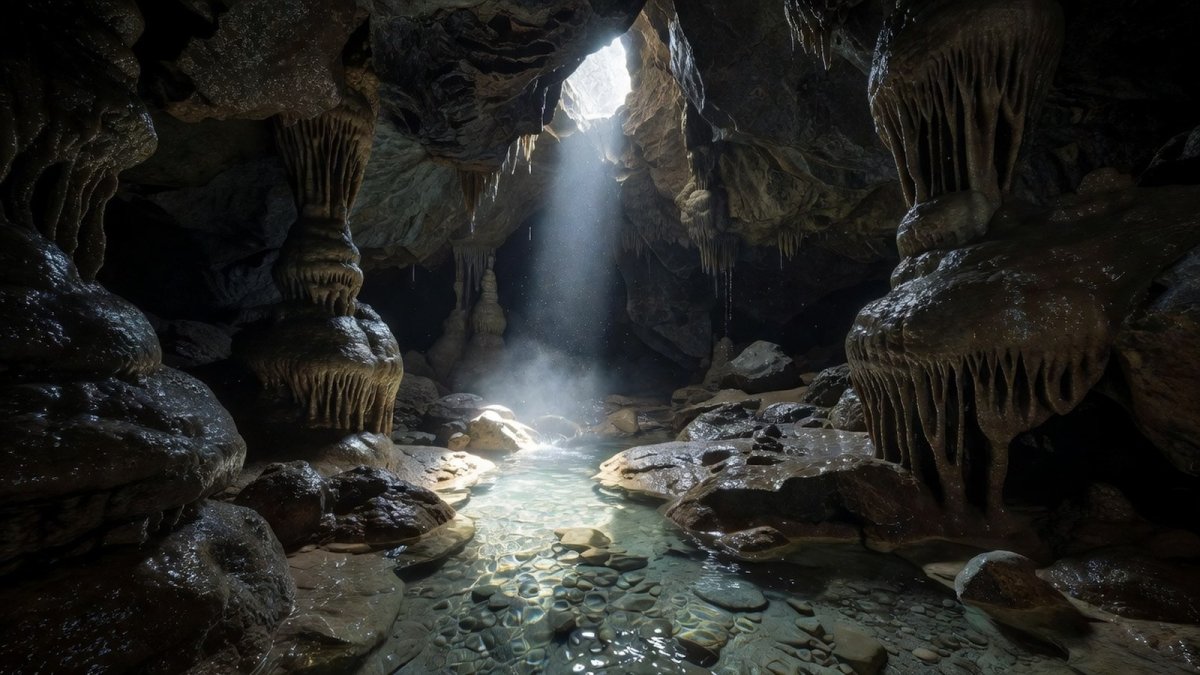
The second surprise was geographical. "What people were calling a cenote was actually a spring pouring out of a hillside, locally known as La Cueva. And we discovered we were now in the state of Oaxaca." The team, which also included cave experts Robbie Schmittner, Phillip Lehman, Jonathan Rivera, and Carlos Jiménez, faced a passage that was brutally hostile. "The average depth of the cave passage was 6 meters, and the visibility was less than a meter," Gust said. The floor was littered with "almost razor-sharp" rocks, 30 centimeters to a meter long, "pointed up like kitchen knives." A single wrong move with a guideline could spell disaster. "All you had to do was pull the line across one of them, zigzag twice, and your line is cut through, gone. Normally you would say this is insane, forget this."
The Breadcrumbs: A Spare Tank and a Flashlight Battery
On his first solo dive into the cave, Gust was operating on the assumption that he was searching for a body. He spent 75 minutes conducting three search patterns. Then, about 75 meters in, he found a small spare air tank, a small bag, and three rocks. The rocks, he realized, were not random debris. They were used for "buoyancy control" and had been dropped in a trail. "The rocks were spread out like breadcrumbs, showing me which way he went," Gust said. It was a sign of life, a clue that the man had been alive and thinking when he passed this point. Low on gas and mentally exhausted, Gust exited the cave, returning the next morning with renewed purpose.
On Aug. 5, the second day of searching, Gust found a D-size flashlight battery on the passage floor. "Now I knew I was heading in the right direction," he said. Pushing forward, he noticed an air space above him. Continuing for another 4 meters, he hit a "very strong flow that I couldn't swim against." He surfaced into what he described as a "large dry cave with a creek of water flowing in the middle of it." It was a hidden sanctuary, a dry chamber fed by a fast-flowing river about 2 meters wide, completely sealed off from the outside world.
What happened next defied all expectations. "I muscled myself up out of the water, side-mount tanks and all, and I yelled into the cave in Spanish if there was anybody in there," Gust recounted. "And to my utter astonishment, I heard a faint 'Sí.'" The word hung in the air, a ghost of a sound that transformed a recovery mission into a rescue. "I ask him his name, and it's Erasto — and I say, 'You've been here for two weeks?' and he said, 'Yeah.'"
Fifteen Days in the Dark: Faith, Water, and Time Standing Still
Erasto's survival is a testament to the human spirit. Trapped in the dry chamber with no food, he survived by drinking the crystal-clear, drinkable water from the stream that ran through his underground prison. With no daylight to mark the passage of time, he lost all sense of days. "For me it was three days, but the people here say it was 15 or 16," he later said. He kept his faith in God, praying and never losing hope that he would be found.
He had run out of air and lost consciousness shortly after entering the cave, only to wake up in the dry section. He was alive, but trapped. The psychological toll of such an ordeal is unimaginable, yet when Gust found him, Erasto was lucid. He had been sitting in a niche next to the stream, waiting. When he heard the bubbles and saw the light on Aug. 7, he knew his wait was over. He heard someone call out into the darkness, and he answered.
Gust told him the words every trapped soul needs to hear: "Your family is waiting outside." He then exited the cave to deliver the impossible news to the gathered crowd. He had to convince everyone he was serious. He told Rivera to suit up. "We're going in so this guy won't be alone, and if he can move just a little bit, we're going to take him out."
The Extraction: Five Minutes to Freedom
The extraction was a masterclass in cave-diving skill and human cooperation. In the dry cave, Rivera took off his tanks and talked with Erasto, who seemed calm and coherent. The two men slowly walked the 10 meters to where Gust was waiting. A critical advantage emerged: Erasto knew how to use a diving mask and breathe from a second-stage regulator. After a quick checkout, Erasto breathed from Rivera's regulator, supplied by a long hose, as they made their way through the underwater passage.
"We got out in record time. Maybe five minutes," Gust said. Erasto had no fins, but he didn't need them. The exit was swift, and the moment they broke the surface, the reality of the rescue hit. Erasto was nearly blinded by the sunlight. As his adrenaline dropped, he "went limp like a baby." He was carried by stretcher up the steep approach to an ambulance and taken to the Uxpanapa Regional Hospital, suffering from severe dehydration, significant weight loss, and malnutrition. No detailed medical assessment has been released, but he was later discharged and able to return home to his family. Gust and Rivera visited him in the hospital, where he was recuperating nicely.
In a video posted on the municipality's Facebook page, a grateful Erasto thanked his rescuers. "I have no way to thank you or repay you for so many kind gestures. May God repay you." The rescue was confirmed publicly by Uxpanapa municipal president Martín Alberto Aguilar Cuéllar, who met the divers to provide logistical support, accommodation, and travel expenses.
A Community's Faith and the Lessons of the Selva Zoque
This story resonates deeply in rural Mexico, where community is not just a word but a lifeline. The people of Uxpanapa and Santa María Chimalapa did not abandon one of their own. They carried gear through the jungle, they paddled overloaded canoes across swollen rivers, and they refused to accept the worst. The Selva Zoque, a region of immense ecological and cultural importance, is home to indigenous communities and ejidos that know the land and its dangers intimately. This rescue is a testament to their perseverance and the power of collective action.
For the international diving community, the story is a stark reminder of the dangers of unexplored caves. The system at La Cueva was unmapped before this operation, a fact that underscores the risks taken by the rescue team. Harry Gust has said he posted his first-person account to correct "a lot of false information" surrounding the rescue, ensuring that the technical realities and the heroism of all involved are accurately recorded. The story has been covered by outlets from People magazine to the Daily Mail, DIVE Magazine, Divernet, and The Scuba News, bringing a Mexican story of survival to the world.
As Erasto recovers at home, the questions linger. What does this mean for cave safety in the region? Will the system at La Cueva now be mapped and studied? For now, the focus remains on the miracle. A man walked into the earth and, against all odds, walked back out. His faith, the skill of a few brave divers, and the unwavering hope of a community brought him home. In the words of his rescuer, Harry Gust, the moment he heard that faint "Sí" was one of utter astonishment. For the people of Uxpanapa, it was an answer to their prayers.
This article was produced with AI-assisted research and editorial support. Sources: Mexico News Daily, DIVE Magazine, Divernet, The Scuba News, People, Daily Mail.
By Rosa Martinez, Staff Writer
What's Your Reaction?
 Like
0
Like
0
 Dislike
0
Dislike
0
 Love
0
Love
0
 Funny
0
Funny
0
 Wow
0
Wow
0
 Sad
0
Sad
0
 Angry
0
Angry
0

Latin America/Andes Correspondent at Global1.News. Based in Bogota, covering politics, environment, energy, and social movements across the Andean region. Passionate about environmental journalism and communities protecting their land.












Comments (0)