
After a deepfake voice fooled her grandfather, this founder sprang into action
When a deepfake voice duped a senior citizen into coughing up cash, the fallout wasn’t just a bruised bank account – it was a glaring reminder that the very devices we trust to keep us connected are now open doors for fraud.
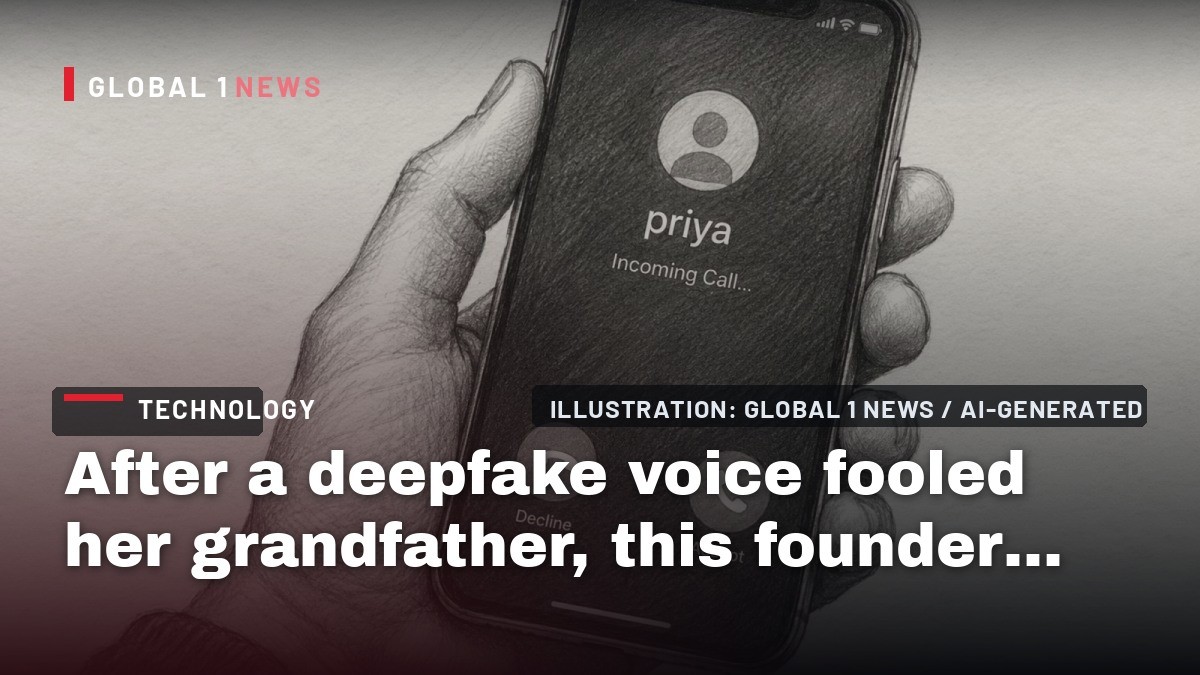
When a deepfake voice duped a senior citizen into coughing up cash, the fallout wasn’t just a bruised bank account – it was a glaring reminder that the very devices we trust to keep us connected are now open doors for fraud. Tarini Padmanabhuni’s personal tragedy sparked DetectifAI, a San Francisco‑based startup that’s building AI models small enough to sit inside a smartphone and flag fake voices in real time. From a family scam to a fledgling company already handling a hundred‑thousand calls a month for Indian financial institutions, the story is a case study in why independent hosting providers and device makers need to rethink “cloud‑first” security.
Why the deepfake voice problem matters to anyone running production services
The FBI’s latest numbers paint a stark picture: Americans lost close to nine‑hundred million dollars to AI‑driven scams last year, a jump of twenty‑four percent from the year before. The loss is not evenly spread – seniors over sixty lost roughly twice as much as those in their fifties. For a hosting provider, that translates into a wave of fraud‑related support tickets, charge‑back disputes, and reputational damage that can cripple a brand overnight.
What makes the threat unique is its low‑tech delivery. A phone call can be intercepted anywhere, and the victim never needs to upload a file to a cloud service for the fraud to work. If the detection engine lives only in a remote data centre, the user has no defence at the moment of attack. That’s a business‑risk blind spot for any company that relies on voice authentication – from banks to telecoms – and a clear opening for a solution that runs on‑device.
The current market landscape: crowded but cloud‑bound
DetectifAI isn’t stepping into an empty field. Established players like Reality Defender, Pindrop, Resemble AI, Microsoft Azure AI Content Safety and Nuance (now under Microsoft) already offer deepfake detection, but their models sit behind the cloud. That architecture forces phone manufacturers to ship a feature that depends on a constant internet connection and raises privacy concerns because the audio has to leave the handset for analysis.
From a founder’s seat, the cloud‑centric model is a double‑edged sword. It lets hyperscalers amortise massive GPU farms across thousands of customers, but it also locks smaller players out of the value chain. If you’re a carrier or a device OEM, you either pay a per‑call fee to a third‑party API or you risk being left behind as competitors embed anti‑deepfake tech directly into their OS.
DetectifAI’s on‑device approach: building small from the ground up
Instead of shrinking a bloated cloud model to fit a phone, DetectifAI designs its neural nets to be compact from day one. The result is a model that can run inside the smartphone’s operating system, delivering an instant verdict on whether a voice is synthetic without ever sending the audio off‑device. That on‑device guarantee is a game‑changer for privacy‑conscious markets and for any scenario where latency matters – think emergency calls or real‑time voice authentication.
The company’s go‑to‑market strategy hinges on an SDK that phone makers can embed into their firmware. Padmanabhuni likens the partnership to AT&T’s exclusive carrier role in the original iPhone launch – the first OEM to ship DetectifAI will gain a clear differentiation point. For independent hosting providers, the SDK model offers a licensing revenue stream without the overhead of building a full‑stack detection service themselves.
Early traction and the business case for licensing
DetectifAI already boasts early revenue, handling more than one hundred‑thousand calls a month for financial institutions in India. Those calls are generated by AI voice agents handling debt collections and loan documentation, with DetectifAI’s detection and speaker verification running on every interaction. While the startup won’t name its customers, the volume indicates a real‑world deployment that validates the on‑device model at scale.
The revenue mix is two‑pronged: a primary stream from licensing the SDK to phone manufacturers, and a secondary stream from selling the technology to businesses and fraud‑prevention firms. For a hosting provider, the secondary stream is a potential partnership avenue – you could host the backend for enterprise licensing while still offering on‑device detection as a value‑added service to your telco clients.
Funding, founder pedigree, and the risk of VC‑driven hype
DetectifAI’s seed round came from two angels – former TechCrunch editor Josh Constine and Manohar Kamath of KM Growth – rather than a massive VC fund. That modest backing keeps the founders focused on product‑market fit rather than growth‑at‑all‑costs. Padmanabhuni’s background is rooted in hands‑on engineering: she started machine learning at twelve, studied cyber‑physical systems at Manipal Institute of Technology, and led India’s first driverless race‑car team in the Formula Student competition.
The founder’s technical pedigree matters because it means the model isn’t a glorified copy of a cloud service; it’s a purpose‑built engine that can survive the constraints of a phone chip. For independent operators, that signals a partner who understands the trade‑offs between compute, power, and latency – a rare commodity in a market flooded with VC‑fueled hype that often overpromises on performance while underdelivering in production.
Implications for independent hosting providers and device makers
The rise of on‑device deepfake detection forces a rethink of the traditional “cloud‑first” security stack. If you’re running a data centre that hosts voice‑related services, you now have to decide whether to keep the detection logic in your servers or to hand it off to a partner like DetectifAI. The latter can reduce bandwidth costs, lower latency, and eliminate the regulatory headache of moving personal audio across borders.
However, there’s a trade‑off. On‑device models require regular updates to stay ahead of evolving deepfake techniques. That means you need a reliable OTA (over‑the‑air) pipeline – something many smaller hosting outfits already manage for OS updates. Leveraging DetectifAI’s SDK could be a win‑win: you keep the heavy lifting off your servers while still offering a cutting‑edge anti‑fraud feature to your customers.
Actionable steps for founders and operators
First, audit your voice‑related services for exposure to deepfake fraud. If you’re handling any form of voice authentication, you’re already in the crosshairs. Second, evaluate the feasibility of integrating an on‑device SDK – reach out to DetectifAI early, as the early‑adopter advantage could become a market differentiator. Third, build an OTA update framework if you don’t already have one; that’s the conduit for pushing model improvements without disrupting users.
Finally, keep an eye on the pricing dynamics. With DetectifAI’s seed‑stage funding, the licensing fees are likely to be modest compared to the per‑call costs of cloud APIs. In a landscape where hyperscalers charge premium rates for every inference, a lean on‑device solution can shave significant operational expense while delivering a stronger privacy promise.
Deepfake voice scams are no longer a fringe curiosity – they’re a mainstream threat that’s already costing billions. The industry’s response can’t rely on bulky cloud models that leave the user exposed at the moment of attack. DetectifAI’s on‑device approach offers a practical, privacy‑first alternative that independent hosting providers and device makers should seriously consider if they want to stay ahead of the fraud curve.
— Allan Ali, Founder
This article was produced with AI-assisted research and editorial support. Reporting is based on the source material cited below. Sources: TechCrunch; techcrunch.com; Global1.News (28 September 2026).
By Allan Ali, Global1.News
What's Your Reaction?
 Like
0
Like
0
 Dislike
0
Dislike
0
 Love
0
Love
0
 Funny
0
Funny
0
 Wow
0
Wow
0
 Sad
0
Sad
0
 Angry
0
Angry
0

Publisher of Global1.News. Automation architect, systems builder, and the guy making sure the truth gets published.














Comments (0)