
US Corporate Resilience in China Supply Chains Defies Decoupling Narratives at CISCE 2026
US Corporate Resilience in China Supply Chains Defies Decoupling Narratives at CISCE 2026 In a recent CGTN report by journalist Wang Mengjie, the ongoing China International Supply Chain Expo underscores how US companies continue to deepen their integration with Chinese markets, positioning the event as a key platform for bilateral business cooperation. The fourth edition of th
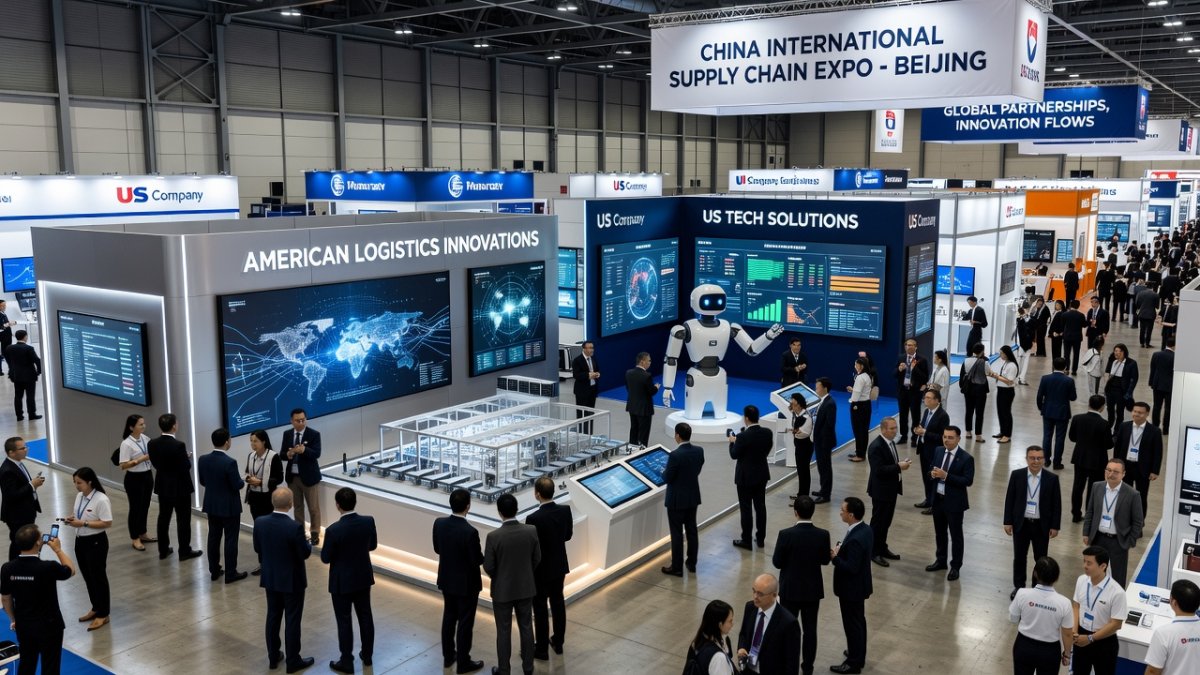
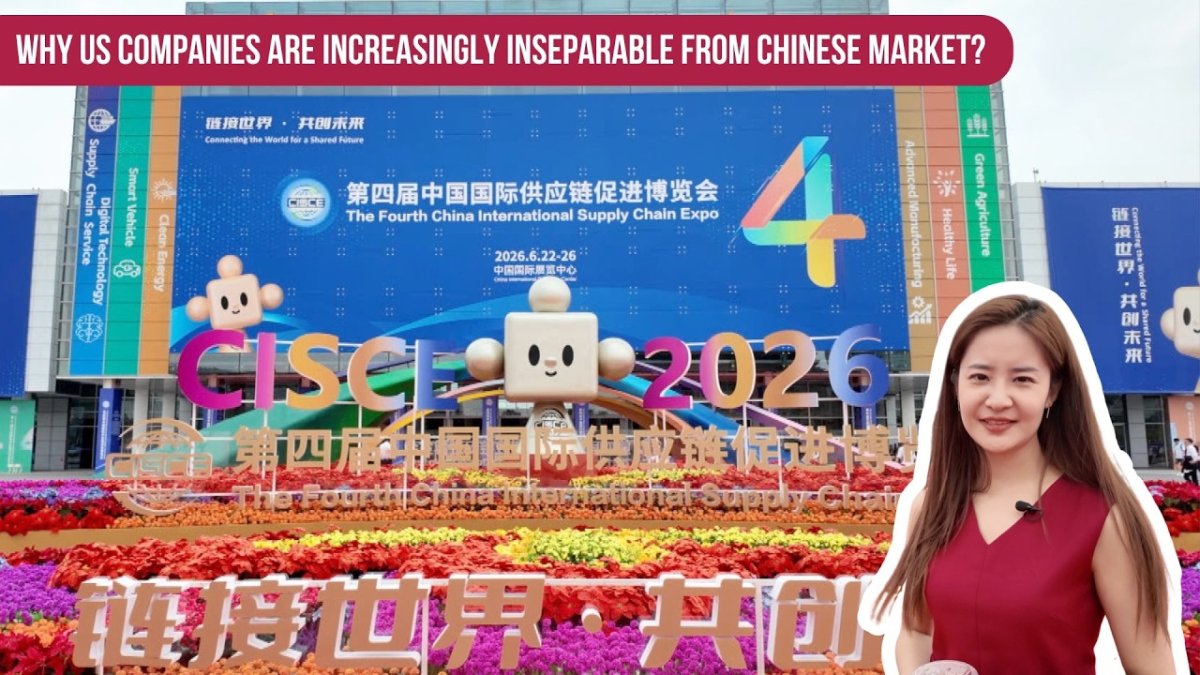
In a recent CGTN report by journalist Wang Mengjie, the ongoing China International Supply Chain Expo underscores how US companies continue to deepen their integration with Chinese markets, positioning the event as a key platform for bilateral business cooperation. The fourth edition of the CISCE, held from June 22 to 26, 2026, at the China International Exhibition Center in Beijing's Shunyi district, highlights this trend through sustained US participation despite ongoing geopolitical frictions.
The Numbers That Matter
US firms have maintained their position as the largest group of foreign exhibitors at the CISCE for four consecutive years. This consistent ranking reflects measurable corporate commitments rather than rhetorical posturing. Trade data from the period shows bilateral goods flows remaining substantial, with US companies leveraging China's manufacturing base for both domestic sales and global exports. The expo's scale, drawing delegations from states including Florida, New Mexico, and Utah, further illustrates subnational economic linkages that operate alongside federal-level policy debates.
These figures align with China's Dual Circulation strategy, which prioritizes domestic market strength while maintaining selective openness to foreign capital and technology. Beijing's approach seeks technological self-sufficiency without severing profitable supply chain interdependencies.
Beyond the Booth — What US Tech Giants Are Actually Doing in China
Corporate activity at the CISCE extends well beyond exhibition displays. Nvidia CEO Jensen Huang delivered a video address describing China as one of the world's great centers of technology and industry. Qualcomm, participating for the fourth time, presented its Snapdragon Ride Flex SoC integrated into the ArcFox electric vehicle and expanded collaborations on AI terminals with Chinese partners including Honor, Xiaomi, vivo, OPPO, Asus, and Lenovo.
Medtronic, with 37 years of operations in China, maintains 7,000 local partners and channels 90 percent of its local procurement into global factories. Honeywell reported nearly 100 Chinese supply chain partners and introduced four new innovations at the event. Cargill operates four research and development centers in China while expanding investment. Micron, appearing for the third time, reaffirmed commitments to the semiconductor ecosystem through partnerships with Chinese entities. These concrete engagements demonstrate operational embedding rather than temporary market testing.
The Decoupling Paradox — Cooperation and Competition Side by Side
The same week the CISCE opened, the Ministry of Commerce added additional US companies to China's export control list. This juxtaposition captures the managed competition that defines current US-China economic relations. Corporate leaders such as AmCham China Chair James Zimmerman have publicly stated that the talk of decoupling over the past decade is over, reflecting assessments from firms that have calculated the costs of withdrawal.
Beijing's dual approach serves strategic objectives: it preserves access to US technology and capital inflows while signaling resolve on national security matters. Washington, for its part, maintains export controls on advanced semiconductors and related equipment, yet these measures have not prompted wholesale corporate exit. The result is a pattern of selective interdependence where firms navigate regulatory constraints through localized production and joint development.
What This Means for Washington's Strategy
US policy emphasizing de-risking encounters practical limits when major corporations identify China as indispensable for scale, talent, and supply chain efficiency. The persistence of US participation at the CISCE suggests that export controls and investment screening have slowed but not reversed commercial integration. Second-order effects include pressure on US regulators to calibrate restrictions more narrowly, lest they accelerate the very technological self-reliance Beijing seeks under its 14th Five-Year Plan.
Corporate lobbying from firms with deep China exposure continues to shape implementation timelines, producing a gap between legislative intent and on-the-ground outcomes. This dynamic weakens the leverage Washington can exert through unilateral measures alone.
Regional and Global Implications
For ASEAN economies, sustained US-China supply chain linkages reduce immediate pressure to choose sides, allowing continued participation in both markets. European firms observe similar patterns, with many maintaining China exposure while pursuing diversification. In the Global South, the example of US companies prioritizing commercial returns over geopolitical alignment reinforces perceptions that economic pragmatism often overrides alliance signaling.
China benefits from this environment by advancing multilateral institution-building through platforms such as the CISCE, which positions Beijing as a convenor of global supply chain dialogue. The United States retains influence through technological leadership in select domains, yet its ability to enforce broad decoupling remains constrained by private-sector incentives.
Strategic Implications for US-China Relations
The evidence from the 2026 CISCE indicates that economic interdependence continues to shape bilateral relations more than rhetorical commitments to separation. Both governments retain tools to manage competition, yet corporate behavior reveals the high costs of abrupt disengagement. Future policy choices will likely emphasize targeted controls and selective cooperation rather than comprehensive decoupling, preserving space for incremental adjustments amid persistent structural rivalry. This equilibrium serves China's interest in stable external conditions for domestic upgrading while testing the durability of US strategic autonomy claims.
By Prof. Marcus Chen, Staff Writer
This article was produced with AI-assisted research and editorial support. Reporting is based on sources cited in the article.
What's Your Reaction?
 Like
0
Like
0
 Dislike
0
Dislike
0
 Love
0
Love
0
 Funny
0
Funny
0
 Wow
0
Wow
0
 Sad
0
Sad
0
 Angry
0
Angry
0

World Politics Analyst at Global1.News. Based in Beijing, covering US-China relations, global trade, and geopolitical strategy. Brings deep analytical perspective to the power dynamics shaping international affairs.














Comments (0)