
U.S. Arms Bottleneck Strains Deterrence in Northeast Asia
The intricate machinery of allied deterrence in Northeast Asia is, at its most fundamental level, a logistics problem. When the United States promises to defend its partners in Tokyo and Taipei, that promise is underwritten by a finite inventory of precision-guided interceptors and cruise missiles. A sobering analysis published this week in The Diplomat lays bare a critical vulnerability: the production lines that feed this arsenal are not keeping pace with global demand, leaving key allies in t
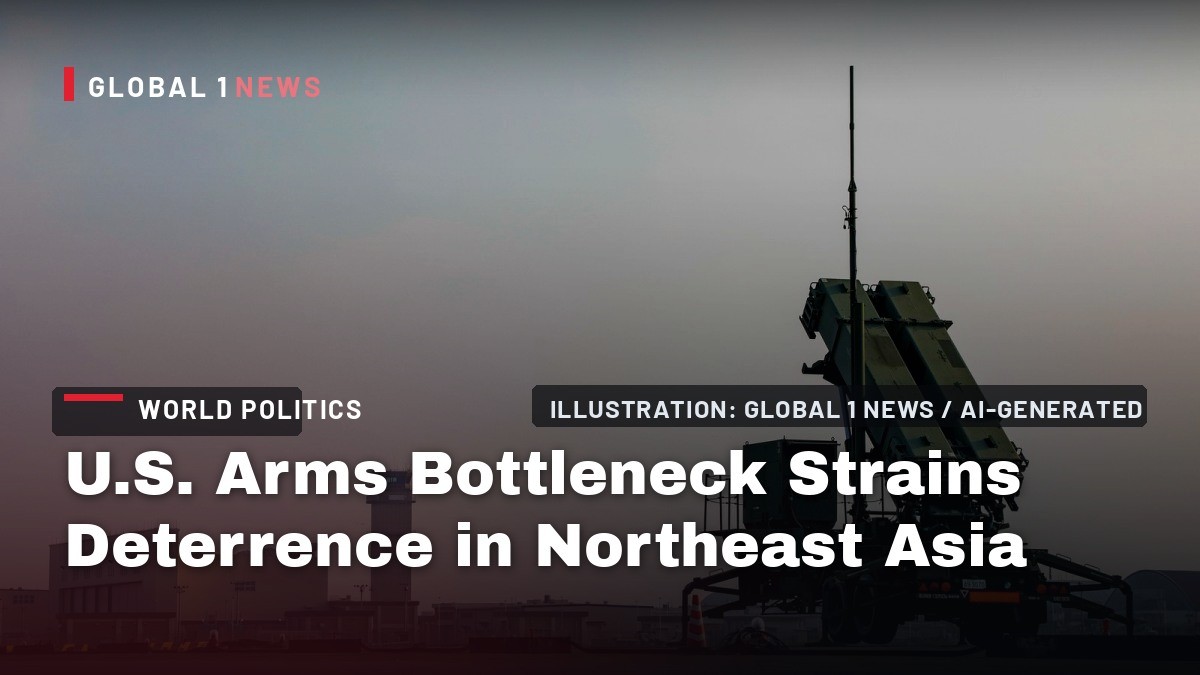
The intricate machinery of allied deterrence in Northeast Asia is, at its most fundamental level, a logistics problem. When the United States promises to defend its partners in Tokyo and Taipei, that promise is underwritten by a finite inventory of precision-guided interceptors and cruise missiles. A sobering analysis published this week in The Diplomat lays bare a critical vulnerability: the production lines that feed this arsenal are not keeping pace with global demand, leaving key allies in the Indo-Pacific queued behind more immediate U.S. operational needs. For South Korea, a linchpin of the U.S. alliance network and a burgeoning defense industrial power in its own right, the episode underscores a strategic reality that extends far beyond the specific munitions in question.
The Queue Behind Epic Fury
The immediate cause of the delivery disruption is the confluence of two massive drains on U.S. stockpiles: the ongoing war in Ukraine and the U.S. military operation in Iran, referred to in the source analysis as "Epic Fury." The sheer scale of expenditure is staggering. According to the report, the United States expended approximately 1,500 interceptors over Iran in a matter of months. This single operational tempo has created a ripple effect across the globe, forcing Washington to make difficult choices about who gets weapons and when.
For Taiwan, the consequences are tangible. The island has been offered a $14 billion arms package that includes Patriot PAC-3 interceptors and NASAMS air defense systems. However, Taiwan has reportedly been given at least four different explanations for delays in receiving this equipment. Acting Navy Secretary Hung Cao testified to senators that the U.S. was "doing a pause" on the sale to ensure sufficient munitions for Epic Fury. In contrast, President Donald Trump characterized the arms sales as "a very good negotiating chip" with China. Regardless of the official rationale, the practical effect is that Taiwan's order of 102 Patriot interceptors is not moving with the urgency that the security environment in the Taiwan Strait demands.
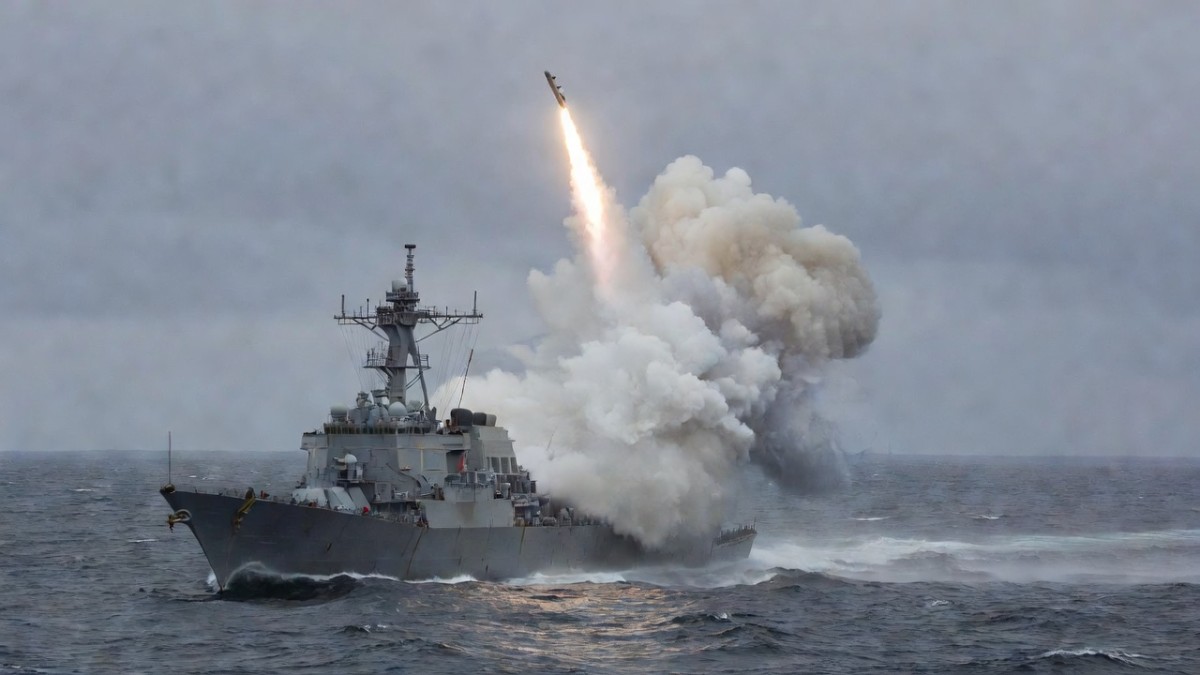
Japan faces a parallel predicament. Tokyo has been informed that the delivery of its 400 long-awaited Tomahawk cruise missiles will be delayed by two years. This delay is directly attributed to the need to meet drawdown demands from the Iran conflict. For Japan, which is seeking to bolster its stand-off strike capabilities in the face of a rising China and an assertive North Korea, a two-year delay in such a critical capability is a significant strategic setback. The Tomahawks and the Patriot interceptors are not isolated transactions; they are competing in the same production queue as the resupply for Ukraine and the U.S. military's own operational needs in the Middle East.
Reading the Production Math
The analytical core of the problem is a stark mismatch between requirements and industrial capacity. The U.S. Army alone has a stated requirement for 2,798 interceptors. This number, however, only scratches the surface when one considers the needs of the Navy, allied requests like Taiwan's 102, and the imperative to replenish the 1,500 interceptors expended over Iran. The arithmetic is unforgiving. If the United States can burn through such a vast quantity of its most advanced interceptors in a matter of months in one theater, the question becomes: what would a conflict in the Indo-Pacific require? Certainly, the source analysis notes, it would demand far more than the 102 systems currently on order for Taiwan.
This production math is not lost on strategic planners in Beijing. Chinese military and political leaders are likely evaluating whether the United States can sustain a major war in the Indo-Pacific by assessing its ability to replenish stocks faster than they can be depleted. The information needed for this assessment is not classified. The U.S. fiscal budget request, the details of awarded contracts, and the public backlog of arms sales all provide a transparent, real-time ledger of American industrial strength. The bottleneck signals a potential vulnerability that could embolden risk-taking in Beijing, as the credibility of U.S. extended deterrence is predicated not just on the will to fight, but on the demonstrated capacity to sustain a prolonged engagement.
The challenge is not a lack of appropriated funds. As the analysis points out, funding the munitions supply chain is no longer the primary bottleneck. The true constraint is time. Factories, supplier networks, machine shops, and skilled labor cannot be ramped up overnight. Production capacity that is scheduled to come online in 2030 will not deter Beijing in 2027. The U.S. defense industrial base, which has been streamlined and drawn down in the decades following the Cold War, is now being asked to surge in a way it has not done in a generation, and the structural limitations are becoming apparent.
A New Model: Private Capital Before Contracts
The traditional sequence of defense procurement—government demand first, followed by the development of new capacity—is proving too slow for the current threat environment. Contracts are typically awarded before firms are willing to invest in the facilities, machines, and personnel needed for production. This creates a lag that is strategically unacceptable. However, a new model is emerging, one that inverts this relationship and offers a potential path forward.
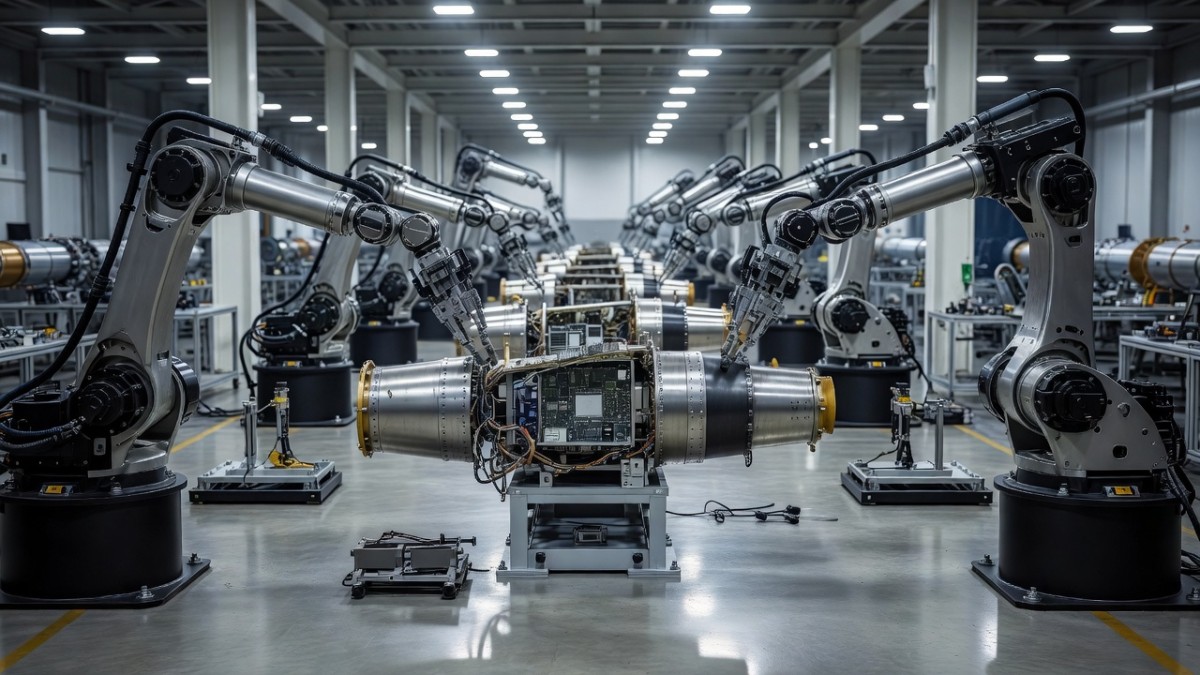
The case of Hadrian, a private manufacturer, is instructive. In March, the company opened Factory 4, a 2.2 million square foot machine shop in Cherokee, Alabama, designed to support Columbia- and Virginia-class submarine production. What makes Hadrian’s move remarkable is its financing structure. The company invested over $1.5 billion in private capital before receiving a roughly $900 million contract from the U.S. Navy. This "private-sector-first, public-sector-later" approach represents a significant bet on guaranteed future demand. It is a model that seeks to compress the timeline by having industry shoulder the initial financial risk, effectively pre-building capacity in anticipation of government orders.
This approach is beginning to gain traction in the missile sector as well. In December 2025, Lockheed Martin signed a Memorandum of Understanding with Hadrian to co-locate a machine shop and inspection facility within Lockheed’s factory that produces the PAC-3 interceptor. This co-location is designed to streamline the supply chain and reduce the friction associated with transporting critical components. The logic is sound: if the government will not or cannot provide the capital upfront, private industry can, provided there is a credible expectation of future demand. This model, if replicated across the supplier base, could be the key to unlocking the production surge that is so desperately needed.
The Seeker Bottleneck and Japan’s Pivotal Role
Even with new machine shops and increased capital, the production line has a critical chokepoint: the seeker. The Patriot PAC-3’s seeker, manufactured by Boeing, is a highly sophisticated component that is currently a bottleneck for the entire system. The source analysis indicates that new seeker production lines will not be running until 2027. This single component is effectively limiting the number of interceptors that can be produced, regardless of how many other parts are available.
This is where Japan’s role becomes pivotal. In November 2025, Japan successfully exported its first domestically manufactured PAC-3 interceptors to the United States, a landmark in Japan-U.S. defense industrial cooperation. Now, Japan and the United States are negotiating joint production of the PAC-3 MSE (Missile Segment Enhancement). If Japan can expand production of its own seekers, it could avoid the Boeing bottleneck for itself while also helping every other Patriot user in the region, including Taiwan and potentially South Korea.
Implications for South Korea and the Allied Industrial Base
For South Korea, the current bottleneck is a double-edged sword. On one hand, it highlights the risks of over-reliance on a single supplier for critical munitions. The delays facing Taiwan and Japan are a clear reminder that even the closest allies can find their orders deprioritized in a global crisis. This reinforces the strategic logic of Seoul’s own efforts to build a robust domestic defense industry and to diversify its sources of military hardware.
On the other hand, the crisis presents an opportunity. The source analysis explicitly calls for Washington to develop a "surge production roadmap" among allied industries, naming the United States, Japan, Australia, South Korea, and Taiwan as potential contributors. South Korea is a rising defense producer with a sophisticated industrial base, particularly in areas like artillery, armored vehicles, and increasingly, air defense and missile systems. The question is whether Seoul’s industry can be integrated into the U.S. supply chain for critical components like seekers, rocket motors, and castings/forgings. The analysis suggests that selective industrial integration, rather than open technology sharing, is the preferred path. For South Korea, this could mean new export opportunities and a deeper strategic role within the alliance, but it also requires navigating complex issues of technology transfer and export controls.
The episode underscores how dependent allied defense postures remain on U.S. production lines. For decades, the U.S. defense industrial base was the ultimate guarantor of security for its allies. The current bottleneck reveals that this guarantor is not infallible. The solution, as outlined in the source analysis, is a multi-pronged strategy: encourage private capital to build capacity ahead of contracts, develop a formal surge production roadmap with allied nations, and address specific chokepoints like the Boeing seeker by leveraging allied production capabilities. Taiwan and Japan, the analysis argues, should demand official, on-the-record timelines for their deliveries once funded, forcing the Pentagon to provide concrete numbers rather than vague assurances.
The strategic implications for Northeast Asia are profound. The credibility of U.S. extended deterrence is not solely a function of military doctrine or the number of carrier strike groups. It is also a function of the industrial might that can sustain a conflict. If Chinese planners believe they can deplete U.S. and allied stocks faster than they can be replenished, the risk of miscalculation increases. The path to restoring deterrence credibility lies not just in new budgets, but in a fundamental restructuring of how the U.S. and its allies finance, build, and integrate their defense industrial bases. The queue is long, but the blueprint for shortening it is beginning to emerge.
This article was produced with AI-assisted research and editorial support. Sources: The Diplomat (September 2, 2026), CBS News, The Japan Times, Taipei Times, USNI News, Defense One.
By Prof. David Park, Staff Writer
What's Your Reaction?
 Like
0
Like
0
 Dislike
0
Dislike
0
 Love
0
Love
0
 Funny
0
Funny
0
 Wow
0
Wow
0
 Sad
0
Sad
0
 Angry
0
Angry
0

East Asia/Technology Correspondent at Global1.News. Seoul-based voice covering Korean politics, technology, business, and culture. Analyzes how technology and geopolitics intersect across East Asia.













Comments (0)