
UK Set to Impose Trade Restrictions on Israeli Settlements
Britain is poised to announce new trade restrictions on goods produced in Israeli settlements in the occupied West Bank, a move that would mark one of the most significant shifts in UK policy toward the Middle East in decades.
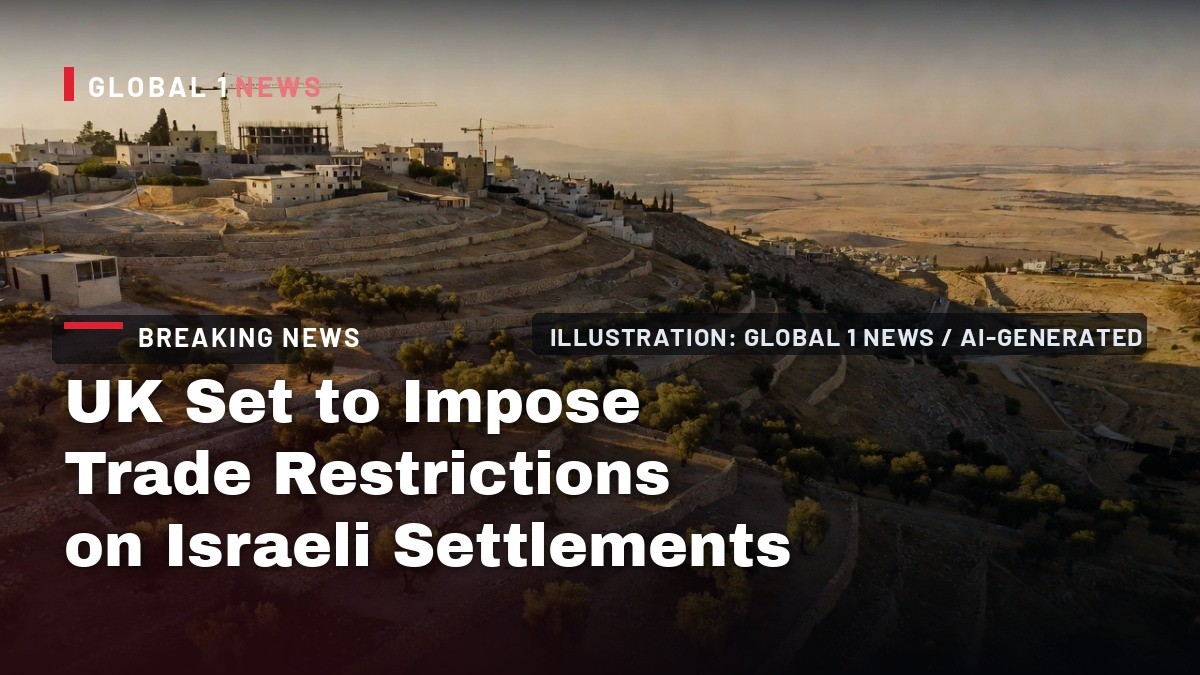
Britain is poised to announce new trade restrictions on goods produced in Israeli settlements in the occupied West Bank, a move that would mark one of the most significant shifts in UK policy toward the Middle East in decades. Foreign Secretary Ed Miliband is expected to outline the measures in the House of Commons on Tuesday, according to multiple sources, in what one minister described as a "complete reset" of the UK's relationship with Israel and Palestine.
London, United Kingdom — The scene here is one of deliberate, calculated tension. On Monday evening, Prime Minister Andy Burnham confirmed to Labour MPs at their weekly parliamentary meeting that Miliband would make the statement, telling them he had briefed international leaders about the plans in phone calls that afternoon. By Tuesday morning, the corridors of Westminster were buzzing with the expectation of a formal announcement that could include restrictions on agricultural products and a broader ban on trade in both goods and services tied to illegal settlements. The UK government has not yet delivered the statement as of this writing, but the machinery of state is clearly in motion.
Why This Is a Break With the Past
To understand the weight of this moment, you have to look at how far British policy has traveled in a single year. Tuesday's intervention comes almost a year after Sir Keir Starmer's government formally recognized a state of Palestine, a decision framed at the time as a moral responsibility to support a peaceful future for both Israelis and Palestinians. Now, under Burnham's leadership, the government is going further, moving from diplomatic recognition to tangible economic pressure.
One minister told the BBC that the upcoming statement "will be a complete reset of the nature of our Israel-Palestine relationship. It will all feel very different. It is not just about sanctions." That language is striking for its ambition. Labour MPs briefed on the plans believe the sanctions will target trade with illegal settlements, covering both goods and services, according to the BBC. This is not a narrow, technical adjustment; it is a signal that the UK intends to reposition itself as a more assertive actor on the Israeli-Palestinian file.
Burnham's own trajectory points to this moment. Before taking office on July 20, 2026, he said he was "looking at measures to ban trade in goods with illegal settlements," as Reuters reported. This is the Burnham government's first major Israel policy move, and it carries the weight of a promise kept. For decades, successive British governments of both parties preferred quiet diplomacy and behind-the-scenes pressure on settlement expansion. Tuesday's expected announcement breaks with that tradition in a way that will reverberate far beyond the aisles of the Commons.
The E1 Trigger
The immediate catalyst for this shift is a piece of land called E1, and the Israeli government's decision to build on it. E1 is a strategically vital area east of Jerusalem, sandwiched between the settlement of Ma'aleh Adumim and the city itself. In August, Israel opened tenders for the construction of some 1,200 settlement homes there, with bids for 1,234 homes in the E1 section of Ma'aleh Adumim, according to The Jerusalem Post (JTA). The Guardian reported that this represents around a third of the 3,400 homes planned for the area.
For decades, Israel held off on building in E1 under intense global pressure, according to the BBC. The area is not just another patch of contested territory; it is the geographic hinge that connects the northern and southern West Bank. Building there would effectively bisect the territory, making the creation of a contiguous, viable Palestinian state nearly impossible. That is why the international community has long treated E1 as a red line, and why its crossing has now triggered this British response.
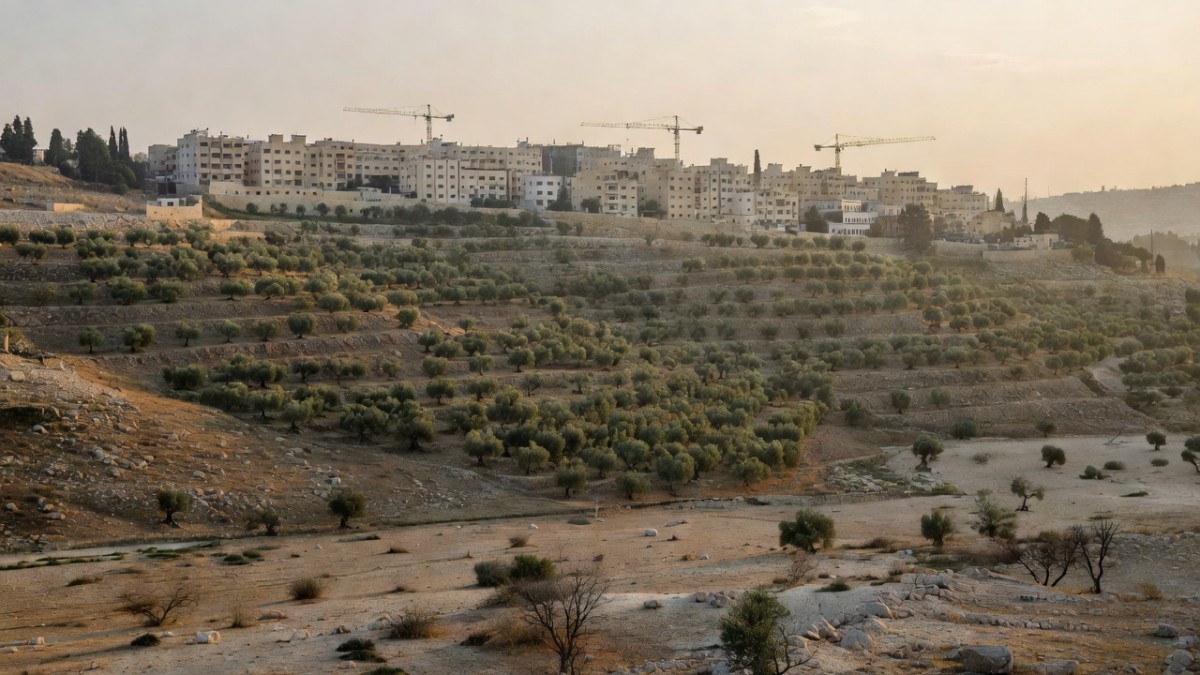
Miliband, in his first address to Parliament as foreign secretary last week, was unambiguous. He called the plans "illegal under international law" and described E1 as "the crossing of a red line, as it cuts through the heart of the West Bank and risks making a Palestinian state unviable." Reuters reported that he told lawmakers the E1 development "risks making a Palestinian state unviable" and declared: "This government will not acquiesce in the destruction of the two-state solution. We will act." Burnham himself warned that Israel's E1 announcement could "imperil or end" the two-state solution, according to the BBC. The tenders were the spark; Tuesday's expected statement is the fire.
What the New Measures Could Look Like
The specifics of the announcement are still being finalized, but the contours are becoming clear. The BBC reports that the measures could include restrictions on trade in agricultural products from settlements. Labour MPs briefed on the plans believe the sanctions will be broader, targeting trade with illegal settlements in both goods and services. Middle East Eye reported on Monday that the ban is expected to prohibit investment in illegal settlement businesses, a move that would bring the UK into compliance with the International Court of Justice's July 2024 advisory opinion, which declared the occupation illegal and stated that states are obliged to oppose it.
The UK Foreign Office is pressing ahead with these plans, according to Middle East Eye, and there is a sense that the government wants to close the loopholes that have allowed British entities to profit from settlement activity. Stephen Doughty, who was Europe minister before being appointed Middle East minister in July, laid out the logic in an interview with the BBC. "At the moment, we can sanction where there is evidence of it being linked to settler violence, but not, for example, in relation to a contractor working on the settlements," he said. "We need to expand our sanctions powers." That expansion appears to be exactly what is coming.
It is worth being clear-eyed about the scale of what is being proposed. Ministers recognize that banning a relatively small quantity of mostly agricultural products is a largely symbolic gesture, according to the BBC. The volume of settlement goods that currently reach British markets is not enormous. But the government will frame the announcement as a major reset in Britain's wider policy on Israel, and symbolism in diplomacy can carry real weight. The signal is not just about carrots and tomatoes; it is about the principle that the UK will no longer treat settlement products as legitimate items of commerce.
Israel's Warning and Washington's Silence
The Israeli government has previously warned that it would retaliate if any new measures were introduced, according to the BBC. That warning has now been sharpened and personalized. Israeli Foreign Minister Gideon Sa'ar told Middle East Eye on Monday: "If Britain acts against Israel, Israel will act against Britain." The threat is vague but pointed, leaving room for diplomatic, economic, or political retaliation depending on how the UK proceeds.
Perhaps more telling than Israel's response is Washington's silence. The United States, which is likely to strongly oppose the proposals, has not commented, according to the BBC. That quiet is conspicuous, especially given the timing. Burnham spoke to US President Donald Trump on Monday, and the two leaders agreed on "the need to continue working towards a ceasefire" to end Russia's war in Ukraine, according to Reuters. A Downing Street spokesperson said Burnham "reiterated the UK's support for Ukraine and for recent U.S.-led peace negotiations."
On the Middle East, the official No 10 account said Burnham stressed the importance of the two-state solution, the reopening of the Strait of Hormuz, and ensuring Iran never acquires a nuclear weapon. Notably, the official account did not specify that Burnham briefed Trump on the settlement sanctions. That omission may be deliberate. The US has long shielded Israel from international pressure at the UN and elsewhere, and a public British move against settlements puts Washington in an awkward position with its closest European ally. The silence from the White House suggests the administration is still calculating how to respond to a move it almost certainly dislikes but cannot easily dismiss.
A Wider Middle East Moment
Tuesday's expected announcement does not exist in a vacuum. It lands at a moment of intense diplomatic churn across the Middle East and beyond. The Monday call between Burnham and Trump covered a full agenda: the Ukraine ceasefire, the two-state solution, the Strait of Hormuz, and Iran's nuclear program. That is a remarkable list for a single conversation, and it underscores how interconnected these files have become.
Trump's envoys, Jared Kushner and Steve Witkoff, met Ukrainian President Volodymyr Zelenskiy in Kyiv on Sunday, having spoken with Russian President Vladimir Putin in Moscow on Saturday, according to Reuters and US News. The shuttle diplomacy between Kyiv and Moscow is ongoing, and the UK is clearly trying to stay aligned with Washington on that front even as it breaks with the US on settlements. The Strait of Hormuz, through which a fifth of the world's oil passes, remains a flashpoint, and the question of Iran's nuclear ambitions continues to hang over every regional calculation.
In this context, the UK's move on settlements is not just about the West Bank. It is a statement about the kind of actor Britain wants to be in a region in flux. By taking a harder line on settlements, London is signaling that it will not subordinate its principles to the convenience of allies, and that it sees the two-state solution as a live project that requires defending, not just rhetorical support. The region is shifting, and the UK is choosing a side in a way it has not done in years.
The Stakes for Israelis and Palestinians
Behind the diplomatic maneuvering and the legal arguments are real people living with the daily reality of occupation. The BBC reports that Israel has built about 160 settlements housing about 700,000 Jews since it occupied the West Bank and East Jerusalem during the 1967 Middle East war. An estimated 3.3 million Palestinians live alongside them, in conditions that range from restricted movement to periodic violence.

There has been a surge in attacks by settlers on Palestinians and their property in the West Bank since the start of the Gaza war, which was triggered by the Hamas-led attack on Israel on October 7, 2023, according to the BBC. Recent months have seen a continued rise in violence toward Palestinians in the West Bank by settlers, the BBC reports. The settlements are illegal under international law, a position the UK government has now embraced with new vigor.
The two-state solution — the proposal for an independent Palestinian state in the West Bank and Gaza, with East Jerusalem as its capital, to exist alongside Israel — has received international backing for decades. But its prospects have dimmed with every new settlement, every new road, every new outpost. Israel rejects a two-state solution, according to the BBC. The Palestinian Authority backs it. Hamas does not, because it opposes Israel's existence. That leaves the international community, and now the UK, trying to keep alive a vision that the parties themselves seem unwilling or unable to realize.
What Happens Next
The immediate focus is on the Commons, where Miliband is expected to deliver his statement on Tuesday. The precise content of the measures will matter, but so will the tone. If the foreign secretary frames this as the beginning of a broader reassessment of UK policy, as the minister's "complete reset" comment suggests, then the implications will extend far beyond trade in agricultural goods.
Allied reactions will be telling. Washington's silence is likely to break at some point, and the nature of the US response — whether it is a quiet diplomatic demarche or a public rebuke — will shape how much room the UK has to maneuver. European allies, many of whom have already taken steps to differentiate settlement products from Israeli goods, may see this as validation of their own approaches. Israel's response, as threatened by Foreign Minister Sa'ar, will be a key indicator of how seriously Jerusalem takes the British move.
What would signal escalation? If Israel announces retaliatory measures against British interests, or if the US moves to block the UK's efforts in international forums, the confrontation would deepen. What would signal de-escalation? If Israel quietly pauses its E1 construction plans, or if the US brokers a compromise that allows the UK to claim a victory without triggering a full-blown crisis. For now, the ball is in London's court. The statement is expected today, and the world is watching to see whether Britain's words match its actions.
By Jessica Ali, Staff Writer
This article was produced with AI-assisted research and editorial support. Sources: BBC News, Reuters, The Guardian, Middle East Eye, ITV News, The Jerusalem Post (JTA).
What's Your Reaction?
 Like
0
Like
0
 Dislike
0
Dislike
0
 Love
0
Love
0
 Funny
0
Funny
0
 Wow
0
Wow
0
 Sad
0
Sad
0
 Angry
0
Angry
0

Editor-in-Chief at Global1.News. Atlanta-based journalist who cuts through the BS and tells it like it is. Lead anchor, host, and the voice you hear when the spin stops and the truth starts.













Comments (0)