
Iran's Korean-Language Warning Sharpens Seoul's Hormuz Dilemma
The Islamic Republic of Iran has issued an unusually direct, Korean-language warning to Seoul, stating that any South Korean military participation in operations in the Strait of Hormuz would be viewed as support for US military action and would carry "serious consequences." The...
The Islamic Republic of Iran has issued an unusually direct, Korean-language warning to Seoul, stating that any South Korean military participation in operations in the Strait of Hormuz would be viewed as support for US military action and would carry "serious consequences." The statement, posted on X by Iranian Foreign Ministry spokesperson Esmaeil Baqaei on Monday, arrives as the South Korean government recalibrates its position amid escalating US-Iranian hostilities and mounting pressure from Washington for a tangible security commitment.
Iran's Direct Appeal Complicates Seoul's Delicate Calculus
Seoul, South Korea – September 8, 2026 — The Iranian message, delivered in Korean directly to the South Korean public, represents a notable departure from Tehran's usual diplomatic practice of communicating through official channels or English-language statements. Baqaei emphasized that Tehran highly values its longstanding friendly relations with South Korea, yet he drew a firm red line: any foreign military presence or participation in operations in the Persian Gulf or the Strait of Hormuz under current circumstances would be interpreted as direct support for US military action. He urged countries not to yield to what he described as US pressure to join military action against Iran.
The timing of this warning is critical. It comes just days after the Global1.news report on September 4 detailing the intensifying US pressure on Seoul, and it follows a weekend of significant escalation in the Gulf. US forces resumed strikes against Iranian targets on August 30 after a roughly monthlong pause. Over the weekend, Iran launched missiles toward US warships, prompting Washington to retaliate with strikes on three Iranian oil tankers. Iranian forces subsequently attacked commercial vessels, further destabilizing a waterway through which approximately 70 percent of South Korea's crude oil imports transit.
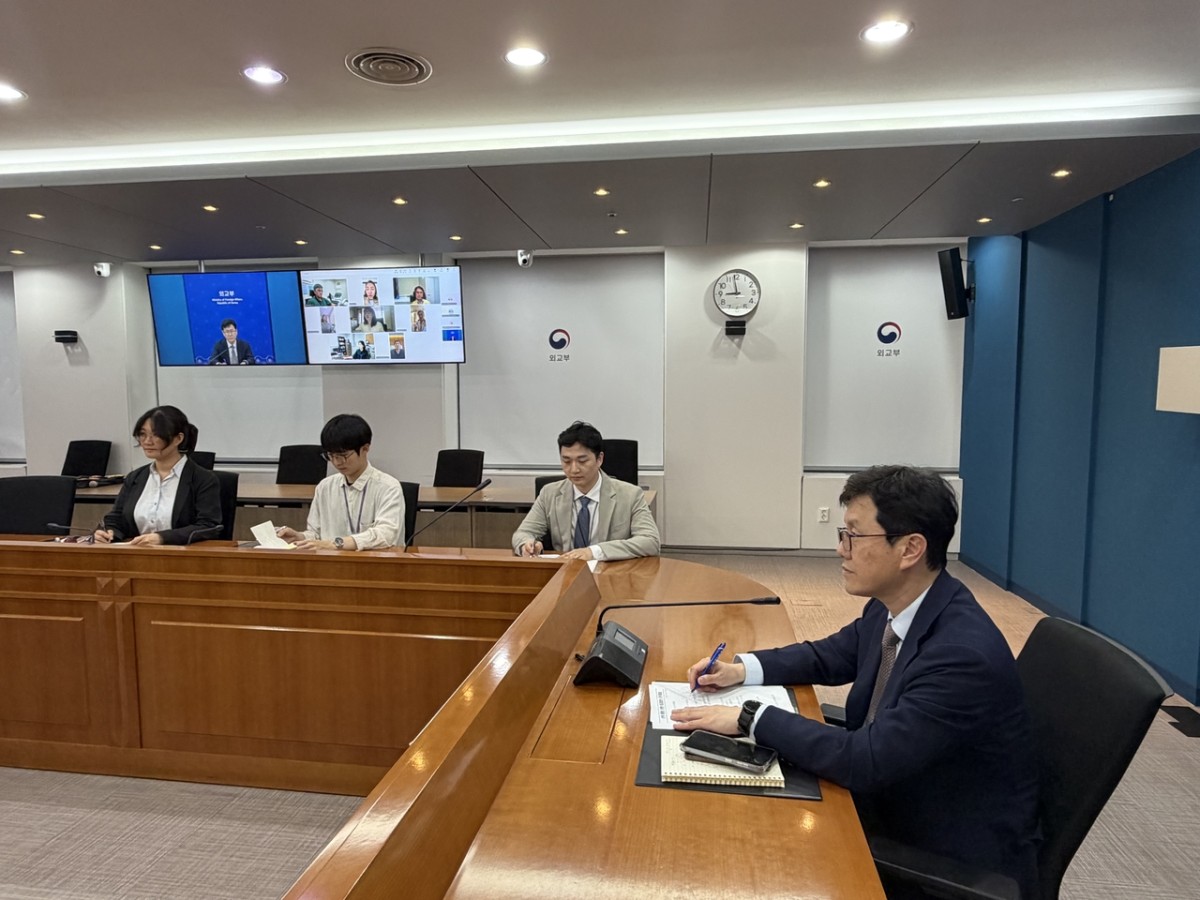
For South Korea, the Iranian statement sharpens an already acute dilemma. The escalation in the strait has fundamentally complicated Seoul's calculus, which had been based partly on expectations that the waterway would stabilize following the initial US pause in strikes. Instead, the security environment has deteriorated, and Seoul now finds itself caught between an assertive US administration demanding concrete support and an Iran that is directly warning of consequences for any Korean involvement.
Seoul's Cautious Recalibration and Narrowing Options
The South Korean Defense Ministry responded to the Iranian warning with notably cautious language on Monday. Spokesperson Chung Bin-na stated that no specific measures have been decided, emphasizing that Seoul is "closely consulting with the international community, including the US, on ways to make a substantive contribution toward the swift restoration of freedom of navigation in the Strait of Hormuz and peace and stability in the Middle East." This careful phrasing marks a discernible shift from last week's tone, when the ministry indicated that details of potential contributions would be disclosed "at an appropriate time."
The recalibration reflects a sober reassessment of available military assets. A Navy logistics support ship, initially considered a leading option for deployment, has fallen down the list of possibilities. Defense analysts note that such a vessel would require more than 100 crew members, and there are concerns about the ship's age and operational readiness. Options still under active review include maritime patrol aircraft capable of wide-area surveillance and submarine or surface detection, explosive ordnance disposal teams, and uncrewed systems designed for detecting and clearing naval mines. Each option carries different risk profiles and political implications, and none offers a simple solution to Seoul's predicament.
US Pressure Intensifies as Alliance Dynamics Shift
The American pressure on Seoul shows no signs of abating. A White House official told Voice of America on Sunday that Washington was still awaiting a commitment of resources from South Korea, explicitly citing Seoul's heavy reliance on Middle Eastern oil as a rationale for contribution. This follows President Trump's August 30 interview, in which he singled out South Korea for declining a US request and stated that he would "remember" Seoul's response. The personalization of the issue by the American president adds a layer of unpredictability to an already complex alliance relationship.
The Hormuz question does not exist in isolation. It runs alongside ongoing Seoul-Washington consultations on uranium enrichment capabilities, nuclear fuel for South Korea's planned nuclear-powered submarines, and the long-delayed transfer of wartime operational control of Korean forces. These parallel tracks create a complex bargaining environment in which concessions on one issue may be linked, implicitly or explicitly, to progress on others. The August 17 decision to reduce the Ulchi Freedom Shield exercise from eleven days to five, ordered by President Trump, signaled a broader recalibration of the alliance's security posture on the Korean Peninsula.
Domestic Political Pressures and Constitutional Constraints
Within South Korea, the deployment question has ignited domestic political controversy. Some lawmakers from the ruling Democratic Party of Korea have begun questioning the wisdom of a deployment, while progressive parties voice stronger opposition. Yang Moo-jin, distinguished professor at the University of North Korean Studies, has been particularly outspoken, characterizing a warship dispatch as an overseas troop deployment and "a reckless venture that serves neither South Korea's national interests nor any justifiable cause." He has urged Seoul to treat the question separately from the broader alliance relationship and to clarify whether any operation would be limited to protecting freedom of navigation, would expand the existing Cheonghae Unit (Korea's naval anti-piracy contingent operating off the Middle East), or would constitute a separate military operation entirely. Most fundamentally, he argued that "securing public consent should be a basic prerequisite."
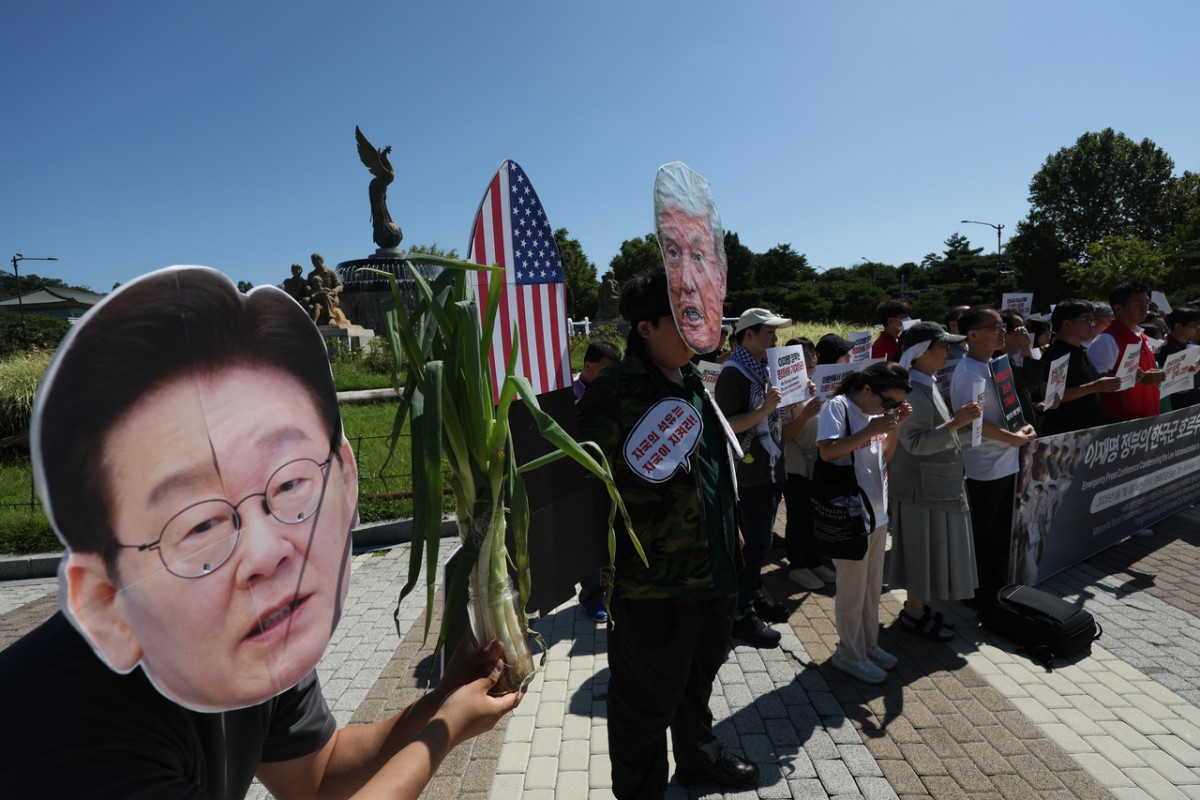
Civic groups have taken to the streets, holding emergency protests outside Cheong Wa Dae in Seoul and in Daejeon on Monday. The domestic opposition reflects deeper constitutional stakes. Under Article 60 of the South Korean Constitution, the National Assembly must consent to the overseas deployment of the armed forces. This requirement means that any significant military commitment to the Strait of Hormuz would require legislative approval, injecting an element of democratic deliberation into what might otherwise be an executive decision. The constitutional framework thus provides a check on presidential authority and ensures that the deployment question becomes a matter of public and parliamentary debate.
Historical Context and the HMM Namu Incident
The current crisis must be understood against the backdrop of Korea-Iran relations, which have remained pragmatic for decades despite periodic tensions. The relationship has weathered international sanctions on Iran, diplomatic disagreements, and regional conflicts. However, the May 2026 incident involving the South Korean-operated vessel HMM Namu, which was struck near the strait, brought the risks of the region into sharp focus. The Iranian ambassador was summoned to Seoul's Foreign Ministry in response, underscoring the seriousness with which Seoul viewed the attack on its commercial interests.
The HMM Namu incident demonstrated that South Korea's stake in the Strait of Hormuz is not abstract but concrete and immediate. Korean shipping and energy security depend on the free flow of traffic through this narrow waterway. Yet the Iranian warning now raises the specter that any Korean military presence, however limited or defensive in nature, could transform South Korea from a concerned bystander into a direct participant in the US-Iranian confrontation. This transformation would carry risks not only for Korean forces in the region but also for Korean commercial interests throughout the Middle East and for the broader bilateral relationship with Iran.
Diplomatic Maneuvering and the Road Ahead
President Lee Jae Myung, currently on a state visit to France, was scheduled to meet with French President Emmanuel Macron on Tuesday. Hormuz cooperation was potentially on the agenda, as France has been a proponent of a multinational maritime mission in the strait. European involvement could provide Seoul with a degree of multilateral cover, diffusing the perception that any Korean contribution is purely a response to American pressure. However, the extent to which such multilateral frameworks would satisfy either Washington's demands or Tehran's concerns remains uncertain.
As Seoul navigates this treacherous diplomatic terrain, several fundamental questions remain unresolved. What precisely constitutes a "substantive contribution" in Washington's view? Would a contribution limited to mine-clearing operations or surveillance activities satisfy American demands, or does the Trump administration expect a more visible military presence? How would any Korean deployment be squared with the constitutional requirement for National Assembly consent? And critically, how would Iran respond to any Korean involvement, regardless of its stated scope or purpose?
The coming weeks will be decisive. The Cheong Wa Dae official's Friday statement that Seoul was considering options for a "substantive contribution," including military support, and could act "within a range that would not significantly undermine readiness on the Korean Peninsula," suggests that some form of commitment is being actively prepared. Yet the Iranian warning, the domestic political opposition, and the constitutional requirements all point toward a more cautious and deliberative approach. South Korea's dilemma is not merely about what to do in the Strait of Hormuz; it is about how to balance alliance obligations, national interests, energy security, domestic politics, and constitutional governance in an increasingly volatile international environment.
For an academic observer of Korean foreign policy, the current situation represents a classic test of Seoul's ability to navigate between great power pressures while maintaining its own strategic autonomy. The outcome will have implications not only for the immediate crisis in the Gulf but also for the future trajectory of the US-ROK alliance and South Korea's role in regional and global security affairs. As the Global1.news September 4 analysis noted, the decisions made in the coming weeks will reverberate far beyond the waters of the Strait of Hormuz.
By Prof. David Park, Staff Writer
This article was produced with AI-assisted research and editorial support. Sources: KOREA NOW (Yonhap News Agency); The Korea Herald, September 7, 2026; Yonhap News Agency.
What's Your Reaction?
 Like
0
Like
0
 Dislike
0
Dislike
0
 Love
0
Love
0
 Funny
0
Funny
0
 Wow
0
Wow
0
 Sad
0
Sad
0
 Angry
0
Angry
0

East Asia/Technology Correspondent at Global1.News. Seoul-based voice covering Korean politics, technology, business, and culture. Analyzes how technology and geopolitics intersect across East Asia.













Comments (0)