
How the Smithsonian became the latest front in Trump’s culture war
When the Smithsonian’s “Electric Dr. Franklin” exhibit opened in November 2021, it wasn’t just another museum show—it was a lightning‑rod for a culture war that’s now being fanned into a full‑blown storm by the Trump administration.
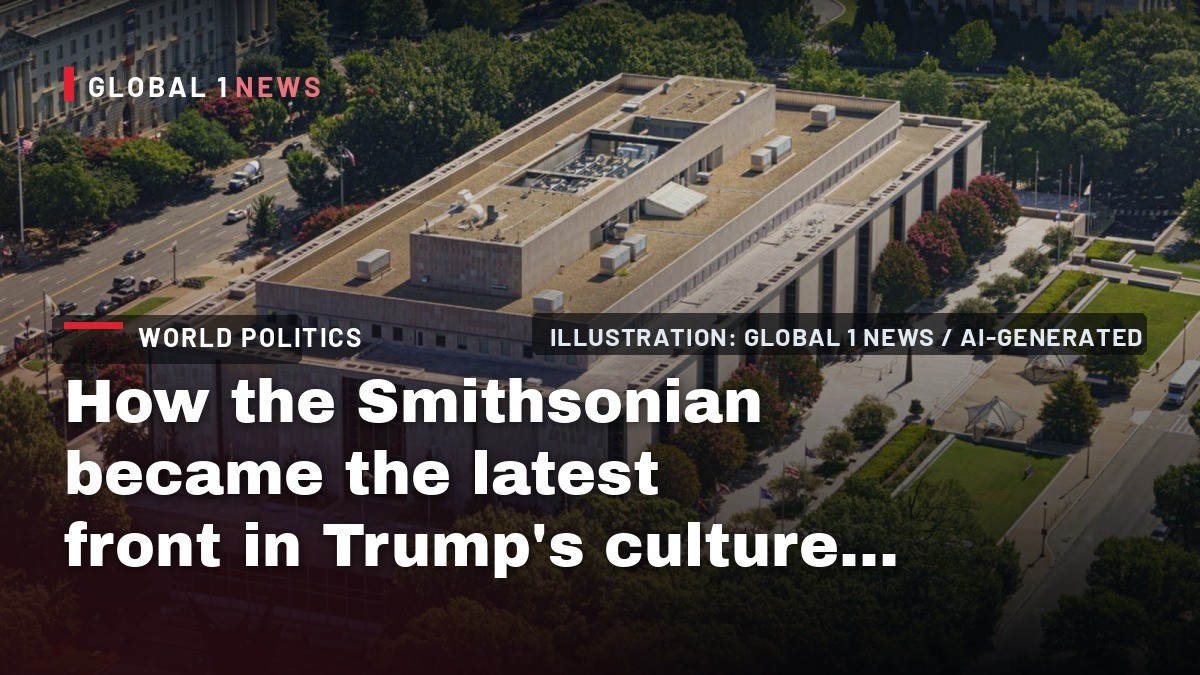
When the Smithsonian’s “Electric Dr. Franklin” exhibit opened in November 2021, it wasn’t just another museum show—it was a lightning‑rod for a culture war that’s now being fanned into a full‑blown storm by the Trump administration. As a founder who spends his days wrestling with real‑world infrastructure, I see a familiar pattern: a well‑intentioned narrative twist gets weaponised by a political machine, and the fallout lands squarely on the shoulders of organisations that have no margin for error. The Smithsonian’s plight is a cautionary tale for any independent provider that relies on public goodwill or government contracts: once you become a flashpoint, the budget cuts and regulatory headaches that follow can cripple even the most venerable institutions.
From “Electric Dr. Franklin” to a White House Report
The exhibit, launched in late 2021, framed Benjamin Franklin’s electrical breakthroughs as “enabled by slavery,” noting that he owned enslaved people before becoming an abolitionist. It went a step further, speculating that enslaved labor may have been used in his experiments, even though the museum admitted it could never prove the exact role of those individuals. The exhibit closed in 2025, but the online archive remains, preserving the claim that “Franklin wrote about experiments in which he took shocks and used family and friends…Indentured servants and enslaved people…could also have been used.”
That language caught the eye of the Trump administration. In July 2026, a 162‑page White House report slammed the museum for “ideological capture,” accusing it of swapping “straightforward historical education” for “extreme political activism.” The report’s timing—just before the nation’s 250th anniversary—was no accident; it was meant to amplify the narrative that the Smithsonian had abandoned its core mission in favour of a divisive agenda.
The Executive Order and Its Immediate Impact
President Trump’s March 2025 executive order declared the Smithsonian had succumbed to “divisive, race‑centered ideology.” Later, on July 4, he signed another order directing the Interior Department to post warning signs outside the museum, warning visitors of the alleged capture. While those signs have yet to appear, Interior Secretary Doug Burgum’s August letter to the Board of Regents warned that other federal agencies “cannot in good conscience continue to support the Smithsonian under current leadership.” The pressure is palpable: the museum depends on the federal government for roughly 62 % of its funding—over $1 billion a year—so any hint of a budget cut is enough to send shockwaves through its operations.
Compounding the crisis, Smithsonian secretary Lonnie Bunch announced his resignation on September 8, citing the stress of the ongoing battle. His departure underscores how quickly political pressure can erode leadership stability, a risk any organisation with government ties must factor into its risk matrix.
Why the Smithsonian Was Vulnerable
Historically, the Smithsonian has been a bipartisan sanctuary, drawing about 15 million visitors annually across its 21 museums. Its governance structure—17 members, including the Supreme Court chief justice, nine private citizens, and six congressional members—was designed to insulate it from partisan swings. Yet the institution’s reliance on federal appropriations left it exposed. The “Electric Dr. Franklin” exhibit was not the first flashpoint; the 1995 Enola Gay controversy at the Air and Space Museum also sparked political backlash, but the museum survived because the outrage was short‑lived and the funding pipeline remained intact.
The difference this time is the convergence of a long‑standing internal debate about the museum’s narrative focus and an external political wave intent on “corrective” action. The National Museum of American History, originally the National Museum of History and Technology, has wrestled for decades over whether to present a unified national story or a more fragmented technological showcase. That ambivalence left the museum without a clear strategic defence when the Trump administration decided to strike.
Lessons for Independent Hosting Providers
Running a data centre or cloud platform isn’t about curating exhibits, but the risk calculus is similar. If you depend on a single revenue stream—especially one tied to government contracts—you become a target when policy shifts. The Smithsonian’s 62 % funding reliance mirrors a hosting firm that leans heavily on a single federal contract. When that contract is threatened, you need contingency plans: diversified revenue, multi‑region redundancy, and a clear narrative that separates your core service from political debates.
In practice, that means building a pricing model that isn’t vulnerable to “hyperscaler” undercutting. The industry loves to tout rock‑bottom rates, but those numbers often hide hidden fees or unsustainable margins. When a political windstorm hits, you can’t afford to be the cheapest option if it means you’ll be the first cut. Instead, focus on reliability, transparent SLAs, and a value proposition that resonates with customers who need stability over flash‑in‑the‑pan discounts.
Strategic Communication: Own the Narrative
The Smithsonian’s misstep was not the exhibit itself but the failure to pre‑emptively frame it within a broader educational context that could withstand political spin. They let the narrative be seized by opponents, who then painted the entire institution as ideologically compromised. For a tech provider, the lesson is to own your story before critics can rewrite it. Publish clear case studies, maintain an open‑source knowledge base, and engage directly with stakeholders—especially regulators and procurement officers—so that when a policy change looms, you’ve already built goodwill.
Transparency is your ally. When the museum posted the exhibit online after its closure, it gave opponents a permanent reference point. Similarly, keeping your infrastructure documentation publicly accessible can prevent misinformation from taking root. It also demonstrates confidence in your processes, a trait that resonates with risk‑averse enterprise buyers.
Actionable Steps for Founders Facing Political Risk
1. **Diversify Funding** – Seek private contracts, subscription models, or regional partnerships to reduce dependence on any single government source. The Smithsonian’s budget reliance was a clear vulnerability.
2. **Build Redundant Architecture** – Multi‑region or multi‑cloud deployments ensure service continuity if a regulator imposes restrictions on a particular data centre or jurisdiction.
3. **Develop a Crisis Playbook** – Map out escalation paths, communication protocols, and legal safeguards. The Smithsonian’s leadership scramble after the executive order illustrates the cost of being unprepared.
4. **Engage Policy Makers Early** – Establish relationships with legislators and agency heads before a controversy erupts. Proactive dialogue can soften blows and provide early warnings of policy shifts.
Looking Ahead: The Smithsonian’s Uncertain Future
The museum’s board now faces a crossroads: appoint a new secretary who can navigate the political minefield while preserving the institution’s scholarly mission, or double down on a defensive posture that may alienate both progressive scholars and conservative critics. The outcome will ripple beyond the Mall, influencing how other cultural and research institutions manage political pressure.
For the tech sector, the Smithsonian saga is a stark reminder that cultural relevance can become a liability when it intersects with partisan agendas. As founders, we must treat political risk as a core component of our business strategy, not an afterthought. By diversifying revenue, building resilient infrastructure, and owning the narrative, we can keep the lights on—even when the ideological thunderheads roll in.
— Allan Ali, Founder
This article was produced with AI-assisted research and editorial support. Reporting is based on the source material cited below. Sources: Ars Technica; arstechnica.com; Global1.News (29 September 2026).
By Allan Ali, Global1.News
What's Your Reaction?
 Like
0
Like
0
 Dislike
0
Dislike
0
 Love
0
Love
0
 Funny
0
Funny
0
 Wow
0
Wow
0
 Sad
0
Sad
0
 Angry
0
Angry
0

Publisher of Global1.News. Automation architect, systems builder, and the guy making sure the truth gets published.













Comments (0)