
Netanyahu blocking inquiry into Oct. 7 events, says former Israeli intelligence officer
Former Israeli military intelligence officer Barak Seri has accused Prime Minister Benjamin Netanyahu of actively obstructing the creation of an official commission of inquiry into the Oct.
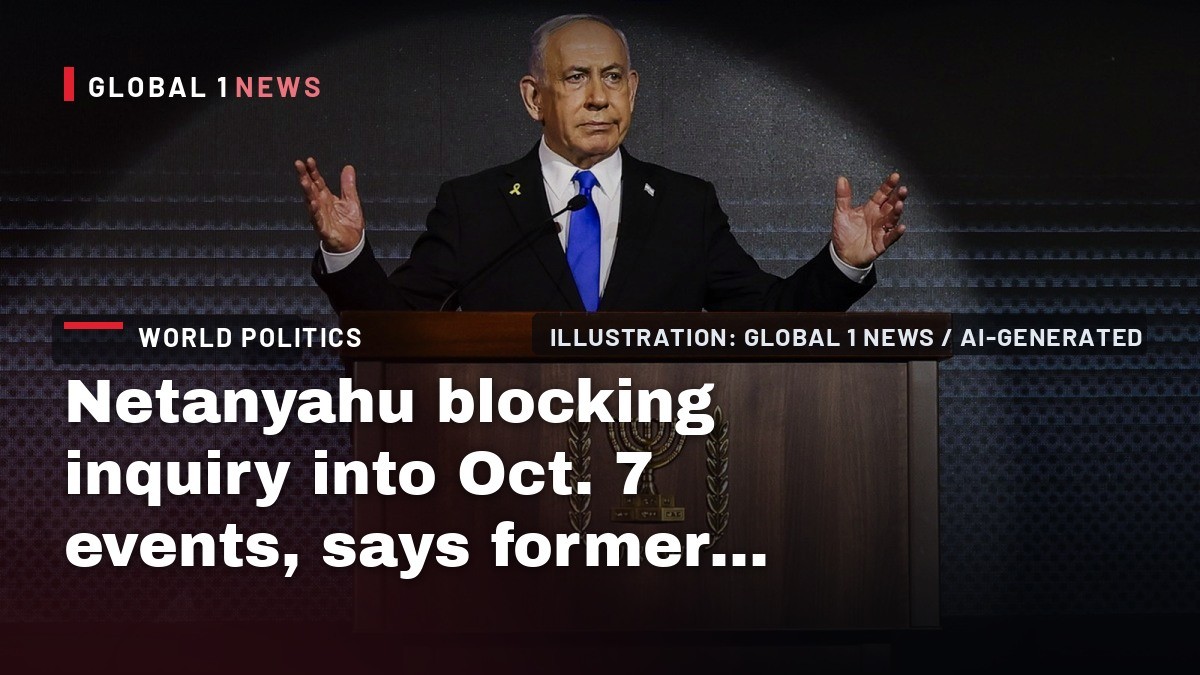
Former Israeli military intelligence officer Barak Seri has accused Prime Minister Benjamin Netanyahu of actively obstructing the creation of an official commission of inquiry into the Oct. 7, 2023 attacks. In a post on the social media platform X, Seri asserted that Netanyahu was “warned and alerted” before the assaults but chose to ignore those warnings, a claim that underscores the growing domestic and international demand for accountability over the events that sparked a devastating war in Gaza.
Allegations of a Deliberate Block
Seri’s statements, reported by Anadolu, allege that Netanyahu is personally preventing the establishment of an inquiry commission. According to Seri, the prime minister received explicit warnings about a possible Hamas attack yet failed to convene a meeting with senior security officials to discuss the intelligence. The former officer’s accusation suggests a deliberate choice to sideline the warning process, raising serious questions about the decision‑making hierarchy within Israel’s security apparatus.
These claims echo earlier reporting by the Israeli daily Yedioth Ahronoth, which noted that Netanyahu did not share the warnings with the Shin Bet, Mossad or the Military Intelligence Directorate (Aman). The omission of such critical information, if verified, would represent a breach of standard protocol for handling imminent threats, and it fuels calls for an independent investigation into the prime minister’s handling of pre‑Oct. 7 intelligence.
International Dimensions of the Warning
The Atlantic has reported that former Egyptian intelligence chief Abbas Kamel allegedly visited Israel eleven days before Oct. 7 to alert Tel Aviv about a possible Hamas attack. While Egyptian officials have not commented on the claim, the report adds a regional dimension to the narrative of missed warnings, suggesting that intelligence sharing extended beyond Israel’s own agencies.
If the Egyptian warning reached Israeli leaders, the failure to act on it would not only be a domestic lapse but also a breach of broader diplomatic expectations. International law obliges states to take reasonable measures to protect civilians when credible threats are known, and the alleged disregard for external alerts intensifies scrutiny of Israel’s compliance with those obligations.
The Human Cost of Inaction
Following the Oct. 7 attacks, Israel launched a large‑scale offensive in the Gaza Strip that resulted in the deaths of nearly 74,000 Palestinians and injured around 175,000 others, according to the source material. The humanitarian devastation transformed the enclave into ruins, a reality that continues to shape the lives of survivors and the region’s political landscape.
Even after a ceasefire took effect in October 2025, Gaza’s Health Ministry reports that Israel’s daily attacks have killed more than 1,400 Palestinians and injured nearly 5,000. These ongoing casualties underscore the enduring human toll of the conflict and amplify the urgency of an inquiry that could illuminate the decision‑making processes that led to such widespread suffering.
Legal and Moral Imperatives for an Inquiry
International humanitarian law requires parties to a conflict to distinguish between combatants and civilians and to take all feasible precautions to minimize civilian harm. The scale of loss in Gaza, combined with the alleged failure to act on pre‑emptive warnings, raises serious concerns about compliance with these legal standards.
Human‑rights advocates argue that an independent commission could assess whether Israel’s actions met the threshold of proportionality and necessity, and whether the alleged suppression of intelligence contributed to the escalation. Such an inquiry would also serve a moral purpose: acknowledging the suffering of victims and providing a transparent account of governmental decisions that led to the tragedy.
Domestic Political Context
Netanyahu’s alleged obstruction of an inquiry must be understood within the broader context of Israeli politics. The prime minister has faced intense scrutiny over his handling of security matters, and the accusations from a former intelligence officer add a new layer of pressure. Critics contend that shielding the government from investigation undermines democratic accountability.
Supporters of Netanyahu might argue that the pursuit of an inquiry could be exploited for political gain or could jeopardize national security by exposing sensitive information. Nonetheless, the balance between security considerations and the public’s right to know remains a contested terrain, especially when lives have been lost on a massive scale.
Regional Repercussions
The claim that an Egyptian intelligence chief attempted to warn Israel highlights the fragile nature of regional security cooperation. If the warning was indeed conveyed and ignored, it could strain Israel’s relationships with neighboring states that seek to contribute to stability. Trust among intelligence agencies is essential for pre‑empting attacks, and perceived negligence may erode that trust.
Moreover, the ongoing violence in Gaza continues to fuel resentment across the Arab world, potentially influencing radicalization and destabilizing the broader Middle East. An inquiry that clarifies the chain of events could either mitigate or exacerbate regional tensions, depending on its findings and the transparency of its process.
Path Forward and International Expectations
International actors, including human‑rights organizations and foreign governments, have called for a thorough and impartial investigation into the Oct. 7 events and the subsequent Gaza offensive. The credibility of Israel’s security establishment and its adherence to international law hinge on its response to these demands.
For the families of the nearly 74,000 victims and the thousands still injured, an official commission could provide a measure of justice and closure. For the broader international community, it represents a test of whether a democratic state can confront uncomfortable truths about its own actions while upholding the rule of law. The coming weeks will reveal whether Netanyahu will continue to block the inquiry or permit a process that could illuminate the missed warnings and the decisions that led to one of the most devastating humanitarian crises in recent memory.
This article was produced with AI-assisted research and editorial support. Reporting is based on the source material cited below. Sources: Middle East Monitor; middleeastmonitor.com; Global1.News (28 September 2026).
By Fatima Al-Rashid, Staff Writer
What's Your Reaction?
 Like
0
Like
0
 Dislike
0
Dislike
0
 Love
0
Love
0
 Funny
0
Funny
0
 Wow
0
Wow
0
 Sad
0
Sad
0
 Angry
0
Angry
0

Gulf/MENA Correspondent at Global1.News. Based in Doha, covering Gulf politics, energy markets, diplomacy, and development across the Middle East and North Africa. Tracks the economic transformation of the Gulf states.













Comments (0)