
4 Killed in Ukrainian Strikes on Russian-Annexed Crimea
The Barrage on Crimea: An Overview Four people were killed and fuel sales suspended in annexed Crimea following a massive Ukrainian barrage on the Black Sea peninsula. Russia-backed authorities reported the incident on Sunday after Ukrainian forces targeted military and energy facilities in what stands as one of the largest attacks on the peninsula in recent months. Crimea serv
The Barrage on Crimea: An Overview
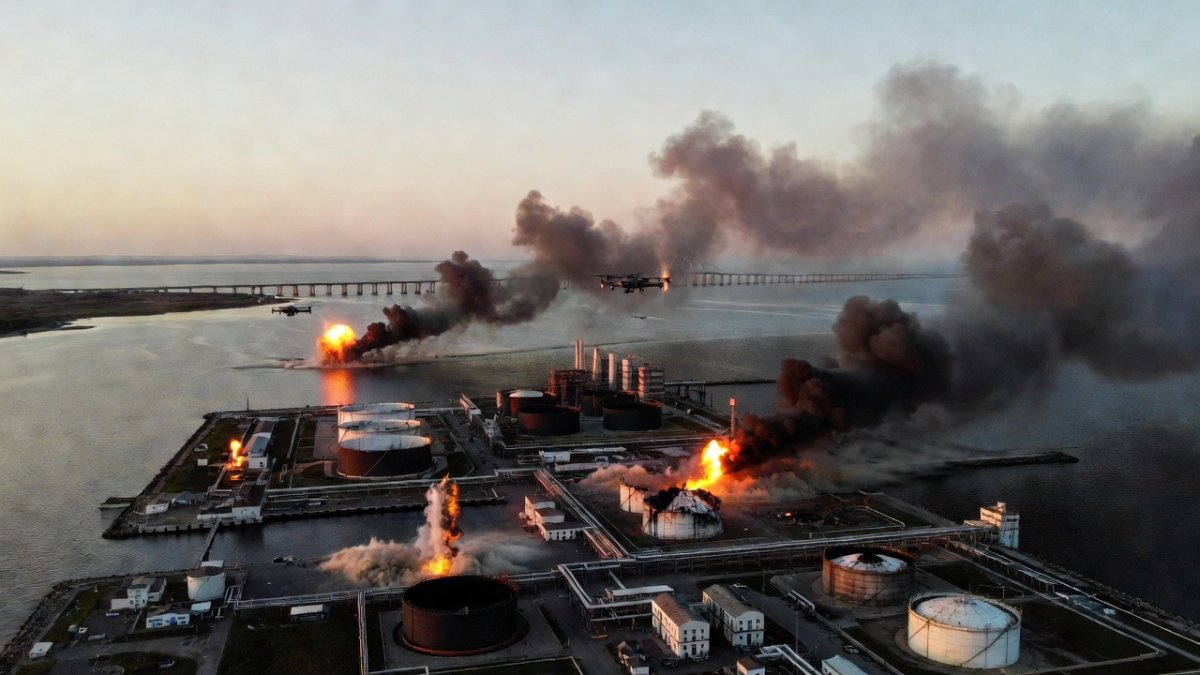
Four people were killed and fuel sales suspended in annexed Crimea following a massive Ukrainian barrage on the Black Sea peninsula. Russia-backed authorities reported the incident on Sunday after Ukrainian forces targeted military and energy facilities in what stands as one of the largest attacks on the peninsula in recent months. Crimea serves as Moscow's key logistics base for its ongoing military operations. Part of the territory was left without power, according to local utilities company Krymenergo. The mass raid also extended to an oil terminal in Russia's southern Krasnodar region, killing one person on a ferry there.
Russia-backed Crimea Governor Sergey Aksyonov described the event as resulting from an enemy's drone attack on the Kerch Peninsula, noting casualties among the civilian population. He stated that four people were killed and 28 wounded based on the latest information. In a separate statement, Aksyonov announced that starting from 09:00 am on the day in question, fuel sales at Crimean petrol stations had been suspended, with fuel available only to state enterprises. These claims attribute the suspension directly to the attack's effects.
These strikes highlight Ukraine's upgraded long-range drone capabilities, allowing strikes along the land corridor through occupied southeastern Ukraine that Russia uses to supply Crimea. For the broader war, such actions underscore a pattern of retaliatory measures that could prolong the conflict without immediate resolution. Ordinary Russians may face indirect pressures through disrupted supply chains, while the energy sector experiences targeted vulnerabilities that affect revenue streams funding military efforts.
(Global 1 News) — Aerial view of drone strike aftermath on Crimean coast
Casualties and Immediate Human Cost
Four deaths in Crimea and one additional fatality on a ferry in the Krasnodar region, alongside 28 wounded in Crimea. Overnight Russian strikes in eastern Ukraine separately killed three people. These figures represent verified outcomes from the exchanges reported by authorities on both sides. Power outages affected parts of Crimea, compounding the immediate disruptions for residents in the annexed territory.
Sergey Aksyonov emphasized casualties among civilians from the drone attack, providing the specific numbers of four killed and 28 wounded. Ukrainian President Volodymyr Zelensky attributed the Ukrainian actions to long-range sanctions targeting military logistics, oil industry, and air defense, framing them as a just response to Russia's attacks. He noted strikes on the Crimean Bridge, radar, and air defense systems without claiming civilian targets.
The human cost extends beyond direct casualties to include widespread inconvenience from power loss and restricted movement. For ordinary Russians, these events may foster a sense of vulnerability in regions previously considered secure rear areas. In the energy sector, such incidents reveal how attacks on infrastructure can cascade into daily hardships, potentially eroding public support for prolonged engagement in the conflict while highlighting the war's expansion into civilian-adjacent zones.
Disruption to Fuel Distribution in Annexed Territories
Fuel sales at Crimean petrol stations were suspended following the attacks, with supplies limited to state enterprises. This measure was implemented amid the barrage that also impacted an oil terminal in the bordering Krasnodar region. The suspension reflects direct operational responses to the damage sustained at energy facilities.
Sergey Aksyonov detailed the suspension starting from 09:00 am, restricting sales exclusively to state enterprises as a temporary measure. These statements position the pause as a necessary precaution tied to the Ukrainian drone activity on the Kerch Peninsula.
Fuel distribution halts in annexed areas like Crimea can strain local economies and logistics supporting military movements. For ordinary Russians, this translates to potential shortages at civilian pumps, mirroring rationing seen elsewhere. The energy sector faces pressure as refining and distribution networks are tested, which may influence Russia's ability to sustain war funding through oil revenues. Broader war implications include heightened focus on protecting supply lines, possibly diverting resources from front-line operations.
Ukraine's Strategic Targeting of Logistics and Energy
Ukrainian strikes on military logistics, oil industry sites, and air defense in Crimea, including the Crimean Bridge and facilities in the Krasnodar region. These actions followed upgrades to long-range drone capabilities, enabling repeated hits on targets deep behind front lines, such as a large refinery in Moscow hit twice earlier this week.
Volodymyr Zelensky described the operations as long-range sanctions aimed at the occupiers' military logistics, oil industry, and air defense. He positioned the attacks as a just response to Russia's brutal actions against Ukrainian people, denying any intent to target civilians while noting strikes on radar and air defense systems.
By focusing on energy and logistics hubs, Ukraine aims to disrupt Russia's supply corridors to Crimea and southeastern occupied territories. This strategy could weaken the energy sector's output, reducing funds available for the war effort. For ordinary Russians, the result may be rising fuel costs or rationing, fostering domestic unease. In the broader war context, such strikes signal a shift toward sustained attrition that keeps negotiations frozen and fighting at a standstill.
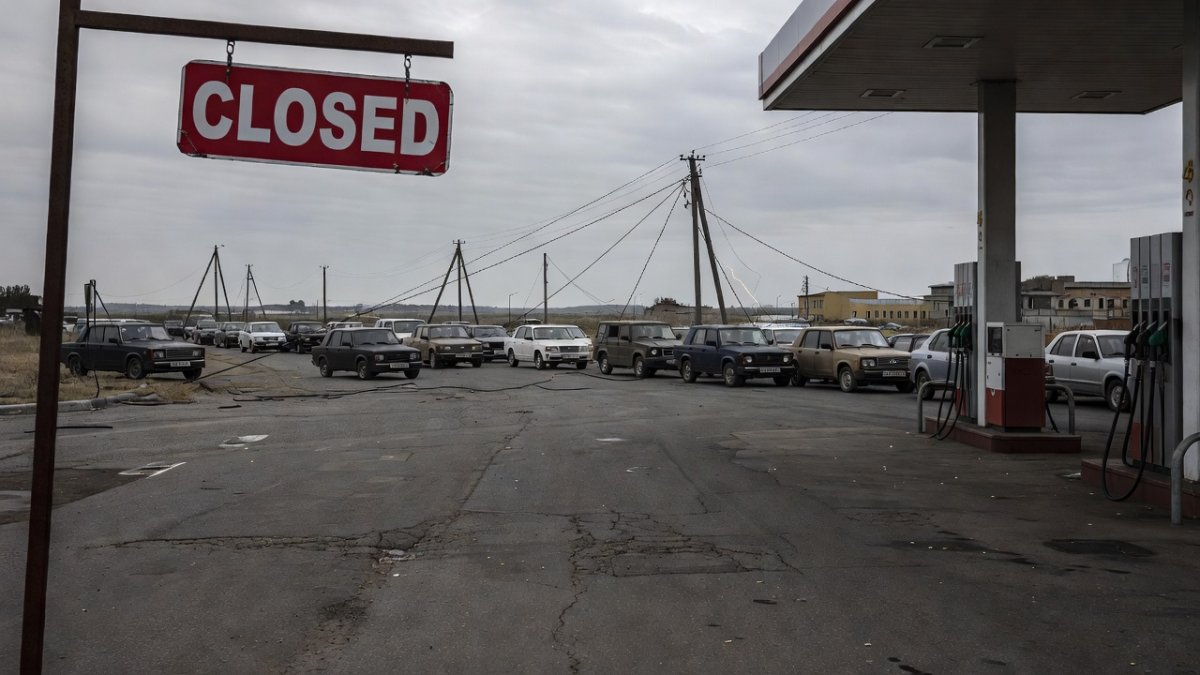
(Global 1 News) — Fuel station in Crimea closed following fuel sale suspension
Broader Impacts on Russia's Energy Infrastructure
Ukrainian drone attacks have struck energy facilities across Russia, with about a third of Russian oil refining capacity offline due to such strikes, according to Energy Intelligence. Fuel exports have been banned since April, and some petrol stations introduced rationing this month in the world's third-biggest oil producer.
Energy Intelligence, a U.S.-based research firm, quantified the offline refining capacity at approximately one third earlier this month. Official Russian statements, including those from Sergey Aksyonov, linked local fuel suspensions directly to the recent barrage without providing further national figures.
These cumulative hits on refineries and terminals could erode Russia's oil revenue base, which finances military operations. The energy sector's vulnerabilities may lead to export restrictions persisting, affecting global markets indirectly. Ordinary Russians encounter practical effects like limited fuel access, which could influence morale and perceptions of the conflict's sustainability. For the war overall, this pattern risks entrenching a cycle of retaliation that delays any path to de-escalation.
Consequences for Ordinary Citizens Amid the Conflict
Power outages in parts of Crimea and fuel sale suspensions affecting daily access for residents. These outcomes followed the barrage and extended to related incidents in the Krasnodar region, creating layered disruptions for civilians in affected zones.
Sergey Aksyonov highlighted civilian casualties and the need for fuel restrictions to state enterprises only. Volodymyr Zelensky's statements framed Ukrainian actions as responses to Russian aggression, emphasizing military targets while acknowledging the reciprocal nature of the violence.
Such events burden ordinary Russians with higher living costs and uncertainty in annexed or border regions. The energy sector's strain may translate into broader economic ripple effects, including potential inflation in fuel-dependent goods. In the context of the wider war, these pressures could contribute to war fatigue among populations far from the front lines, underscoring the conflict's reach into civilian life without advancing peace talks.
The Stalemate in Peace Efforts and Future Implications
Talks on ending Europe's biggest conflict since World War II remain frozen, with fighting on the front line effectively at a standstill. Ukrainian capabilities now allow strikes at will along key Russian supply routes, while Russian forces continue operations supported by Crimea's logistics role.
Volodymyr Zelensky positioned the strikes as necessary countermeasures, and Sergey Aksyonov reported the defensive and restrictive measures in Crimea. Energy Intelligence provided data on refining capacity losses without speculating on diplomatic outcomes.
Continued targeting of energy and logistics assets may prolong the impasse by raising the costs of sustained warfare for Russia. For ordinary Russians, this could mean ongoing economic adjustments and restricted resources. The energy sector's challenges might force strategic reallocations that affect long-term military sustainability. Overall, the war risks deepening into a resource-draining stalemate unless external factors shift the balance toward renewed negotiations.
By Irina Volkov, Staff WriterThis article was produced with AI-assisted research and editorial support. Reporting is based on sources cited in the article.
What's Your Reaction?
 Like
0
Like
0
 Dislike
0
Dislike
0
 Love
0
Love
0
 Funny
0
Funny
0
 Wow
0
Wow
0
 Sad
0
Sad
0
 Angry
0
Angry
0
Russia/Eastern Europe Correspondent at Global1.News. Covering Russian politics, energy, security, and the shifting dynamics of the post-Soviet space. Provides clear-eyed analysis on one of the world's most opaque regions.











Comments (0)