
Strait of Hormuz: Iran Re-Closes Waterway Days After Ceasefire Reopening
In the heart of the Middle East, control over the narrow Strait of Hormuz remains the decisive lever in the ongoing US-Iran confrontation that erupted in February 2026. The waterway’s 21-mile width at its narrowest point carries roughly 20 percent of global oil, making every closure or reopening a direct threat to worldwide energy security. Recent developments have once again p
In the heart of the Middle East, control over the narrow Strait of Hormuz remains the decisive lever in the ongoing US-Iran confrontation that erupted in February 2026. The waterway’s 21-mile width at its narrowest point carries roughly 20 percent of global oil, making every closure or reopening a direct threat to worldwide energy security. Recent developments have once again placed this chokepoint at the center of regional and international calculations.
Iran Re-Closes Strait of Hormuz, Stalling Global Shipping Again
Beirut, Lebanon – June 24, 2026 — Four days after a preliminary ceasefire briefly reopened the Strait of Hormuz, Iran announced its re-closure on June 20, citing Israeli violations. The move stranded dozens of vessels that had begun transiting following the June 16 agreement and reversed the short-lived resumption of maritime traffic through the critical waterway.
Background: The War and the Strait
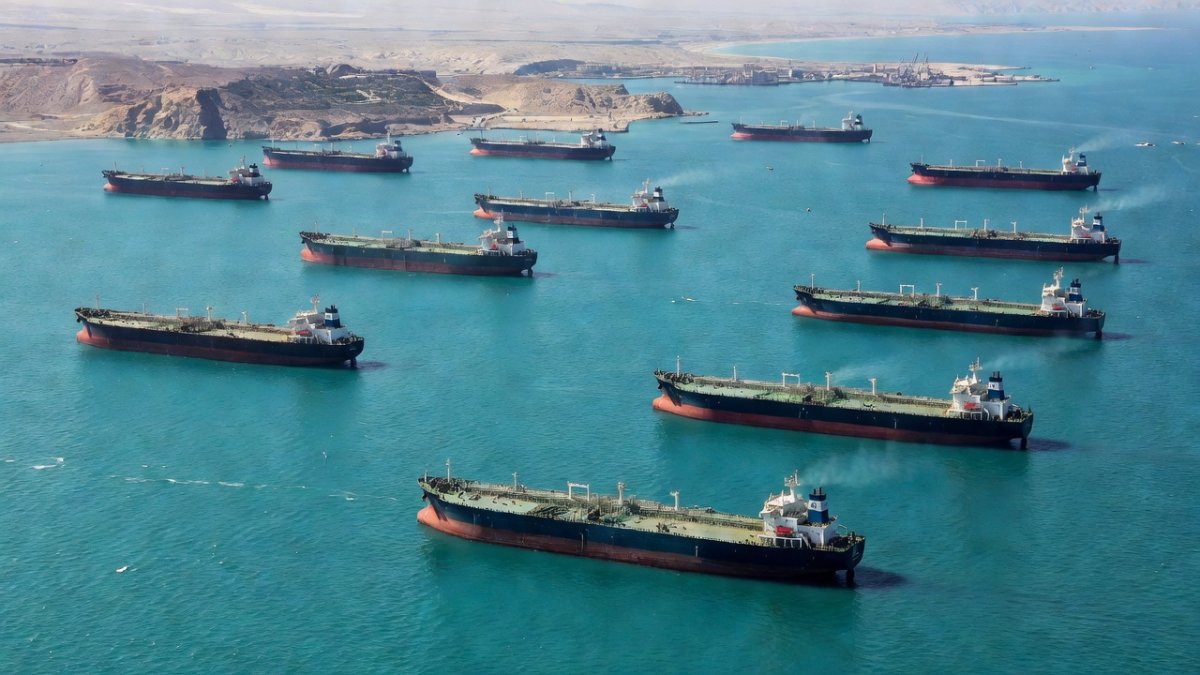
The US-Iran war began in February 2026 after nuclear talks collapsed. Iran immediately imposed a blockade on the Strait of Hormuz, prompting a sustained US military campaign that struck more than 8,000 Iranian targets. US forces also destroyed 130 vessels during operations to keep sea lanes open. Throughout the conflict the 21-mile-wide strait has served as Iran’s primary asymmetric tool, allowing Tehran to threaten 20 percent of global oil flows without direct confrontation on land. The blockade quickly raised insurance premiums and forced rerouting around the Cape of Good Hope, adding weeks to voyages and billions in costs. Beyond immediate military strikes, the conflict exposed deep vulnerabilities in global supply chains, as even brief disruptions triggered cascading effects on petrochemical industries and airline fuel costs worldwide. Analysts emphasize that Iran’s strategy deliberately avoids symmetric warfare, instead leveraging geography to impose asymmetric economic pain on adversaries and allies alike.
Historical Context: The Strait as Strategic Lever
Iran has long viewed the Strait of Hormuz as a historical instrument of leverage, dating back to the 1980s Tanker War during the Iran-Iraq conflict when Revolutionary Guard speedboats targeted vessels to internationalize the fighting. In 2011-2012, Tehran again threatened closure amid nuclear sanctions, conducting naval exercises that demonstrated its ability to mine the narrow channel and deploy anti-ship missiles. These precedents reveal a consistent doctrine: the strait functions not merely as a transit route but as a pressure valve that Tehran can open or shut to extract concessions. Past episodes show that even rhetorical threats have sufficed to spike global prices, underscoring how Iran’s geographic advantage compensates for conventional military inferiority. Contemporary analysts trace this approach to a broader “forward defense” doctrine that prioritizes maritime denial over territorial conquest.
The June 16 Ceasefire and Brief Reopening
On June 16 a preliminary ceasefire was signed between the United States and Iran, leading to the immediate reopening of the Strait of Hormuz. Maritime data firm Kpler recorded 172 vessels crossing within days. President Trump publicly urged commercial shipping to resume, telling vessels to “start your engines” in remarks reported by NPR on June 17. The rapid movement of tankers and bulk carriers demonstrated pent-up demand for the shortest route between Gulf producers and Asian markets. For a brief window, the 20 percent of global oil normally transiting the strait began flowing again at pre-war volumes. Shipping executives described the surge as a “relief valve” moment, with charter rates temporarily easing as operators raced to fulfill backlogged contracts. Yet the speed of the reopening also highlighted underlying fragility, as many vessels carried minimal insurance coverage and relied on ad-hoc security guarantees that proved fleeting.
Iran's June 20 Re-Closure: Motives and Timing
Iran’s Foreign Ministry announced the re-closure on June 20, explicitly linking the decision to alleged Israeli violations of the ceasefire. The timing came just four days after the strait reopened and after 172 vessels had already passed. Iranian officials framed the move as a necessary response to actions by Prime Minister Netanyahu’s government, though no independent verification of the cited violations has been released. The decision immediately halted new transits, leaving ships that had entered the strait before the announcement stranded or forced to reverse course. Diplomats interpret the rapid reversal as calibrated signaling designed to remind Washington that Tehran retains escalation dominance over the waterway. By acting within days rather than weeks, Iran avoided allowing commercial momentum to solidify, thereby preserving its bargaining position ahead of any renewed negotiations.
Energy Markets and the Oil Price Calculus
Brent crude has traded in the $72-78 per barrel range since the June 20 re-closure, reflecting both the limited duration of the earlier reopening and continued uncertainty. The strait’s role in carrying 20 percent of global oil means even short interruptions register quickly in futures markets. Gulf producers have maintained steady output, yet the inability to use the shortest export route continues to pressure logistics. Analysts note that any prolonged closure would likely push prices higher, while a durable reopening could stabilize the current band. Forward curves already price in a modest risk premium, with traders monitoring satellite imagery of Iranian naval movements for early warning signs. Refiners in Asia, particularly in India and China, have begun drawing down strategic reserves, illustrating how even contained volatility propagates through complex global energy networks.
Insurance, Shipping, and Commercial Realities
War-risk insurance premiums for Hormuz transits have risen 4,000 times above pre-war levels, according to The National. Shipping companies now face daily decisions between paying exorbitant rates or adding thousands of nautical miles around Africa. Kpler tracking shows vessels that crossed during the brief reopening window are now idled or awaiting new instructions. Al Jazeera and CNBC reported on June 22 that dozens of ships remain stalled, underscoring how quickly commercial traffic evaporates when the strait is closed. Industry insiders report that some owners are exploring convoy arrangements with private security contractors, though legal liabilities remain murky under current sanctions regimes. The cumulative effect has been a measurable contraction in spot-market activity, with charter rates for very large crude carriers climbing sharply even for non-Hormuz routes.
The Human and Environmental Toll
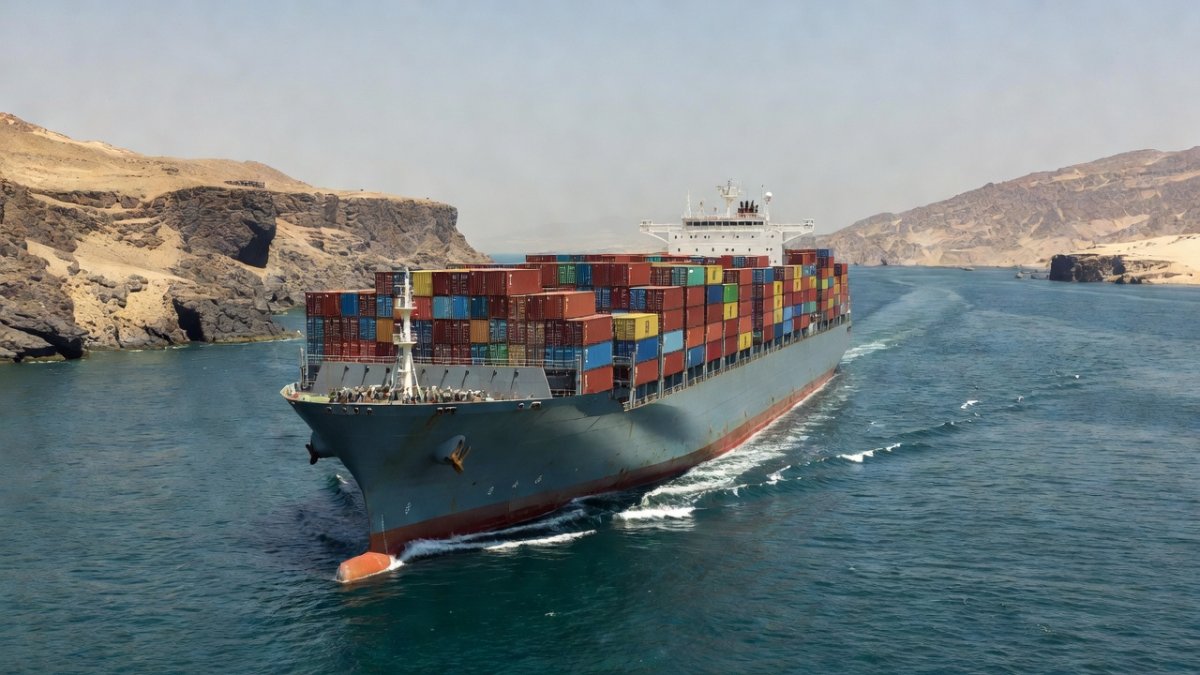
Beyond macroeconomic figures, the repeated closures have exacted a direct human cost on thousands of seafarers. Crews aboard stranded tankers report dwindling food supplies and psychological strain after weeks at anchor, with many vessels lacking adequate medical facilities for extended idling. Port authorities in Oman and the UAE have scrambled to provide humanitarian resupply, yet access remains restricted by security protocols. Environmentally, the risk of collisions or mechanical failures among idled vessels has risen, raising fears of oil spills in the ecologically sensitive waters of the Persian Gulf. Damaged tankers from earlier US-Iran exchanges continue to leak small quantities of bunker fuel, threatening coral reefs and fisheries that sustain coastal communities. Experts warn that a single major spill could dwarf previous incidents in economic and ecological damage given the strait’s confined geography and strong currents.
Gulf State Responses and Regional Dynamics
The Saudi Ministry of Energy has emphasized the need for secure passage while coordinating with ADNOC in the UAE to maintain export schedules via alternative routes. Both governments have avoided direct criticism of either Washington or Tehran, focusing instead on protecting their own energy revenues. Israel, under Prime Minister Netanyahu, has maintained its stance that any agreement must address Iranian regional activities. These positions illustrate the complex web of interests that any lasting settlement must navigate. Riyadh and Abu Dhabi have quietly accelerated investments in overland pipelines to the Red Sea and Indian Ocean, seeking to reduce future dependence on Hormuz. Meanwhile, smaller Gulf states such as Qatar and Kuwait have intensified diplomatic outreach to both Tehran and Washington, positioning themselves as potential mediators.
Great Power Dynamics: Russia, China, and the Indian Ocean
Moscow and Beijing have watched the Hormuz crisis with calculated detachment, viewing it as an opportunity to expand influence in the Indian Ocean. Russia has offered to mediate while simultaneously increasing its naval presence near the Gulf of Oman, signaling readiness to protect its own energy interests. China, the largest importer of Gulf crude, has accelerated construction of overland pipelines through Pakistan and Myanmar to bypass the strait entirely. Both powers have refrained from endorsing either side’s narrative, preferring to exploit the resulting instability to secure discounted oil cargoes and long-term infrastructure contracts. Their strategic patience contrasts with Western urgency, highlighting how the crisis is reshaping great-power competition across maritime Asia.
Strategic Calculus for Tehran and Washington
For Iran, re-closing the strait serves as leverage to pressure the United States and its partners while avoiding full-scale resumption of hostilities. The US State Department, including statements associated with Marco Rubio, has reiterated that any final agreement must guarantee freedom of navigation. President Trump’s earlier call for ships to resume operations highlighted Washington’s interest in rapid normalization of trade flows. Both sides continue to weigh the costs of escalation against the benefits of using the strait as a bargaining chip. Iranian decision-makers appear to calculate that intermittent closures inflict sufficient economic pain to extract sanctions relief without triggering decisive American military intervention. Washington, conversely, seeks to demonstrate resolve without becoming entangled in another prolonged Middle Eastern conflict.
Regional Implications
The repeated opening and closing of the Strait of Hormuz has ripple effects across the Middle East and beyond. Energy-dependent economies in Asia face higher costs, while Gulf producers must manage inventory and contractual obligations. The involvement of the Al Arabiya English GNT segment “Strait of Hormuz: Who Is Passing Through?” produced by Shadaan Hammam underscores sustained media attention on the waterway’s daily traffic. Until a more durable arrangement is reached, the 21-mile passage will remain the most sensitive pressure point in the US-Iran confrontation that began in February 2026. Regional capitals are already preparing contingency plans for a potential six-month disruption, including coordinated releases from strategic petroleum reserves and emergency fiscal support for vulnerable sectors. The pattern of brief reopenings followed by renewed closures suggests that any lasting solution will require addressing not only nuclear issues but also the underlying maritime security architecture of the Gulf.
By Malik Hassan, Staff Writer
This article was produced with AI-assisted research and editorial support. Reporting is based on sources cited in the article.
What's Your Reaction?
 Like
0
Like
0
 Dislike
0
Dislike
0
 Love
0
Love
0
 Funny
0
Funny
0
 Wow
0
Wow
0
 Sad
0
Sad
0
 Angry
0
Angry
0

Middle East Correspondent at Global1.News. Based in Beirut, covering politics, conflict, energy, and society across the Middle East. Brings context and depth to a region often reduced to headlines.













Comments (0)