
Springboks Hammer Barbarians 80-31 in Gqeberha Season Opener
Springboks Hammer Barbarians 80-31 in Gqeberha Season Opener Gqeberha, Nelson Mandela Bay — The Springboks kicked off their 2026 international season with a thunderous 80-31 victory over the Barbarians at Nelson Mandela Bay Stadium on Saturday, June 20, running in twelve tries in a performance that blended attacking flair, emerging talent, and the kind of rugby that has made So
Springboks Hammer Barbarians 80-31 in Gqeberha Season Opener
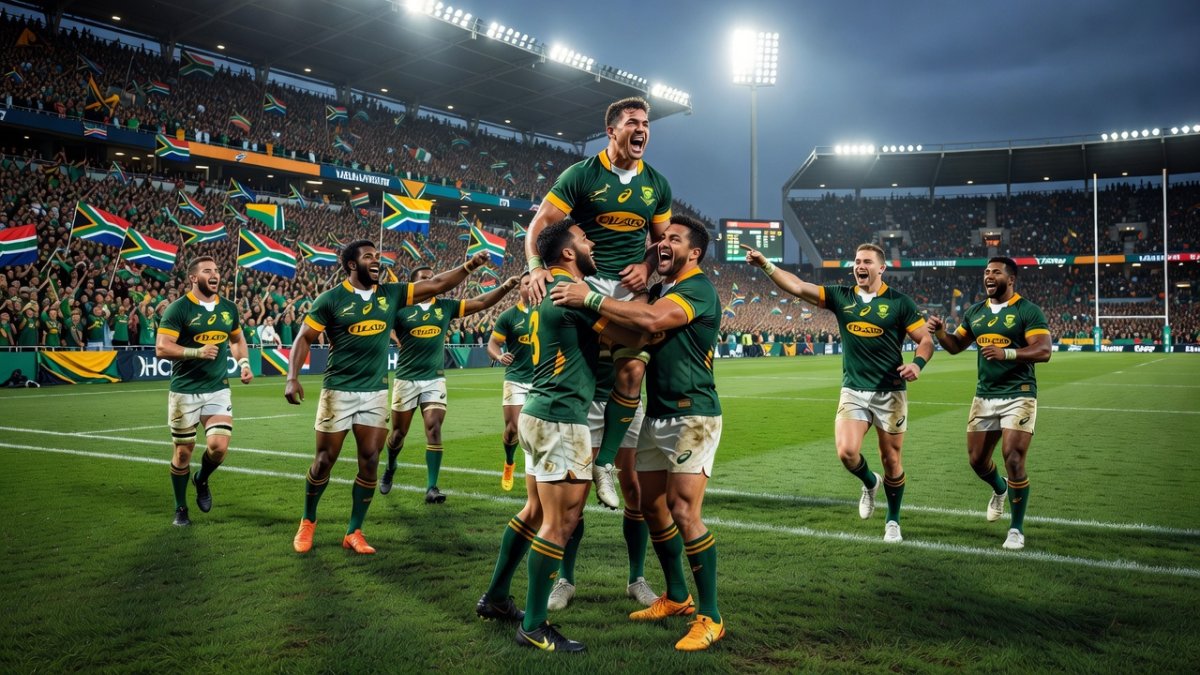
Gqeberha, Nelson Mandela Bay — The Springboks kicked off their 2026 international season with a thunderous 80-31 victory over the Barbarians at Nelson Mandela Bay Stadium on Saturday, June 20, running in twelve tries in a performance that blended attacking flair, emerging talent, and the kind of rugby that has made South African fans fall in love with this team all over again.
The final score tells one story — a dominant display from the world champions. But the match itself told many more. It spoke of the depth Rassie Erasmus is building in South African rugby. It spoke of injury concerns in critical positions. And it spoke of a team that, even when reduced to fourteen men, found a way to dig deep and respond.
Before a passionate crowd in the Eastern Cape, the Boks served notice that 2026 is about more than just winning matches — it is about building something sustainable for the Rugby World Cup cycle ahead.
Tags: Springboks, Barbarians, 80-31, Edwill van der Merwe, Cheslin Kolbe, Siya Kolisi, Quan Horn, Riley Norton, Rassie Erasmus, Gqeberha, Nations Championship, South African rugby
Explosive Start Sets the Tone in Gqeberha
From the opening whistle, the Springboks attacked with intent. Captain Siya Kolisi, playing with the kind of leadership that has defined his tenure, drew two Barbarians defenders before releasing the ball wide to Edwill van der Merwe, who finished superbly in the corner. Cheslin Kolbe, shouldering the goal-kicking duties for the day, slotted a difficult conversion from the touchline to give South Africa a 7-0 lead inside five minutes.
The Barbarians, true to their tradition, did not fold. Ali Nankivell cut through Quan Horn's defensive line and found centre partner Virimi Vakatawa, who crashed over for a converted try that levelled the scores at 7-7 in the tenth minute. It was the kind of response that could have rattled a less experienced side, but the Springboks answered immediately.
Pieter-Steph du Toit, playing with the relentless intensity South Africans have come to expect, powered over from close range to restore the lead. Kolbe converted, and the Boks were 14-7 ahead. Then came the turning point of the first quarter — TJ Perenara was sent to the sin bin for a high tackle, and Miracle Fai'ilagi followed shortly after for a cynical breakdown infringement, leaving the Barbarians with just thirteen men on the field.
The Springboks exploited the numerical advantage with clinical precision. Jasper Wiese collected a wayward Barbarians lineout inside their twenty-two-metre area and charged over for a converted try. Shortly after, Riley Norton — making his Springbok debut — found space after neat work from Grant Williams and Quan Horn, crossing for his first try in the green and gold. Kolbe converted again. 28-7 after twenty minutes.
Fourteen-Man Boks Tested as Barbarians Strike Back
Just as the match seemed to be slipping away from the visitors, Grant Williams was shown a yellow card for a deliberate knockdown. The Springboks were down to fourteen men, and the Barbarians — with nothing to lose — launched a furious counter-attack that would test every ounce of South African defensive resolve.
Over the next seven minutes, the Barbarians scored three converted tries through Franco Molina, Andrew Kellaway, and TJ Perenara. The visitors had cut the Springboks' lead from 28-7 to 35-26, and the Nelson Mandela Bay Stadium fell into an uneasy silence. The momentum had shifted completely. The Barbarians, playing with freedom and flair, looked capable of stealing the match.
This was the moment that will have given Rassie Erasmus and his coaching staff plenty to analyse in the video room. The Boks' defensive shape fractured under the weight of the Barbarians' offloading game. The vaunted Springbok rush defence, so effective in big Test matches, was caught narrow on several occasions. Against a Barbarians side that boasted genuine international quality across the park, the cost of those defensive lapses was immediate.
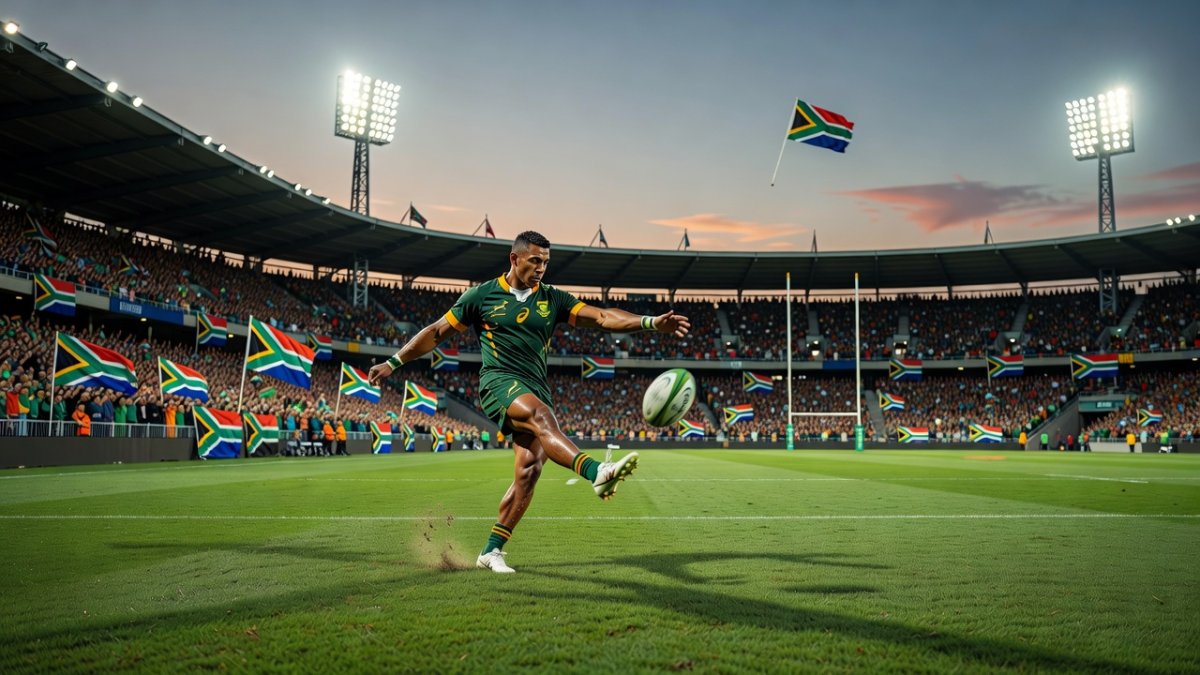
But character is measured in how a team responds to adversity, and the Boks responded emphatically. With time up on the clock in the first half, Cheslin Kolbe sniped from the back of a dominant scrum, playing scrumhalf in Williams' absence, and darted over for a try that pushed the Boks' lead to 40-26 at the break. Half-time arrived with the scoreboard leaning South Africa's way, but the warning signs were clear — discipline and defensive structure would need to improve in the second period.
Second-Half Surge: The Boks Find Another Gear
Whatever Rassie Erasmus said in the changeroom at half-time worked. The Springboks emerged for the second half with renewed purpose and controlled the game from the restart. Within seven minutes, JJ Kotze scored from the back of a dominant lineout maul — the kind of set-piece score that has become a Springbok trademark. Kolbe converted, and the lead stretched to 47-26.
Edwill van der Merwe completed his hat-trick ten minutes later, finishing off a fast ball from a ruck that was spread wide with precision. The Lions winger's performance was a statement — three tries in the season opener, making the most of every opportunity that came his way. Kolbe landed the conversion from another difficult angle. 52-26.
The Barbarians responded immediately through Andrew Kellaway's second try, cutting the lead to 52-31. But it was the final push from a tiring invitational side. From there, the Boks ran away with the match. Faf de Klerk, introduced from the bench, crossed for a try within minutes of his arrival. Jesse Kriel finished strongly after a quiet game by his standards. Andre Esterhuizen powered over. And Zachary Porthen added his name to the scoresheet in the closing stages.
The final twenty minutes belonged entirely to South Africa. Six tries in the second half, forty points added, and an emphatic 80-31 scoreline that — while generous in its final margin — reflected the Boks' superiority once they regained their full complement of players and their defensive structure.
Quan Horn and Riley Norton: The Future on Display
Amid the avalanche of tries, two individual performances stood out for what they say about the future of Springbok rugby. Quan Horn, thrust into a surprise start at flyhalf with Sacha Feinberg-Mngomezulu, Handré Pollard, and Manie Libbok all unavailable, produced a composed and well-rounded display in the playmaker role. He did not try to be flashy — he did not need to be. Horn managed the game, distributed efficiently, and showed the kind of temperament that suggests he can be part of the Springbok flyhalf solution going forward.
The flyhalf position remains a concern for South African rugby. Pollard's absence through injury, Feinberg-Mngomezulu's ongoing recovery, and Libbok's unavailability for this fixture have left the Boks thin in the most critical position on the field. But Horn's performance — and the fact that Erasmus was willing to trust a relative newcomer in a fixture that, despite being an exhibition, still carries the weight of Springbok tradition — is encouraging.
Riley Norton, meanwhile, made his Springbok debut and scored a try in the first half. The young back, who has impressed at Super Rugby level, showed the kind of finishing instinct and spatial awareness that the Springbok coaching staff value. To score on debut, in front of a passionate Gqeberha crowd, is the kind of moment that builds careers.
Aphelele Fassi was lively from fullback, repeatedly slicing through the Barbarians defence with his running game. Siya Kolisi, as ever, led from the front — multiple line-breaks, countless tackles, and the kind of inspirational presence that makes him one of the most respected captains in world rugby. Grant Williams controlled proceedings at scrumhalf before his yellow card, and his partnership with the forwards showed promising signs.
SA A Also Shine: 40-0 Win Adds to Positive Weekend
The weekend's success was not limited to the senior side. Earlier on Saturday at the same venue, South Africa A recorded a commanding 40-0 victory over Zimbabwe in a separate fixture. The clean sheet — a shutout against a determined Zimbabwean side — demonstrated the depth of talent available to the South African rugby system beyond the senior Springbok squad.
Mzwandile Stick led the SA A side, and the result provides further evidence that the pathway from junior to senior representation is producing results. Under World Rugby Regulation 8, SA A has been designated as South Africa's official second senior representative team, and performances like these build the kind of competitive culture that has defined the Springbok environment under Erasmus and his coaching staff.
For South African rugby fans, the double-header in Gqeberha was a powerful reminder of the strength in depth that exists in the domestic game. From the Vodacom Bulls and the DHL Stormers to the Sharks and the Lions, talent is being developed and given opportunities at the highest level.
Nations Championship Beckons: England, Scotland, Wales Ahead
With the Barbarians exhibition out of the way, attention now turns to the Nations Championship, where the Springboks will face three northern hemisphere giants in July. England, Scotland, and Wales await — and each fixture carries its own narrative and challenge.
Erasmus has named a 46-man squad for the tournament, including six uncapped players. Twelve Vodacom Bulls players were added to the group after their URC final defeat to Leinster in Dublin. The depth of the squad is evident, but so are the areas of concern. The flyhalf injury crisis remains the most pressing issue, with Pollard and Feinberg-Mngomezulu's fitness timelines uncertain. The Boks' defensive shape against the Barbarians, particularly when down to fourteen men, will need to be tightened before facing a sharp England attack at Twickenham.
But there is also much to be optimistic about. The emergence of players like Norton and Horn, the continued excellence of Kolisi and Kolbe, and the sheer volume of tries scored in the season opener all point to a Springboks side that is evolving. Erasmus has spoken about building for the 2027 Rugby World Cup, and every minute of game time for young players in high-pressure environments accelerates that process.
What It All Means for South African Rugby
The 80-31 scoreline will make headlines around the world, but for South African fans, the result is only part of the story. This was a day that showcased everything that makes Springbok rugby special — the passion of the Gqeberha crowd, the emergence of new talent, the leadership of established stars, and the relentless pursuit of excellence that defines the culture Rassie Erasmus has built.
It also highlighted areas that require attention. Defensive lapses when playing with reduced numbers, the flyhalf injury situation, and the need to maintain discipline against teams that punish errors — these are the lessons that Erasmus and his coaching staff will take from the match.
For the fan sitting in a shebeen in Soweto, a pub in Cape Town, or a braai in Durban, the message is clear: this Springboks side is not just winning — it is evolving. The blend of experience and youth, the attacking ambition, and the never-say-die attitude that saw the Boks shake off a Barbarians fightback and run in forty second-half points are all signs of a team that is building towards something special.
The road to the Nations Championship begins now. England, Scotland, and Wales will present far sterner tests than the Barbarians. But on a sun-drenched afternoon in Gqeberha, the Springboks served notice that they are ready for the challenge. Twelve tries, eighty points, and a performance that mixed power with flair — not a bad way to start a season.
By Dante Williams, Staff Writer
This article was produced with AI-assisted research and editorial support. Reporting is based on sources cited in the article.
What's Your Reaction?
 Like
0
Like
0
 Dislike
0
Dislike
0
 Love
0
Love
0
 Funny
0
Funny
0
 Wow
0
Wow
0
 Sad
0
Sad
0
 Angry
0
Angry
0

West Africa/Sahel Correspondent at Global1.News. Dakar-based journalist covering politics, security, climate, and development across Francophone and Anglophone West Africa. Tells the stories of a region undergoing profound transformation.










Comments (0)