
Poking the Russian bear
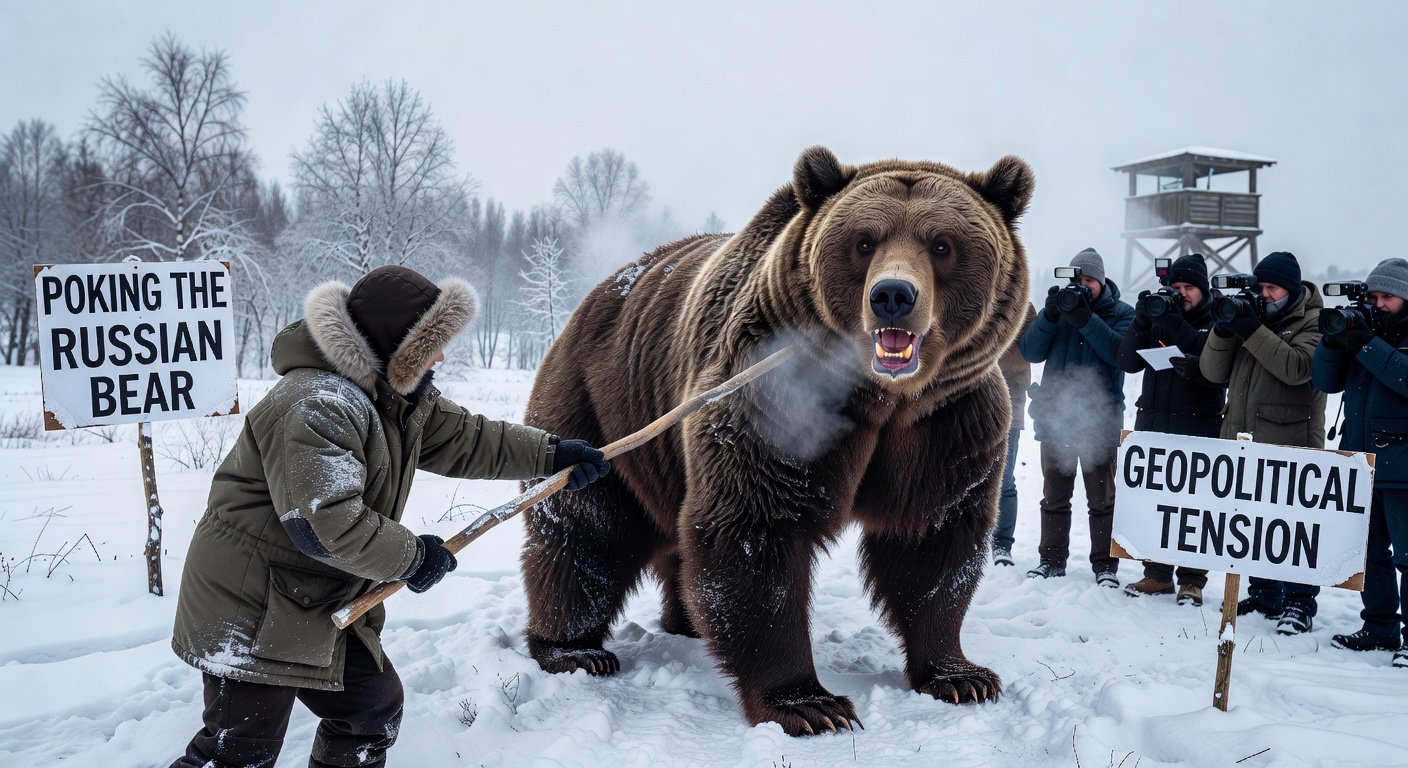
Poking the Russian Bear: Africa’s Precarious Position in Great-Power Rivalry
Discussions in Pretoria have taken on an urgent tone lately. Policymakers, academics and security analysts are openly weighing the dangers of Africa being pulled into a confrontation not of its own making. The phrase “poking the Russian bear” circulates in corridors of power as shorthand for Washington’s expanding footprint across the continent and Moscow’s predictable pushback.
US Activity Accelerates Across the Continent
American diplomatic, military and economic engagement has surged since 2022. The United States Africa Command now maintains cooperative security locations in more than a dozen countries, with enhanced rotational deployments reported in Kenya, Ghana and Djibouti. In 2023 alone, US security assistance to African nations topped $1.1 billion, according to State Department figures, focused on counter-terrorism training and maritime domain awareness in the Gulf of Guinea.
Development finance has also grown. The US International Development Finance Corporation approved $2.4 billion in new African projects last year, targeting critical minerals essential for electric-vehicle batteries. These moves are framed in Washington as partnership, yet in African capitals they are increasingly read through the lens of competition with Russia and China.
Russian Influence and the Bear’s Reaction
Moscow has cultivated relationships in the Sahel, Central African Republic and Sudan through arms deliveries, resource contracts and the activities of the Africa Corps, successor to the Wagner network. Russian grain shipments and energy deals have been positioned as alternatives to Western conditionalities. When US officials announce new basing arrangements or sanctions-related restrictions, Russian diplomats quickly highlight historical grievances and promise “no-strings-attached” cooperation.
The risk, Pretoria analysts argue, is miscalculation. A single high-profile incident involving Russian personnel and American advisors could trigger secondary effects far from the original flashpoint, including disrupted trade routes and pressure on African governments to choose sides.
South Africa’s Balancing Act Under Scrutiny
South Africa maintains formal ties with both powers. It participates in BRICS while hosting US naval visits and receiving American development support. Yet the domestic debate has sharpened. Parliament’s portfolio committee on international relations recently heard testimony that Pretoria must avoid “proxy entanglement” that could jeopardise its non-aligned stance and economic recovery.
Economists note that any escalation affecting shipping lanes around the Cape or investment flows from European partners would hit South Africa’s already fragile growth projections. The rand’s volatility in response to global risk sentiment serves as an early warning indicator.
Expert Perspectives from Johannesburg and Beyond
Dr Thandi Mokoena, senior fellow at the Institute for Security Studies in Pretoria, warns that external actors often underestimate local agency. “African states are not passive chess pieces,” she told Global1 News. “But when great powers escalate rhetoric and military posturing, the space for independent policy shrinks.”
Professor Adebayo Olukoshi, a Nigerian political economist currently based at Wits University, adds historical context: “We have seen this movie before in the 1970s and 1980s. The difference now is the speed of information and the density of economic linkages. A misstep travels faster and costs more.”
Security, Economic and Diplomatic Implications
Security analysts point to potential spillover in the Sahel, where Russian and Western-backed forces already operate in close proximity. In the economic sphere, critical minerals such as cobalt and lithium could become bargaining chips, with African producers pressured to restrict sales to one side or the other.
Diplomatically, the African Union’s consensus-based approach faces strain. Member states with differing alignments may find it harder to present unified positions on issues ranging from debt relief to climate finance. The upcoming 2025 AU summit in Addis Ababa is expected to feature closed-door sessions precisely on this topic.
Data from the African Development Bank shows intra-African trade still below 18 percent of total commerce; external shocks therefore retain outsized influence. Any perception that the continent is a theatre for proxy competition risks deterring the very investment needed for industrialisation and job creation.
Paths Forward for African Agency
Calls are growing for a coherent continental strategy. Proposals include strengthened early-warning mechanisms within the AU Peace and Security Council, diversified partnerships that avoid exclusive alignments, and greater use of African-led mediation in conflicts where external actors are present.
South African officials privately emphasise quiet diplomacy over public confrontation. The goal, they say, is to keep channels open with all sides while protecting sovereign decision-making. Whether this approach survives intensified pressure remains an open question as global tensions continue to rise.
This is Dante Williams for Global1 News, reporting from Johannesburg. 🇿🇦
This article was produced with AI-assisted research and editorial support. Reporting is based on sources cited in the article.
What's Your Reaction?
 Like
0
Like
0
 Dislike
0
Dislike
0
 Love
0
Love
0
 Funny
0
Funny
0
 Wow
0
Wow
0
 Sad
0
Sad
0
 Angry
0
Angry
0

Breaking News and Investigations Correspondent at Global1.News. Based in London, covering global breaking news, security, and investigative stories. Known for digging deeper and connecting the dots across continents.












Comments (0)