
Netanyahu Rejects Vance 'Only Ally' Remark, Highlights India's Strategic Support for Israel
In a candid Fox News interview on July 5, 2026, Israeli Prime Minister Benjamin Netanyahu directly challenged US Vice President JD Vance's assertion that the United States stands as Israel's only powerful ally — highlighting instead the deepening strategic partnership with India, a nation of 1.4 billion people. The exchange, which comes weeks after Vance warned Israel against c
In a candid Fox News interview on July 5, 2026, Israeli Prime Minister Benjamin Netanyahu directly challenged US Vice President JD Vance's assertion that the United States stands as Israel's only powerful ally — highlighting instead the deepening strategic partnership with India, a nation of 1.4 billion people. The exchange, which comes weeks after Vance warned Israel against criticizing the emerging US-Iran nuclear framework, reveals widening fissures in alliance management at a moment when regional dynamics in the Middle East are shifting rapidly.
Netanyahu Rejects Vance 'Only Ally' Remark, Highlights India's Strategic Support for Israel
Beirut, Lebanon – July 6, 2026 — The Vance-Netanyahu exchange reflects a broader recalibration of Israeli diplomacy as Jerusalem seeks to diversify its strategic partnerships beyond the traditional US-centric framework. Netanyahu's pointed reference to India — a nation with which Israel shares deepening defense, intelligence, and technology ties — signals that Israeli options extend beyond Washington's orbit even as Trump remains "the greatest friend we ever had in the White House."
The Vance Remark and Netanyahu's Rebuttal
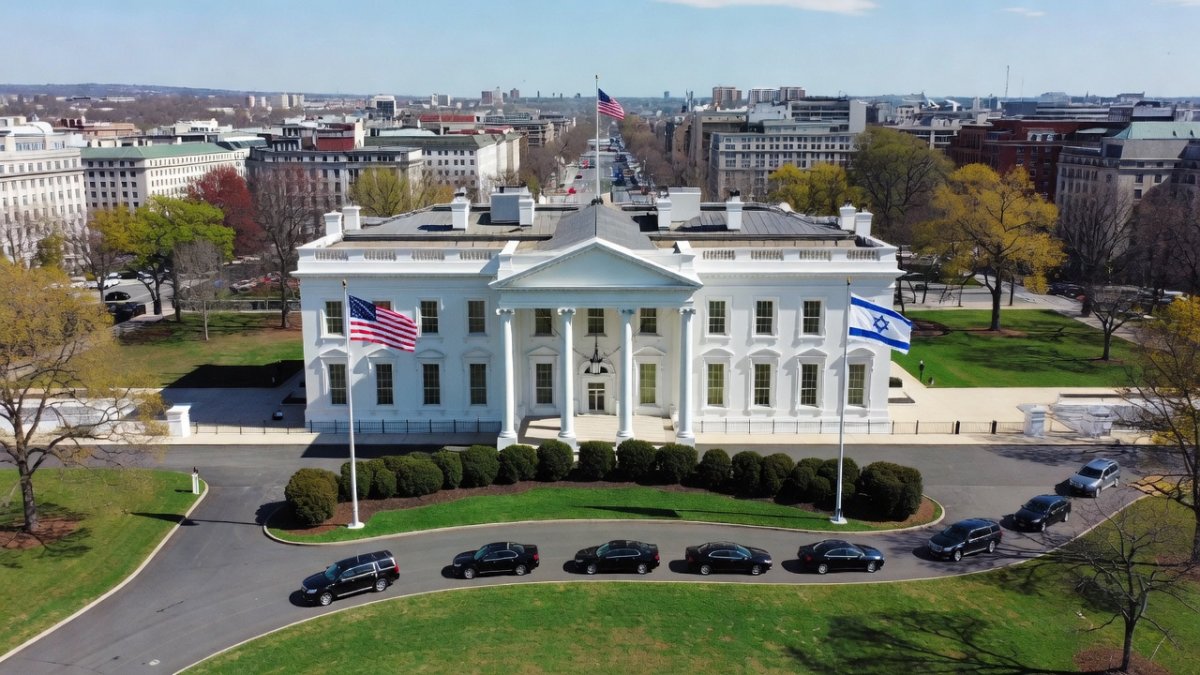
In a Fox News interview on July 5, 2026, Israeli Prime Minister Benjamin Netanyahu directly challenged US Vice President JD Vance's assertion that the United States stands as Israel's only powerful ally. Netanyahu stated, "We have some other friends, like a small country called India. It has 1.4 billion people, and boy, do we have tremendous support there." This rebuttal came weeks after Vance's June 2026 comments warning Israel against criticizing the emerging US-Iran nuclear framework. Netanyahu also praised former President Donald Trump as "the greatest friend we ever had in the White House," underscoring his preference for bilateral ties that prioritize Israeli security concerns over multilateral pressure.
The exchange reveals underlying friction in US-Israel coordination. Vance's remark positioned American leverage as decisive, particularly when Israel voices reservations about renewed diplomacy with Tehran. Netanyahu's response reframes the alliance landscape by elevating India as a counterweight. Analysts note that this public correction serves domestic audiences in Israel while signaling to Washington that Israeli options extend beyond the traditional US orbit. The timing, just before Netanyahu's scheduled Washington visit, amplifies the message that Jerusalem seeks diversified partnerships rather than exclusive dependence.
Netanyahu's emphasis on India's scale and reliability reflects a calculated diplomatic pivot. By naming Prime Minister Narendra Modi's government explicitly, he highlights concrete cooperation in intelligence and technology that complements, rather than replaces, American support. This approach avoids direct confrontation with the Biden-Trump transition dynamics while asserting Israeli agency in alliance management.
The US-Iran Deal Context
Vance's original warning in June 2026 targeted Israeli criticism of the proposed US-Iran nuclear arrangement, which aims to revive elements of the 2015 Joint Comprehensive Plan of Action with additional restrictions. Netanyahu has consistently argued that any deal must permanently dismantle Iran's nuclear infrastructure and address its ballistic missile program and regional proxy networks. The Vance-Netanyahu exchange therefore encapsulates broader tensions between US efforts to stabilize energy markets through diplomacy and Israel's insistence on preventing a nuclear threshold state on its borders.
Regional actors watch these negotiations closely. Gulf states, particularly Saudi Arabia and the UAE, balance their own normalization tracks with Israel against concerns over Iranian expansion. Netanyahu's invocation of India serves as an indirect reminder that Israel maintains strategic depth in Asia, reducing the perceived cost of resisting US pressure on the Iran file. If implemented, the new framework could constrain Israeli military options while offering Tehran sanctions relief estimated in the tens of billions of dollars annually.
What makes this particularly significant is how the public disagreement exposes differing threat assessments. Washington views the deal as a non-proliferation tool within great-power competition with China, whereas Jerusalem sees Iranian nuclear latency as an existential risk that no diplomatic text can fully neutralize. Netanyahu's India reference thus functions as both reassurance to Israeli voters and a subtle signal to American policymakers that alternative partnerships can mitigate isolation.
India-Israel Strategic Partnership
India-Israel relations have accelerated markedly under the "Special Strategic Partnership" upgraded during Prime Minister Modi's February 2026 visit to Jerusalem. Modi received Israel's highest civilian honor, reflecting mutual recognition of converging interests in counter-terrorism, defense production, and agricultural technology. Netanyahu's public nod to India's 1.4 billion population underscores the demographic and economic weight New Delhi brings to the relationship, positioning it as a hedge against over-reliance on any single power.
Both countries share concerns over Iranian influence and Islamist extremism. Joint intelligence sharing has expanded, particularly regarding maritime security in the Indian Ocean and Red Sea corridors. Modi's government has also facilitated Israeli access to broader Asian markets, creating second-order effects that bolster Israel's economic resilience amid regional volatility. This partnership operates within the larger US-China-India triangle, where New Delhi seeks advanced technology without fully aligning against Beijing.
Netanyahu's framing of India as a "tremendous" supporter aligns with concrete policy outcomes. The two nations coordinate on UN voting patterns and multilateral forums, diluting automatic majorities against Israel. As Arab-Israeli normalization proceeds through the Abraham Accords framework, India's role as a bridge to non-Arab Muslim-majority states adds diplomatic utility that complements US efforts.
Defense and Technology Cooperation
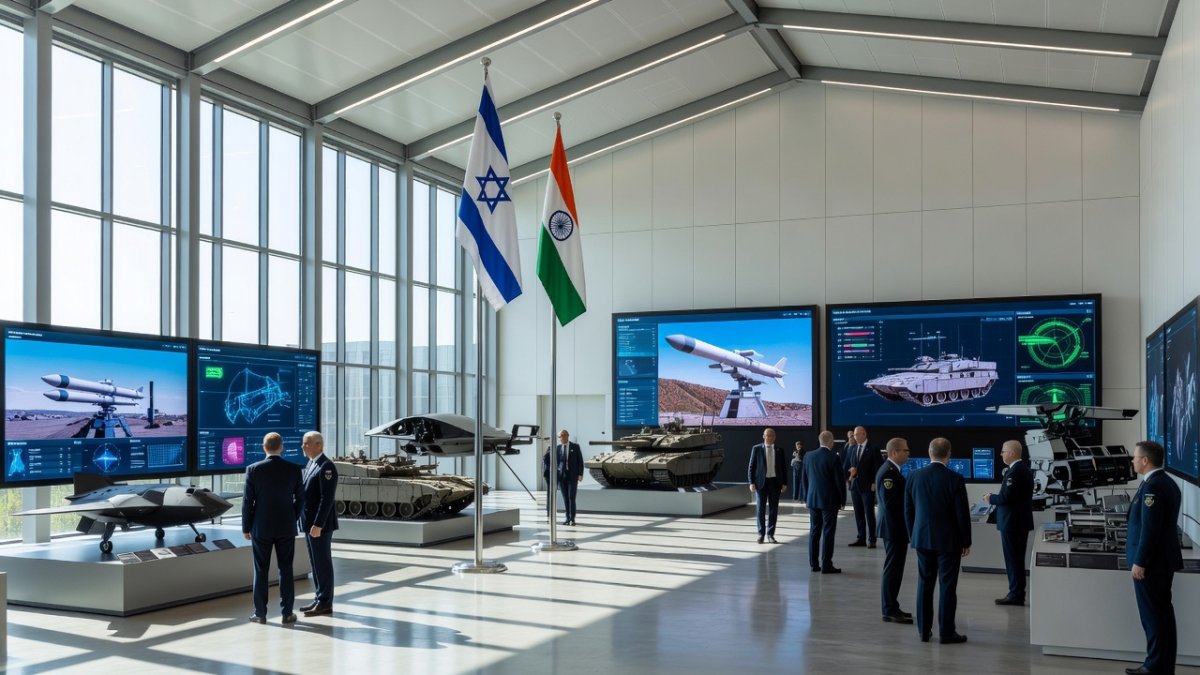
Israeli arms sales to India reached $20.5 billion between 2020 and 2024, with an additional $8.6 billion in new agreements signed since early 2026. These figures encompass drones, missile defense systems, and precision munitions that enhance India's capabilities along its northern borders. Joint production initiatives now include co-development of unmanned aerial vehicles and cybersecurity tools, reducing India's dependence on Russian platforms while giving Israel economies of scale.
Technology transfer extends beyond hardware. Israeli expertise in border security and urban counter-terrorism informs Indian operations in sensitive regions. Agricultural innovations, including drip irrigation and drought-resistant seeds, address India's food security challenges and create commercial footholds for Israeli firms. Notably, these exchanges occur alongside growing US-India defense frameworks, illustrating how India balances multiple suppliers to maximize strategic autonomy.
The defense relationship carries implications for great-power competition. As Washington encourages India to serve as a counterweight to China, Israeli systems provide capabilities that complement American platforms without triggering technology-control restrictions. This layered approach allows New Delhi to maintain leverage in both Washington and Jerusalem while advancing its "Make in India" industrial goals.
Washington Visit and Diplomatic Stakes
Netanyahu's upcoming White House meeting with President Trump will test whether the public divergence with Vance translates into policy friction. Trump has historically granted Israel greater latitude on Iran and settlement issues, yet current US priorities include stabilizing global energy prices and managing China competition through Indian partnerships. Netanyahu must navigate these overlapping agendas without appearing to play Washington against New Delhi.
The visit also coincides with ongoing Arab-Israeli normalization efforts. Any perception that Israel is diversifying away from the United States could affect Gulf states' calculations regarding security guarantees and economic integration. Netanyahu's India emphasis therefore serves as both an insurance policy and a negotiating tactic, reminding American interlocutors that Israeli options are not binary.
Diplomatic choreography around the trip will likely emphasize continuity in US-Israel military aid while quietly advancing trilateral India-Israel-US technology initiatives. Success depends on whether the administration views Netanyahu's India outreach as complementary or competitive with American interests.
Strategic Implications for the Middle East
Netanyahu's rebuttal to Vance signals a broader realignment in which middle powers cultivate multiple patrons amid US-China rivalry. India's emergence as Israel's key Asian partner introduces new variables into Iran nuclear diplomacy, Arab-Israeli normalization, and energy market stability. Gulf sovereign wealth funds, already directing capital toward Indian infrastructure, may accelerate similar investments in Israeli tech corridors, creating economic interdependencies that transcend traditional security alignments.
Second-order effects include potential coordination on Red Sea shipping protection and counter-drone architectures that address Houthi threats backed by Tehran. If the US-Iran framework advances despite Israeli objections, Jerusalem's Indian connection provides alternative supply lines and diplomatic cover. Conversely, stronger US-Israel alignment under Trump could pull India deeper into Western-led technology coalitions, altering Beijing's calculus in South Asia.
Ultimately, the Vance-Netanyahu exchange illustrates how alliance management now requires acknowledging diversified partnerships. Israel's ability to leverage Indian scale while retaining American qualitative military edge will shape regional dynamics for years to come, particularly as Iran tests the boundaries of any revived nuclear agreement.
By Malik Hassan, Staff WriterThis article was produced with AI-assisted research and editorial support. Reporting is based on sources cited in the article.
What's Your Reaction?
 Like
0
Like
0
 Dislike
0
Dislike
0
 Love
0
Love
0
 Funny
0
Funny
0
 Wow
0
Wow
0
 Sad
0
Sad
0
 Angry
0
Angry
0

Middle East Correspondent at Global1.News. Based in Beirut, covering politics, conflict, energy, and society across the Middle East. Brings context and depth to a region often reduced to headlines.













Comments (0)