
Myanmar President Min Aung Hlaing's Beijing Visit Reinforces Strategic Partnership with China
Myanmar President Min Aung Hlaing's Beijing Visit Reinforces Strategic Partnership with China In a recent CGTN report on the exclusive interview with Myanmar President Min Aung Hlaing, the leader outlined his priorities during his first state visit to China as president from June 15 to 19, 2026. The discussion highlighted commitments to bilateral cooperation and border stabilit
The Transition from Military Rule and Beijing's Calculated Endorsement
Min Aung Hlaing's swearing-in as Myanmar's 11th president in April 2026 marked the formal shift from direct military administration to a military-backed civilian structure. This development occurred after years of post-2021 coup isolation, during which China maintained consistent engagement without endorsing the initial power seizure. Beijing's decision to host the president for high-level meetings with Xi Jinping, Premier Li Qiang, and Zhao Leji at the Great Hall of the People reflects a deliberate choice to stabilize relations with a key neighbor rather than an abrupt policy reversal.
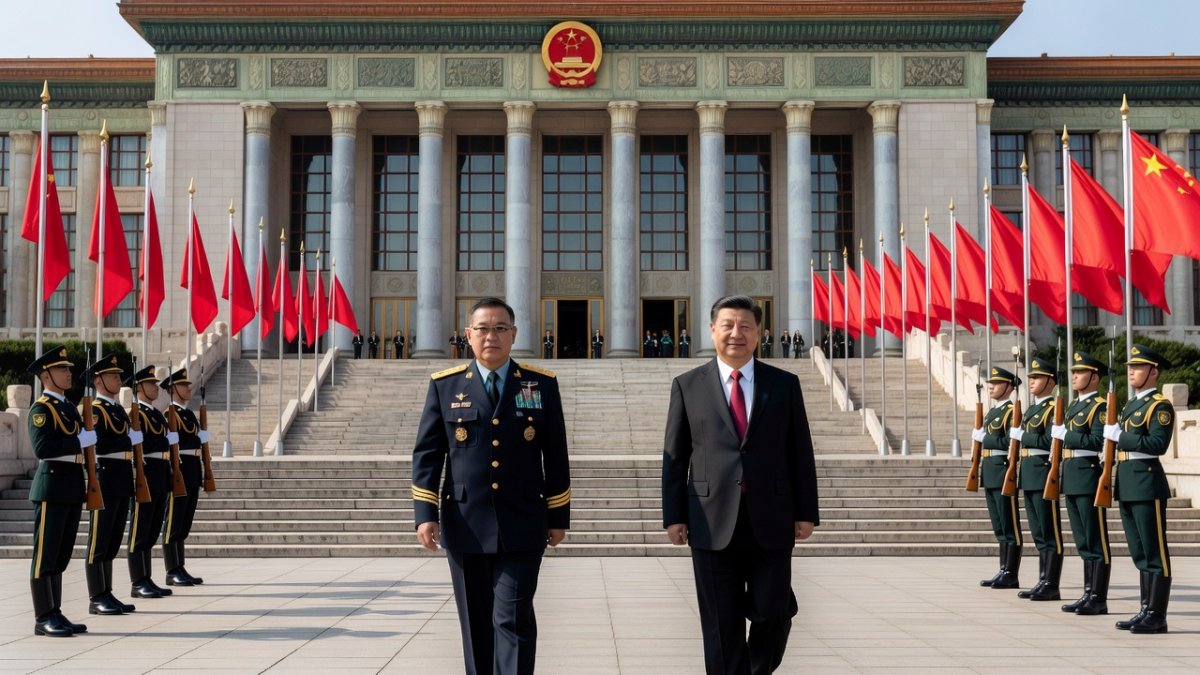
Myanmar President Min Aung Hlaing arrives at the Great Hall of the People in Beijing. (Global 1 News)
Chinese Ministry of Foreign Affairs spokesperson Lin Jian emphasized in briefings that the visit builds on longstanding ties, avoiding any commentary on Myanmar's internal political mechanics. This approach aligns with China's doctrine of non-interference while advancing practical interests in connectivity and security along the shared border.
Xi Jinping's Remarks on Pauk-Phaw Friendship and Cooperation Priorities
During the summit, Xi Jinping invoked the traditional "pauk-phaw" fraternal bond between the two nations, calling for expanded collaboration in infrastructure, trade, and people-to-people exchanges. The language echoed earlier diplomatic exchanges but gained weight through concrete references to ongoing projects under the Belt and Road Initiative. No specific tariff adjustments or new funding figures were announced in the joint statement, underscoring the measured pace of implementation.
Both leaders agreed to intensify efforts against online gambling and telecom fraud operations concentrated in border regions. This pledge addresses immediate security concerns for China, where such activities have disrupted local economies and facilitated cross-border crime networks. Myanmar gains from potential reductions in instability that could otherwise spill into domestic politics.
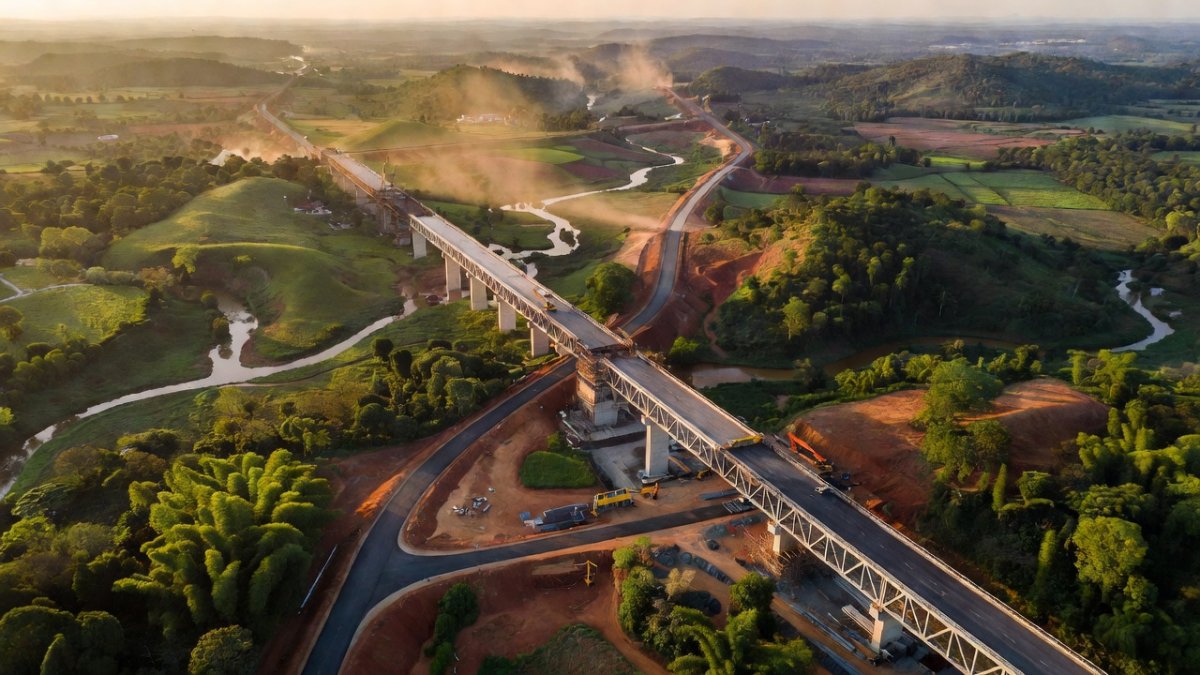
China-Myanmar Economic Corridor infrastructure development. (Global 1 News)
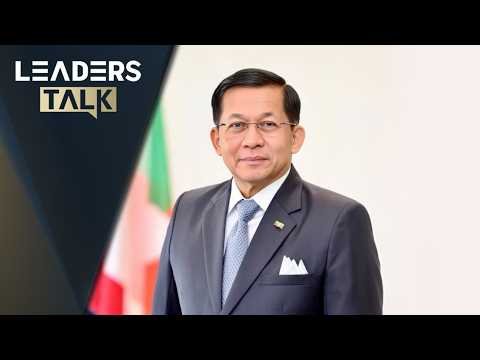
President Min Aung Hlaing in exclusive interview with CGTN. (CGTN)
Securing Commitments for the China-Myanmar Economic Corridor
The visit produced renewed investment pledges for the China-Myanmar Economic Corridor, a flagship component of the Belt and Road Initiative linking Yunnan province to Myanmar's ports and special economic zones. Discussions focused on phased development rather than immediate groundbreaking, consistent with China's practice of aligning projects to host-country capacity and regional stability conditions.
Premier Li Qiang's involvement signaled emphasis on economic coordination, complementing the political signaling from Xi Jinping. Myanmar's leadership seeks these inflows to support post-transition reconstruction, while China secures alternative trade routes that reduce reliance on maritime chokepoints in the South China Sea.
Myanmar's Push for ASEAN Re-engagement
Min Aung Hlaing used the Beijing platform to signal intent to normalize ties with ASEAN partners after prolonged diplomatic distance following the 2021 events. China, as ASEAN's largest trading partner, can facilitate indirect channels for dialogue without assuming a formal mediation role. The joint statement avoided explicit references to ASEAN mechanisms, leaving room for Myanmar to pursue bilateral outreach first.
This dynamic illustrates Beijing's preference for supporting gradual reintegration over abrupt multilateral pressure. Second-order effects may include eased tensions within ASEAN forums, where member states have diverged on approaches to Myanmar, potentially allowing the bloc to refocus on economic integration agendas.
Strategic Calculus: Leverage, Interests, and Regional Ripple Effects
China's primary objectives center on border security, energy transit corridors, and maintaining influence amid competition with other external actors. Myanmar benefits from diplomatic cover and economic lifelines that offset sanctions pressure from Western capitals. Each side holds asymmetric leverage: China through investment scale and geographic proximity, Myanmar through its position as a gateway to the Indian Ocean.
For ASEAN, the visit may encourage pragmatic engagement rather than continued isolation, though it risks perceptions of Chinese dominance in continental Southeast Asia. The European Union and Global South nations could observe similar patterns where economic corridors intersect with political stabilization efforts, prompting recalibrations in their own Myanmar policies.
Longer-Term Implications for China's Foreign Policy Doctrine
This engagement reinforces Beijing's broader objectives of technological self-sufficiency through diversified supply chains and expanded regional influence without direct confrontation. The China-Myanmar Economic Corridor supports Dual Circulation strategy goals by enhancing overland connectivity that complements domestic market strengthening.
Future developments will depend on implementation pace of agreed measures, particularly border initiatives. Historical patterns suggest incremental progress rather than rapid transformation, with both capitals prioritizing stability over ambitious timelines. The interview and summit together illustrate how personal diplomacy between leaders can sustain momentum in complex bilateral relationships.
By Prof. Marcus Chen, Staff WriterThis article was produced with AI-assisted research and editorial support. Reporting is based on sources cited in the article.
What's Your Reaction?
 Like
0
Like
0
 Dislike
0
Dislike
0
 Love
0
Love
0
 Funny
0
Funny
0
 Wow
0
Wow
0
 Sad
0
Sad
0
 Angry
0
Angry
0

World Politics Analyst at Global1.News. Based in Beijing, covering US-China relations, global trade, and geopolitical strategy. Brings deep analytical perspective to the power dynamics shaping international affairs.













Comments (0)