
Moscow Gas Stations Reimpose Fuel Limits as 'Second Wave' of Shortages Hits Russia
Fuel purchase limits have returned to Moscow gas stations as Russian media describes a "second wave" of the summer fuel crisis. Gazprom Neft and Tatneft have reinstated caps on gasoline and diesel sales, with shortages persisting across Siberia, the Far East, and Crimea.
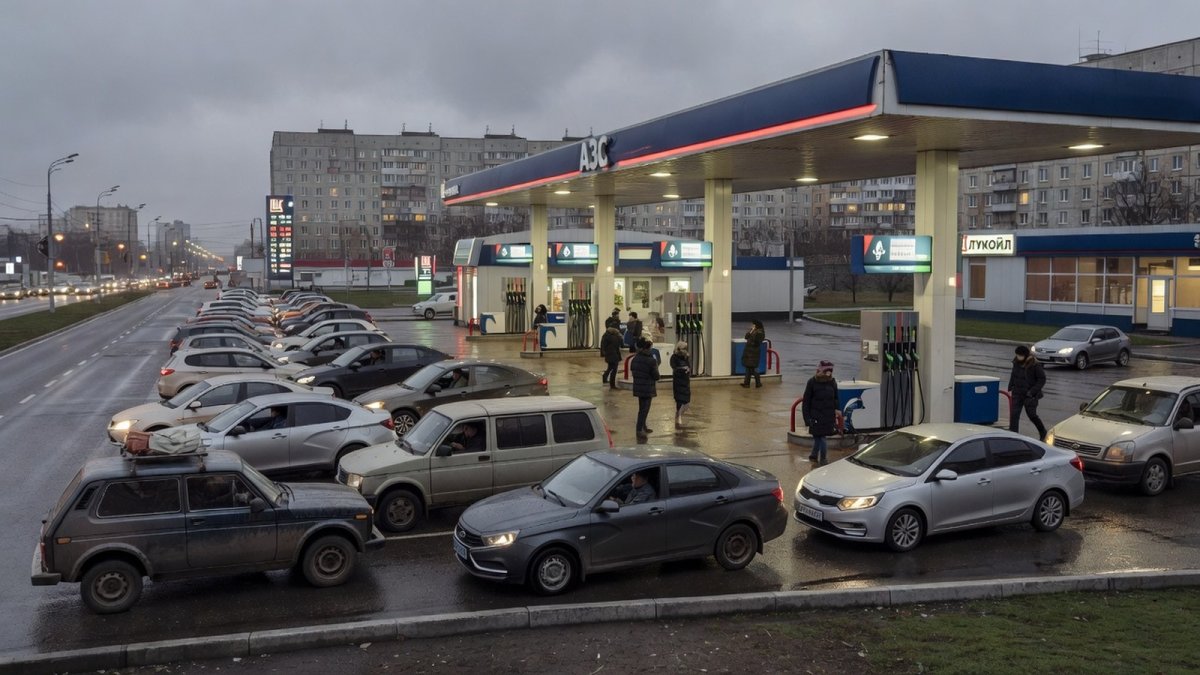
Moscow gas stations have reinstated fuel purchase limits for regular gasoline and diesel, marking what Russian media is calling the "second wave" of the country's summer fuel crisis. The return of rationing measures comes as persistent shortages continue to dog the domestic market following months of Ukrainian drone strikes on oil refineries and storage hubs.
Moscow Gas Stations Reimpose Fuel Limits as 'Second Wave' of Shortages Hits Russia
Moscow, Russia — Drivers across the Russian capital and surrounding regions are once again facing fuel purchase caps as major producers reinstate rationing measures amid what industry analysts describe as a deepening supply crunch. The restrictions, which had been briefly lifted earlier this month, signal that the country's fuel market remains far from stabilized despite government assurances to the contrary.
Rationing Returns to Moscow Gas Stations
Gazprom Neft, one of Russia's largest fuel retailers, has reinstated purchase limits of 60 liters (16 gallons) per customer for regular gasoline across its network of stations in Moscow and the Moscow region. The company's hotline initially told customers they could buy up to 40 liters per person, though the company later clarified that the actual limit was 60 liters, according to reports from Meduza and RBC.
Tatneft, another major producer, has capped sales at 50 liters (13 gallons) of regular gasoline and 60 liters of diesel per vehicle across its Moscow stations, the business news outlet RBC reported. The restrictions follow a brief rollback earlier this month when Gazprom Neft eased limits across 13 Russian regions, suggesting that any stabilization was short-lived.
A Summer of Shortages
Dozens of Russian regions have faced fuel shortages this summer after months of Ukrainian drone strikes on oil refineries and storage hubs. The attacks have disrupted refining capacity at a time when seasonal demand typically peaks, creating a perfect storm of reduced supply and heightened consumption.
Industry analysts warn that supplies will remain tight across much of the country until peak summer travel demand subsides. The return of rationing measures in some parts of the country comes despite Deputy Prime Minister Alexander Novak saying last month that the domestic fuel market was showing signs of "partial stabilization."
Restrictions on gasoline sales at Moscow gas stations first began in June, with companies including Tatneft, Rosneft, and Lukoil imposing limits. Those restrictions were later lifted, but by early August, a second wave of Russia's fuel crisis had already arrived, according to Meduza and RBC.
Government Response and Export Bans
To protect domestic supplies, the Russian government has extended a temporary export ban on gasoline and diesel through early next year. The measure is designed to keep fuel within the country, but critics note that it has done little to alleviate the underlying logistical and refining challenges.
Energy Minister Sergei Tsivilev admitted on Tuesday that long lines continue to form at gas stations, though he insisted that fuel remains available as the government works to resolve logistics bottlenecks. Tsivilev claimed that diesel remains available "everywhere" in Russia, a statement that contradicts reports from several regions where drivers report empty pumps.
The disconnect between official statements and on-the-ground reality has become a recurring theme of Russia's fuel crisis. Novak's "partial stabilization" comment from last month now appears premature, as the second wave of shortages has swept through major urban centers including Moscow.
Regional Disparities Widen
While some gas stations have lifted purchase caps, fuel shortages never fully abated in other parts of the country, including in Siberia and the Far East. Annexed Crimea also continues to face an acute shortage, leaving residents of the peninsula particularly vulnerable to supply disruptions.
The newspaper Izvestia reported on Monday that as of Aug. 16, gasoline and diesel fuel were available at only 28% of Russian gas stations nationwide. The figure paints a stark picture of a market in distress, with the vast majority of stations either out of fuel entirely or operating with severely limited stock.
Moscow is also facing a shortage of AI-95 premium gasoline. As of the evening of Aug. 18, the fuel was available at only one Neftmagistrali station in the city, the company's hotline told RBC, according to Meduza. For drivers of premium vehicles that require higher-octane fuel, the shortage presents a particularly acute problem.
Drone Strikes Continue to Disrupt Refining Capacity
Ukrainian forces have continued long-range strikes against Russian oil facilities, extending the campaign deep into Russian territory. On Wednesday, authorities in the republic of Bashkortostan said a Ukrainian drone set part of an oil refinery ablaze, adding that they expect repairs to take several days.
Regional head Radiy Khabirov said air defense systems intercepted four of six drones that targeted the region overnight. One drone sparked a fire at an oil refinery in the regional capital of Ufa, hitting a unit that was undergoing maintenance. Another drone crashed into a residential building in northern Ufa, shattering upper-floor windows and damaging parked cars; one person was hospitalized.
Located over 1,000 kilometers from the Ukrainian border, Bashkortostan is a major hub for Russia's oil processing industry. The strike demonstrates Ukraine's ability to reach critical infrastructure far beyond the front lines, a capability that has fundamentally altered the calculus of Russia's fuel security.
Russia's Defense Ministry said it intercepted 453 Ukrainian drones across Russia and annexed Crimea between Tuesday night and Wednesday morning. The sheer volume of drone activity underscores the scale of the challenge facing Russian air defenses and the vulnerability of the country's energy infrastructure.
Price Pressures Mount for Ordinary Russians
For ordinary Russians, the fuel crisis has translated directly into higher costs and greater inconvenience. In July, the average price of gasoline in Russia spiked by nearly 20% since the start of the year. It has since fallen slightly to a national average of 76.04 rubles per liter ($3.38 per gallon) as of Aug. 10, but the relief is marginal for consumers who have watched prices climb steadily.
The impact extends beyond personal vehicles. Farmers rely on diesel to power harvest equipment, and the timing of the crisis could not be worse as the agricultural sector enters its peak season. Regional economies that depend on road transport for goods movement are feeling the pinch, with logistics costs rising as fuel becomes scarcer and more expensive.
For drivers in Moscow, the return of purchase limits means planning trips around fuel availability and waiting in lines that can stretch for blocks. The psychological impact should not be underestimated: for many Russians, the sight of empty pumps and rationing signs evokes memories of the chaotic 1990s, a period of instability that remains fresh in the national consciousness.
Analysts Question Official Optimism
Market analysts suggest that the government's assurances of stabilization do not align with the evidence on the ground. The fact that major producers have reinstated limits in Moscow, the country's wealthiest and most politically significant city, indicates that the problem is not confined to remote regions but has reached the heart of the Russian economy.
The extension of the export ban through early next year suggests that the government itself does not expect a quick resolution. While the ban helps keep fuel within the country, it also reduces revenue from export sales, creating a fiscal tension that could have longer-term implications for the state budget.
Ukrainian officials have framed the drone campaign against Russian oil infrastructure as a legitimate military strategy aimed at undermining Russia's ability to fund its war effort. From Kyiv's perspective, every refinery knocked offline is a blow to Moscow's war chest. The strategy appears to be working, at least in terms of its impact on Russia's domestic fuel market.
What Comes Next
As the summer travel season winds down, demand for gasoline is expected to ease, potentially providing some relief to the strained system. However, analysts caution that the underlying vulnerabilities remain: refining capacity is still diminished, logistics networks are still strained, and the drone threat shows no signs of abating.
The government has promised to resolve logistics bottlenecks, but the complexity of the problem suggests that a quick fix is unlikely. Fuel shortages have become a fact of life for many Russians, and the return of rationing in Moscow indicates that even the capital is not immune.
For now, drivers in Moscow and beyond will continue to navigate a market defined by uncertainty. The second wave of the fuel crisis has arrived, and with it, the uncomfortable realization that Russia's energy infrastructure is far more fragile than official narratives suggest.
This article was produced with AI-assisted research and editorial support. Sources: The Moscow Times, Meduza, RBC, Izvestia.
By Irina Volkov, Staff Writer
What's Your Reaction?
 Like
0
Like
0
 Dislike
0
Dislike
0
 Love
0
Love
0
 Funny
0
Funny
0
 Wow
0
Wow
0
 Sad
0
Sad
0
 Angry
0
Angry
0

Russia/Eastern Europe Correspondent at Global1.News. Covering Russian politics, energy, security, and the shifting dynamics of the post-Soviet space. Provides clear-eyed analysis on one of the world's most opaque regions.













Comments (0)