
Filipina Drug Trafficker Walks Free After Receiving Presidential Pardon
President Ferdinand Marcos Jr. granted an absolute pardon to Mary Jane Veloso on Friday, ending a fifteen‑year incarceration that began after her 2010 arrest in Indonesia.
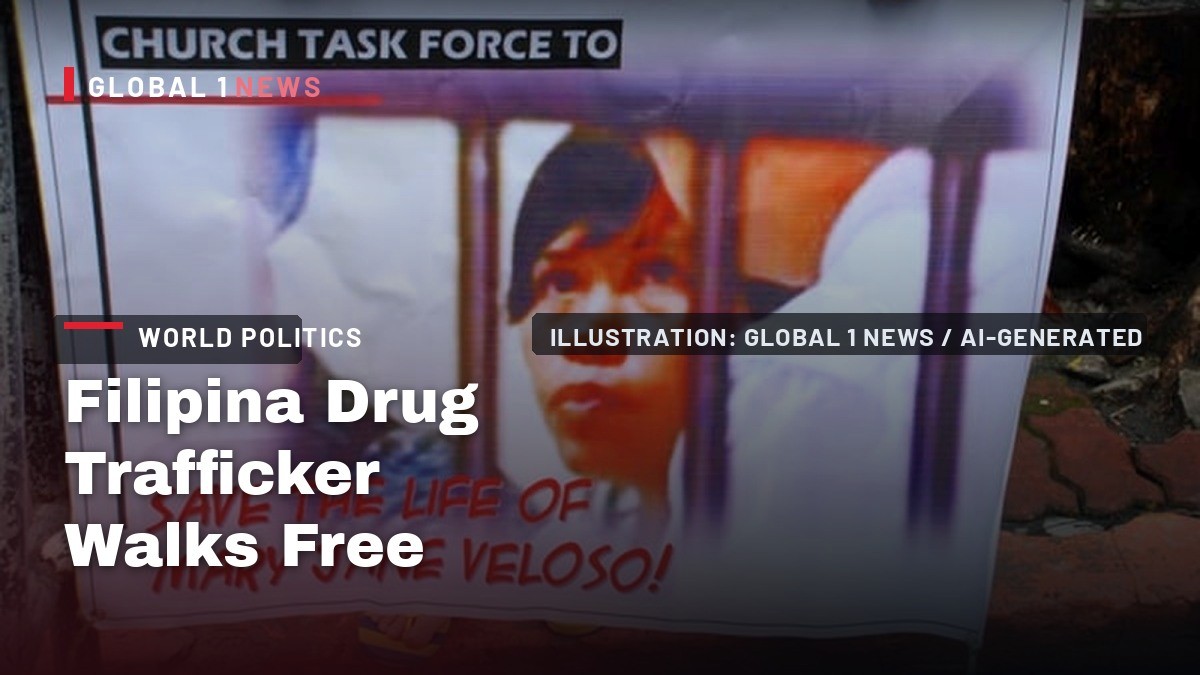
President Ferdinand Marcos Jr. granted an absolute pardon to Mary Jane Veloso on Friday, ending a fifteen‑year incarceration that began after her 2010 arrest in Indonesia. The pardon, signed the day before, was physically handed to Veloso by Gregorio Pio Catapang Jr., director general of the Bureau of Corrections, who also oversaw her official release. In a press conference, Veloso thanked the president, expressed relief at being cleared of legal consequences, and spoke of reuniting with her two sons, who have matured while she was behind bars.
Background of the case and the original conviction
Veloso, a 41‑year‑old domestic worker, was apprehended in Yogyakarta in 2010 while attempting to bring 2.6 kilograms of heroin into Indonesia. Under Indonesia’s stringent drug laws, she was sentenced to death. The severity of the sentence reflected the country’s reputation for an unforgiving stance on large‑scale drug trafficking.
In 2015, a last‑minute reprieve from execution was secured after Philippine officials appealed to then‑Indonesian President Joko “Jokowi” Widodo, seeking Veloso’s testimony against members of a prominent drug‑trafficking organization. The appeal succeeded, sparing her life but leaving her under continued incarceration.
The diplomatic negotiations leading to repatriation
Negotiations for Veloso’s return intensified after 2020, with the Philippines mounting a persistent campaign through relatives and advocacy groups. In December 2024, Indonesia agreed to repatriate Veloso, acknowledging the Philippines’ repeated requests. Senior minister for law and human rights affairs Yusril Ihza Mahendra noted that the Philippines had pledged to respect Indonesia’s original sentencing while also indicating that any subsequent decision by the Philippines, including clemency, would be honored.
The agreement underscored a diplomatic balance: Indonesia maintained its legal judgment, yet signaled willingness to accommodate the Philippines’ humanitarian concerns. This cooperation reflects a broader regional pattern where Southeast Asian states navigate the tension between strict anti‑drug policies and diplomatic goodwill.
The presidential pardon and its legal implications
Marcos Jr.’s absolute pardon, as explained by Catapang, removes all remaining legal consequences of Veloso’s conviction. The document, described as an “absolute pardon,” effectively erases the criminal record associated with the case, granting Veloso a clean slate upon her return to Philippine soil. The president’s decision, announced without elaboration, aligns with the Philippines’ long‑standing advocacy for Veloso’s release.
Legal scholars note that an absolute pardon differs from a conditional clemency in that it extinguishes the underlying conviction entirely, rather than merely commuting a sentence. Consequently, Veloso regains full civil rights, including the ability to travel abroad, work without restriction, and access public services without the stigma of a criminal record.
Public and advocacy response in the Philippines
The pardon was met with visible joy among Veloso’s family and the advocacy networks that have championed her cause for over a decade. Supporters highlighted the emotional toll of her separation from her children, echoing Veloso’s own remarks that she missed watching them grow. The release was framed as a triumph of persistent civil‑society pressure combined with diplomatic engagement.
Human‑rights organizations, while acknowledging the positive outcome for Veloso, also reiterated concerns about Indonesia’s harsh drug penalties. They pointed to her case as a reminder of the broader human cost of punitive drug policies across the region, urging continued advocacy for more proportionate sentencing frameworks.
Implications for Philippines‑Indonesia relations
The coordinated handling of Veloso’s case may serve as a diplomatic touchstone for future cooperation. Both governments demonstrated a willingness to respect each other’s legal processes while allowing room for humanitarian considerations. Yusril’s statement that Indonesia would respect any Philippine decision once Veloso was back on its soil reflects a mutual understanding of sovereignty and the potential for case‑by‑case flexibility.
Analysts suggest that this episode could pave the way for deeper collaboration on trans‑national crime, particularly in areas where legal standards diverge. The ability to negotiate repatriation and clemency without jeopardizing bilateral trust indicates a mature diplomatic channel that could be leveraged for joint anti‑drug initiatives, extradition agreements, or victim‑support programs.
Societal reflections on drug policy and justice
Veloso’s ordeal highlights the stark contrast between Indonesia’s zero‑tolerance approach and the Philippines’ evolving stance on drug‑related offenses. While the Philippines has its own contentious war on drugs, the case illustrates how individual narratives can humanize broader policy debates. Veloso’s claim of being deceived by a “godsister” adds a layer of complexity, raising questions about the vulnerability of migrant workers to exploitation by criminal networks.
Public discourse in the Philippines is likely to focus on the balance between upholding law and ensuring due process for citizens abroad. The pardon may be cited by advocates urging more robust consular support for overseas Filipino workers, especially those facing severe foreign penalties.
Looking ahead: Veloso’s reintegration and broader lessons
With the absolute pardon in hand, Veloso faces the challenge of rebuilding a life after fifteen years of confinement. She expressed optimism about guiding her sons, who are now nearing adulthood. Reintegration will require not only personal resilience but also social support mechanisms, such as employment assistance and psychological counseling, to address the long‑term impacts of incarceration.
For policymakers, Veloso’s case serves as a reminder of the importance of diplomatic advocacy in protecting citizens abroad, especially when they encounter legal systems with markedly different punitive philosophies. The coordinated effort between the Philippines and Indonesia demonstrates that even in the realm of stringent drug enforcement, channels for humanitarian relief remain viable when pursued with persistence and diplomatic nuance.
This article was produced with AI-assisted research and editorial support. Reporting is based on the source material cited below. Sources: The Diplomat; thediplomat.com; Global1.News (28 September 2026).
By Kenji Tanaka, Staff Writer
What's Your Reaction?
 Like
0
Like
0
 Dislike
0
Dislike
0
 Love
0
Love
0
 Funny
0
Funny
0
 Wow
0
Wow
0
 Sad
0
Sad
0
 Angry
0
Angry
0

Japan Correspondent at Global1.News. Tokyo-based voice covering Japanese politics, technology, economy, and culture. Tracks the intersection of tradition and innovation in one of the world's most dynamic societies.













Comments (0)