
Severe Snowstorms Paralyse Bolivia as 165,000 Livestock Face Starvation
Severe snowstorms have paralyzed Bolivia, with El Alto among the worst hit and more than 165,000 llamas and sheep facing starvation in Potosi. Authorities declared an emergency and are battling blocked roads to deliver forage and aid to isolated Andean communities as more snow looms.
The first flakes began falling on the Bolivian Altiplano not as a gentle dusting, but as a relentless, suffocating blanket. For the residents of El Alto, a sprawling city of nearly a million people perched on the edge of the Andes, the August 2026 snowstorm was not a picturesque winter scene; it was a slow-motion disaster that choked the life out of the streets, the markets, and the livelihoods of those who depend on the daily rhythm of commerce. As the cold seeped into makeshift stalls and the white powder piled up on corrugated iron roofs, the human cost of this extreme weather event became starkly apparent. This storm, which has paralysed entire departments and threatened the survival of over 165,000 livestock animals, is the latest and most violent manifestation of a climate crisis that is reshaping the South American continent, hitting the Andean region with a ferocity that scientists have long warned about.
The scene in El Alto was one of eerie stillness, a stark contrast to its usual chaotic energy. The city, which sits at an altitude exceeding 4,000 metres above sea level on the windswept Altiplano plateau, is uniquely vulnerable to severe winter conditions, and this storm exploited that vulnerability with brutal efficiency. For the informal traders and small business owners who form the backbone of the local economy, the snow was not just an inconvenience; it was a financial catastrophe. With customers forced to stay indoors and the main arteries of the city clogged with ice and slush, the daily earnings that families rely on for food and rent simply evaporated. The storm has effectively placed a frozen hand over the city's economic pulse, and the authorities, already stretched thin by the scale of the emergency, are scrambling to respond to a crisis that shows no signs of abating.
Severe Snowstorms Paralyse Bolivia as 165,000 Livestock Face Starvation
La Paz, Bolivia - August 19, 2026 - A powerful winter storm has brought life to a standstill across much of Bolivia, with the highland city of El Alto among the worst affected, according to a report by Al Jazeera English's Michael Appel. The heavy snowfall has disrupted daily life, forcing authorities to suspend travel on major highways and mountain passes, while in the southern department of Potosi, a full-blown emergency has been declared as more than 165,000 llamas and sheep face starvation. The storm, which has buried grazing fields under deep snow, is a stark reminder of the fragility of life on the Altiplano, where communities depend on livestock and small-scale trade for their survival. As the nation braces for more heavy snowfall in the coming days, the full scale of the humanitarian and economic impact is only beginning to emerge.
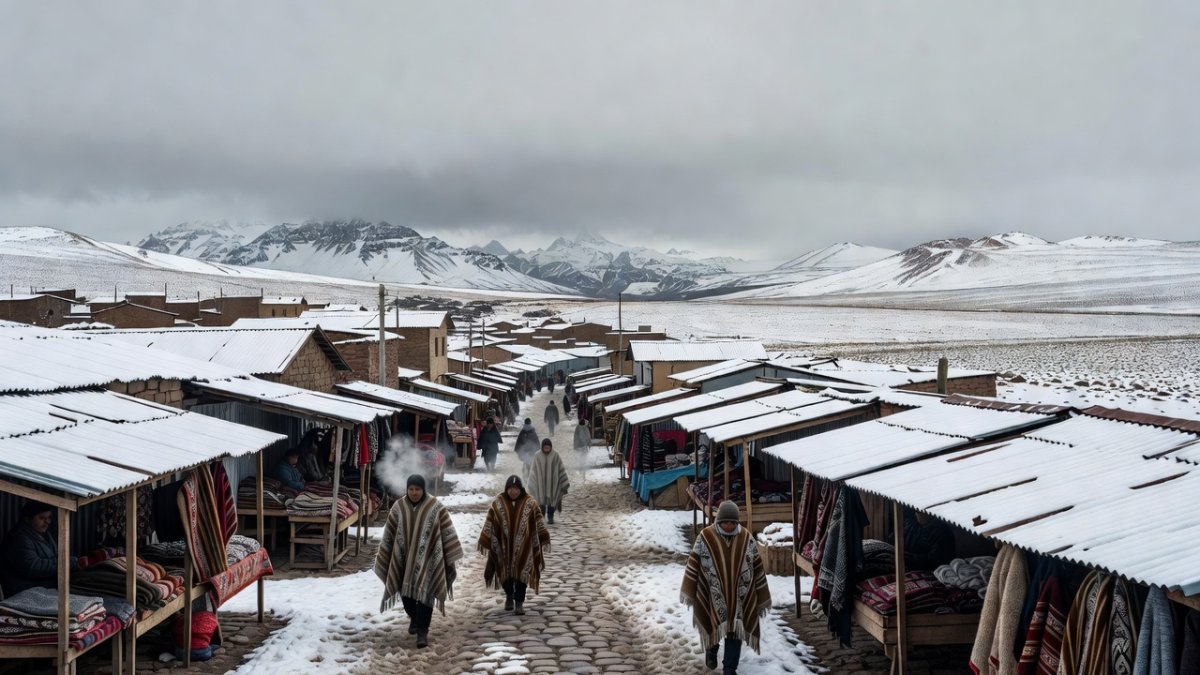
An Altiplano Winter Emergency: El Alto Under the Snow
The city of El Alto, Bolivia's second-largest urban centre, has been transformed into a frozen tableau. The Altiplano plateau, upon which the city is built, is a high-altitude plain that offers little protection from the elements, and the August 2026 snowstorm has exploited this geographic vulnerability with devastating effect. For the informal traders who set up their stalls in the sprawling markets of 16 de Julio and the surrounding neighbourhoods, the snow has been a commercial death sentence. The constant, heavy snowfall has kept customers away, leaving perishable goods unsold and families without the income they need to survive the winter. The streets, usually teeming with minibuses and pedestrians, are now eerily quiet, punctuated only by the sound of snow being shovelled from doorways and the occasional rumble of a four-wheel-drive vehicle struggling through the drifts.
The impact on small businesses extends beyond the markets. Restaurants, hardware stores, and service providers have all reported a dramatic drop in foot traffic, a trend that threatens to push many already-marginal operations into insolvency. The city's infrastructure, not designed for such prolonged and intense snowfall, has also buckled under the strain. Power lines have sagged and snapped under the weight of the ice, leaving some neighbourhoods in darkness, while the drainage systems have been overwhelmed by the sudden meltwater, causing flooding on major avenues. Mayor Williams Cervantes confirmed that the overnight snowfall caused significant flooding on avenues and fallen power cables in Potosi city, a similar scenario playing out in El Alto. The combination of economic paralysis and physical disruption has created a sense of siege, with residents hunkering down and hoping that the sun will eventually break through the thick cloud cover.
165,000 Llamas and Sheep Face Starvation in Potosi
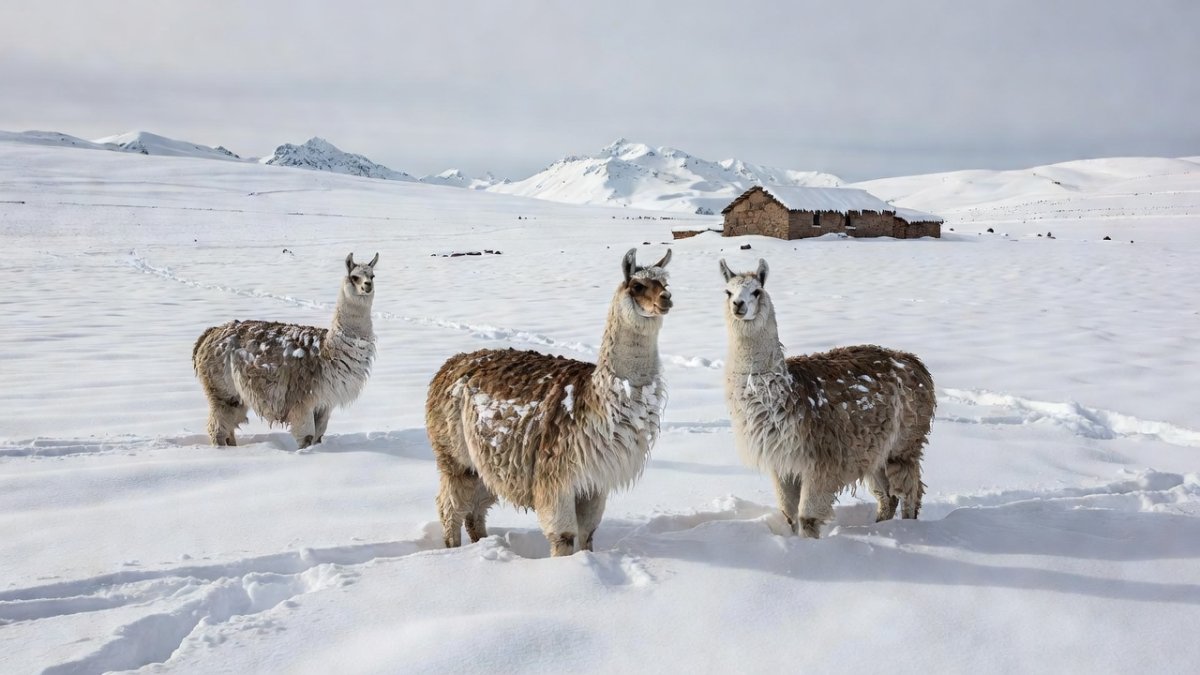
While the urban centres grapple with economic disruption, the true scale of the disaster is unfolding in the rural highlands of the Potosi department, where the storm has dealt a potentially fatal blow to the region's pastoral economy. The deep snow has completely buried the grazing fields, or bofedales, that are the lifeblood of the llama and sheep herds that roam the altiplano. According to authorities, more than 165,000 of these animals are now facing starvation, their usual forage inaccessible beneath a thick, frozen crust. The Potosi Governorate has declared an emergency, a formal recognition of the crisis that is unfolding in the isolated communities that dot this harsh landscape. The preliminary report from the Governorate paints a grim picture: 11 municipalities, 131 communities, and 4,499 families have been directly affected by the storm, a number that is likely to rise as assessments continue.
Willams Acho Portillo, the head of the Risk Management Unit of the Potosi Governorate, has been on the front lines of the response, and he describes the situation as critical. He notes that the most vulnerable animals are the young and some adults, who are succumbing to a lethal combination of hunger, extreme cold, and a complete lack of forage. The animals, already weakened by the harsh winter, have little energy to dig through the deep snow, and their body reserves are being rapidly depleted. Departmental authorities have deployed emergency aid, including food and vitamins for the livestock, but the logistical challenges are immense. Several communities remain completely isolated due to blocked roads, making it impossible for aid convoys to reach them. Heavy machinery is being moved to recover access routes, but the process is slow and painstaking, and for many animals, time is running out. The emotional and economic toll on the families who depend on these herds for their subsistence is incalculable.
Human Toll: Traders, Families and Isolated Communities
Beyond the statistics of livestock and municipalities, the storm has inflicted a deep human toll on the communities of the Bolivian highlands. In the highlands of the Tarija department, the situation is equally dire, with reports of animals and crops lost, buried under the snow, and housing infrastructure also affected. Families who rely on subsistence farming and camelid raising are facing an uncertain future, their primary assets frozen in the ground. A community member from Quetena Grande, speaking to local media Sud Lipez Comunicaciones, captured the prevailing mood of despair: "After this it will get more critical for the livestock... our livestock will start to die." This stark prediction underscores the fact that the immediate emergency is only the beginning of a longer-term crisis, as the loss of breeding stock will have repercussions for years to come. The families are urging authorities to guarantee a supply of forage, nutritional blocks, and veterinary attention to help their animals survive the coming weeks.
The isolation of many of these communities is compounding the suffering. With roads blocked by snowdrifts that can be several metres deep, access to markets, medical care, and even basic supplies is severely restricted. The psychological impact of being cut off from the outside world, combined with the constant worry about the survival of their livestock, is taking a heavy toll on the residents. In Potosi city, the urban population is also feeling the strain, as the overnight snowfall caused flooding on avenues and fallen power cables, disrupting daily life and raising concerns about safety. The authorities are working to clear the streets and restore services, but the sheer volume of snow is making progress slow. The human cost of this storm is not just measured in economic losses, but in the anxiety, fear, and exhaustion of a population that is being tested to its limits by an unforgiving climate.
Roads, Airports and the Uyuni Tourist Circuit Cut Off
The storm has not only isolated rural communities but has also severed the vital transport links that connect Bolivia's major cities and economic hubs. The Administradora Boliviana de Carreteras (ABC) has imposed restrictions and precautionary measures on routes in the departments of La Paz, Oruro, Potosi, and Cochabamba, effectively shutting down the country's road network. At least two stretches of the trunk road connecting the centre of the country with the west and southwest have been closed, along with a stretch of the main route to the Amazon north through the subtropical Los Yungas zone. Heavy machinery has been deployed to clear the road between La Paz and the La Cumbre pass, which sits at an altitude of about 4,200 metres, but the work is dangerous and slow. The closure of these routes has brought freight transport to a halt, threatening supply chains and driving up prices for essential goods in the affected regions.
The impact on air travel has been equally severe. Bus terminals in La Paz, Oruro, and Potosi have suspended local and international land travel, while the state airports authority, Naabol, has warned that conditions "are not favourable for air operations" at the La Joya Andina airport in Uyuni, in the southwest of Potosi. This is a significant blow to the tourism industry, as Uyuni is the gateway to the world-famous Uyuni salt flat. The storm has hit the entire Uyuni tourism circuit, including the Eduardo Avaroa Andean Fauna National Reserve (RNFA-EA), which sits above 4,200 metres and borders Chile. The reserve, home to flamingos, vicuñas, and other unique wildlife, is a major draw for international tourists, but the heavy snow has made it inaccessible and dangerous. The dangers were highlighted last week when police and firefighters rescued three US tourists who had been trapped for more than 30 hours by snow at Laguna Colorada in the reserve, and on Sunday the Army assisted two French tourists affected by the storm in Quetena.
Government Response: Emergency Aid, Forage and Tight Budgets
In response to the escalating crisis, the Bolivian government and departmental authorities have mobilised an emergency response, but they are facing significant financial and logistical constraints. Javier Gonzales, the head of Early Warning for the Potosi Governorate, has confirmed that an initial sum of Bs 2 million (about USD 290,000) has been assigned for the emergency, but he has warned that these resources may not be enough. The Governorate is currently analysing an additional Bs 3 million to buy forage for the starving livestock, a critical intervention that could mean the difference between life and death for thousands of animals. The deployment of emergency aid, including food and vitamins for livestock, is underway, but the blocked roads are hampering the delivery of supplies to the most isolated communities. Heavy machinery is being moved to recover access routes, but the process is slow, and the authorities are urging patience as they work to reach all affected areas.
The response is not just about logistics; it is also about prioritising the most vulnerable. Willams Acho Portillo has emphasised that the focus is on saving the young and weaker animals, which are most at risk from the combination of hunger and extreme cold. The aid packages include nutritional supplements and vitamins designed to boost the animals' immune systems and help them survive the harsh conditions. However, the scale of the crisis is immense, and the authorities are aware that they cannot reach every animal in time. The request for additional funding is a recognition that the initial budget is insufficient to address the long-term needs of the affected communities, who will require ongoing support to rebuild their herds and their livelihoods. The government is also coordinating with international partners and NGOs to secure additional resources, but the immediate priority is to clear the roads and get aid to those who need it most.
What This Means for Latin America
The devastating snowstorms in Bolivia are not an isolated event but rather a stark illustration of the broader climate crisis that is engulfing Latin America. The storm follows months of extreme weather across the continent, from devastating droughts in the Amazon to catastrophic floods in the Southern Cone, and it serves as a powerful reminder that the region is on the front lines of climate change. The Andes, in particular, are among the regions most exposed to climate variability, with rising temperatures and shifting precipitation patterns already having a profound impact on glaciers, water supplies, and ecosystems. The current storm, with its unusual intensity and timing, is consistent with the predictions of climate models, which suggest that extreme weather events will become more frequent and more severe in the coming decades. For the countries of the Andean region, this means that they must prepare for a future of increased uncertainty and heightened risk.
The El Niño phenomenon, which has been a major driver of extreme weather across the Pacific basin, is a key factor in this equation. The current storm is part of a larger pattern of climate variability that is being amplified by global warming, creating a perfect storm of conditions that can lead to disasters like the one unfolding in Bolivia. The impact on the Uyuni salt flat, a dried ancient sea bed of more than 10,000 square kilometres and one of Bolivia's top tourist destinations, is particularly symbolic. The salt flat holds the country's largest lithium reserve, a resource that is critical for the global transition to clean energy, but it is also a fragile ecosystem that is highly sensitive to changes in temperature and precipitation. The storm has disrupted the tourism circuit that brings vital revenue to the region, and it has highlighted the vulnerability of even the most iconic landscapes to the forces of climate change. For Latin America, the message is clear: the climate crisis is not a future threat, but a present reality.
The Bottom Line: What Comes Next
As the snow continues to fall and the cold grips the Bolivian highlands, the immediate priority is clear: save lives, both human and animal. The emergency response is underway, but the scale of the crisis is immense, and the resources available are limited. The coming days will be critical, as the authorities work to clear roads, deliver aid, and reach the isolated communities that are bearing the brunt of the storm. The long-term outlook is more uncertain. The loss of livestock, which represents a lifetime of savings and investment for many families, will have a lasting impact on the local economy. The damage to crops and infrastructure will take months, if not years, to repair. And the psychological toll on a population that has been pushed to the brink will not be easily healed. The Bolivian government will need to provide sustained support to the affected regions, not just in the immediate aftermath of the storm, but for the long term.
The storm also raises fundamental questions about the future of the Altiplano and its inhabitants. As climate change continues to alter the region's weather patterns, events like this are likely to become more common, placing an unbearable strain on the communities that call this harsh but beautiful landscape home. The resilience of the Bolivian people is legendary, but even the most resilient communities have their limits. The international community must also pay attention, not just to the immediate humanitarian needs, but to the broader issue of climate adaptation and mitigation. The Uyuni salt flat, with its vast lithium reserves, is a symbol of the future, but the storm has shown that this future is not guaranteed. The bottom line is that Bolivia is facing a crisis that is both immediate and existential, and the decisions made in the coming weeks and months will determine the fate of the region for generations to come. The world is watching, and the time to act is now.
By Elena Vasquez, Staff Writer
This article was produced with AI-assisted research and editorial support. Reporting is based on sources cited in the article.
What's Your Reaction?
 Like
0
Like
0
 Dislike
0
Dislike
0
 Love
0
Love
0
 Funny
0
Funny
0
 Wow
0
Wow
0
 Sad
0
Sad
0
 Angry
0
Angry
0

Latin America Correspondent at Global1.News. Based in Mexico City, covering politics, economics, energy, and culture across the region. Brings an on-the-ground perspective to stories spanning from the Rio Grande to Patagonia.















Comments (0)