
The 60-Day US-Iran Deal Deadline Expires With Hormuz Still Closed, and Trump Threatens Oman
The 60-day US-Iran deal expired August 17 with Hormuz still closed. Trump threatens to bomb Oman over a transit deal, the USS Abraham Lincoln faces a mental-health crisis after 250 days at sea, and oil markets brace for prolonged disruption.
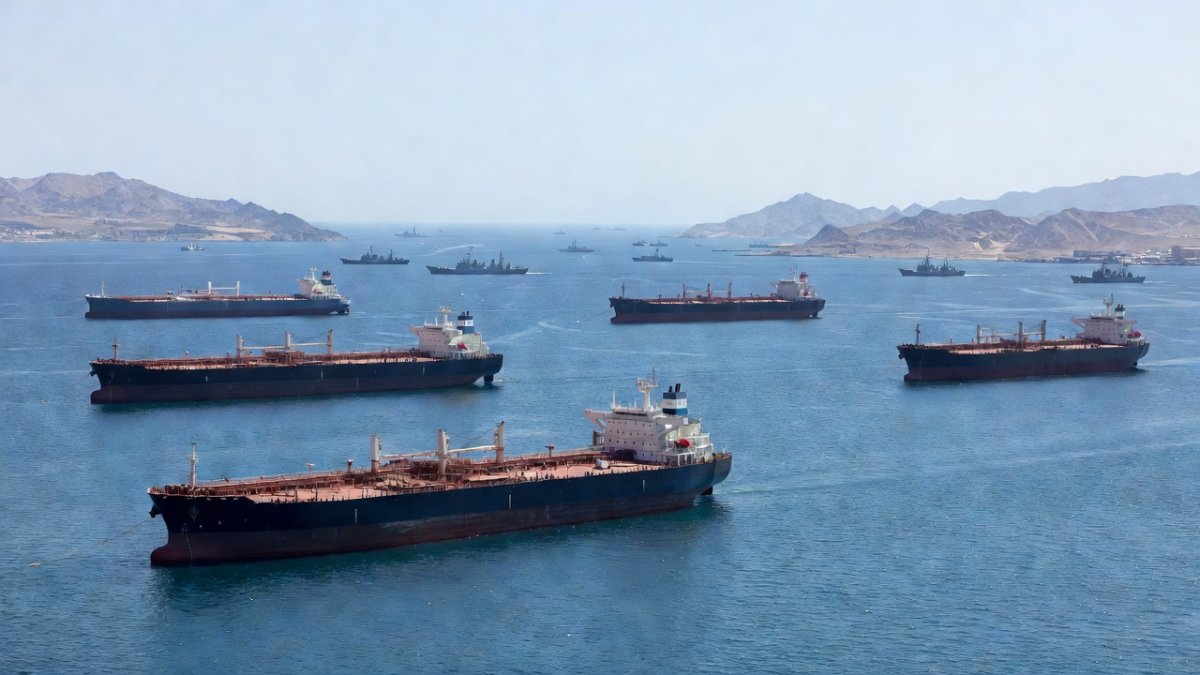
The 60-day memorandum of understanding between the United States and Iran expired Monday, August 17, 2026, with the Strait of Hormuz still effectively closed and no public progress toward reopening the waterway. As the deadline lapsed, President Donald Trump escalated his rhetoric against both Tehran and a key American ally, warning the United States would use military force against Oman if it obstructed a reopening deal.
In an interview with Fox News chief foreign correspondent Trey Yingst on August 17, Trump said, "If Oman gets in the way, we'll bomb the s--- out of them," and pressed Iran to capitulate: "They should put up the white flag of surrender." The comments mark a significant escalation against Oman, a longtime US partner that has been mediating between Washington and Tehran.
The Expired Memorandum and the Stalled Negotiations
The June 2026 memorandum was intended to establish a framework for de-escalation and reopening of the Strait of Hormuz, which carried roughly 20% of the world's oil before the conflict. With the August 17 expiration passing, neither side has announced a formal extension or a breakthrough, and Iranian Foreign Ministry spokesperson Esmail Baghaei says Tehran has denied that direct US-Iran talks are taking place or planned.
Trump, meanwhile, has insisted negotiations are progressing. In an August 4-5 Fox News interview, he said, "They had an all-day negotiation today, and it looks like things are very good." He also claimed he called off what he described as the biggest US attack on another country since World War II because Iran wanted to negotiate, and confirmed a US backchannel with Iranian officials.
The expiration leaves the region in a precarious position, with the Strait of Hormuz — a chokepoint for global energy supplies — still closed and the risk of further escalation high. Trump's threat against Oman suggests Washington is losing patience with mediation and is prepared to act unilaterally.
The Iran-Oman Transit Route Understanding
The diplomatic push centers on a transit route developed jointly by Iran and Oman. According to Baghaei, the two countries have reached "an understanding regarding the map of the transit route," under which ships would enter near Iranian waters and exit near Omani waters, transiting toll-free during an interim period. The sides are working to finalize a joint statement.
Al-Monitor and Reuters reported on August 5 that Iran and Oman had agreed on geographic coordinates for the route, with a joint announcement being finalized "provided certain third parties did not interfere." Tehran cautioned the deal would not necessarily mean a full reopening of the waterway.
Washington has opposed the plan, objecting to giving Iran control over traffic or allowing it to charge vessels for passage. The United States has long insisted the waterway remain open under international maritime law. That tension is now the central flashpoint in the crisis.
Trump's Threat to Oman and the US Position
Trump's threat to bomb Oman marks a dramatic shift toward a country that hosts American military facilities and has long been a reliable regional partner. The comments came as he reiterated his willingness to use overwhelming force against Iran, saying, "We'd handle them very easily."
On August 6, Trump said the US has "massive amounts" of munitions, responding to reports of low stockpiles. His bellicose language has raised concerns among allies and military planners, who worry a strike on Oman could destabilize the Gulf and alienate a key partner whose mediation efforts have been vital to any diplomatic resolution.
The threat also complicates US strategy. While Washington has opposed the Iran-Oman plan, it has not offered a viable alternative for reopening the Strait. The president's insistence on Iranian surrender, coupled with his willingness to target Oman, suggests maximum pressure with little room for compromise — an approach analysts warn could push Oman closer to Iran.
The USS Abraham Lincoln Crisis and Crew Mental Health
The USS Abraham Lincoln, the carrier at the center of the US naval response, has been deployed for more than 250 days without making land — a record. The carrier left San Diego nine months ago and has remained at sea, with multiple sailors attempting to jump overboard, according to The Guardian and the Washington Times.
Families of the crew are pressing Navy leadership over a mounting mental health crisis and reports of supply shortages. Trump has pushed back, calling CNN's coverage "fake news," but the Pentagon has acknowledged the strain.
The Navy is moving to relieve the Lincoln. The Pacific-based USS George Washington is steaming toward the Middle East to replace it, according to the Los Angeles Times, and the Pentagon confirmed on August 15 the carrier will be rotated out.
Oil Markets and the Global Energy Crunch
The closure of the Strait of Hormuz has sent shockwaves through global energy markets. Brent crude reached $100 a barrel on July 23 following Houthi strikes on tankers in the Red Sea, and Nigerian Bonny Light neared $95 on August 15. The International Energy Agency (IEA) warned on August 13 that global stockpiles are diminishing at a rapid clip.
Oil majors have reaped a $93 billion windfall from the Iran war, according to OilPrice.com. The New York Times reported on August 18 that Gulf giants — Saudi Arabia, the UAE, and Japan — are expanding overseas stockpiles as protection against chokepoints, with a Strait of Hormuz that shows little sign of opening.
ADNOC, the Abu Dhabi National Oil Company, has said two of its vessels were attacked while transiting the Strait — underscoring the continued danger in the waterway even as diplomatic efforts proceed. With the IEA warning of dwindling stockpiles and prices hovering near $100, the global economy faces prolonged elevated energy costs.
Tehran's Military Reshuffle Under Supreme Leader Mojtaba Khamenei
Supreme Leader Mojtaba Khamenei, who assumed power after his father, Ayatollah Ali Khamenei, was killed in a late February 2026 strike, reshaped Iran's military leadership on August 11 — naming Ali Abdollahi as armed forces chief of staff, Ahmad Vahidi as commander-in-chief of the Islamic Revolutionary Guard Corps (IRGC), and Ali Azmaei as IRGC Navy commander. The appointments signal a consolidation of control as Tehran navigates the crisis.
Khamenei has not been seen in public since becoming leader, fueling speculation about his health and the stability of his rule. The reshuffle comes as Iran's economy is under acute strain, but its key leverage remains its militarization of the Strait of Hormuz, and the new commanders are expected to hold a hardline stance even as negotiations with Oman continue.
The changes also come amid a brutal domestic crackdown. At least 56 people have been executed on national security-related charges since March 19, including 27 linked to widespread anti-regime protests earlier this year, according to UN High Commissioner for Human Rights Volker Turk. The Abdorrahman Boroumand Center said the execution toll since the start of 2026 stands at 916, with 15 in August alone.
Wider Conflict and Regional Fallout
The crisis has expanded beyond the Strait. On August 7-8, Iranian-backed proxies targeted Saudi Arabia, and on August 5, Houthis claimed an attack on a Saudi oil tanker, drawing Riyadh deeper into a widening conflict.
Jared Kushner, Trump's son-in-law and senior adviser, met Egyptian President Abdel Fattah el-Sisi in El Alamein on August 16, discussing Middle East developments and Gaza ceasefire implementation. No concrete outcomes have been announced.
The wider conflict has strained US relations with Gulf allies. Saudi Arabia, the UAE, and Japan are all seeking expanded overseas stockpiles — a reflection of their lack of confidence in maritime security. The Hormuz closure, Red Sea attacks, and rising prices are forcing a global reassessment of energy security.
What Happens Next
With the 60-day memorandum expired, the immediate future is uncertain. Trump's threat to bomb Oman raises the stakes for a transit deal Washington opposes — and his rhetoric suggests he could follow through, with serious consequences for the region and US alliances.
Iran appears willing to finalize the transit arrangement with Oman but has made clear it does not guarantee a full reopening of the Strait. The new military leadership under Mojtaba Khamenei is likely to use the waterway as leverage in any broader negotiations. The human rights toll — 916 executions in 2026 — underscores the regime's willingness to use extreme measures to maintain control.
For the United States, the options are narrowing. The Lincoln's crisis has highlighted the strain on US forces, and relief is still en route. Washington must decide whether to accept the Iran-Oman plan, escalate militarily, or pursue a new diplomatic track — while oil markets, with Brent at $100 and stockpiles dwindling, price in a prolonged disruption. The world is watching, and the next move could determine the course of the global economy.
By Jessica Ali, Staff Writer
This article was produced with AI-assisted research and editorial support. Sources: CNN, AP, Reuters, The Guardian, Fox News, Washington Times, NPR, Los Angeles Times, The New York Times, Al Jazeera, IEA, OilPrice.com.
What's Your Reaction?
 Like
0
Like
0
 Dislike
0
Dislike
0
 Love
0
Love
0
 Funny
0
Funny
0
 Wow
0
Wow
0
 Sad
0
Sad
0
 Angry
0
Angry
0

Editor-in-Chief at Global1.News. Atlanta-based journalist who cuts through the BS and tells it like it is. Lead anchor, host, and the voice you hear when the spin stops and the truth starts.














Comments (0)