
Taiwan Isn’t Giving Up, It’s Pulling Apart
Recent polling data from Taiwan’s National Security Survey (TNSS) reveals a deepening fissure in the public’s willingness to resist a potential Chinese invasion.
Recent polling data from Taiwan’s National Security Survey (TNSS) reveals a deepening fissure in the public’s willingness to resist a potential Chinese invasion. While the headline question “Would you fight?” continues to elicit a majority of affirmative answers, a closer look at the underlying conditions that convert sentiment into action shows a marked rise in fatalistic passivity. The shift is not uniform across the island; it is strongly mediated by political affiliation, trust in government, confidence in the military, and expectations of collective resistance. As Taiwan approaches a new electoral cycle, these trends carry significant implications for the island’s defense posture and for the strategic calculations of its allies.
Measuring the “Defense Social Contract”
Political scientists have long warned that willingness to fight in abstract terms does not guarantee actual resistance when the stakes become existential. The TNSS, fielded in two waves—June 2024 and September 2025—offers a systematic way to track the three pillars of what one researcher calls the “Defense Social Contract.” The first pillar, trust in the state, reflects citizens’ belief that the government governs competently and that the nation’s future is worth defending. The second pillar, trust in one another, gauges whether Taiwanese expect their neighbors to share the burden of resistance. The third pillar, trust that resistance can work, measures confidence in the island’s own military capabilities and the likelihood of timely assistance from allies, chiefly the United States.
When any of these pillars erodes, the abstract willingness to fight remains a sentiment rather than a commitment. The TNSS data allow us to observe how each pillar has shifted over a fifteen‑month period, and how those shifts translate into concrete choices when respondents are asked what they would do if China invaded.
Rising Fatalistic Passivity
One of the most striking findings from the surveys is the increase in respondents who would “let nature take its course,” a response the researcher labels fatalistic passivity. This option is not surrender; it is a decision to wait and see, effectively withdrawing from active resistance. In the 2024 wave, roughly a quarter of respondents chose this path. By September 2025, that share had climbed to nearly two‑thirds of a third, indicating a significant rise in the willingness to adopt a wait‑and‑see stance.
The growth of fatalistic passivity aligns with broader declines across the three pillars of the Defense Social Contract. As trust in the state, trust in fellow citizens, and confidence in the military all weakened, the proportion of respondents opting for passivity rose in tandem, suggesting a causal relationship between these underlying conditions and the willingness to act.
Erosion of Trust in the State
Economic perceptions play a crucial role in shaping public confidence in the government. Between the two surveys, the share of respondents who believed the national economy had worsened rose sharply—from just under one‑third to nearly half of those surveyed. While the correlation between negative economic outlooks and passivity is evident, the association weakens when other factors, such as confidence in the military, are accounted for. Nonetheless, the perception of a deteriorating economy contributes to a sense that the state is less capable of sustaining a prolonged defense effort.
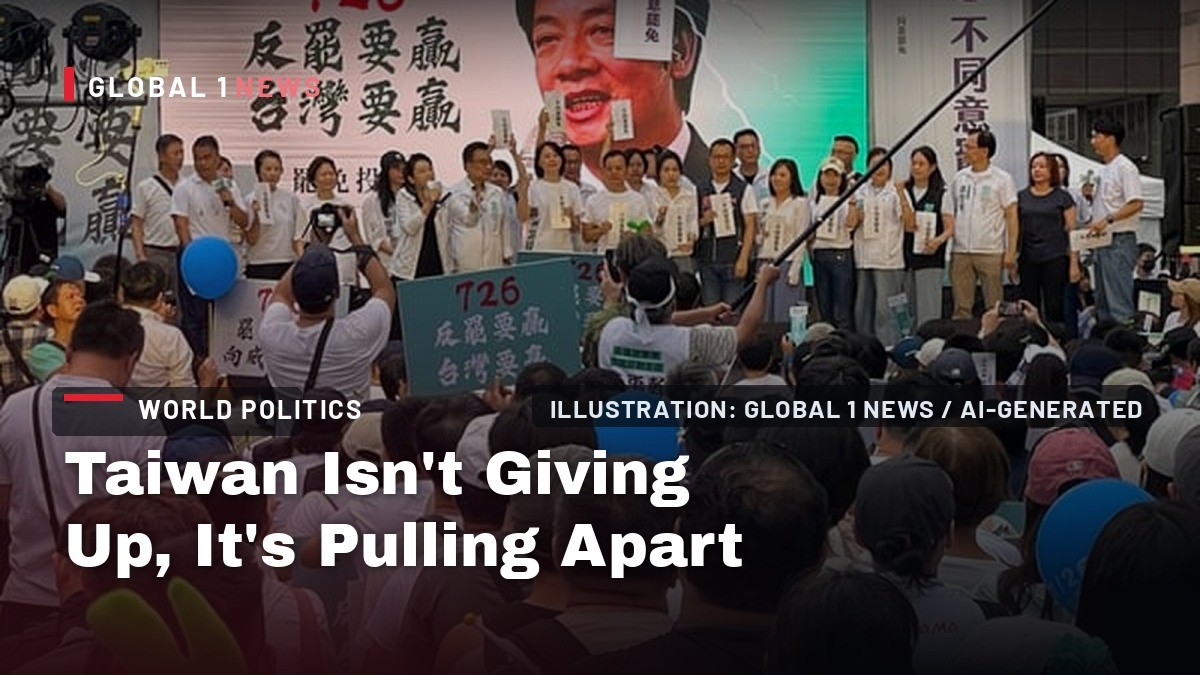
These economic concerns are set against a backdrop of intense executive‑legislative conflict during Lai Ching‑te’s first year in office. The political turbulence, culminating in the 2025 Great Recall campaign, likely amplified public doubts about the government’s competence, further undermining the first pillar of the Defense Social Contract.
Diminishing Confidence in Military Capability
Confidence in Taiwan’s own armed forces and the expectation of U.S. intervention are the strongest predictors of lower passivity. Between 2024 and 2025, the proportion of respondents who doubted that Taiwan could defend itself without external help rose from roughly two‑thirds to three‑quarters. This growing skepticism about the island’s self‑defense capacity coincides with an increase in fatalistic passivity, underscoring the importance of perceived military efficacy in motivating collective resistance.
The data also show that those who maintain confidence in the military and expect U.S. assistance are significantly less likely to choose the “let nature take its course” option. This suggests that the prospect of a credible external security guarantee remains a vital element in sustaining public resolve, even as internal confidence wanes.
Trust in Fellow Taiwanese: The Social Dimension
The second pillar—trust that fellow citizens will also resist—exerts a powerful influence on individual decisions. Respondents who believed “most Taiwanese would resist” were far less likely to opt for fatalistic passivity. The predicted passivity rate fell from roughly one‑third among those who thought their compatriots would not resist to about one‑quarter among those who expected widespread resistance.
This finding highlights the collective nature of defense in a small democracy facing a far larger adversary. When citizens perceive that the burden of resistance will be shared, they are more willing to shoulder personal risk. Conversely, a perception that others will free‑ride encourages withdrawal.
Partisan Divergence: KMT vs. DPP
The most pronounced variation in passivity emerges along partisan lines. Among supporters of the Kuomintang (KMT), the share opting for fatalistic passivity rose from roughly one‑fifth in 2024 to four‑tenths in 2025—an 18‑point increase. In contrast, Democratic Progressive Party (DPP) identifiers saw a modest rise from the mid‑twenties to just over thirty percent, a change that is statistically indistinguishable from zero. The resulting gap of over thirteen points between the two camps is statistically significant.
Importantly, the data do not indicate that KMT supporters are less patriotic or less willing to defend Taiwan. In the 2024 wave, KMT identifiers were actually slightly less fatalistic than DPP supporters. The divergence appears to have emerged during the period of heightened executive‑legislative conflict and the Great Recall campaign, suggesting that the opposition’s relationship with the ruling DPP government has soured, leading to a growing sense of alienation among KMT supporters.
Strategic Implications for Taiwan and Its Allies
The weakening of the Defense Social Contract, especially among opposition supporters, poses a strategic challenge for Taiwan’s security calculus. A rising share of the population inclined toward passive withdrawal could undermine the credibility of Taiwan’s deterrence posture, as adversaries may interpret internal passivity as a sign of reduced resolve.
For the United States and other allies, the data underscore the importance of maintaining a visible and credible security guarantee. Confidence that external assistance will arrive remains a key factor in limiting public passivity. Continued diplomatic engagement, joint exercises, and clear signaling of commitment may help shore up the third pillar of the Defense Social Contract.
Domestically, policymakers must address the underlying grievances that fuel passivity: economic insecurity, perceived governmental incompetence, and political polarization. Initiatives that improve economic resilience, enhance transparency, and foster cross‑party dialogue on national security could help rebuild trust in the state and in fellow citizens, thereby strengthening the collective resolve needed to deter aggression.
This article was produced with AI-assisted research and editorial support. Reporting is based on the source material cited below. Sources: The Diplomat; thediplomat.com; Global1.News (27 September 2026).
By Kenji Tanaka, Staff Writer
What's Your Reaction?
 Like
0
Like
0
 Dislike
0
Dislike
0
 Love
0
Love
0
 Funny
0
Funny
0
 Wow
0
Wow
0
 Sad
0
Sad
0
 Angry
0
Angry
0

Japan Correspondent at Global1.News. Tokyo-based voice covering Japanese politics, technology, economy, and culture. Tracks the intersection of tradition and innovation in one of the world's most dynamic societies.














Comments (0)