
Millions approved for spaza shop support fund but hundreds fail compliance checks
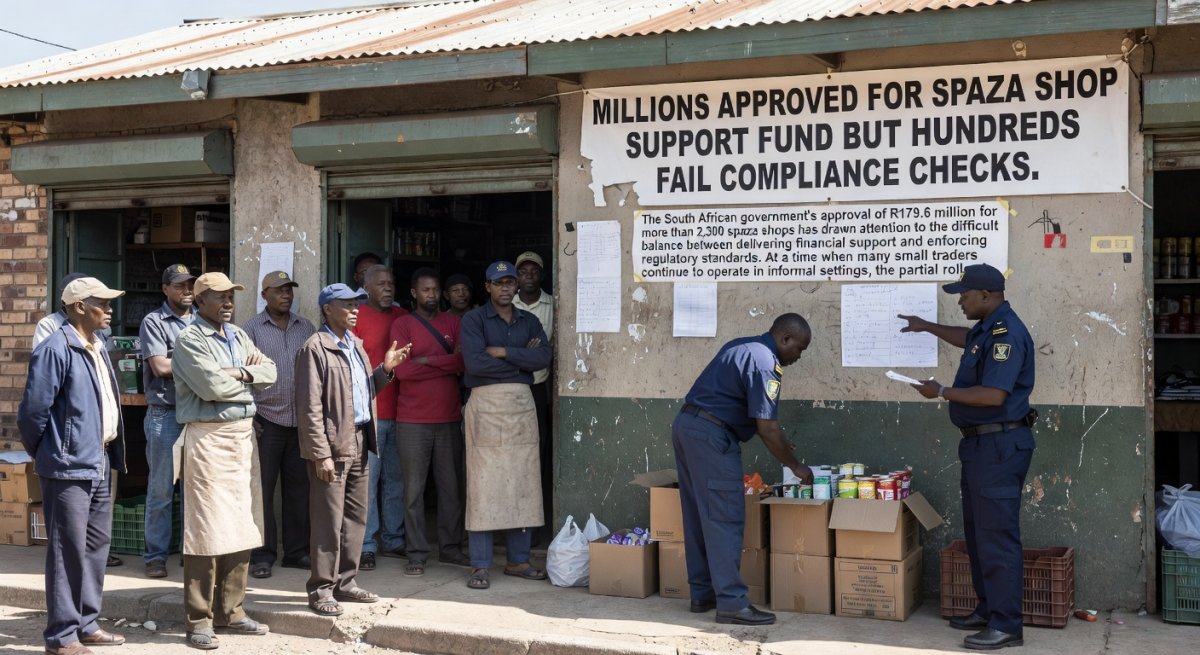
The South African government’s approval of R179.6 million for more than 2,300 spaza shops has drawn attention to the difficult balance between delivering financial support and enforcing regulatory standards. At a time when many small traders continue to operate in informal settings, the partial rollout of this assistance shows both the scale of demand and the barriers that remain in place.
Spaza shops serve as everyday access points for groceries and household goods in townships and rural areas, forming part of the country’s cultural and economic fabric. When funding reaches these businesses it can help sustain daily operations, yet the current process reveals that licensing and compliance requirements are still filtering out a significant number of applicants.
Scale of the Approved Funding
The R179.6 million already cleared represents a concrete step within a larger R500 million spaza shop support fund. This initial allocation covers more than 2,300 outlets spread across South Africa. The figures indicate that a meaningful portion of the total envelope has moved from planning into the approval stage, even while hundreds of other applicants have not yet cleared the necessary checks. Because the fund was designed to assist traders who meet defined criteria, the gap between applications received and funds disbursed points to ongoing administrative hurdles rather than a lack of available resources. The approved amount therefore serves as a snapshot of progress measured against a wider ambition.Compliance and Licensing as Ongoing Filters
Hundreds of applicants have been unable to access the support because they have not satisfied compliance and licensing conditions. These checks form an essential part of the programme and are intended to ensure that public funds reach properly registered operations. The persistence of these barriers suggests that many spaza shops still function outside formal regulatory frameworks, a situation that predates the current fund. The requirement for valid licences and adherence to health, safety and trading standards creates a clear threshold. Traders who fall short remain excluded, regardless of the overall size of the allocation. This filtering process protects the integrity of the fund but also leaves a portion of the target group without immediate relief.Context Within the Broader Support Programme
The R179.6 million tranche sits inside the R500 million spaza shop support fund that was launched to provide structured assistance to small retailers. The fund’s design reflects recognition that these outlets contribute to local supply chains and household food security. By tying disbursements to compliance, the programme seeks to encourage formalisation while delivering targeted financial help. The fact that approvals have already reached more than 2,300 shops demonstrates that the administrative machinery can process applications at scale when conditions are met. At the same time, the continued exclusion of other applicants underlines that formalisation remains an unfinished task for many informal traders.Economic and Cultural Significance of Spaza Shops
Spaza shops occupy a distinctive place in South African daily life, often operating as neighbourhood hubs where residents can obtain essentials without travelling long distances. Their presence supports both convenience and a sense of community continuity. When government support reaches these businesses, it can help maintain that role, particularly in areas where larger retail chains have limited footprints. The current funding exercise therefore intersects with wider questions about how informal and formal economies can coexist and gradually integrate. The compliance requirements attached to the fund represent one mechanism for encouraging that integration, while the partial disbursement shows the practical limits of rapid rollout.What Happens Next
Further batches of applications are expected to be assessed against the same compliance standards. The remaining balance of the R500 million fund provides headroom for additional approvals, provided applicants can satisfy licensing and regulatory conditions. Observers will watch whether the number of successful applicants grows and whether the proportion of excluded traders shrinks over time. The experience so far suggests that any expansion of support will continue to depend on the pace at which traders complete the necessary documentation and inspections. This measured approach may slow immediate relief for some operators yet aims to place future assistance on a more sustainable footing.By Dante Williams, Staff Writer
This article was produced with AI-assisted research and editorial support. Reporting is based on sources cited in the article.
What's Your Reaction?
 Like
0
Like
0
 Dislike
0
Dislike
0
 Love
0
Love
0
 Funny
0
Funny
0
 Wow
0
Wow
0
 Sad
0
Sad
0
 Angry
0
Angry
0

Dante Williams
Breaking News and Investigations Correspondent at Global1.News. Based in London, covering global breaking news, security, and investigative stories. Known for digging deeper and connecting the dots across continents.














Comments (0)