
KF-21 Boramae Certification and Hanwha's Expanding Stake in KAI
The recent airworthiness certification of the KF-21 Boramae fighter by South Korea’s Defense Acquisition Program Administration and Hanwha Group’s calculated increase of its equity position in Korea Aerospace Industries together mark a decisive phase in the country’s pursuit of indigenous aerospace sovereignty. These parallel developments illustrate how technical validation and
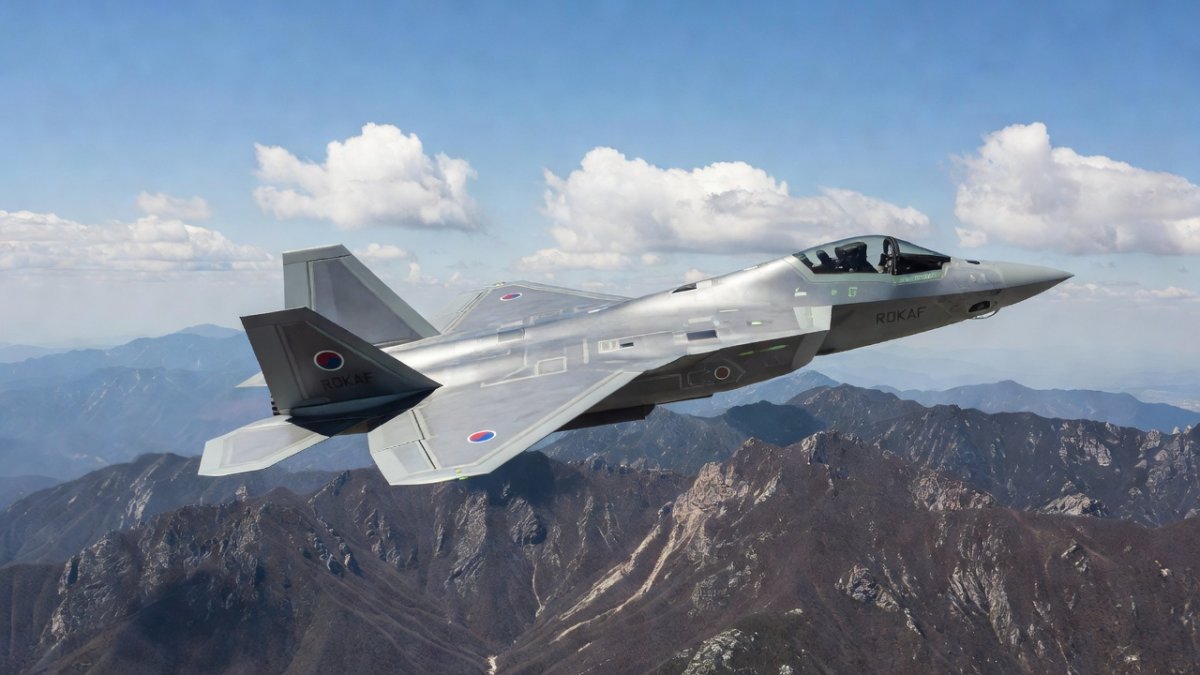
The recent airworthiness certification of the KF-21 Boramae fighter by South Korea’s Defense Acquisition Program Administration and Hanwha Group’s calculated increase of its equity position in Korea Aerospace Industries together mark a decisive phase in the country’s pursuit of indigenous aerospace sovereignty. These parallel developments illustrate how technical validation and corporate consolidation are being synchronized under state guidance to accelerate the Republic of Korea’s emergence as a top-tier defense manufacturer. The certification closes a five-year verification campaign while Hanwha’s capital infusion signals the chaebol-led restructuring that MOTIE views as essential for scaling complex programs. Both events therefore deserve joint examination as indicators of Korea’s broader aerospace trajectory through 2032 and beyond.
KF-21 Certification and Hanwha Consolidation Cement Korea’s Aerospace Ambitions
Seoul, South Korea – June 16, 2026 — On 15 June 2026 the Defense Acquisition Program Administration granted final airworthiness certification to the KF-21 Boramae, clearing the multirole fighter for series production and initial operational service with the Republic of Korea Air Force. Hours later, regulatory filings confirmed that Hanwha Group had executed additional purchases that will lift its combined stake in Korea Aerospace Industries above 12 percent by year-end. Together these announcements crystallize two decades of policy, investment, and engineering effort aimed at transforming South Korea from a licensed assembler into a globally competitive designer of advanced combat aircraft.
Certification Process and Technical Validation
The DAPA certification process subjected the KF-21 prototype fleet to 745 discrete requirements distributed across fourteen technical domains, ranging from flight-control software integrity and radar cross-section management to environmental resilience and weapons-release kinematics. Beginning in April 2021 and concluding in May 2026, the campaign encompassed more than 2,300 flight-test hours and 1,800 ground-test points executed at Sacheon, Seosan, and the Agency’s own test facilities. Each requirement was mapped to MIL-HDBK and Def-Stan equivalents, with independent audit teams from the Korea Research Institute for Defense Technology and the Air Force Test and Evaluation Group providing cross-verification.
Particular scrutiny was applied to the active electronically scanned array radar jointly developed by Hanwha Systems and LIG Nex1, whose electronic counter-countermeasure performance was validated against simulated Chinese J-20 and J-35 threat profiles. Structural-fatigue testing confirmed a 6,000-hour service life under mixed air-to-air and air-to-ground sortie spectra, while the fly-by-wire flight-control laws successfully demonstrated departure resistance at angles of attack exceeding 35 degrees. The final combat-readiness evaluation conducted in May 2026 involved four-ship tactical scenarios against ROKAF F-15K aggressors and integrated live-fire launches of the Meteor beyond-visual-range missile and the indigenously developed KGGB guided bomb.
Certification therefore represents not merely bureaucratic closure but the empirical proof that Korean industry can satisfy the most stringent Western and NATO-derived airworthiness standards without foreign type certification. The 14-domain matrix now serves as a reusable template for future indigenous platforms, including the forthcoming joint unmanned combat aerial vehicle program slated for 2029.
Production Timeline and Capability Phasing
Under the current Defense Mid-Term Plan, 120 KF-21 aircraft will enter ROKAF service by 2032. The first 40 jets, configured primarily for air-to-air missions with full Meteor and AIM-2000 integration, are scheduled for delivery beginning in the second half of 2026 at a rate of eight aircraft per year. Subsequent blocks will incorporate the full multirole suite, including the indigenous AESA, advanced electronic warfare pods, and conformal fuel tanks, bringing the total to 80 additional airframes optimized for strike and suppression of enemy air defenses.
KAI’s Sacheon final-assembly line has already been reconfigured with automated riveting cells and digital thread manufacturing systems that reduce man-hours per aircraft by 23 percent compared with the FA-50 line. First deliveries to the 29th Fighter Wing at Cheongju are expected in December 2026, with initial operational capability declared in 2028 once pilot conversion and maintenance training pipelines reach steady state. Block upgrades will be introduced at two-year intervals, ensuring that the fleet remains technologically current against evolving Northeast Asian threats through at least 2045.
Hanwha Equity Strategy and Capital Alignment
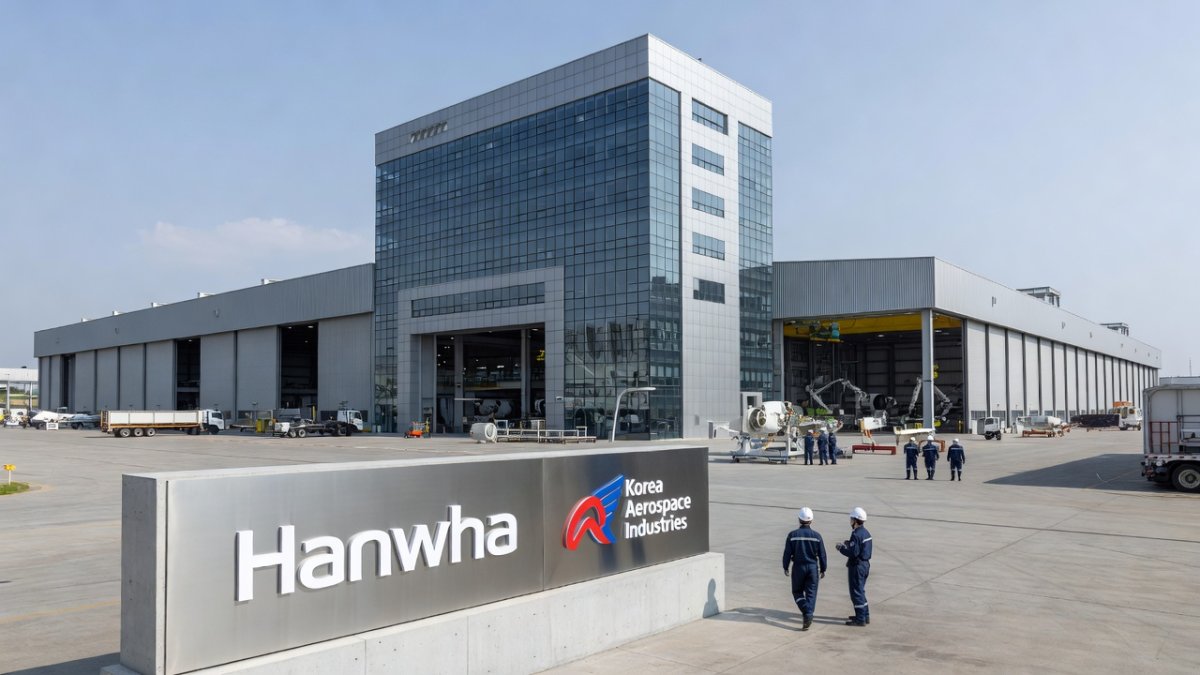
Hanwha’s stake-building campaign began with the acquisition of a 6.5 percent holding in Hanwha Aerospace valued at 500 billion won, followed by a 1.53 percent purchase in Hanwha Systems for 125 billion won and a 1.01 percent position through its U.S. subsidiary. These transactions established a 9.04 percent baseline. A further 500 billion won commitment announced on 15 June will push the aggregate position above the 12 percent threshold by December 2026, granting Hanwha board-level influence commensurate with its role as lead systems integrator for avionics and propulsion.
Hanwha executives explicitly invoked the SpaceX precedent, arguing that capital scale now rivals pure technological prowess in determining which nations field sixth-generation capabilities. By consolidating ownership, Hanwha intends to internalize supply-chain risk, accelerate vertical integration of solid-rocket motors and satellite constellations, and position itself for future manned-unmanned teaming programs. The move also aligns with MOTIE’s industrial policy that favors chaebol champions capable of sustaining multi-billion-dollar development cycles without repeated government recapitalization.
Industrial Policy and Chaebol Consolidation
MOTIE and DAPA have jointly promoted consolidation within the defense aerospace sector since the 2021 revision of the Defense Industry Development Act. The policy explicitly encourages cross-shareholdings among the “Big Three” defense chaebol—Hanwha, LIG Nex1, and Hyundai Rotem—to achieve economies of scale in avionics, sensors, and airframe subsystems. Domestic content targets for the KF-21 have risen from an initial 60 percent to 78 percent following certification, with further increases projected once the K9-derived auxiliary power unit and indigenously forged titanium bulkheads enter serial production.
These measures reduce foreign dependency below the 20 percent threshold that previously exposed programs to International Traffic in Arms Regulations delays. They also create a self-reinforcing innovation loop in which profits from KF-21 exports can be recycled into next-generation sixth-generation demonstrators. The Hanwha-KAI linkage therefore exemplifies the state-directed yet market-executed model that South Korea hopes will vault it into the global top-ten arms-exporting nations by 2030.
Regional Security Implications
The KF-21’s certification arrives against a backdrop of accelerating air-power modernization across Northeast Asia. China’s J-20 and J-35 fleets now exceed 300 aircraft, while North Korea continues to flight-test air-launched ballistic missiles and new surface-to-air systems. ROKAF’s existing F-15K and KF-16 fleets face block obsolescence by the early 2030s; the KF-21’s combination of supercruise, low-observability features, and Meteor integration provides a credible counterweight at roughly two-thirds the unit cost of an F-35A.
By fielding 120 indigenous fighters, Seoul reduces its reliance on U.S. Foreign Military Sales and gains greater operational autonomy in potential contingencies involving both the Korean Peninsula and the Taiwan Strait. The aircraft’s open mission-systems architecture also facilitates future interoperability with U.S. and Japanese assets under the expanding trilateral security framework, thereby contributing to collective deterrence without necessitating additional alliance procurement commitments.
Export Strategy and International Partnerships
Indonesia remains the KF-21’s anchor export customer under a 20 percent cost-sharing agreement, although Jakarta’s payment arrears have prompted Seoul to restructure financing through the Korea Development Bank. Parallel marketing of the proven FA-50 light combat aircraft—also manufactured at KAI—has already secured contracts with Poland, Malaysia, and the Philippines, generating valuable sustainment revenue that subsidizes KF-21 development overhead.
Additional target markets include Egypt, Morocco, and select Latin American states seeking affordable 4.5-generation replacements for aging F-5 and Mirage fleets. DAPA’s newly established Defense Export Promotion Agency is coordinating government-to-government offsets that bundle KF-21 avionics support with Hanwha’s satellite and ground-system offerings, thereby creating comprehensive defense-industrial packages attractive to middle-power air forces.
Looking Ahead: Risks, Opportunities, and Proof of Concept
Despite certification success, residual risks include potential Indonesian funding shortfalls, software-stability issues during initial operational testing, and the perennial challenge of maintaining a skilled aerospace workforce amid competition from commercial space ventures. Nevertheless, the KF-21 now stands as a tangible proof of concept for Korea’s ability to deliver a clean-sheet, fifth-generation fighter on schedule and within revised budget envelopes.
Future programs—including a sixth-generation manned-unmanned teaming platform and a new advanced trainer—will inherit the certification methodology, supply-chain architecture, and chaebol governance structures validated by the present milestone. Should Hanwha’s stake consolidation proceed without regulatory challenge, South Korea will possess an integrated industrial champion capable of sustaining two-decade development cycles, thereby securing its position among the world’s elite aerospace powers well into the 2040s.
By Prof. David Park, Staff Writer
This article was produced with AI-assisted research and editorial support. Reporting is based on sources cited in the article.
What's Your Reaction?
 Like
0
Like
0
 Dislike
0
Dislike
0
 Love
0
Love
0
 Funny
0
Funny
0
 Wow
0
Wow
0
 Sad
0
Sad
0
 Angry
0
Angry
0

East Asia/Technology Correspondent at Global1.News. Seoul-based voice covering Korean politics, technology, business, and culture. Analyzes how technology and geopolitics intersect across East Asia.














Comments (0)