
UK Demands FIFA Probe After Argentine Players Brandish Falklands Banner in World Cup Semifinal Win Over England
UK demands FIFA investigate Argentina after Martinez and Lo Celso displayed a "Las Malvinas son Argentinas" banner following their 2-1 World Cup semifinal win over England. The act violated FIFA rules banning political symbols, reigniting tensions from the 1982 Falklands War that killed 904 people.
In a stunning breach of football's longstanding separation from geopolitics, Argentine players brandished a provocative banner declaring "Las Malvinas son Argentinas" immediately after their dramatic 2-1 semifinal triumph over England at the 2026 World Cup in Atlanta. The act has triggered an official demand from the UK government for FIFA to launch a full investigation, with Downing Street insisting the World Cup must remain free of territorial disputes. Business Minister Peter Kyle branded the display an "egregious violation" of FIFA rules that explicitly prohibit political symbols on the pitch.
UK Demands FIFA Probe After Argentine Players Brandish Falklands Banner in World Cup Semifinal Win Over England
Atlanta, Georgia – July 16, 2026 — Prime Minister Keir Starmer's Downing Street office has thrown its full weight behind calls for FIFA to investigate Argentina's national team following the highly charged incident. The banner reading "The Falklands are Argentinian" was held aloft by defenders Lisandro Martinez and Giovani Lo Celso as they celebrated in front of jubilant fans after overcoming a 1-0 deficit with two late goals to secure a place in Sunday's final against Spain in New Jersey. The move has reignited decades-old tensions stemming from the 1982 Falklands War, during which Argentina invaded the British overseas territory in the South Atlantic, prompting then-Prime Minister Margaret Thatcher to dispatch a naval task force that ultimately reclaimed the islands after 74 days of conflict resulting in 649 Argentine and 255 British deaths.
Downing Street Insists Politics Must Remain Separate From Football
Business Minister Peter Kyle was the first senior UK figure to publicly condemn the banner display, telling the BBC that the incident represented a clear breach of FIFA's foundational principle that politics and football must never mix. "Politics needs to be separate from football. In fact, the World Cup has one of its central tenets that politics is separate from football," Kyle stated on Thursday, one day after the July 15 semifinal. He added that the matter now rests squarely with FIFA and that the UK government expects the world governing body to conduct a thorough investigation without delay. A Downing Street spokesperson reinforced this position with a blunt declaration: "The World Cup might not be ours, but the Falkland Islands definitely are." This coordinated response from the Starmer administration underscores Britain's determination to treat the banner not as harmless patriotism but as a deliberate political statement on the field of play, potentially exposing players to disciplinary action under FIFA statutes.
FIFA's Explicit Ban on Political Banners and Symbols
FIFA's stadium code of conduct is unambiguous on this issue, prohibiting "banners, flags, flyers, apparel and other paraphernalia that are of a political, offensive, and/or discriminatory nature" from being displayed inside venues. The rule exists precisely to prevent matches from becoming platforms for territorial claims, historical grievances, or nationalist provocations. In this case, the banner directly referenced Argentina's longstanding claim over the Falkland Islands, known locally as Las Malvinas, which Britain has held since the 19th century. Argentina has never relinquished its assertion that the archipelago forms an integral part of its sovereign territory. FIFA had not issued any immediate comment or confirmation of an investigation by the time of this reporting, but the organization's track record suggests that visible political gestures during live play often trigger at minimum a formal review and possible sanctions ranging from fines to suspensions for involved players.
Argentine Players Defend Banner as Emotional Tribute to War Veterans
Lisandro Martinez, who has spent four years playing club football in England with Manchester United, offered an unapologetic defense of the banner display. Speaking after the match, Martinez said the act stirred profound national emotions and that he could vividly imagine a Malvinas war veteran watching the moment and being moved to tears. "I can picture a Malvinas veteran seeing that and weeping," Martinez stated. "I don't know if there might be sanctions or not, but what they did was display that banner and assert that the islands belong to us." His teammate Leandro Paredes echoed similar sentiments, describing the 1982 conflict as a painful chapter in Argentine history that still resonates deeply. "Sadly, it is a sad part of our history, for everyone involved in that chapter of, I repeat, our history. And it hurts. We knew we were playing for them, too," Paredes said. These comments reveal how, for many in the Argentine squad, the gesture transcended sport and connected directly to national identity and unresolved grievances from the war that claimed hundreds of lives on both sides.
Pre-Match Rhetoric and Heightened Security Concerns in Argentina
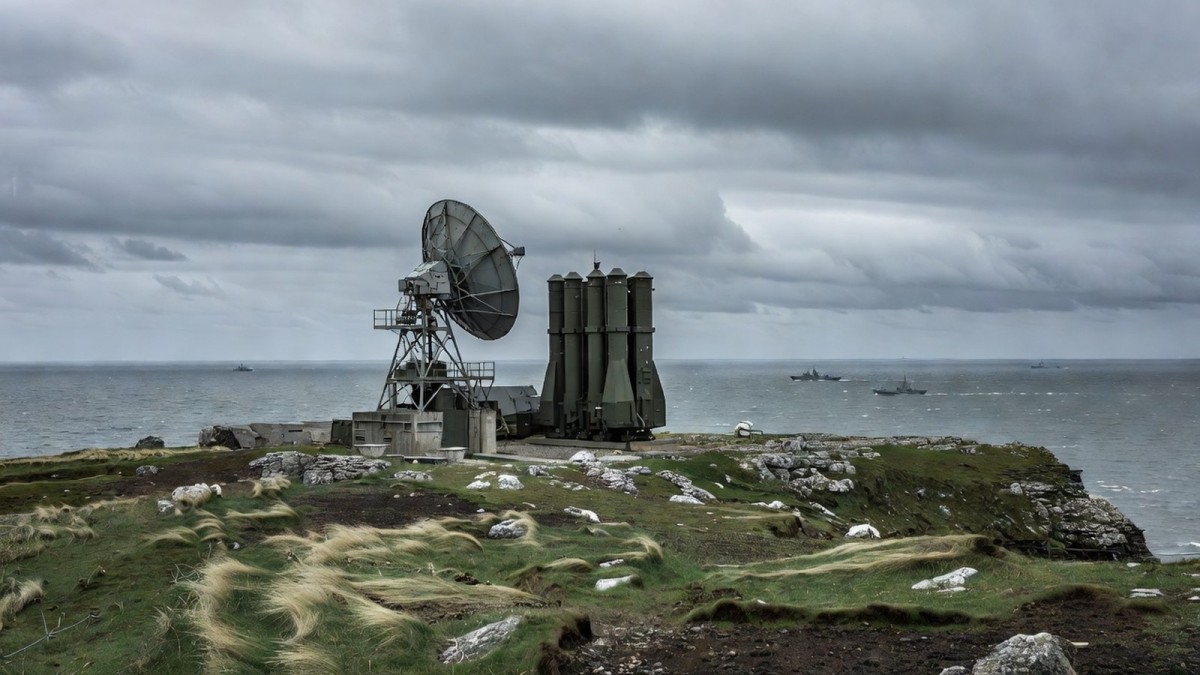
Tensions had already been stoked before kickoff when Argentina's Vice President Victoria Villarruel referred to the English as "usurping pirates" in public remarks. This inflammatory language set a confrontational tone for the encounter between two nations whose football rivalry is permanently colored by the 1982 Falklands conflict. In response to the anticipated passions, Argentina's security minister Alejandra Monteoliva announced on Tuesday that authorities had planned for enhanced security measures around any victory celebrations. "There will be 1,600 officers. We want the celebration to be peaceful," Monteoliva confirmed. The focus on maintaining order reflected awareness that public displays tied to the Malvinas issue could quickly escalate into broader demonstrations. Following the semifinal victory, Argentina's foreign minister escalated matters further on the diplomatic front by announcing that Buenos Aires had filed a formal protest over the presence of a British warship near the Falkland Islands, linking the football celebration directly to ongoing sovereignty disagreements.
Historical Context of the Falklands Dispute and Its Enduring Impact
The roots of the controversy stretch back to the 19th century when Britain established control over the Falkland Islands, a position London has maintained ever since. Argentina has consistently claimed the islands as its own, leading to the 1982 invasion ordered by the Argentine junta. The subsequent war, launched under Margaret Thatcher's leadership, lasted 74 days and ended in British victory but at significant human cost: 649 Argentine personnel and 255 British service members lost their lives. That conflict continues to shape relations between the two countries more than four decades later, with the islands remaining a British overseas territory whose roughly 3,000 residents overwhelmingly identify as British and have repeatedly affirmed their desire to remain under UK sovereignty. The banner incident at the World Cup has served as a vivid reminder that the wounds from 1982 have not fully healed, particularly within Argentine society where the Malvinas remain a potent symbol of national pride and perceived historical injustice.
Pattern of Political Chants and Gestures Throughout Argentina's World Cup Run
This was not an isolated occurrence during Argentina's 2026 campaign. Following their quarterfinal victory over Switzerland, some players were recorded chanting "For the Malvinas, for Diego [Maradona] and for Leo [Messi]'s last one." The reference simultaneously invoked the Falklands cause, the late football legend Diego Maradona, and captain Lionel Messi's final tournament. Such chanting demonstrates how the squad has woven the Malvinas narrative into their competitive motivation. The semifinal banner, held aloft by Martinez and Lo Celso while they grinned and waved to supporters, appeared to be a deliberate culmination of this theme. It remains unclear how the banner entered the stadium or who originally supplied it, but its prominent display immediately after the final whistle ensured maximum visibility to global television audiences and stadium spectators alike.
Potential Consequences and FIFA's Responsibility Under Scrutiny
The UK government's swift demand for an investigation places significant pressure on FIFA to act decisively. Kyle's characterization of the banner as an "egregious violation" aligns with the organization's own written prohibitions, suggesting that at minimum the players involved could face individual sanctions while the Argentine Football Association might incur fines or other penalties. Downing Street's emphasis that "the Falkland Islands definitely are" British reinforces that this is not viewed in London as mere sporting exuberance but as a political incursion onto the pitch. As Argentina prepares to face Spain in the final on July 19 in New Jersey, the cloud of a possible FIFA probe hangs over the squad. The incident also raises broader questions about how international sporting bodies enforce rules against political expression when national passions run deep, particularly on issues as emotionally charged as territorial sovereignty disputes that have previously led to armed conflict.
The coming days will determine whether FIFA treats the banner display as a minor celebration that got out of hand or as a serious breach warranting formal punishment. For the UK government, the red line has been drawn: football's global showcase cannot be allowed to become a vehicle for challenging British sovereignty over the Falklands. Argentine players, meanwhile, have made it clear they stand by their actions as an expression of deeply held national sentiment tied to the memory of the 1982 war dead. The intersection of sport, history, and politics has once again thrust the Falkland Islands dispute into the international spotlight at the very pinnacle of the world's most popular game.
By Jessica Ali, Staff Writer
This article was produced with AI-assisted research and editorial support. Reporting is based on sources cited in the article.
What's Your Reaction?
 Like
0
Like
0
 Dislike
0
Dislike
0
 Love
0
Love
0
 Funny
0
Funny
0
 Wow
0
Wow
0
 Sad
0
Sad
0
 Angry
0
Angry
0

Editor-in-Chief at Global1.News. Atlanta-based journalist who cuts through the BS and tells it like it is. Lead anchor, host, and the voice you hear when the spin stops and the truth starts.









Comments (0)