
Japan's Quantum Computing Legacy: From a 1998 Theory to a Billion-Dollar National Strategy
Introduction Setting Up the Story The NHK Science View episode "A Quantum Search for Optimal Solutions" examines Japan's foundational role in quantum computing through the work of Professor Hidetoshi Nishimori at the Institute of Science Tokyo and Tadashi Kadowaki at the National Institute of Advanced Industrial Science and Technology. Their contributions trace back to a 1998 p
Introduction Setting Up the Story
The NHK Science View episode "A Quantum Search for Optimal Solutions" examines Japan's foundational role in quantum computing through the work of Professor Hidetoshi Nishimori at the Institute of Science Tokyo and Tadashi Kadowaki at the National Institute of Advanced Industrial Science and Technology. Their contributions trace back to a 1998 paper that introduced quantum annealing theory, which later supported the development of the world's first commercial quantum computer. The episode highlights practical uses in communication network optimization and accelerated drug discovery while noting the 2025 quantum computing conference held in Tokyo that featured Quantum AI projects.
Nishimori, who specialized in statistical physics and spin glass materials, now leads the Specialized Academy for Quantum Computing at Science Tokyo. Kadowaki continues research at AIST. The episode remains available on NHK World-Japan until November 24, 2026. These elements connect directly to Japan's broader policy framework under the Seventh Basic Plan for Science, Technology and Innovation, which guides long-term investments in strategic technologies.
Japan's approach integrates quantum efforts with the Society 5.0 vision for merging digital and physical systems. METI's Semiconductor and Digital Industry Strategy Initiatives provide additional structure for these developments. The episode positions the 1998 theory as a starting point for ongoing national and international collaborations without overstating immediate outcomes.
The 1998 Discovery: Quantum Annealing
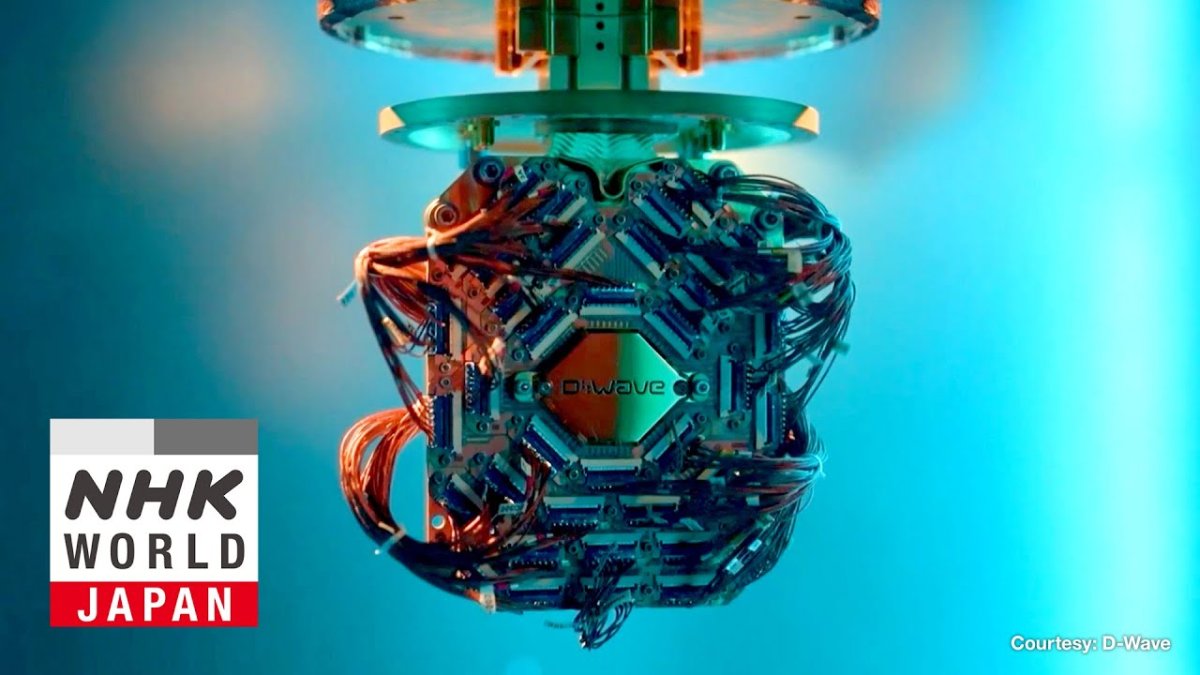
In 1998, Professor Hidetoshi Nishimori and Tadashi Kadowaki published a paper proposing quantum annealing as a method to solve optimization problems by leveraging quantum fluctuations. This work built on Nishimori's expertise in statistical physics and spin glass materials, which model complex systems with multiple possible states. The theory offered a distinct path from gate-based quantum computing by focusing on finding ground states in physical systems.
Quantum annealing differs from other quantum approaches by gradually reducing quantum effects to settle on optimal solutions. The 1998 paper outlined how this process could address combinatorial optimization challenges that classical computers handle inefficiently. Kadowaki's involvement at what is now AIST helped ground the theoretical proposal in practical computational considerations.
Japanese researchers viewed the method as aligned with national strengths in materials science and precision engineering. The paper did not claim immediate commercial readiness but established a conceptual foundation that later influenced hardware development. Subsequent work at institutions such as the Institute of Science Tokyo refined the underlying mathematics over the following decades.
From Theory to World's First Commercial Quantum Computer
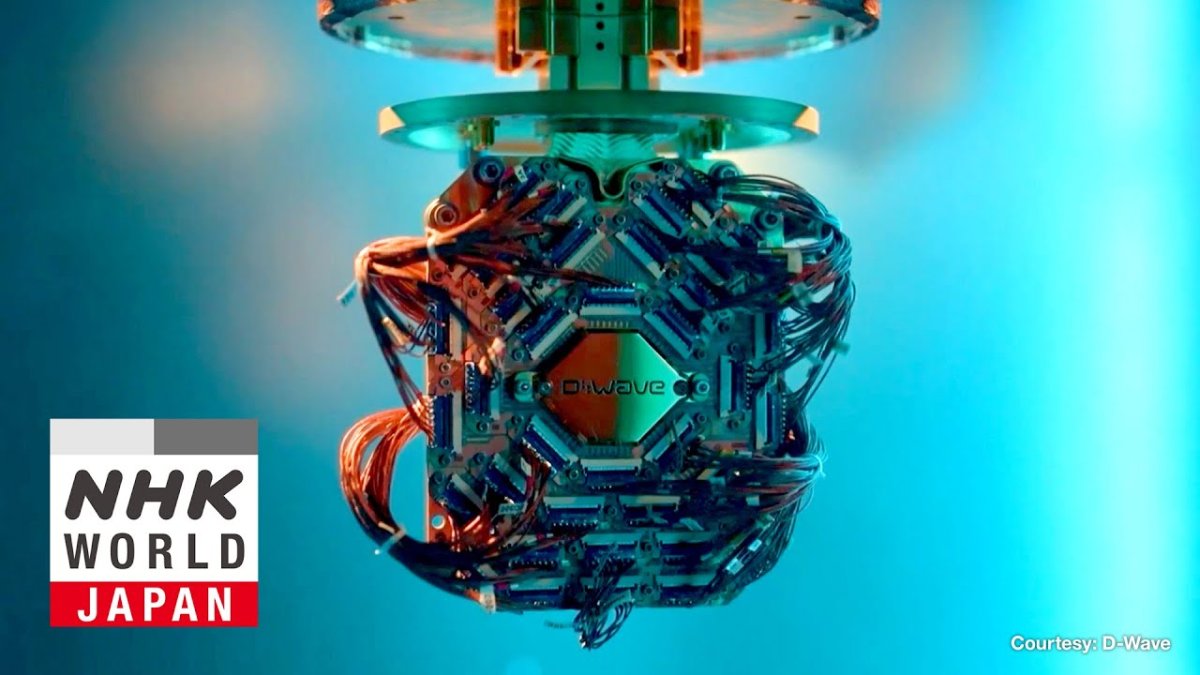
The 1998 quantum annealing theory contributed to the creation of the world's first commercial quantum computer. This transition involved translating spin glass concepts into programmable systems capable of handling real-world optimization tasks. Companies and research organizations built upon the original proposal to develop annealing-based machines that operate at scale.
Early implementations demonstrated advantages in specific domains such as network routing and scheduling. The commercial system emerged after years of iterative engineering that addressed challenges like noise reduction and qubit connectivity. Japanese institutions maintained involvement through continued theoretical support from Nishimori's group and experimental work at AIST.
The resulting hardware found initial adoption in industrial settings where optimization problems dominate. This outcome illustrates how a focused theoretical contribution from 1998 could evolve into deployed technology. The NHK episode presents this progression as a measured advancement rather than an overnight breakthrough.
Japan's Quantum Strategy and Government Investment
Japan's quantum initiatives operate under the Seventh Basic Plan for Science, Technology and Innovation, which coordinates efforts across ministries and research bodies. The plan includes approximately 370 trillion yen in planned investment for AI and strategic sectors by FY2040. METI's Semiconductor and Digital Industry Strategy Initiatives complement this framework by addressing supply chain and infrastructure needs relevant to quantum hardware.
Society 5.0 provides the overarching integration goal, aiming to connect quantum capabilities with physical systems in manufacturing and logistics. The Specialized Academy for Quantum Computing at Science Tokyo, led by Nishimori, trains researchers to support these objectives. Government funding mechanisms prioritize projects that align with national economic priorities while encouraging collaboration between universities and national laboratories.
These policies emphasize steady capability building rather than rapid deployment timelines. METI coordinates with other agencies to align quantum work with semiconductor advancements. The approach reflects Japan's preference for long-horizon planning in technology development, consistent with prior investments in supercomputing and materials research.
US-Japan Quantum Partnership and Global Collaboration
On June 8, 2026, the United States and Japan announced a $1 billion joint quantum research commitment under President Trump's Genesis Mission. The agreement allocates $500 million from each country over five years through collaboration between the Department of Energy, MEXT, and METI. Eleven joint teams combine expertise from DOE National Labs with Japanese institutions including RIKEN, the University of Tokyo, NIMS, KEK, and J-PARC.
Participants gain access to the Fugaku supercomputer alongside DOE high-performance computing systems. The partnership builds on the 2025 U.S.-Japan Technology Prosperity Deal and focuses on complementary strengths in hardware, algorithms, and applications. This structure supports shared experimental facilities without assuming immediate commercial translation.
Additional industry-academic efforts include Fujitsu and the University of Osaka developing early-FTQC technologies announced in March 2026. Kyoto University reported a breakthrough in quantum W-state detection in May 2026. The University of Tokyo QII Consortium maintains an IBM Quantum System for research use. These activities operate alongside the bilateral government framework.
Applications and Industry Impact
Quantum annealing systems address optimization problems in communication network design, where they evaluate large numbers of routing configurations. Drug discovery efforts use similar methods to model molecular interactions more efficiently than classical approaches alone. The 2025 Tokyo quantum computing conference showcased Quantum AI projects that combine annealing techniques with machine learning for materials screening.
Manufacturing and logistics sectors in Japan stand to benefit from improved scheduling and resource allocation. Pharmaceuticals represent another target area where faster identification of candidate compounds could shorten development cycles. These applications align with METI priorities for digital transformation in key industries.
Current deployments remain specialized rather than general-purpose. Japanese firms continue testing systems in controlled environments before wider rollout. The episode notes that practical gains depend on further refinement of both hardware and algorithms.
Expert Perspectives
Professor Hidetoshi Nishimori emphasizes the statistical physics origins of quantum annealing and its continued relevance to optimization challenges. His leadership of the Specialized Academy for Quantum Computing focuses on preparing the next generation of researchers through targeted training programs. Nishimori's background in spin glass materials informs ongoing theoretical refinements.
Tadashi Kadowaki, working at AIST, contributes to bridging theoretical models with experimental implementations. His perspective highlights the importance of sustained institutional support for translating early concepts into functional systems. Both researchers appear in the NHK episode discussing the path from 1998 to current applications.
Additional commentary from conference participants in 2025 underscores the value of international partnerships for accessing diverse computational resources. Experts stress measured expectations regarding timelines while recognizing concrete progress in specific use cases such as network optimization.
What to Watch For
Continued development of early-FTQC technologies by Fujitsu and the University of Osaka will provide data on fault-tolerant approaches. Further results from the eleven joint teams under the 2026 US-Japan agreement should clarify performance benchmarks when using Fugaku and DOE systems. The Specialized Academy at Science Tokyo will expand its training output in coming years.
Integration with Society 5.0 initiatives will determine how quantum methods connect to broader digital infrastructure goals. METI's semiconductor strategies may influence hardware supply chains supporting quantum devices. Observers should monitor updates from the University of Tokyo QII Consortium and Kyoto University on W-state detection techniques.
The NHK episode remains available for reference until November 24, 2026, offering context on the foundational 1998 work. Future conferences and policy updates under the Seventh Basic Plan will shape investment priorities through FY2040. These developments proceed within established frameworks that prioritize alignment between research, industry, and government objectives.
By Kenji Tanaka, Staff Writer
This article was produced with AI-assisted research and editorial support. Reporting is based on sources cited in the article.
What's Your Reaction?
 Like
0
Like
0
 Dislike
0
Dislike
0
 Love
0
Love
0
 Funny
0
Funny
0
 Wow
0
Wow
0
 Sad
0
Sad
0
 Angry
0
Angry
0

Japan Correspondent at Global1.News. Tokyo-based voice covering Japanese politics, technology, economy, and culture. Tracks the intersection of tradition and innovation in one of the world's most dynamic societies.














Comments (0)