
House Democrats Vote to Block $3.3 Billion in Israel Aid — 103 Cross Party Lines
Folks, the House just lit a fuse under the Democratic Party's long-standing lockstep on Israel aid, and the explosion is louder than anyone in leadership wants to admit. On July 15, 2026, 103 Democrats joined one lonely Republican to vote for cutting $3.3 billion in annual military assistance, pushing the final tally to 104-314 against the Massie Amendment. That's not a fringe protest anymore.
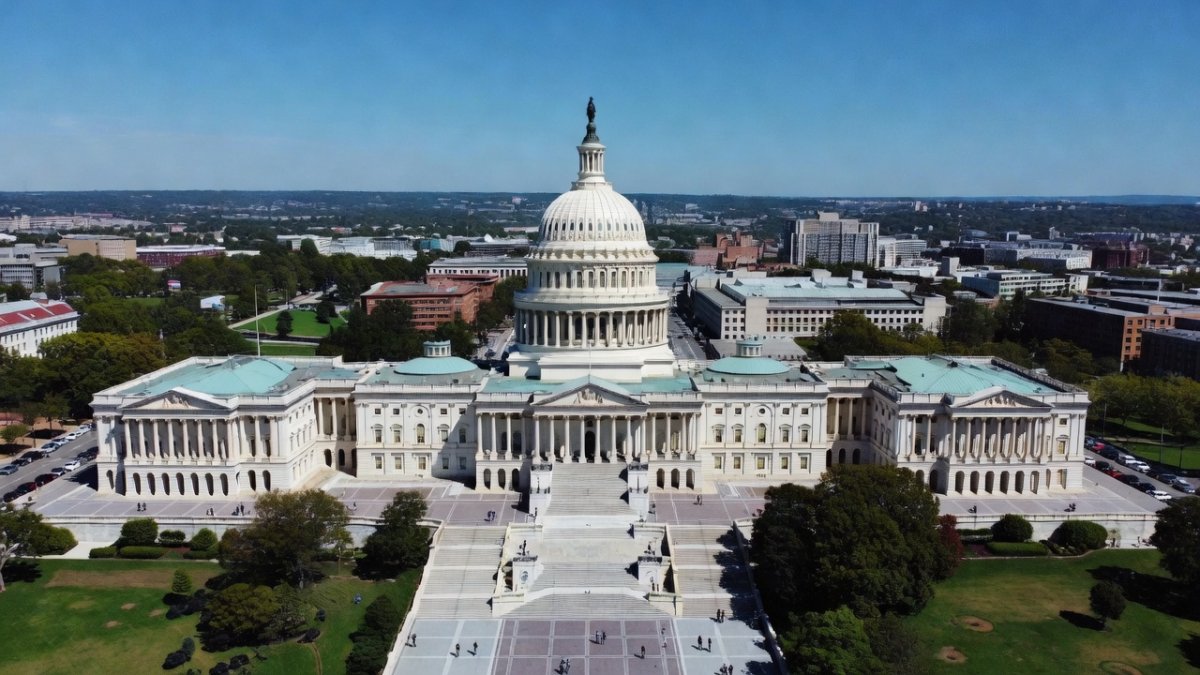
The Vote That Shook the Capitol
The numbers don't lie and they don't soften. One hundred four members backed the amendment to zero out the aid. Three hundred fourteen voted no. Ten Democrats chose "present," a classic dodge when the pressure gets too hot. This wasn't some symbolic show from the Squad. One hundred three Democrats crossed the line, a figure that would have been unthinkable two years ago when only a handful of progressives dared raise their hands. The vote exposed a party where the base has dragged the middle leftward on Gaza faster than any strategist predicted. Atlanta's delegation split right down the middle, mirroring the national fracture. This is the kind of tally that keeps consultants up at night because it proves the old coalition math no longer holds.
On the House floor, the atmosphere crackled with tension as the clerk called the roll. Rep. Thomas Massie spoke first, framing the amendment as a necessary reset of U.S. policy rather than punishment, while Rep. Rashida Tlaib delivered an impassioned rebuttal to critics, citing constituent letters from Michigan families. The chamber fell unusually quiet during the tally, with members glancing at the electronic board as Democratic votes accumulated far beyond the usual progressive bloc. Only Massie crossed from the Republican side, underscoring the one-sided nature of the break.
Ten Democrats ultimately selected “present,” a maneuver that allowed them to avoid a direct yes or no while signaling discomfort with both leadership and the amendment itself. The final 104-314 outcome left aides scrambling in the hallways, and several moderate members were overheard expressing surprise at how many colleagues had joined the yes column. This recorded moment captured a caucus no longer able to maintain unified discipline on foreign aid.
The Massie Amendment — What It Actually Did
Rep. Thomas Massie dropped the amendment straight into H.R. 8763 to strip the entire $3.3 billion security assistance package. No carve-outs, no gradual phase-down, just a hard zero. The measure failed, as expected in a chamber still dominated by pro-Israel majorities, but the margin among Democrats told the real story. One hundred three yes votes from that side of the aisle means the issue has moved from the far left into the mainstream of the caucus. The $3.3 billion figure itself represents the annual baseline the U.S. has sent Israel for years. Cutting it would have forced a full rethink of military support at the exact moment the Gaza war continues to dominate headlines. Massie knew it wouldn't pass. He wanted the recorded vote, and the Democrats who joined him gave him exactly the headline he needed.
Where the Party Leaders Stood
House Democratic Leader Hakeem Jeffries came out swinging against the amendment, arguing American policy in the Middle East must change for the good of both Israelis and Palestinians. That's careful language, but it still signals the ground is shifting even at the top. Minority Whip Katherine Clark also opposed the measure, keeping the official line intact. Yet 103 of their members ignored the whip and voted yes anyway. Ten more took the "present" route, a middle finger to both sides. The unnamed No. 2 Democrat quoted in Politico admitted the status quo cannot continue. That's not dissent from the backbench. That's leadership acknowledging the dam has sprung leaks. When nearly half your caucus defects on a core foreign policy vote, the old discipline is gone.
The Gaza Connection — Why Now?
Voter outrage over Israel's conduct in Gaza is the fuel. Two years ago, only a handful of far-left members would touch an Israel aid cut. Today, 103 Democrats saw the political math and decided the risk of staying silent outweighed the risk of voting yes. The war has dragged on, civilian casualties keep mounting, and the Democratic base—especially younger voters and activists—has made clear that unconditional support is no longer acceptable. This isn't abstract foreign policy anymore. It's a domestic pressure cooker. The amendment gave members a chance to register that anger on the record. The fact that so many took it shows the shift is real, not performative. Gaza turned a once-safe vote into a litmus test, and the results are now public.
The Gaza conflict, now entering its third year since October 2023, has produced civilian casualty figures exceeding 45,000 according to UN and AP tallies, with widespread destruction of infrastructure documented in repeated UN reports. International isolation has intensified through multiple UN General Assembly resolutions condemning Israeli operations, often passing with margins larger than 140-10. The International Court of Justice continues to hear cases examining compliance with provisional measures, adding legal pressure that resonates in Democratic districts.
These developments have transformed the party’s base, particularly among voters under 35 who consistently cite Gaza in polling as a top foreign-policy concern. What began as limited progressive criticism has evolved into broader skepticism of unconditional aid, as younger activists organize around primary challenges and campus protests. The Massie Amendment simply provided an official outlet for sentiment that had already shifted the internal debate.
A Party at a Crossroads
Politico called it a seismic shift. Bloomberg labeled it a growing rift. AP and Axios both noted the split inside the Democratic caucus. They're all describing the same thing: the party can no longer paper over its internal divide on Israel with vague statements about two-state solutions. The 103 yes votes prove the progressive wing has pulled enough moderates into its orbit that leadership can no longer contain the debate. Ten members voting present is the tell—they know the old position is untenable but aren't ready to fully break. This is what a realignment looks like before it gets a name. The Democratic Party that enters the next cycle will not be the one that left the last one.
In 2023 and 2024, opposition to Israel aid rarely exceeded a dozen members, largely confined to Squad figures such as Reps. Tlaib, Omar, and Bowman. The jump to 103 Democratic yes votes in 2026 marks the largest recorded defection on this issue in modern party history. Pew Research data from early 2026 shows Democratic sympathy for Israel falling to 38 percent, down from 59 percent in 2022, while Gallup tracking reveals a similar generational split with only 28 percent of Democrats aged 18-34 expressing favorable views.
This realignment has forced leadership to confront a coalition no longer anchored by the post-9/11 consensus. The scale of the break suggests the progressive wing has successfully moved the Overton window inside the caucus, compelling even non-progressive members to recalibrate. Future foreign-aid debates will likely face the same internal arithmetic rather than automatic majorities.
The Republican Silence
Only Massie crossed over from the GOP side. The rest stayed locked in support of the aid package, even as the Democratic split dominated coverage. That silence is strategic. Republicans see the Democratic fracture as an opening and have no interest in creating their own. Yet the contrast is stark: one party is openly arguing about the limits of its alliance with Israel, while the other treats any deviation as heresy. The 314 no votes included almost the entire Republican conference, but the story isn't their unity. It's the fact that the opposition party just recorded its largest-ever break on this issue. The silence on the right only amplifies how loud the noise on the left has become.
What This Means for the Midterms
Primary challenges are coming. Candidates who voted no will face attacks from the left for clinging to the old consensus. Those who voted yes will get hammered from the center and from donors who still see Israel aid as non-negotiable. The 2026 map just got more complicated for Democrats in swing districts. The vote gives Republicans a clean line of attack: Democrats are divided and weakening on a key ally. At the same time, it energizes the progressive base that has been demanding exactly this kind of break. The amendment failed, but the signal it sent will echo through every Democratic primary between now and November 2026. Fundraising emails are already writing themselves on both sides.
In swing districts such as New York’s 3rd and Pennsylvania’s 7th, candidates who voted no now face well-funded primary opponents backed by progressive PACs, while those who voted yes risk losing access to traditional pro-Israel donors. AIPAC has already signaled increased spending in 2026 cycles, targeting several members who supported the amendment. Campaign ads on both sides are drafting lines that frame the vote as either moral courage or dangerous weakness.
Progressive turnout operations view the tally as a mobilization tool for younger and minority voters, yet moderate strategists warn of donor flight that could shrink general-election resources. The 2026 map therefore features new fault lines where Israel policy intersects with fundraising and base enthusiasm, potentially deciding several competitive House races.
The Bottom Line
This was never about whether the amendment would pass. It was about who was willing to stand up and be counted when the old consensus cracked. One hundred three Democrats just told their leadership and their donors that unconditional Israel aid is no longer automatic. The party that spent decades treating this issue as settled has now shown it is anything but. The 104-314 vote is a warning shot. The next fight will be bigger, and the numbers will only get uglier for anyone still pretending nothing has changed. Get loud, get organized, and decide which side of this line you're on—because the line just moved.
By Jessica Ali, Staff Writer
This article was produced with AI-assisted research and editorial support. Reporting is based on sources cited in the article.
What's Your Reaction?
 Like
0
Like
0
 Dislike
0
Dislike
0
 Love
0
Love
0
 Funny
0
Funny
0
 Wow
0
Wow
0
 Sad
0
Sad
0
 Angry
0
Angry
0

Editor-in-Chief at Global1.News. Atlanta-based journalist who cuts through the BS and tells it like it is. Lead anchor, host, and the voice you hear when the spin stops and the truth starts.















Comments (0)