
Russia Urges Citizens in Gulf to Take Precautions as Iran-U.S. Conflict Escalates
Russia's Foreign Ministry warns citizens in Gulf states to take safety precautions as Iran-U.S. strikes escalate, linking Gulf crisis to stalled Ukraine mediation.
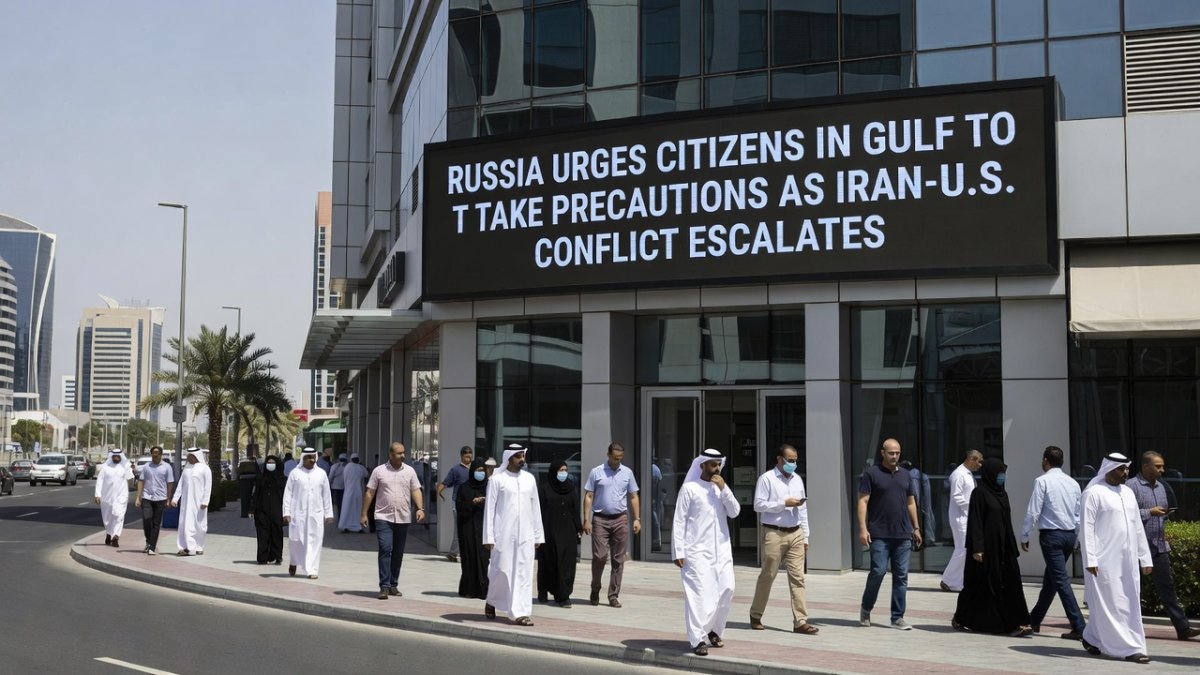
Russia Urges Citizens in Gulf to Take Precautions as Iran-U.S. Conflict Escalates
The Escalating Tensions in the Gulf
Russia's Foreign Ministry issued a public warning this week directing Russian citizens in Gulf countries to adopt additional personal safety precautions. The advisory followed an exchange of strikes between the United States and Iran and the collapse of an interim deal. Ministry statements emphasized the need for travelers to maintain contact with tour operators and airlines amid rapidly changing conditions. Foreign Minister Sergey Lavrov has previously underscored the importance of de-escalation channels in such scenarios, noting that Moscow maintains open lines with regional actors to facilitate consular support when required.
The warning reflects Moscow's assessment of risks to its nationals in a region where energy routes and military facilities intersect. Officials urged avoidance of military installations and cautioned against posting footage of air defense activity on social media platforms. In recent days the ministry has framed the situation as one in which longstanding patterns of regional competition have intensified, with direct consequences for states that maintain diplomatic and commercial ties across the Gulf. This assessment draws on prior instances of Russia-Iran military-technical dialogue, including a documented visit by a specialized Russian aircraft often referred to in open sources as a "doomsday plane" and recurring allegations of intelligence-sharing arrangements that have shaped bilateral coordination over time.
Russian Foreign Ministry Issues Precautionary Advisory
On Wednesday the Foreign Ministry released guidance for Russians present in Qatar, the United Arab Emirates, Kuwait, Bahrain, and Oman. Citizens were instructed to exercise heightened vigilance and to refrain from sharing images or videos that could be interpreted as intelligence material. The ministry stressed that individuals should remain reachable through established travel channels. Spokespeople for the ministry have reiterated that these steps follow standard protocols applied during earlier periods of regional volatility, ensuring that diplomatic posts can respond promptly to citizen inquiries.
These measures align with standard Russian consular practice during periods of regional instability. The advisory did not specify numerical estimates of affected citizens but underscored the ministry's role in coordinating with commercial carriers. Statements from the ministry have attributed the need for such guidance to the rapid evolution of events rather than to any single actor, while reiterating that Russian diplomatic posts in the region stand ready to assist nationals who request support. The presence of established Russian expatriate communities and seasonal tourism flows in these states adds practical weight to the advisory, as families and business travelers must navigate shifting flight schedules and local security advisories issued by host governments.
Details of Recent Strikes and Blockade
According to the ministry's account, the United States reimposed a naval blockade on Iran and intensified airstrikes following Iranian attacks on vessels in the Strait of Hormuz. Iranian forces subsequently launched missiles and drones toward Qatar, the United Arab Emirates, Kuwait, Bahrain, and Oman. Disruptions in the Strait of Hormuz have already affected global oil shipping lanes. Ministry commentary has placed these developments in the context of an interim diplomatic arrangement that had sought to reduce tensions but ultimately collapsed amid renewed exchanges.
Russian statements attribute the initial escalation to actions by Washington and its partners. The ministry described the sequence as an unprovoked act of armed aggression by the United States and Israel against Iran. Officials have noted that the waterway remains a critical corridor whose temporary constriction carries consequences that extend well beyond the immediate parties to the conflict. This framing echoes earlier Russian positions on Gulf security that emphasize multilateral dialogue over unilateral measures.
The Strategic Importance of the Strait of Hormuz
The Strait of Hormuz functions as the principal maritime passage connecting the Persian Gulf to the open waters of the Indian Ocean. Russian officials have long regarded developments in this chokepoint as matters of direct relevance to energy security calculations that affect multiple continents. In recent days ministry commentary has highlighted how any sustained interference with tanker traffic through the strait can influence pricing signals and supply reliability for importers and exporters alike.
Framed within the broader context of global energy interdependence, the current disruptions illustrate how localized military actions can produce ripple effects across distant markets. The Foreign Ministry has avoided operational specifics while underscoring that Moscow continues to monitor shipping patterns and to assess implications for its own energy export arrangements. This monitoring occurs alongside routine diplomatic contacts with states that border the waterway.
Historical Context: Russia's Role in Previous Gulf Conflicts
Russia's diplomatic posture in the current Gulf situation builds on a record of engagement during earlier regional crises. During the 1991 Gulf War and the 2003 Iraq conflict, Moscow consistently advocated for negotiated outcomes through the United Nations Security Council and warned against the destabilizing effects of military intervention on energy infrastructure and civilian populations. These positions reflected a broader Russian emphasis on preserving state sovereignty and avoiding the spillover of conflict into neighboring territories.
Contemporary ministry statements continue to reference this historical pattern when discussing the risks of escalation. Officials have noted that past interventions in the region produced prolonged instability that complicated energy transit and required extended humanitarian coordination. By drawing on this experience, the Kremlin positions its current advisory as part of a consistent approach that prioritizes citizen protection and diplomatic channels over direct involvement in ongoing hostilities.
Kremlin's Response and Mediation Concerns
The Kremlin expressed regret over the escalation and noted that Washington is currently unable to focus on mediation efforts concerning Ukraine. Presidential Press Secretary Dmitry Peskov stated that right now the Americans cannot deal with the Ukraine settlement. This assessment links the Gulf developments to Russia's broader diplomatic priorities.
Ministry commentary framed the events within established Kremlin positions on Middle East stability and energy security. Officials avoided direct operational details while highlighting the potential for wider spillover. The linkage drawn by Peskov reflects a consistent Russian argument that simultaneous crises can divert attention and resources away from negotiated settlements in other theaters.
Suspension of Flights and Travel Advisories
Russian civil aviation authorities suspended all flights to and from Iran indefinitely. The decision followed the ministry's safety advisory and reflects coordination between the Foreign Ministry and the Ministry of Transport. Airlines were instructed to reroute passengers and provide updated information through official channels.
Travelers already in the region were advised to monitor embassy communications and to avoid areas near potential military targets. These steps mirror previous Russian responses to regional crises involving energy infrastructure. The measures have produced immediate effects on ordinary Russians whose travel plans intersect with the affected routes, including those returning from business or family visits.
Effects on Russian Travelers and Domestic Economy
The flight suspension and regional advisories have created practical difficulties for Russian citizens whose itineraries involve Gulf destinations or transit through Iranian airspace. Families planning seasonal travel and professionals engaged in commercial activities have had to adjust schedules at short notice. Russian authorities have directed affected individuals to work through accredited tour operators and airline representatives to secure alternative arrangements.
Framed against the background of existing economic pressures, these travel disruptions add another layer of uncertainty for households that rely on predictable international connections. The Foreign Ministry has attributed the necessity of such measures to the fluid security environment rather than to any domestic policy shift. Economic analysts aligned with official perspectives have noted that prolonged instability in energy transit corridors can influence domestic fuel pricing and related sectors over time.
Implications for Russia's Energy Exports and Global Oil Markets
Disruptions in the Strait of Hormuz carry direct implications for Russia's energy export strategy, which relies on stable global pricing and diversified delivery routes. Ministry statements have highlighted that any sustained constriction of tanker traffic can alter market dynamics for crude and refined products, affecting both producers and consumers far from the immediate theater. Russian officials have stressed the importance of maintaining existing supply commitments while monitoring how price volatility might influence domestic revenue streams.
The 20-year treaty framework provides a reference point for potential coordination with Iran on energy matters, yet current events underscore the vulnerability of shared transit corridors. Analysts aligned with government views have observed that ripple effects on global oil benchmarks could prompt adjustments in Russia's long-term export planning, particularly as alternative routes and partnerships are evaluated. This dimension intersects with Moscow's broader energy security doctrine that treats maritime chokepoints as strategic variables requiring continuous assessment.
The 20-Year Strategic Partnership Treaty
Russia and Iran signed a 20-year Comprehensive Strategic Partnership Treaty in January 2025. The agreement covers cooperation in energy, defense, and trade sectors. Russian officials have presented the treaty as a framework for long-term bilateral engagement independent of short-term regional fluctuations.
The treaty's provisions on energy coordination gain relevance amid current disruptions in the Strait of Hormuz. Kremlin statements continue to reference the document when discussing mutual interests with Tehran. Officials have described the agreement as providing institutional continuity even when immediate events require consular responses.
Linkages to the Ukraine Peace Process
The Gulf escalation intersects with Russia's ongoing military operation in Ukraine and with diplomatic efforts aimed at reaching a settlement. Peskov's remarks on American attention being diverted illustrate how Moscow views the timing of multiple crises as potentially affecting the pace of negotiations. Russian officials have maintained that any reduction in external focus on Ukraine prolongs the conflict and complicates the search for mutually acceptable terms.
Analysis from the presidential administration has framed the current situation as one in which competing international priorities can slow progress toward de-escalation in Eastern Europe. The ministry has reiterated that Russia's position on the Ukraine settlement remains unchanged and that external mediation capacity is a variable rather than a fixed element in the process.
Broader Geopolitical Ramifications
The current situation intersects with Russia's established positions on energy politics and power structures within the Kremlin. The Foreign Ministry and the presidential administration maintain primary responsibility for public messaging, while security agencies monitor developments affecting Russian nationals abroad. Disruptions to oil transit routes carry implications for global markets and for Russia's own energy export calculations.
Perspectives from Gulf governments and from Washington have not been detailed in Russian official releases. The ministry's statements focus on consular protection and diplomatic regret rather than direct engagement with other parties' narratives. This approach preserves space for future diplomatic engagement while addressing immediate citizen safety concerns.
What This Means
The advisory and flight suspension indicate that Russian authorities view the escalation as sufficiently serious to warrant concrete protective steps for citizens. By linking the Gulf events to stalled Ukraine mediation, the Kremlin signals that multiple crises are competing for international attention. The 20-year treaty provides a stable reference point for Moscow-Tehran relations even as immediate security concerns dominate public communications. Continued monitoring of Strait of Hormuz traffic will determine whether further consular measures become necessary in the coming days. Expanded analysis suggests that the interplay between regional instability and the Ukraine peace process may require sustained diplomatic attention from Moscow to prevent additional spillover effects on Russian economic and travel interests.
By Irina Volkov, Staff Writer
This article was produced with AI-assisted research and editorial support. Reporting is based on sources cited in the article.
What's Your Reaction?
 Like
0
Like
0
 Dislike
0
Dislike
0
 Love
0
Love
0
 Funny
0
Funny
0
 Wow
0
Wow
0
 Sad
0
Sad
0
 Angry
0
Angry
0
Russia/Eastern Europe Correspondent at Global1.News. Covering Russian politics, energy, security, and the shifting dynamics of the post-Soviet space. Provides clear-eyed analysis on one of the world's most opaque regions.














Comments (0)