
Inside Toyota's Latest Efficiency Drive
**Keywords:** Toyota efficiency drive, BEV Factory, giga-casting, Koji Sato, METI GX policy, hybrid vehicles, Toyota Production System, 5 trillion yen electrification, 1.5 million BEV target, Japanese automotive industry, hydrogen society, supply chain Asia Pacific Toyota's latest efficiency drive reflects Japan's broader push to maintain technological leadership in a shifting
Toyota's latest efficiency drive reflects Japan's broader push to maintain technological leadership in a shifting global automotive landscape. The world's largest automaker, with approximately 10.9 million vehicles sold in fiscal 2025, is updating core production methods while advancing electrification under CEO Koji Sato's multi-pathway approach. This effort aligns with national priorities such as the Green Transformation (GX) and Society 5.0 initiatives led by METI and the Digital Agency.
Toyota Efficiency Drive Advances Amid Global EV Shift
Tokyo, Japan — June 15, 2026 — An NHK WORLD-JAPAN report highlights how Toyota is modernizing operations to address rapid changes in the automotive sector. The company continues to apply its foundational principles while investing heavily in new manufacturing technologies and powertrain options.
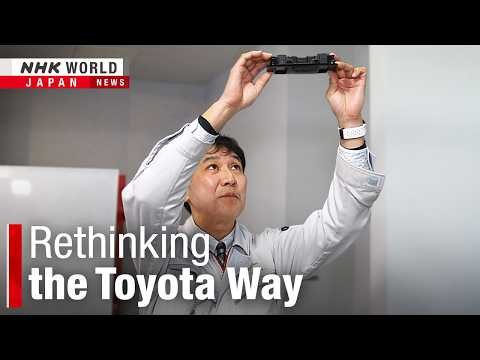
Toyota Production System Modernization
Toyota is updating the Toyota Production System to meet current demands without abandoning its core principles of monozukuri. The approach continues to emphasize Genchi Genbutsu, where managers visit production sites to observe operations directly. This method supports incremental improvements across global facilities while maintaining quality standards that have supported sales of approximately 10.9 million vehicles in fiscal 2025.
Modernization efforts focus on integrating data-driven tools into existing workflows. Engineers apply these updates to reduce waste and improve flexibility in mixed-model production lines. The changes help the company respond to varying demand for different powertrains while preserving the just-in-time principles that define TPS.
BEV Platform and Giga-Casting Technology
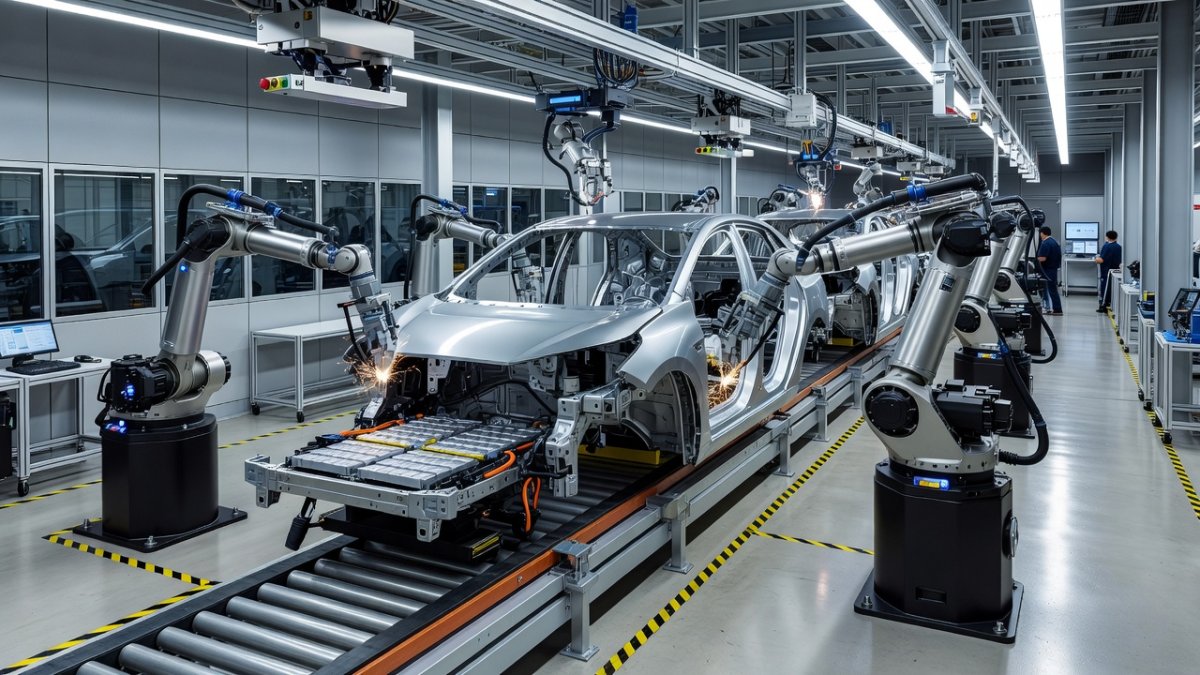
The dedicated BEV Factory division is working toward 1.5 million BEV sales by 2026. Giga-casting technology forms a central part of this effort by reducing the parts count by approximately 20 percent per vehicle. This simplification lowers assembly complexity and supports higher production volumes on dedicated electric platforms.
Toyota has committed 5 trillion yen to electrification initiatives through 2030. The investment covers new platform development and manufacturing equipment needed for large-scale BEV output. Early applications of giga-casting are being tested at select plants to validate structural integrity and cost reductions before wider rollout.
Competitive Pressure from Chinese EV Makers and Tesla
Global competitors continue to expand their electric vehicle offerings, prompting Toyota to accelerate its own efficiency measures. Chinese manufacturers have scaled production rapidly, while Tesla maintains strong market presence through software and manufacturing innovations. Toyota's response centers on disciplined investment rather than reactive model launches.
The company monitors these developments through its established market intelligence processes. This information informs decisions on where to deploy resources across hybrid, battery electric, and other powertrains. Maintaining production discipline remains a priority even as external pressures increase.
Japan's Green Transformation (GX) and METI Automotive Policy
METI has set a target of 150 GWh domestic battery production capacity by 2030 as part of the Green Transformation strategy. Toyota's electrification investments align with this national goal and support broader supply chain resilience. The automotive sector, which employs approximately 5.5 million people in Japan, plays a central role in achieving these targets.
Policy frameworks encourage collaboration between government and industry on battery technology and charging infrastructure. Toyota participates in these efforts while advancing its internal programs. The alignment helps secure long-term competitiveness for Japanese manufacturers in the global transition to lower-emission vehicles.
Digital Transformation and AI in Toyota's Factories
AI applications are being introduced to support quality control and predictive maintenance across Toyota plants. These tools analyze production data in real time to identify potential issues before they affect output. The integration builds on existing TPS practices rather than replacing them.
The Digital Agency's national initiatives provide a supportive environment for such advancements. Toyota applies these technologies selectively to maintain human oversight in critical processes. Early results show improvements in uptime and defect detection rates at pilot facilities.
Multi-Pathway Strategy: Hybrids, BEVs, and Hydrogen
CEO Koji Sato continues to advocate a multi-pathway strategy that includes hybrids, battery electric vehicles, and hydrogen fuel cells. Hybrid vehicles already represent over 30 percent of Toyota's sales in Japan, demonstrating sustained customer acceptance. This balanced approach allows the company to reduce emissions across different market segments and infrastructure conditions.
The hydrogen society vision remains active through continued development of the Mirai and commercial fuel cell vehicles. Toyota supplies fuel cell systems to various partners for buses, trucks, and stationary applications. This diversification supports the company's long-term goal of offering suitable powertrains for varied use cases worldwide.
Supply Chain Transformation and Asia Pacific Impact
Toyota is restructuring its supply chain to improve resilience and support electrification targets. Partnerships with battery and component suppliers across the Asia Pacific region are being expanded. These changes aim to secure stable material flows while meeting local content requirements in key markets.
The strategy includes closer coordination with suppliers on quality and delivery standards. Regional production adjustments help mitigate risks from geopolitical and logistical disruptions. Toyota's scale provides leverage in negotiating long-term agreements that benefit the broader Japanese automotive ecosystem.
Expert Outlook and Key Milestones for 2026-2027
Industry analysts expect Toyota to reach initial BEV production milestones in 2026 while continuing hybrid volume growth. The 1.5 million BEV sales target serves as a near-term checkpoint for the BEV Factory division. Progress will depend on successful scaling of giga-casting and platform efficiencies.
Further updates to the Toyota Production System and digital tools are anticipated through 2027. These developments will be monitored against METI's GX benchmarks and global competitive dynamics. Toyota's consistent application of monozukuri principles positions it to adapt as market conditions evolve.
By Kenji Tanaka, Staff Writer
This article was produced with AI-assisted research and editorial support. Reporting is based on sources cited in the article.
What's Your Reaction?
 Like
0
Like
0
 Dislike
0
Dislike
0
 Love
0
Love
0
 Funny
0
Funny
0
 Wow
0
Wow
0
 Sad
0
Sad
0
 Angry
0
Angry
0

Japan Correspondent at Global1.News. Tokyo-based voice covering Japanese politics, technology, economy, and culture. Tracks the intersection of tradition and innovation in one of the world's most dynamic societies.














Comments (0)