
Gulf of Paria Widens as Trinidad Pours Oil on Troubled Venezuelan Waters
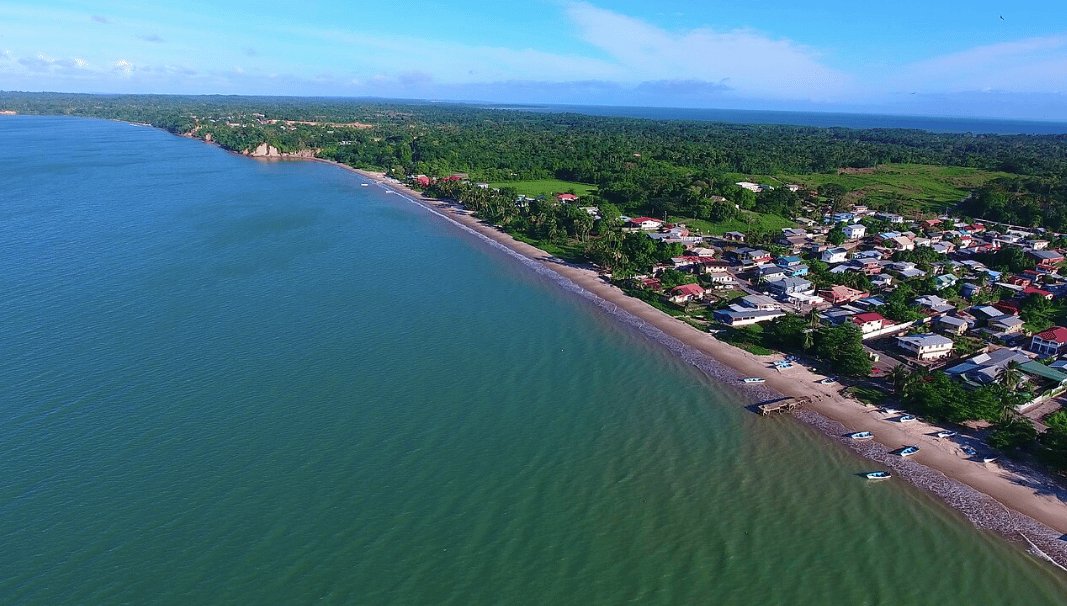
The Spill That Sparked Diplomatic Tension The Gulf of Paria has long been more than a stretch of water separating Trinidad and Tobago from Venezuela. For generations it has supported fishing communities on both sides, fed into the energy economies that keep our lights on and our families fed, and reminded us how closely our fortunes are tied to the sea. Now a reported oil spill
The Spill That Sparked Diplomatic Tension
The Gulf of Paria has long been more than a stretch of water separating Trinidad and Tobago from Venezuela. For generations it has supported fishing communities on both sides, fed into the energy economies that keep our lights on and our families fed, and reminded us how closely our fortunes are tied to the sea. Now a reported oil spill has widened old cracks in that relationship, turning a technical incident into a matter of regional concern that touches on everything from environmental protection to the cost of living pressures felt across the Caribbean.
According to the details released so far, Heritage Petroleum Company Limited detected the spill at its offshore Main Field operation on 1 May at around 7:25 a.m. The company notified the Ministry of Energy and Energy Industries, the Coast Guard and the Environmental Management Authority without delay. Port of Spain maintains that roughly ten barrels were released, that the leak was stopped the same day and that the facility was repaired and back in service by 2 May.
Venezuela Raises the Alarm Publicly
Caracas has taken a different view of events. Venezuela's Foreign Minister Yván Gil went public on 12 May, demanding information and compensation while warning of possible damage across 1,625 square kilometres that includes twelve wetland systems, four national parks and the livelihoods of more than five hundred fishermen in the states of Sucre and Delta Amacuro. Satellite imagery cited by Venezuelan authorities reportedly shows a slick dating back to 28 April, before Trinidad and Tobago's official detection date.
Acting President Delcy Rodríguez ordered a multidisciplinary team of environmental specialists, biologists and naval personnel to assess the affected areas. The move to frame the complaint under international environmental law has lifted the matter beyond routine spill response and placed it squarely on the diplomatic table.
Trinidad and Tobago's Account and Response
Trinidad and Tobago's modelling indicated that, if left untreated, the hydrocarbons could have crossed into Venezuelan waters. Chemical dispersants were therefore deployed some six to eight nautical miles from the shared maritime border. Follow-up drone and vessel inspections reportedly found no visible hydrocarbons remaining on the surface. Officials have described the incident as minor and quickly contained.
Yet the fact that neither Heritage Petroleum nor the government made the matter public until Venezuela raised it internationally has added to the friction. Neighbours sharing such a vital body of water expect clearer and earlier communication, especially when livelihoods on both sides depend on clean waters and healthy fisheries.
Shared Waters, Shared Responsibilities
The Gulf of Paria is not simply a border; it is a single ecological system. What happens on one side inevitably affects the other. Trinidad and Tobago's energy sector has long been central to the national economy, just as Venezuela's oil and gas resources have shaped its own development path. Both countries understand the pressures of fluctuating energy prices and the need to balance production with environmental care.
For small island developing states like ours, these incidents highlight wider vulnerabilities. Climate change already brings stronger storms, rising seas and shifting fish stocks. An oil spill adds another layer of stress to communities already coping with higher living costs and the slow recovery of tourism after the pandemic. Regional cooperation through CARICOM has helped on many fronts, yet gaps remain when it comes to pre-agreed notification and response frameworks for shared maritime zones.
Lessons for Caribbean Energy and Environment
The absence of robust, standing arrangements for cross-border spills is now itself a point of contention. Neighbours who share one of the Caribbean's most ecologically and economically important bodies of water need practical mechanisms that work before the next incident occurs. Such frameworks would support both environmental protection and the steady operation of the energy sector that underpins so many households across the region.
Trinidad and Tobago has experience with offshore operations and spill response, yet the current episode shows that technical capability alone is not enough. Transparent communication and joint planning with Venezuela would strengthen confidence on both sides and reduce the risk of future diplomatic flare-ups. The same principle applies across the wider Caribbean, where similar shared waters exist between other nations.
Looking Ahead for Neighbours in the Gulf
Resolving this particular disagreement will require steady diplomacy and a willingness to share data openly. Both countries have an interest in protecting the Gulf's wetlands, fisheries and coastal communities. Fishermen in Trinidad and Tobago, like their counterparts in Sucre and Delta Amacuro, depend on the same waters remaining productive and safe.
As the region continues to navigate energy transitions, climate impacts and the everyday realities of making ends meet, incidents like this serve as reminders that environmental governance cannot be an afterthought. The Gulf of Paria will continue to connect us; the question is whether we manage that connection with the care and cooperation it deserves.
By Sharon Sahatoo, Staff WriterThis article was produced with AI-assisted research and editorial support. Reporting is based on sources cited in the article.
What's Your Reaction?
 Like
0
Like
0
 Dislike
0
Dislike
0
 Love
0
Love
0
 Funny
0
Funny
0
 Wow
0
Wow
0
 Sad
0
Sad
0
 Angry
0
Angry
0

Caribbean Correspondent at Global1.News. Based in Port of Spain, Trinidad, covering Caribbean politics, economy, energy, climate, and culture. Amplifying the voices and stories of the Caribbean region.










Comments (0)