
Emergency Response Team Expands Across Caribbean
Regional Emergency Response Team Expands to Strengthen Caribbean Disaster Preparedness This week the One Caribbean News segment "Emergency Response Team Grows" highlighted how the regional emergency response team is expanding its personnel, equipment and training capabilities to better serve communities across the Caribbean. The development comes at a critical time as nations p
This week the One Caribbean News segment "Emergency Response Team Grows" highlighted how the regional emergency response team is expanding its personnel, equipment and training capabilities to better serve communities across the Caribbean. The development comes at a critical time as nations prepare for the demands of the annual hurricane season and the growing pressures faced by small island developing states in the region.
Regional Emergency Response Team Expands to Strengthen Caribbean Disaster Preparedness
Port of Spain, Trinidad and Tobago – This week — A One Caribbean News report has highlighted the steady expansion of an emergency response team serving communities across the Caribbean, with new personnel, upgraded equipment and enhanced training programmes being introduced to better prepare for the annual hurricane season and the increasing threats posed by climate change. The expansion reflects a shared commitment among regional nations to strengthen collective defence against natural hazards that have long tested Caribbean resilience.
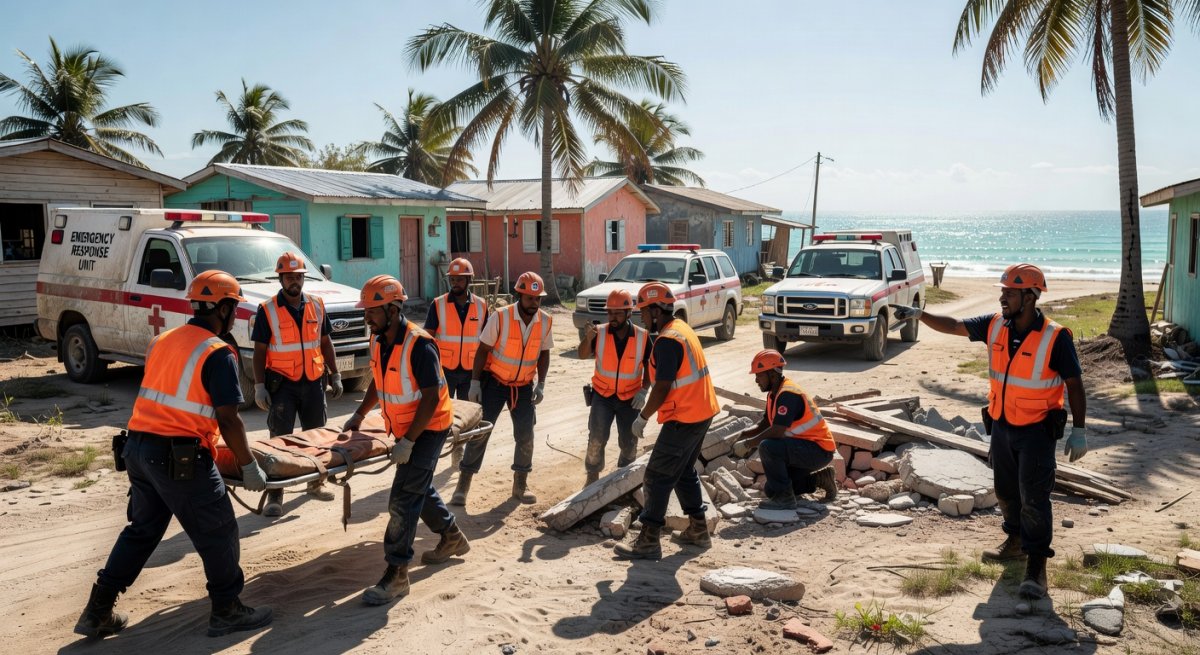
New Personnel and Enhanced Training Programmes
Recruitment drives are underway to bring in new members who will undergo specialised training programmes tailored to Caribbean conditions. These programmes focus on search and rescue, medical response and coordination across borders, ensuring that personnel from Trinidad and Tobago, Jamaica, Barbados and Guyana can work seamlessly together when disasters strike. Training sessions are being organised in multiple locations to accommodate participants from different islands, with emphasis on practical exercises that mirror real scenarios such as flooding in low-lying areas and storm surges along vulnerable coastlines.
Specialised roles are being developed to address the unique needs of each country. In Guyana, for example, teams will receive additional instruction on riverine emergencies, while counterparts in Barbados focus on coastal evacuation procedures. The programmes also incorporate lessons from past events to prepare responders for the challenges of operating in resource-limited settings.
Officials have noted that this expansion allows for more dedicated logistics coordinators and medical support staff drawn from across the region, ensuring that personnel are ready to support communities when the next crisis arrives.
Equipment Upgrades for Faster Crisis Response
Significant upgrades to equipment are forming a central part of the expansion. Modern communication tools are being introduced to allow teams across the Caribbean to maintain contact even when traditional networks fail during storms. New vehicles and boats are being added to the fleet to improve mobility across difficult terrain and open water, enabling faster delivery of supplies to affected areas in St. Vincent and the Grenadines, Dominica and other vulnerable locations.
Medical supplies and emergency kits are also being expanded to cover larger populations, ensuring that responders have the necessary resources on hand to treat injuries and prevent disease outbreaks in the aftermath of hurricanes and flooding. These upgrades are expected to shorten the time between a disaster occurring and the arrival of help, a critical factor that communities across the region have long identified as a priority for their safety.
Hurricane Season Preparedness Across the Region
The Caribbean hurricane season runs from June to November each year, bringing the constant threat of powerful storms to islands and coastal nations. Recent seasons have reminded everyone of the need for constant vigilance and improved readiness at every level of society. Hurricane Ivan in 2004 caused widespread destruction across several islands and highlighted significant gaps in regional coordination that had to be addressed in the years that followed.
More recently, Hurricane Beryl in 2024 demonstrated how quickly conditions can change and how essential it is to have trained teams in place before landfall. Lessons from these events are now being integrated into current preparedness efforts, with the expanded response team using these experiences to refine protocols and ensure that personnel can move quickly between countries when mutual assistance is required. National agencies are working alongside the regional team to conduct drills and stockpile essential items ahead of the peak months of the season.
Climate Change and Small Island Developing States
Small island developing states in the Caribbean face particular challenges from climate change, including rising sea levels that threaten coastal communities in Trinidad and Tobago, Barbados and the wider region. These changes increase the risk of flooding and erosion in areas that have long supported local livelihoods, placing additional strain on emergency systems that were already stretched during past hurricane seasons. The expansion of the response team is seen as one practical way to adapt to these shifting conditions.
Communities in Jamaica and Guyana are experiencing changes in rainfall patterns that affect agriculture and water supplies, meaning preparedness measures now include planning for these longer-term impacts alongside immediate disaster response. Regional discussions continue to emphasise the importance of international support for adaptation efforts, with the growing emergency team representing a concrete step that Caribbean nations are taking to protect their populations in the face of ongoing climate pressures.
CDEMA and CARICOM Regional Cooperation Framework
The Caribbean Disaster Emergency Management Agency, known as CDEMA, plays a central role in coordinating emergency efforts across the region through established mutual aid agreements. These agreements allow member states to request and receive assistance quickly when national resources are overwhelmed, a framework that has proven its value during volcanic activity in St. Vincent and the Grenadines as well as flooding episodes elsewhere. CARICOM supports this framework by facilitating joint exercises that bring together teams from different countries, building familiarity and trust among responders who may need to work side by side during actual events.
The current expansion aligns with CDEMA's goals of strengthening regional capacity. By increasing personnel and equipment, the team can better fulfil its mandate to support all participating nations during times of crisis. Regular meetings among CARICOM leaders ensure that cooperation remains a priority, sustaining the political will needed to maintain and grow the emergency response network across the Caribbean.
ODPM and National Bodies in Trinidad and Tobago
The Office of Disaster Preparedness and Management in Trinidad and Tobago is actively involved in the regional expansion through partnerships that link local efforts with broader Caribbean initiatives. These connections allow for the sharing of expertise and resources between national and regional levels. The Trinidad and Tobago Police Service is also contributing, with personnel receiving additional training to support emergency operations, particularly in areas surrounding critical energy infrastructure such as Atlantic LNG facilities.
Protecting energy assets is essential for maintaining national stability during disasters, given the importance of the oil and gas sector to the Trinidadian economy. Coordination between ODPM and other national bodies ensures that response plans account for both natural hazards and industrial risks, creating a more unified system that strengthens overall resilience for citizens across the country.
Community Volunteers and Local Resilience
Volunteer networks in Jamaica, Barbados and rural Trinidad continue to form the backbone of community-level preparedness across the Caribbean. These groups often provide the first response before external teams arrive and play a vital role in recovery efforts, from clearing debris to checking on elderly neighbours after heavy weather. Training opportunities linked to the expanded regional team are being extended to volunteers so they can work alongside professional responders, building local capacity while respecting the knowledge that communities already possess.
In St. Vincent and the Grenadines and other islands, volunteer programmes focus on early warning systems and evacuation support, helping to reduce casualties by ensuring that residents know what to do when alerts are issued. The warm spirit of Caribbean communities shines through in these volunteer initiatives, with neighbours supporting neighbours remaining a powerful force that complements the formal structures now being strengthened across the region.
Protecting Tourism, Energy and Critical Infrastructure
Tourism remains a vital economic driver for many Caribbean nations, and protecting this sector requires robust disaster management. The expanded response team is developing specific plans to safeguard hotels, beaches and transport links that visitors and local economies rely upon. The energy sector in Trinidad and Tobago, including facilities such as Atlantic LNG, demands particular attention during emergencies, as ensuring continuity of operations helps maintain fuel supplies and economic stability for the wider region.
Public safety measures are being reviewed to cover ports, airports and hospitals that serve both residents and tourists across multiple islands. Coordinated action between national agencies and the regional team supports these critical functions, with investments in resilience expected to yield long-term benefits for the overall attractiveness and safety of Caribbean destinations.
Future of Disaster Management in the Caribbean
Looking ahead, the future of disaster management in the Caribbean depends on sustained funding and continued regional cooperation. The current expansion provides a strong foundation, yet ongoing investment will be needed to maintain momentum and keep pace with the evolving threats posed by climate change. Challenges remain in securing consistent resources for training and equipment across all member states, and leaders from Trinidad and Tobago, Jamaica, Barbados and Guyana are working together to address these gaps through shared initiatives.
Long-term goals include further integration of climate adaptation into emergency planning, recognising that disaster management must evolve alongside changing environmental conditions. The spirit of unity that characterises Caribbean responses offers hope for the years ahead. By building on recent progress, the region can continue to protect its people and communities with growing effectiveness, ensuring that the strengthened team stands ready to serve with the dedication that defines Caribbean resilience.
By Sharon Sahatoo, Staff Writer
This article was produced with AI-assisted research and editorial support. Reporting is based on sources cited in the article.
What's Your Reaction?
 Like
0
Like
0
 Dislike
0
Dislike
0
 Love
0
Love
0
 Funny
0
Funny
0
 Wow
0
Wow
0
 Sad
0
Sad
0
 Angry
0
Angry
0

Caribbean Correspondent at Global1.News. Based in Port of Spain, Trinidad, covering Caribbean politics, economy, energy, climate, and culture. Amplifying the voices and stories of the Caribbean region.













Comments (0)