
Canada's nuclear strategy: 10 new reactors by 2040 explained
In a recent CBC News Front Burner episode, MIT nuclear engineering professor Jacopo Buongiorno examined what is driving Canada's nuclear power boom and what risks could come with it. The discussion followed the federal government's announcement, earlier this summer, that it would build up to ten new nuclear reactors over the next fifteen years to help achieve the country's energy goals.
In a recent CBC News Front Burner episode, MIT nuclear engineering professor Jacopo Buongiorno examined what is driving Canada's nuclear power boom and what risks could come with it. The discussion followed the federal government's announcement, earlier this summer, that it would build up to ten new nuclear reactors over the next fifteen years to help achieve the country's energy goals. For Canadians, the strategy raises direct questions about electricity costs, supply chain security and the long-term management of radioactive waste as the plan moves from announcement toward construction.
Federal Nuclear Strategy Sets Course for Ten New Reactors by 2040
Ottawa, Ontario – August 6, 2026 — Energy and Natural Resources Minister Tim Hodgson released Canada's new national nuclear strategy at a news conference in Newmarket, Ont. The plan calls for up to ten new nuclear reactors over the next fifteen years, with the goal of doubling the capacity of the country's electrical grid by 2050. Hodgson described it as a plan for a "new civilian nuclear renaissance."
Strategy Outlines Construction Timeline and Reactor Mix
The strategy requires construction to start on two new large-scale reactors by 2035. Five more reactors must be planned or under development by 2040, and at least one reactor must be under construction outside Ontario by 2035. A Canadian-made microreactor is to be finalized by 2035 and deployed to a remote community by the late 2030s.
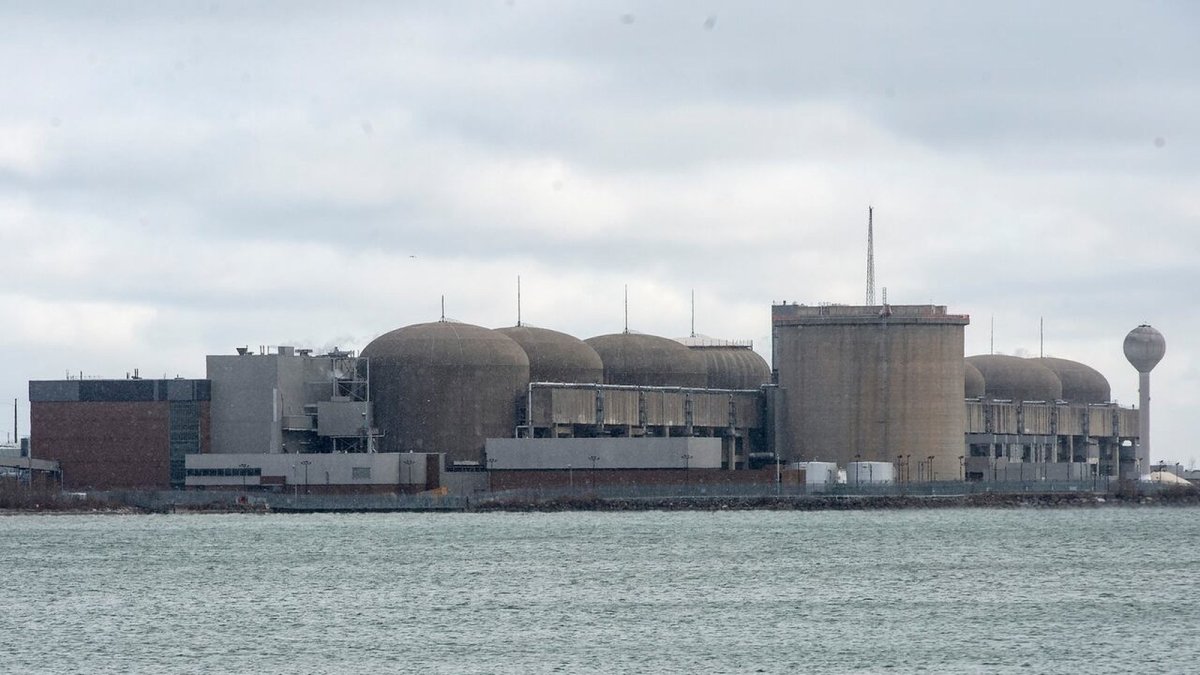
Ontario has already begun building the first of four planned BWRX-300 small modular reactors at the Darlington New Nuclear Project in Clarington, Ont. Saskatchewan is advancing plans for the same BWRX-300 design by the mid-2030s, while New Brunswick and Alberta are evaluating potential nuclear projects, including SMRs. The energy deal between Ottawa and Alberta also committed the two governments to collaborating on a strategy for a nuclear power plant.
"If our goal is to double our grid and build a low-carbon economy in less than 25 years, there is no credible plan to do that without nuclear energy and the clean, reliable baseload power it provides," Hodgson told reporters. "There is no credible plan for Canada to become an energy superpower if we choose not to build upon one of the strongest energy advantages we have."
Shift to Foreign Fuel Supply Chain Raises Sovereignty Concerns
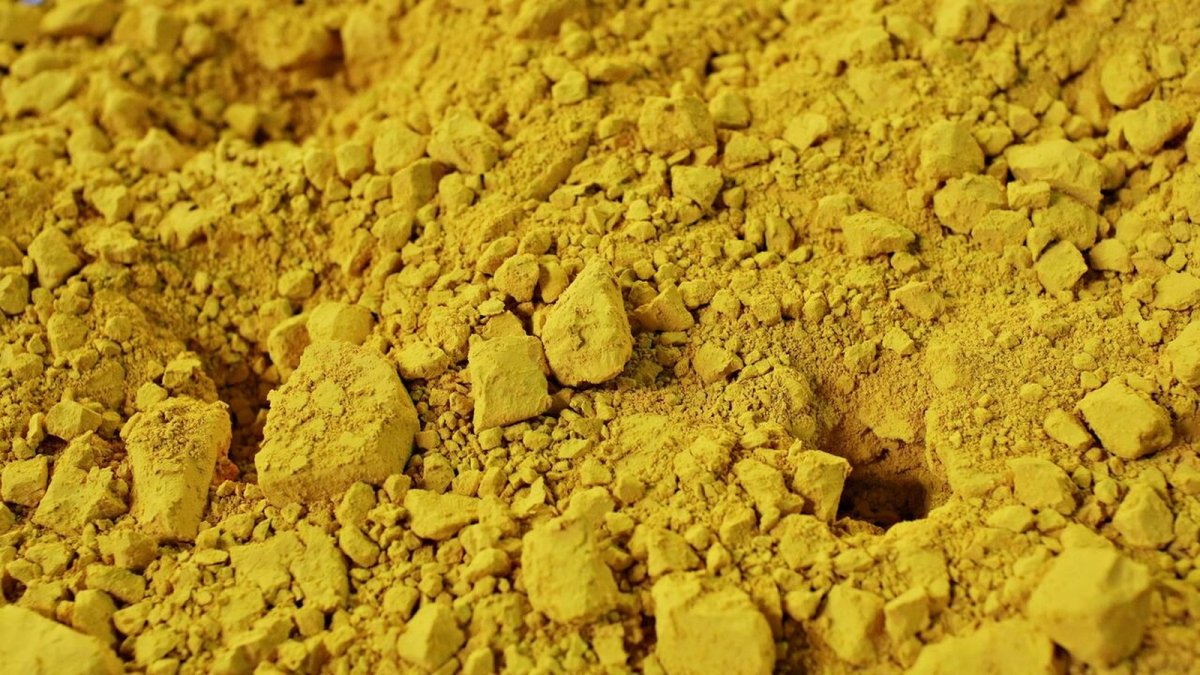
The first reactors in the planned expansion will depend on foreign suppliers, including the United States, to enrich and fabricate their fuel. This marks a sharp departure from the Candu system that gave Canada a largely domestic nuclear supply chain for more than half a century, even though Canada remains the world's second-largest uranium producer.
Ontario Power Generation expects the first BWRX-300 at Darlington to connect to the grid by the end of 2030, with the other three planned for the mid-2030s. Cameco will mine uranium ore in Saskatchewan and convert it in Port Hope, Ont., before enrichment occurs abroad. France's Orano and Britain's Urenco are listed by OPG as enriched-uranium suppliers, and an American company will manufacture the finished fuel assemblies in the United States.
The 1993 Library of Parliament background paper explained that the Candu design was created "to design a reactor tailored to Canadian circumstances," using natural uranium to avoid "the difficult and expensive process of enrichment or, alternatively, dependence on foreign sources of enriched uranium." York University professor Mark Winfield said relying on imported enriched uranium gives foreign governments the ability to disrupt Canada's nuclear fuel supply during a political dispute. "It turns the original rationale for the Candu program completely on its head," he said. "The whole idea was, going back to the 1950s, that we would have an all-Canadian fuel supply chain that would not be subject to those kinds of geopolitical risks."
OPG says spreading the work among suppliers in the United States, Britain and France creates a "robust and resilient supply chain." But Winfield cautioned that multiple enrichment suppliers reduce, rather than eliminate, the risk, since every enrichment facility is outside Canada. "Particularly if the United States decides to use its supply of various uranium for geopolitical leverage, which is clearly not beyond the thinking of the Trump administration," he said. Natural Resources Canada maintains the four planned Darlington SMRs will require "a very small amount" of enriched fuel that is "modest" compared with the global market.
Job Creation Targets and Infrastructure Funding Sources
The strategy projects nuclear sector employment will rise from roughly 90,000 positions today to more than 180,000 over the coming decades. Canada currently operates four nuclear power plants — three in Ontario and one in New Brunswick — that generate about 15 per cent of the country's electricity.
Officials from Natural Resources Canada told reporters in a background briefing that construction of the reactors outlined in the strategy could cost more than $100 billion. The document does not say how Canada would pay for them, though an official pointed to the Canadian Infrastructure Bank and the Canada Growth Fund as possible funding sources.
The federal plan to double national electricity capacity by 2050 responds to rising demand from the electrification of transport, heating and industrial processes across the provinces. Because electricity jurisdiction rests primarily with the provinces while Ottawa controls major financing tools, the expansion will require coordinated federal-provincial action. The Canadian Infrastructure Bank and the Canada Growth Fund are positioned to channel capital into projects that provinces alone might struggle to fund at the required scale, particularly as Bank of Canada interest rates continue to influence borrowing costs for utilities.
Ontario Energy and Mines Minister Stephen Lecce explained at a July news conference in Nanticoke, Ont., why the province looked abroad for its reactor technology. "There is not a Canadian grid-scale, commercially viable small modular reactor technology to procure," he said. "So we had to go global." Canada's domestic Candu Monark is not an SMR and remains under assessment by the nuclear regulator.
Political Opposition Questions Delivery and Regulatory Changes
Conservative Leader Pierre Poilievre said he was not sold on the plan. "An announcement will not build anything," he said. "And this is the problem we've had with the Carney Liberals is their promises are being reported on as results and so far there have been no results." He also called for repealing "anti-development laws," depoliticizing the Canadian Nuclear Safety Commission and removing "Liberal obstacles" to produce more affordable and abundant electricity.
Prime Minister Mark Carney was not shown the strategy and had no role in developing it because of the ethics screen in place. Carney held stock options and deferred shares in Brookfield Corporation and Brookfield Asset Management, which were placed in a blind trust after he became prime minister; Candu competes with a reactor model co-owned by Brookfield. The government has also proposed moving impact assessments for nuclear projects to the Canadian Nuclear Safety Commission from the Impact Assessment Agency of Canada, with consultations extended after pushback from environment and Indigenous groups.
Poilievre's critique frames the strategy as another Liberal announcement without guaranteed delivery, linking nuclear expansion to broader concerns about electricity affordability. That positions the Conservatives to challenge the government on both pace and cost control in the coming parliamentary debates.
Indigenous Ownership Deal and Waste Cost Uncertainties
Seven First Nations communities signed a minority-ownership agreement in the Darlington New Nuclear Project on June 23, backed by the largest Indigenous loan guarantee issued in Canada, worth about $715 million. The deal gives communities a direct stake in the project as construction advances.
University of British Columbia professor M.V. Ramana, who studies nuclear energy and international security, said being the first SMR in the G7 is "not a good thing, in my opinion." He argued that "nuclear power is a very expensive way to generate electricity and the small modular reactor is even more expensive," pointing to a 2014 study suggesting SMRs cost more per unit of generating capacity unless savings from shared infrastructure offset the disadvantage — the approach OPG intends for its four-reactor Darlington site.
BWRX-300 designer GE Vernova says smaller reactors require less machinery, with water circulating without powered pumps and emergency cooling relying on gravity and natural circulation. Because Darlington is the design's first deployment, however, those projected savings have not yet been demonstrated by a commercially operating unit.
Canada's existing $26-billion nuclear waste plan was calculated around fuel from the current Candu fleet. The Nuclear Waste Management Organization has not yet produced a cost estimate for the different spent fuel that four BWRX-300 units would produce, leaving a gap that provincial ratepayers and federal taxpayers would ultimately back — and a question mark for communities weighing long-term storage sites.
Export Ambitions and Domestic Enrichment Options
The strategy aims to sell Canadian-made reactors to new markets: at least four new international markets by 2040, and engagement with six to ten new nuclear entrant markets over a fifteen-year horizon. Thirty Candu reactors currently operate around the world, including in South Korea, China, India, Argentina, Pakistan and Romania, with plans for two more.
If Ottawa fails to sell more Candu reactors abroad, the strategy suggests looking into boosting domestic uranium enrichment. Lecce said Ontario would be open to discussions, though he acknowledged the decision ultimately rests with the federal government. Natural Resources Canada has made no decision on commercial enrichment but plans to create a "Nuclear Fuels Table" with the provinces and industry to examine future needs and opportunities.
Global Nuclear Expansion Context and Expert Assessment
Canada is not alone in making this kind of investment. Plans are underway to build more reactors in the United States, China, India and across Europe, according to the Front Burner discussion with MIT's Jacopo Buongiorno. The episode examined what is driving the global nuclear power boom — and what risks could come with it, including cost overruns, safety and the long-term management of radioactive waste.
The federal government continues to weigh whether to pursue domestic enrichment capacity to reduce dependence on foreign suppliers amid shifting international uranium markets. Western allies, meanwhile, are turning away from Russia, one of the world's key suppliers of enriched uranium, a dynamic the strategy says could strengthen Canada's position as a reliable uranium export partner.
By Alex Thompson, Staff Writer
This article was produced with AI-assisted research and editorial support. Reporting is based on sources cited in the article.
What's Your Reaction?
 Like
0
Like
0
 Dislike
0
Dislike
0
 Love
0
Love
0
 Funny
0
Funny
0
 Wow
0
Wow
0
 Sad
0
Sad
0
 Angry
0
Angry
0
Canada Correspondent at Global1.News. Based in Toronto, covering Canadian politics, energy, trade, and US-Canada relations. Provides the Canadian perspective on North American and global affairs.












Comments (0)