
The 2008 economic crisis changed the US's relationship with energy
When the 2008 financial crisis slammed the doors on a decade of unchecked growth, it also forced a painful but revealing break in the United States’ long‑standing partnership with fossil fuels.
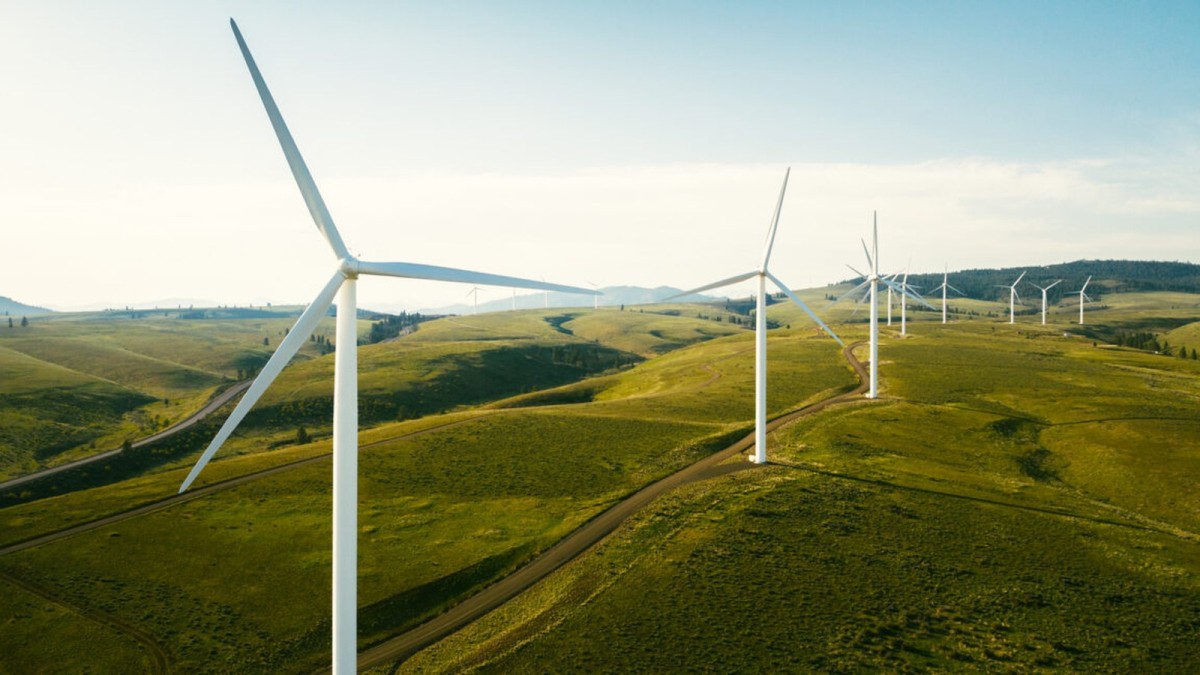
When the 2008 financial crisis slammed the doors on a decade of unchecked growth, it also forced a painful but revealing break in the United States’ long‑standing partnership with fossil fuels. The downturn didn’t just shrink GDP; it snapped the tight coupling between economic expansion and carbon emissions that had defined the post‑World War II era. In the years since, the data show a modest but unmistakable decoupling—growth has continued while emissions have trended downward, even as the nation wrestles with political headwinds and the relentless march of climate impacts.
The “Scissors” Metaphor: How Growth and Emissions Were Once Locked Together
For decades, the United States, like much of the world, treated gross domestic product (GDP) and carbon output as two blades of a closed pair of scissors—move one, the other follows. The logic was simple: fossil fuels powered factories, trucks, power plants, and the digital infrastructure that underpinned modern prosperity. The result was an economy that grew in lockstep with ever‑rising greenhouse‑gas releases.
That metaphor was first popularized in a 2013 essay that likened the need for a new economic model to opening those scissors: keep the growth blade moving while easing the emissions blade back. At the time, the idea was more aspirational than demonstrable, but it set the stage for a data‑driven test of whether the United States could truly separate the two.
Sweden’s Early Success: A Proof‑of‑Concept for Decoupling
Sweden offered the first concrete illustration of the scissors‑opening experiment. Beginning in 1996, the Nordic nation’s carbon emissions began a steady decline that has continued for more than three decades. By the most recent accounting, total emissions are down roughly a third from the 1996 peak and have fallen more than half from the 1970 high. Yet Sweden’s GDP has more than doubled since 1996, according to World Bank figures.
The Swedish story mattered because it showed that a modern economy could shrink its carbon footprint without sacrificing prosperity. However, the country’s abundant hydropower and a long‑standing nuclear fleet gave it a structural advantage that the United States does not share, prompting analysts to question whether the model could be replicated at scale.
The 2008 Inflection Point: Emissions Begin to Unhook from Growth
When the 2008 crisis hit, the United States experienced a sharp contraction in energy demand, and carbon emissions fell precipitously. The drop was not a one‑off blip; it marked the beginning of a new trajectory. Graphs of annual emissions data, sourced from the University of Exeter’s Global Carbon Project, reveal a consistent downward trend since that inflection point, despite the usual year‑to‑year variability.
Crucially, the dip in emissions did not translate into a prolonged economic slump. Outside of the pandemic‑induced dip in 2020, GDP has remained broadly steady, mirroring the World Bank’s long‑term series. This divergence suggests that the United States can sustain growth without automatically increasing its carbon output—a real‑world validation of the scissors metaphor.
Why the Trend Matters: The Hidden Costs of Fossil‑Fuel Growth
Proponents of fossil fuels often argue that they have lifted billions out of poverty by powering economic expansion. While there is truth to the claim that energy access has improved living standards, the source material emphasizes a counterpoint: the growth driven by carbon‑intensive energy has accrued “very high costs” in the form of extreme‑weather damage, sea‑level rise, and other climate‑related disruptions.
Those costs are not merely abstract; they are now appearing on balance sheets across the country—from insurance claims after hurricanes to infrastructure repairs after floods. The article notes that even if the world reaches net‑zero emissions, sea‑level rise will continue for centuries, meaning the debt incurred by past fossil‑fuel use will linger for generations.
Current Obstacles: Political Resistance and Emerging Emission Sources
Despite the encouraging downward trend, the United States faces significant headwinds. The Trump administration, as highlighted in the source, pursued policies overtly hostile to renewable energy and often dismissed efficiency measures. Such political resistance can stall investment in clean‑energy infrastructure and slow the pace of decarbonization.
Moreover, new sources of emissions are emerging. Data centers, for example, are proliferating at a rapid rate and frequently rely on on‑site diesel generators as backup power. This growth in digital infrastructure introduces fresh carbon challenges that could offset gains made elsewhere if not addressed with clean‑energy solutions.
What the Numbers Say: A Decade of Modest Decoupling
When the author of the source material graphed the data, the visual story was clear: since 2008, U.S. carbon emissions have trended downward while GDP has held steady, except for the pandemic dip. The pattern is not a dramatic plunge but a “sawtooth” of modest declines punctuated by occasional rebounds—a sign that the decoupling is real but still fragile.
The analysis also points out that even though emissions are falling, the rate is insufficient to avert the most severe climate impacts. The author cautions that the current pace “is not fast enough” to keep warming below critical thresholds, underscoring the urgency of accelerating clean‑energy adoption.
Looking Ahead: The Path to Sustainable Growth
The evidence from the past decade suggests that the United States can grow without a corresponding rise in carbon emissions, but the journey is far from complete. Policymakers must translate the observed decoupling into a robust, long‑term strategy that addresses emerging emission sources, expands renewable capacity, and overcomes political inertia.
In practical terms, that means investing in grid modernization to accommodate more wind and solar, incentivizing data‑center operators to adopt renewable backup power, and ensuring that future economic metrics go beyond GDP to capture quality‑of‑life improvements. As the article concludes, even if emissions tick upward in the short term, the United States now has a proven record that growth does not have to be synonymous with carbon intensity—a critical narrative shift for a nation grappling with the twin challenges of prosperity and climate resilience.
This article was produced with AI-assisted research and editorial support. Reporting is based on the source material cited below. Sources: Ars Technica; arstechnica.com; Global1.News (05 October 2026).
By Jessica Ali, Staff Writer
What's Your Reaction?
 Like
0
Like
0
 Dislike
0
Dislike
0
 Love
0
Love
0
 Funny
0
Funny
0
 Wow
0
Wow
0
 Sad
0
Sad
0
 Angry
0
Angry
0

Editor-in-Chief at Global1.News. Atlanta-based journalist who cuts through the BS and tells it like it is. Lead anchor, host, and the voice you hear when the spin stops and the truth starts.















Comments (0)