
Rookie 10 tortures Bulls
Munster’s latest United Rugby Championship triumph in Limerick offered a vivid reminder of why South African fans cling to the sport’s raw drama. The youngster made an immediate impact, not only by scoring two tries but also by setting up a third.
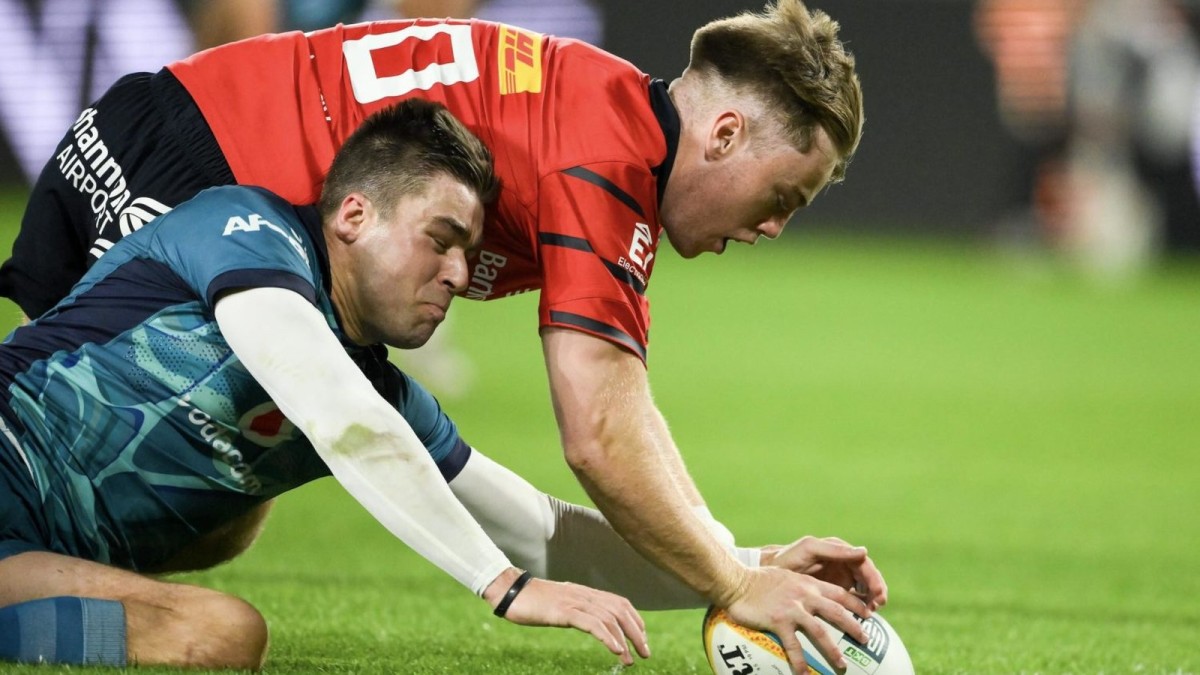
Munster’s latest United Rugby Championship triumph in Limerick offered a vivid reminder of why South African fans cling to the sport’s raw drama. The Irish province’s 26‑22 win over the Bulls was more than a narrow victory; it was a showcase of a teenage fly‑half, Charlie O’Shea, who turned his first competitive start into a personal masterclass. For the Bulls, fresh from a dominant display against Zebre in Parma, the defeat was a sobering reminder that the URC’s South African franchises must constantly adapt to the evolving European style of play.
Charlie O’Shea’s debut: a rookie lights up Thomond
At just twenty years old, fly‑half Charlie O’Shea arrived at Thomond Park with the weight of a season‑opening fixture on his shoulders. The youngster made an immediate impact, not only by scoring two tries but also by setting up a third. His first try came after a relentless charge that saw him out‑pace the Bulls’ defence, finishing in the right corner following a lineout maul. The second try was a textbook display of instinct: O’Shea charged down Curwin Bosch’s clearance, gathered the loose ball and sprinted over, reinforcing his reputation as a game‑changer.
Beyond the tries, O’Shea’s composure with the boot was evident. He slotted three conversions, including a precise touchline kick for Diarmuid Kilgallen’s try. The accuracy of those kicks helped Munster secure the crucial bonus point, underscoring how a reliable goal‑kicker can tilt tight URC encounters. For South African observers, O’Shea’s performance mirrors the early promise shown by past Bulls prodigies who have gone on to dominate the league.
Early Bulls dominance and the first half tussle
The Bulls entered the match with confidence after a convincing win over Zebre, and they made an early statement. In the 15th minute, lock Ruan Vermaak powered over from close range after a lineout maul, converting a set‑piece advantage into the opening score. Fly‑half Curwin Bosch added the conversion, giving the Bulls a 7‑0 lead and a foothold in the early exchanges.
Munster’s reply was swift. Right wing Diarmuid Kilgallen collected a cross‑kick from O’Shea and sprinted down the right flank, finishing with a try that was promptly converted by O’Shea from the touchline. The quick response demonstrated Munster’s intent to dominate territory, a factor that would become increasingly decisive as the game progressed.
The seesaw battle to halftime
The match’s first half turned into a seesaw battle, with both sides trading blows. After O’Shea’s early strike, the Bulls answered almost immediately. Tight‑head prop Francois Klopper crossed the line, converting his own try to level the scores at 14‑14 by the break. The Bulls’ ability to respond quickly to Munster’s pressure highlighted the physical resilience that South African teams are renowned for, especially in the forward pack.
While the Bulls matched Munster’s scoring, the Irish side began to assert dominance in possession and territory. Munster’s forward pack, buoyed by O’Shea’s aggressive play, started to control the breakdowns, setting the platform for the second‑half surge that would eventually decide the game.
Second‑half surge: O’Shea’s brilliance and Munster’s territorial edge
The second half opened with the Bulls reclaiming a narrow lead. No 8 Jeandré Rudolph won his third breakdown penalty, allowing Bosch to edge the Bulls back in front with a successful penalty kick. The Bulls’ forward work was impressive, and their ability to win penalties at the breakdown kept them in contention.
However, Munster’s control of territory began to tell. O’Shea, now fully in his element, dived over in the right corner after a lineout maul sent the ball wide, extending Munster’s lead to 20‑22. This try, combined with his earlier scores, cemented O’Shea’s status as the match’s standout performer. The Irish side’s dominance in the set‑piece and open play forced the Bulls onto the back foot, a scenario South African coaches will dissect when preparing for future URC fixtures.
Late drama and the bonus‑point clincher
With twelve minutes left, replacement flank Alex Kendellen added Munster’s bonus‑point try, capitalising on a broken play to touch down near the left touchline. The conversion was missed, but the try secured the vital extra point that would prove decisive.
Not to be denied, the Bulls launched a final surge. Rudolph raced down the right touchline for a five‑point try, narrowing the gap to a precarious two points. However, Bosch’s conversion attempt slipped wide, leaving the Bulls unable to overturn the deficit. Munster’s defensive resilience in the closing stages ensured the 26‑22 scoreline held, granting them a hard‑earned three‑point win and a morale‑boosting start to the 2026‑27 URC campaign.
Implications for the Bulls and South African rugby
The loss marks the Bulls’ first defeat of the season after a dominant display in Parma. The result forces the South African side to reassess their defensive structures, particularly against agile, counter‑attacking fly‑halves like O’Shea. Their next fixture at home against the Lions will be a litmus test for whether they can tighten the gaps exposed by Munster’s fluid back‑line play.
From a broader perspective, the Bulls’ performance highlights the ongoing challenge for South African franchises in the URC: balancing the physicality that has traditionally defined SA rugby with the need for faster, more expansive play. The Bulls’ ability to score through forwards such as Vermaak and Klopper shows they retain that traditional edge, but Munster’s emphasis on quick ball and tactical kicking exposed a tactical lag that South African coaches will need to address if they are to compete consistently at the top of the table.
Looking ahead: Munster’s next steps and the URC landscape
Munster’s victory not only snapped a three‑match losing streak against the Bulls but also set the tone for their URC campaign. Their next journey takes them to Belfast to face Ulster, a match that will test whether their momentum can be sustained against another strong Irish province. The bonus‑point win also places them ahead of the Bulls in the early standings, a psychological edge that could influence future encounters.
For South African fans, the match serves as a reminder of the URC’s unpredictable nature. While the Bulls have the talent and physicality to dominate, the European provinces are quick to exploit space and pace. As the season unfolds, the Bulls will need to blend their traditional strengths with a sharper, more dynamic approach if they hope to keep pace with the evolving style of play that O’Shea epitomised on his debut night in Limerick.
This article was produced with AI-assisted research and editorial support. Reporting is based on the source material cited below. Sources: SARugbyMag; sarugbymag.co.za; Global1.News (04 October 2026).
By Dante Williams, Staff Writer
What's Your Reaction?
 Like
0
Like
0
 Dislike
0
Dislike
0
 Love
0
Love
0
 Funny
0
Funny
0
 Wow
0
Wow
0
 Sad
0
Sad
0
 Angry
0
Angry
0

Breaking News and Investigations Correspondent at Global1.News. Based in London, covering global breaking news, security, and investigative stories. Known for digging deeper and connecting the dots across continents.














Comments (0)