
Controlling the brain with light earns a physiology Nobel
Optogenetics—using light to turn neurons on and off—has already reshaped neuroscience labs, yet the same hype engine that fuels biotech unicorns can also spin a dangerous narrative for anyone trying to translate lab tricks into real‑world products.
When the Nobel Committee handed this year’s Physiology or Medicine prize to Karl Deisseroff, Peter Hegemann and Georg Nagel, the headlines screamed “optogenetics revolution.” As a founder who’s been wiring up servers and data centers for a decade, I can’t help but see a parallel: a breakthrough that promises precise control, but also a wave of hype that can drown out the gritty realities of production. Optogenetics—using light to turn neurons on and off—has already reshaped neuroscience labs, yet the same hype engine that fuels biotech unicorns can also spin a dangerous narrative for anyone trying to translate lab tricks into real‑world products. Below I break down what the Nobel really means, why the back‑story matters for risk‑aware founders, and how to keep your own infrastructure from getting blinded by flash‑in‑the‑pan hype.
From Algae to Neurons: The Science Behind the Prize
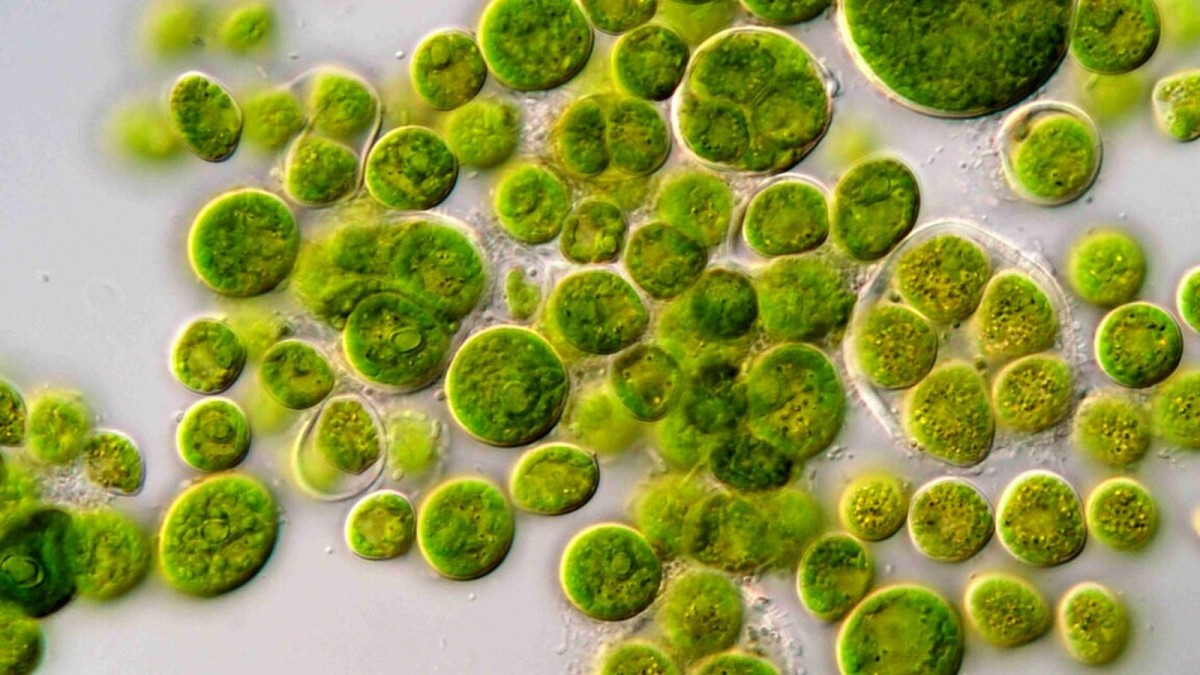
The story starts with a single‑celled alga, Chlamydomonas, whose eye‑spot detects light and triggers ion flow. Hegemann’s team at Humboldt University attached an electrode to the alga and showed a flash of light caused a rapid influx of ions, hinting at a light‑gated ion channel. Scanning the alga’s messenger RNAs, Hegemann identified two genes resembling a light‑activated pump from an archaeal species. By silencing those genes with RNA interference, he proved they were responsible for the light‑induced ion flux.
Those genes turned out to be the first channelrhodopsins—proteins that open ion channels in response to light. Nagel, then at the University of Würzburg, demonstrated that one channel let protons in while the other accepted a broader range of positively charged ions, each responding to different wavelengths. Both relied on a vitamin‑A‑like chromophore, the same light‑sensing chemistry that powers our eyes. This biochemical foundation made it possible to graft the channels into other organisms.
Scaling the Concept: From Worms to Human Cells
Nagel’s next leap was to show the channels worked beyond algae. He expressed the genes in frog embryos, cultured human cells, and even the nematode C. elegans. Light‑stimulating the worms altered their behavior, proving the channels could drive neuronal activity in a living animal. Deisseroff’s lab at Stanford took that proof of principle and ran with it, confirming the channels generated genuine nerve impulses in mammalian neurons and expanding the family with variants sensitive to different colors.
Crucially, Deisseroff’s team engineered the hardware side—compact light sources and flexible fiber optics—that let animals move freely while their brains were illuminated. This engineering work turned a cool lab trick into a practical tool, enabling researchers to map behavior to specific neuronal populations in awake, behaving mice.
Why the Nobel Matters for Founders
From a founder’s lens, the Nobel validates a technology that has already seen “widespread adoption” across neuroscience. That signals a maturing ecosystem: commercial suppliers of viral vectors, fiber‑optic rigs, and even turnkey optogenetic platforms. But it also flags a surge of new entrants—VC‑backed startups promising to “revolutionize brain‑machine interfaces” or “cure blindness” with optogenetics. The risk is that hype can outpace the hard science, leading to over‑promised timelines and under‑delivered performance.
In production terms, the optogenetic toolbox relies on precise gene delivery, stable expression, and reliable light delivery. Each of those steps is a potential failure point—think of it like a multi‑tiered cloud stack where a bug in the underlying hypervisor can bring down dozens of VMs. If you’re building a medical device or a neuro‑tech service, you need to budget for redundancy, rigorous validation, and regulatory compliance, not just the flash of a Nobel‑winning discovery.
Lessons from the Lab: What Works, What Doesn’t
The source material makes clear that early attempts to control neurons “involved some combination of needing to insert multiple genes, supplying the nerve cells with some very specific chemicals, or using lasers at an intensity that physically damaged the cells.” Those approaches failed to scale because they added complexity and risk. The channelrhodopsin solution succeeded by being genetically simple (a single gene) and optically elegant (light of a specific wavelength). For founders, the lesson is to strip away unnecessary layers. If your product requires a cascade of proprietary reagents or exotic hardware, you’re courting the same pitfalls that doomed earlier methods.
Even the “ultimate solution” still depends on a virus or transgenic line to deliver the channelrhodopsin gene. That delivery step is a classic supply‑chain choke point—think of a data center that can’t spin up new servers because the vendor’s firmware pipeline is broken. Mitigate by diversifying delivery vectors, maintaining in‑house capabilities, and validating that the gene expression is stable over the product’s intended lifespan.
Business‑Risk Lens: From Research Labs to Commercial Products
Optogenetics has already been used to restore limited light sensing in a patient with retinal degeneration, showing a clear path to therapeutic applications. However, the transition from bench to bedside is fraught with regulatory, manufacturing, and reimbursement hurdles. The Nobel citation notes “widespread adoption” but does not guarantee that every startup can replicate the success of the original academic labs.
Founders should therefore treat optogenetics as a high‑impact, high‑risk technology. Conduct a “risk‑adjusted ROI” analysis: weigh the potential market size (neuro‑degenerative disease, mental health, brain‑computer interfaces) against the cost of building a compliant production pipeline, the timeline for clinical trials, and the competitive pressure from well‑funded rivals. In many cases, a partnership with an established biotech or a licensing deal may be more prudent than trying to build the entire stack from scratch.
Practical Advice for Independent Hosting and Infrastructure Teams
If you’re running a hosting platform that supports neuro‑tech research—think cloud services for large‑scale imaging or data analysis—optogenetics introduces new workload patterns. Light‑stimulated experiments generate high‑frequency, low‑latency data streams that can stress storage I/O and network bandwidth. Design your architecture with burst‑capacity buffers, similar to how you would handle sudden spikes from a viral launch.
Also, the hardware side (fiber optics, lasers) demands precise environmental controls. Temperature swings or vibration can corrupt data, just as a power glitch can take down a server rack. Implement redundant power, vibration‑isolated racks, and real‑time monitoring of environmental sensors. Treat the optogenetic rig as a “critical node” in your infrastructure, with the same SLA rigor you’d apply to a core database.
Looking Ahead: The Next Wave After the Nobel
The Nobel Committee highlighted optogenetics’ role in decoding memory, sleep, and maternal behavior, and even hinted at therapeutic uses. As the field matures, we’ll see next‑generation tools: faster channelrhodopsins, red‑shifted variants for deeper tissue penetration, and closed‑loop systems that combine sensing and stimulation in real time. Those advances will open new markets but also raise the bar for reliability and integration.
For founders, the takeaway is simple: the Nobel shines a spotlight on a technology that works, but the real work lies in building robust, scalable, and compliant systems around it. Cut through the hype, focus on the engineering fundamentals—stable gene delivery, safe light dosing, and resilient infrastructure—and you’ll avoid the common pitfalls that have tripped up many a VC‑fueled biotech dream. In the end, it’s the same lesson we learn in data centers: a flashy new tool is only as good as the foundation you build it on.
— Allan Ali, Founder
This article was produced with AI-assisted research and editorial support. Reporting is based on the source material cited below. Sources: Ars Technica; arstechnica.com; Global1.News (06 October 2026).
By Allan Ali, Global1.News
What's Your Reaction?
 Like
0
Like
0
 Dislike
0
Dislike
0
 Love
0
Love
0
 Funny
0
Funny
0
 Wow
0
Wow
0
 Sad
0
Sad
0
 Angry
0
Angry
0

Publisher of Global1.News. Automation architect, systems builder, and the guy making sure the truth gets published.













Comments (0)