
Cano’s ‘Malinche’: A musical that’s not all song and dance
Every night for the past year and a half, more than a thousand Mexicans have filed into the historic Art Deco theater of El Frontón in the Tabacalera neighborhood, eager to witness a spectacle that blends flamenco, hip‑hop, urban beats and contemporary dance.
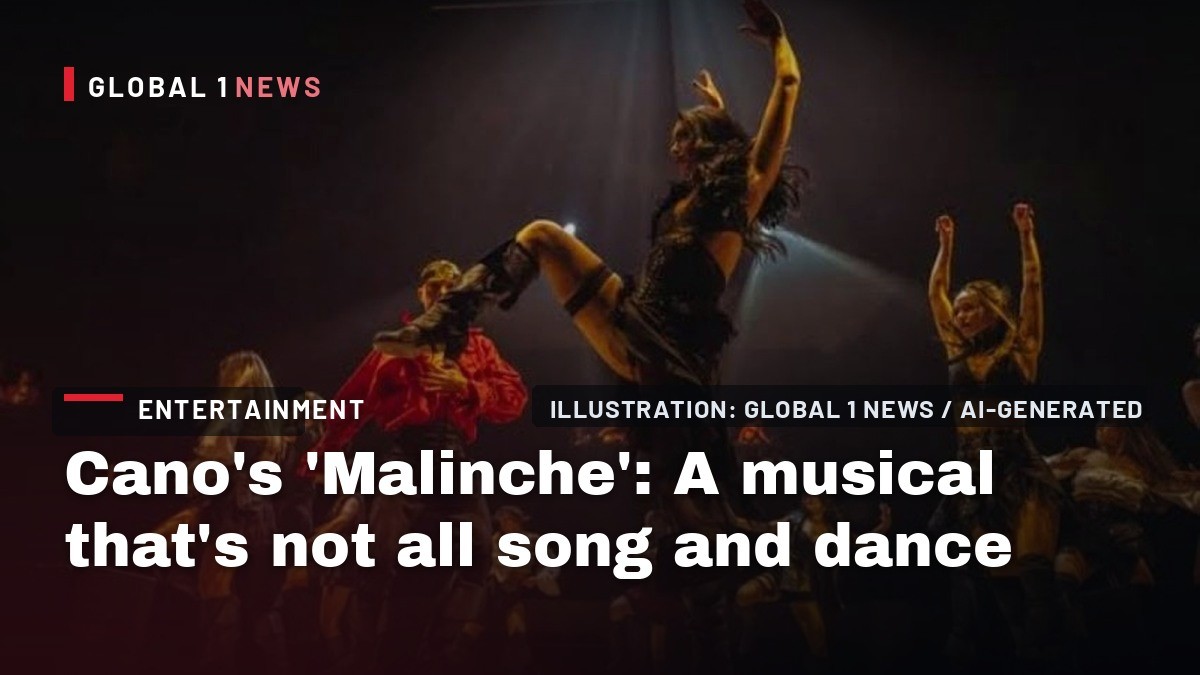
Every night for the past year and a half, more than a thousand Mexicans have filed into the historic Art Deco theater of El Frontón in the Tabacalera neighborhood, eager to witness a spectacle that blends flamenco, hip‑hop, urban beats and contemporary dance. The show, titled Malinche, opened its second run on 15 August 2026 and now fills an auditorium that seats 1,299, with a cast of over eighty performers who wear face paint, leather crop tops and fringed two‑pieces while narrating a version of the 1519 Spanish conquest. Created, written and directed by Spanish pop‑star‑turned‑theatrical impresario Nacho Cano, the musical arrived in Mexico City in March 2025 after a two‑and‑a‑half‑year stint at Madrid’s IFEMA complex. Its dazzling staging—complete with a small pyramid, cenotes, pyrotechnics and live bands—has drawn crowds, yet the production has also ignited a fierce debate about how Mexico’s colonial past is remembered and who gets to shape that memory.
From Pop Icon to Controversial Producer
Ignacio “Nacho” Cano first became a household name in the 1980s as a member of the Spanish pop group Mecano, whose debut album sold a million copies in Spain and contributed to a catalog that eventually topped thirty million records worldwide. After Mecano, Cano turned his creative energy toward musical theater, most notably with Hoy No Me Puedo Levantar, a stage adaptation that dramatized Madrid’s post‑Franco countercultural movement, La Movida. The success of that show cemented his reputation as one of the most financially successful musical producers in Spain.
Beyond his artistic achievements, Cano has cultivated a political profile aligned with Spain’s right‑wing. He received the Order of the Second of May in 2021 from Isabel Díaz Ayuso, the president of the Community of Madrid and a leading figure in the People’s Party. Ayuso, described by Politico as engaged in a “nationalistic showdown with Mexico,” admires Hernán Cortés and defends the Spanish conquest as a civilizing mission. Cano echoes this stance, famously declaring that “without Cortés there would be no Mexico,” a sentiment that informs the romanticized tone of his musical.
The Political Backdrop of a Mexican Stage
The staging of Malinche cannot be divorced from the broader political tensions between Mexico and Spain. Seven years ago, former President Andrés Manuel López Obrador sought an apology from King Felipe VI for the colonial mistreatment of Indigenous Mexicans. When the king failed to deliver, he was excluded from President Claudia Sheinbaum’s inauguration, though he later acknowledged “significant abuses.” In the years since, Mexico has erected statues on Paseo de la Reforma honoring six Indigenous women, signaling a national effort to foreground Indigenous contributions and suffering.
These gestures contrast sharply with the narrative championed by Cano and his allies. By presenting a love story that centers a consensual relationship between Malinche and Cortés, the production aligns with a pro‑Hispanic revisionism that seeks to sanitize the conquest. Critics argue that this artistic choice downplays the violence and oppression that accompanied Spain’s arrival, turning a complex historical trauma into a romantic spectacle.
Malinche: From Historical Figure to Symbol
Malintzin, also known as Doña Marina or “the Mexican Pocahontas,” entered the historical record as a teenage interpreter for Hernán Cortés. At roughly fourteen years old, she began translating between Nahuatl and Spanish, a role that placed her at the heart of the conquest’s diplomatic and military maneuvers. She later bore Cortés a son, intertwining her personal story with the nascent mestizo identity of Mexico. Yet no first‑hand testimony from Malinche survives; her legacy is filtered through Spanish and Nahuatl chronicles that vary widely—some portray her as a slave‑turned‑informant, others as a willing lover, and still others as a victim of colonial patriarchy.
Scholars have long debated her image. Nationalist narratives have cast her as “La Chingada,” a traitorous Eve who facilitated the fall of the Mexica empire. Feminist and Chicanx perspectives, drawing on thinkers like Gloria Anzaldúa, emphasize her agency and survival within a patriarchal system, arguing that she existed beyond the binary of traitor‑victim. The term “malinchista” emerged from this discourse, denoting those who favor foreign influences over native traditions. The musical’s portrayal of Malinche as a romantic heroine taps into the “mother of Mexico” myth, echoing Disney’s treatment of Pocahontas, and thereby participates in an ongoing contest over her symbolic meaning.
Corporate Backing and Media Power
The success of Malinche in Mexico is also a story of powerful corporate patronage. Television magnate Ricardo Salinas Pliego, chairman of Grupo Salinas and owner of TV Azteca, championed the show’s Mexican debut. His wife, María Laura Medina de Salinas, served as an executive producer, citing a personal “love” for the production after seeing it in Madrid. The musical is officially presented by Banco Azteca, a subsidiary of Salinas’ conglomerate, linking the artistic venture to a broader commercial network.
Salinas himself is a controversial figure, having faced accusations of tax evasion and fraud, and he has flirted with a potential presidential bid. His political orientation aligns with the Mexican right, supporting the National Action Party (PAN) and echoing the rhetoric of figures like Argentina’s Javier Milei and former U.S. President Donald Trump. Salinas’ partnership with Cano underscores a convergence of cultural production and right‑wing political agendas, reinforcing the musical’s positioning within a specific ideological framework.
Labor Disputes and Legal Entanglements
The production’s backstage realities have also attracted scrutiny. In July 2024, Cano was arrested in Madrid on allegations of poor working conditions and the employment of undocumented immigrants in the original Spanish run of Malinche. While the charges were dropped the following year, Cano claimed that left‑wing leaders orchestrated a coordinated attack against him. This episode highlights the fraught labor environment behind the glittering performances, raising questions about the ethical responsibilities of large‑scale theatrical enterprises.
These labor concerns intersect with broader debates about cultural ownership. Critics argue that a production financed by Mexican media conglomerates, yet directed by a Spanish right‑wing figure, may marginalize local artistic voices and laborers, especially when the narrative itself privileges a Eurocentric view of history.
The Audience’s Response and Cultural Impact
Despite the controversies, Malinche continues to draw crowds night after night. The theater’s capacity of 1,299 seats is regularly filled, indicating a strong public appetite for high‑production musical theater that blends contemporary music styles with historical storytelling. For many audience members, the spectacle offers an immersive escape, a chance to see Mexican history rendered in vibrant choreography and modern soundscapes.
Yet the very popularity of the show without a parallel public conversation about its historical framing suggests a gap in collective memory work. As the second season runs through January 2027, the musical’s presence in the cultural landscape may serve as a catalyst for deeper discussions about who gets to write history, how Indigenous trauma is represented, and what role commercial entertainment should play in shaping national identity.
Looking Forward: Memory, Art, and Responsibility
The debate sparked by Malinche reflects a larger struggle within Mexico to reconcile a colonial past with contemporary aspirations for justice and representation. While the stage offers a space for artistic innovation, it also carries the weight of historical interpretation. As scholars, activists, and everyday families attend the performances, they bring with them memories of the ejido, the tianguis, and the stories passed down in colonia neighborhoods.
For a nation still grappling with the legacies of conquest, the question remains: can a musical that frames a traumatic epoch as a love story also become a platform for honest dialogue? The answer may lie in how audiences, critics, and policymakers choose to engage with the production—whether they allow it to remain a dazzling diversion or push it to become a springboard for a more nuanced, inclusive reckoning with Mexico’s past.
This article was produced with AI-assisted research and editorial support. Reporting is based on the source material cited below. Sources: Mexico News Daily; mexiconewsdaily.com; Global1.News (25 September 2026).
By Rosa Martinez, Staff Writer
What's Your Reaction?
 Like
0
Like
0
 Dislike
0
Dislike
0
 Love
0
Love
0
 Funny
0
Funny
0
 Wow
0
Wow
0
 Sad
0
Sad
0
 Angry
0
Angry
0

Latin America/Andes Correspondent at Global1.News. Based in Bogota, covering politics, environment, energy, and social movements across the Andean region. Passionate about environmental journalism and communities protecting their land.















Comments (0)