
Quebec Elects a Separatist Premier, and Hands Him Half a Mandate
The Parti Quebecois won Quebec's provincial election and will form a minority government, making Paul St-Pierre Plamondon premier-designate with no referendum date set.
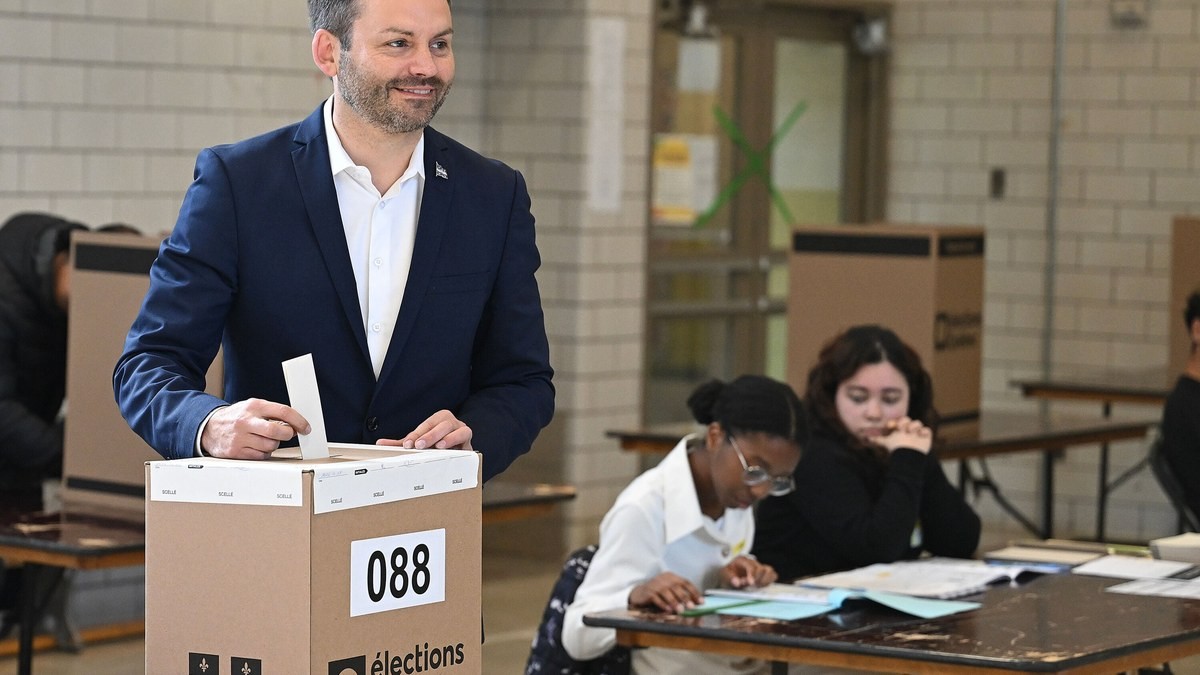
Quebec woke up Tuesday to a new premier who wants to break up the country, and to a legislature that will not let him do it alone. The Parti Quebecois won Monday's provincial election and will form a minority government, five seats short of the majority it needed to govern without asking permission. Paul St-Pierre Plamondon, the 49-year-old former lawyer known by his initials PSPP, is premier-designate.
Quebec Elects a Separatist Premier, and Hands Him Half a Mandate
Montreal, Canada — The numbers tell you what the speeches did not. A separatist party now runs Quebec's government. A clear majority of Quebecers still say they do not want the thing that party exists to deliver.
A Separatist Premier, On Half A Mandate
Folks, here is what happened. The Parti Quebecois won the Quebec provincial election held Monday, October 5, 2026, and it will form a minority government. The PQ took 59 of the 127 seats in the National Assembly. Sixty-four is the number you need for a majority. Five seats short.
That is not a rounding error. That is the difference between governing and negotiating every single day.
St-Pierre Plamondon becomes premier-designate. He won his own riding of Camille-Laurin, on the island of Montreal. He leads the first separatist government since Pauline Marois, whose government fell in 2014, and he leads it on a leash held by a legislature that does not share his central project.
This is a real result. It is also a partial one. Both things are true, and neither cancels the other.
The Numbers Behind A 59-Seat Win
Start with the popular vote, which is preliminary. The PQ took about 28 per cent. The Liberals took about 24 per cent. The Parti conservateur du Quebec took about 21 per cent. The Coalition Avenir Quebec took about 13 per cent. Quebec solidaire took about 12 per cent.
Now look at what those numbers produced. The PQ turned roughly 28 per cent into 59 seats and the premiership. The Liberals turned roughly 24 per cent into 40 seats and the role of official Opposition for the third election in a row. The PCQ turned roughly 21 per cent into 19 seats and official party status. Quebec solidaire, led by Ruba Ghazal, dropped to fourth with 9 seats.
And the CAQ, which governed this province for eight years, was projected to win zero seats. Not a reduced caucus. Zero.
Turnout was soft. Elections Quebec put preliminary participation at slightly over 45 per cent with a few hours of voting left. Advance polling hit 25.59 per cent, roughly 1.6 million voters, above the 2022 advance rate of 24.5 per cent.
The Party That Won 90 Seats And Now Holds None
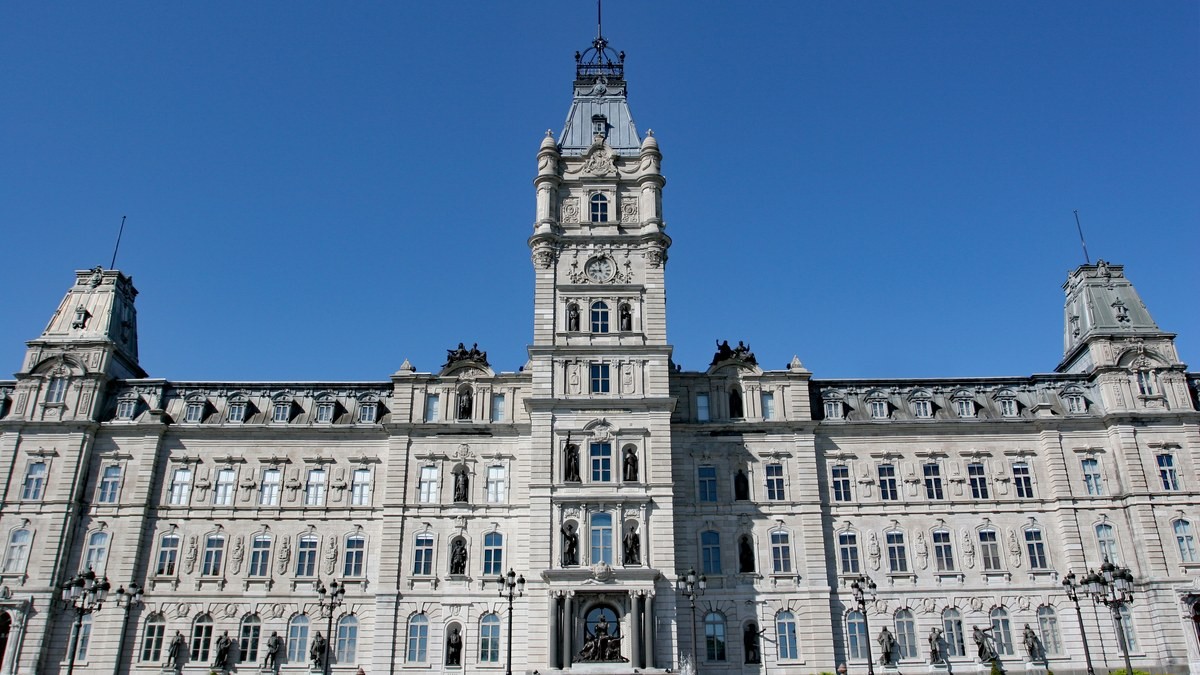
Four years ago the CAQ won a 90-seat majority. Read that again. Ninety seats. On Monday it was projected to hold none.
The collapse has a history. The CAQ took power in 2018 under Francois Legault, promising to promote Quebec's autonomy and distinct identity without calling a formal separation. It won a landslide re-election in 2022. Then support fell. An economic agenda was tarnished by failed investments in private projects and a credit downgrade. Health care and education crumbled. Legault stepped down in April 2026.
Christine Frechette succeeded him, winning the CAQ leadership with 57.9 per cent of members' votes against Bernard Drainville. She became Quebec's 33rd premier and the second woman to hold the office, after Pauline Marois. She moved her candidacy to her hometown riding of Trois-Rivieres and was projected to lose that seat.
In 2022 the PQ won just 3 seats. On Monday it won 59. That is not a wave. That is a realignment.
The Defeat Is Mine
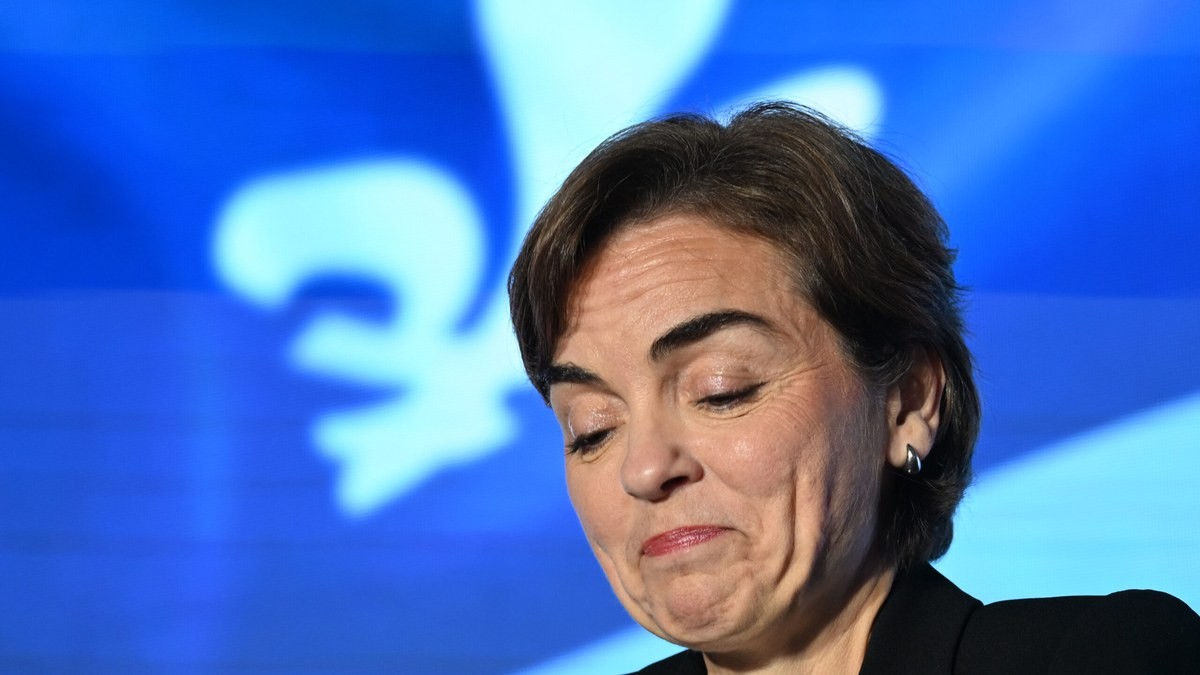
Frechette spoke to supporters in Trois-Rivieres on Monday night and did not hide from it. "Quebecers wanted change, and I respect their choice," she said. Then she took the weight herself: "The defeat is mine, not yours; keep your head high."
She said she has Quebec tattooed on her heart. She called it the honor of her life to serve as the second woman to ever lead the province. "I gave everything I could."
She called and congratulated St-Pierre Plamondon and offered him her collaboration for an orderly transition. And she defended the CAQ's "third way" between the Liberals' federalism and the PQ's separatism, saying: "Quebecers don't have to choose between pride and prosperity."
The defeat was widely predicted. Surveys in the later part of the five-week campaign showed the party slipping into third place, and in some polls its support was under 20 per cent. The only question Monday night was how deep the hole went. The answer was all the way down.
A Referendum, But Not Before 2029
Here is the promise that got the PQ here. The party has committed to a referendum on independence during a first four-year mandate. That is the deal it offered voters, and voters handed it a minority government anyway.
But St-Pierre Plamondon has attached a condition that pushes the timeline out. He says he will not hold a referendum before U.S. President Donald Trump leaves office in January 2029. During a televised debate he explained why: "The completely unprecedented situation we have just experienced with the Americans, which is unacceptable on the part of the Trump administration, does not provide a calm environment to reflect on our future."
It would be the third referendum in Quebec's history. In 1995, the pro-sovereignty "yes" side lost by just over one percentage point.
St-Pierre Plamondon repeatedly urged Quebecers during the campaign not to be afraid of forming a country. "We shouldn't be afraid of democracy," he said. At the victory party in Montreal, supporters chanted a slogan declaring that "Quebec is a country."
Most Quebecers Say They Don't Want One
Now the hard part for the new premier. Several polling firms have shown about 70 per cent of Quebecers are opposed to independence. That is not a close number. That is a landslide against the central project of the party that just won the election.
So how does a separatist premier win while separatism loses? Vote-splitting among the federalist parties tipped the result toward the PQ. The Liberal vote, the PCQ vote and what was left of the CAQ vote did not consolidate behind a single alternative. The PQ walked through the gap.
Patrick Taillon, a constitutional expert at Universite Laval, pointed to the "volatility and unpredictability" of voters, where people who are "dissatisfied at a given moment" can suddenly tip the scales. That cuts both ways. A movement that can surge from 3 seats to 59 in four years can fall just as fast.
Read the result honestly. Quebecers elected a separatist government. They did not endorse separation.
What The Bond Market Heard
The money noticed. A spread index on 30-year Quebec bonds is more than 9 basis points above its Ontario equivalent, up from about 7 basis points two weeks ago. Quebec's 10-year spreads over Canadian government bonds are currently the widest among the four major provinces.
Derek Holt, head of capital markets economics at the Bank of Nova Scotia, put it plainly in a report Monday: "Clearly spreads would widen and perhaps rather sharply in a true referendum campaign, especially if it surprised pollsters by not rejecting separation."
Business leaders are not waiting for that. They gathered in Montreal at an event organized by Andrew Lutfy, head of apparel company Groupe Dynamite, and asked the next government to cut regulatory hurdles and raise Quebec's GDP to $701 billion over seven years. Lutfy called the province "uninvestable, much less attractive than other markets around the world."
Alain Bouchard, co-founder and executive chairman of Alimentation Couche-Tard, was asked about the referendum threat. "It'll create uncertainty, whatever," he said. "I've voted 'yes' before, and I've voted 'no.'"
Carney's New Test
In Ottawa, Prime Minister Mark Carney congratulated St-Pierre Plamondon on X. "Building a stronger Quebec is core to our mission of building a stronger Canada," he wrote. "I look forward to working with you to support Quebec's businesses and workers impacted by tariffs, create more good jobs, work to end homelessness, and get more homes built across Quebec."
Ahead of the results, Carney pledged to work with the winner. "C'est le choix des Quebecois et Quebecoises," he said on Parliament Hill. It is for Quebecers to decide.
Carney was scheduled to attend question period Monday, fresh from a swing through Western Canada where he gave a proposed bitumen pipeline from Alberta to the Pacific coast "project of national interest" designation. He had previously stressed the need for a united Canadian response to U.S. tariffs.
Now he has a premier in Quebec City who wants to leave the country, and a minority legislature that may not let him try.
What The PQ Says It Will Do First
Forget the referendum for a moment. Here is the governing agenda the PQ ran on, and it is long.
On immigration: reduce temporary immigrants in Quebec from 500,000 to roughly 225,000, lower the annual permanent immigration threshold from 45,000 to 35,000, and create a Quebec citizenship ceremony.
On health and language: increase health funding by $550 million and extend Bill 101, the French-language charter, to CEGEPs.
On money: balance the budget by 2028-29, reduce public sector compensation costs by 2.5 per cent over three years, abolish the Quebec sales tax on used goods, lower the gas tax and gradually cut the corporate income tax rate to 9.5 per cent from 11.5 per cent, offset by a reduction in grants for businesses.
In his first 100 days, St-Pierre Plamondon has promised to unlock funds to address homelessness, create a secretary to overhaul the bureaucracy, audit technology projects and lower immigration thresholds. He has said Quebec needs greater control over its language, culture, immigration and finances.
What Happens Next
Here is what we know. The PQ forms a minority government with 59 seats. The Liberals are the official Opposition with 40. The PCQ has 19 seats and official party status, and Eric Duhaime was declared elected in the riding of Bellechasse, south of Quebec City. It is the first time a member of Quebec's Conservatives has been elected to the legislature since 1935. Quebec solidaire holds 9. The CAQ holds none.
Here is what we do not know. There is no sworn-in cabinet, no ministry list and no date for the transition. The seat totals are preliminary, not certified. There is no statement from Trump or the White House, and the PQ has not set a date for a referendum.
What we do know is the shape of the thing. A premier with a mandate to ask a question, and a legislature that may not let him ask it. A province that voted for change and against the biggest change on offer. A bond market already pricing in the uncertainty. And a clock that does not start until January 2029.
Folks, watch the certified seat count, watch who the PQ puts in charge of the province's finances, and watch whether this minority survives its first budget. In Quebec, the next two years are the whole ballgame.
By Jessica Ali, Staff Writer
This article was produced with AI-assisted research and editorial support. Sources: The Canadian Press, CityNews Montreal, POLITICO, the Associated Press, Bloomberg, The Hindu and Elections Quebec.
What's Your Reaction?
 Like
0
Like
0
 Dislike
0
Dislike
0
 Love
0
Love
0
 Funny
0
Funny
0
 Wow
0
Wow
0
 Sad
0
Sad
0
 Angry
0
Angry
0

Editor-in-Chief at Global1.News. Atlanta-based journalist who cuts through the BS and tells it like it is. Lead anchor, host, and the voice you hear when the spin stops and the truth starts.











Comments (0)