
Iran Hardliners Move Toward Impeachment of Foreign Minister Araghchi Over Oman Talks
In a recent i24NEWS English report titled "Political rifts widen within Iran as calls for impeachment against lawmakers loom," the Israeli international news channel highlighted deepening divisions inside Tehran over the government's wartime diplomacy. The August 4 broadcast examined how hardline parliamentarians are mobilizing against Foreign Minister Abbas Araghchi following backchannel talks in Oman.
In a recent i24NEWS English report titled "Political rifts widen within Iran as calls for impeachment against lawmakers loom," the Israeli international news channel highlighted deepening divisions inside Tehran over the government's wartime diplomacy. The August 4 broadcast examined how hardline parliamentarians are mobilizing against Foreign Minister Abbas Araghchi following backchannel talks in Oman. These tensions carry direct implications for Israel's security planning and regional stability after Operations Roaring Lion and Epic Fury.
Iran Hardliners Move Toward Impeachment of Foreign Minister Araghchi Over Oman Talks
Jerusalem, Israel — Senior Iranian lawmakers from the Paydari Front are gathering documentation to impeach Foreign Minister Abbas Araghchi, according to statements from the parliamentary Article 90 committee. The move comes days after backchannel negotiations resumed in Muscat, Oman, even as Tehran publicly denied direct contacts with Washington. Israeli officials in the Prime Minister's Office and the IDF are monitoring these internal Iranian rifts for signs of policy shifts that could affect the Strait of Hormuz and ballistic missile threats.
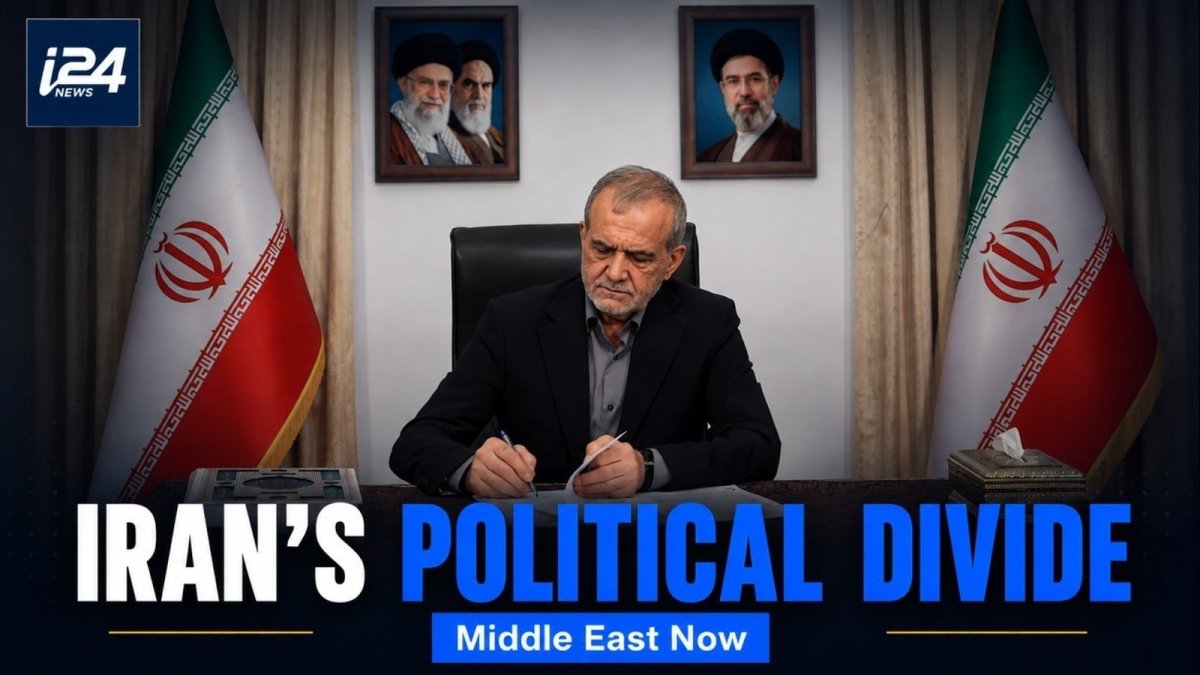
On the Ground in Tehran
Senior lawmaker Hosseinali Hajideligani, first deputy chair of Iran's parliamentary Article 90 committee and a Paydari hardline MP, stated that lawmakers are compiling documentation for the impeachment of Foreign Minister Abbas Araghchi. Hajideligani said the motion would be initiated at the appropriate time under Iran's constitution, which allows impeachment of an individual minister with signatures from at least ten lawmakers. He also suggested lawmakers could move against President Masoud Pezeshkian in response to the same diplomatic efforts.
Hajideligani described talks held during the US ceasefire as inappropriate and called the word "negotiation" a signal for renewed war. He warned that any agreement violating Iran's sovereignty or ceding control over territorial waters would breach the constitution. The Article 90 committee investigates complaints about government conduct, giving it a formal role in preparing such motions against ministers.
The impeachment drive unfolds against wartime economic strain, where public frustration over supply disruptions and price spikes has created a volatile backdrop. Street-level sentiment in Tehran appears divided between those who view the backchannel efforts as pragmatic survival and hardline constituencies that see them as surrender, raising the prospect of localized protests or heightened security measures if the proceedings advance.
The Foreign Minister Under Fire
Abbas Araghchi faced sharp criticism from conservative media after appearing on the YouTube program "Chronicles of War," where he discussed Iran's wars with the United States and Israel, internal security planning, and negotiations with Washington. Araghchi acknowledged security gaps that allowed attacks on senior officials and leadership sites, stating they "probably still have not been fully resolved." He also addressed contingency planning for the possible killing of the country's leader.
Political analyst Mostafa Khoshcheshm, who appears on Iranian state television, called the interview a "disaster in public relations, image-building and image repair" that showed "a lack of strategic thinking." Araghchi has served as foreign minister since August 2024 and previously acted as a key nuclear negotiator during the JCPOA period.
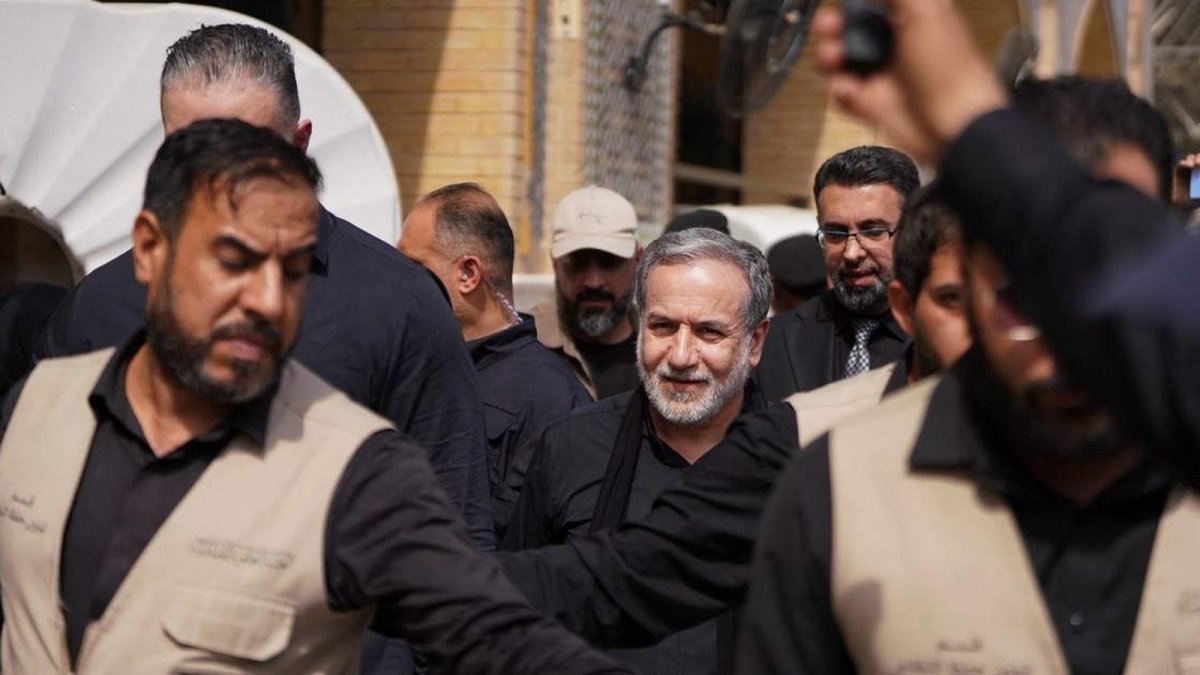
Wartime Diplomacy and the Hormuz Crisis
Backchannel negotiations between Iranian and Western envoys resumed in Muscat, Oman on Monday, even as state media reported that Araghchi was traveling to Najaf, Iraq, on a private religious visit. Foreign Ministry spokesman Esmail Baghaei said the Muscat discussions were limited to consultations between Iran and Oman. Iran submitted a revised technical framework proposing joint Iranian-Omani inspection procedures for commercial vessels and barring military escorts from designated transit routes.
President Donald Trump suspended a planned large-scale strike against Iran over the weekend of August 1-2 and announced parallel agreements to reopen the Strait of Hormuz and address Iran's nuclear program. CENTCOM redirected 44 commercial vessels, disabled two, and boarded two others to enforce the blockade, with Trump stating the US Navy maintained complete control over the strait. Iran-Oman talks are approaching a final stage, with Tehran seeking guarantees on banking channels for energy exports before clearing the tanker backlog.
Trump's "last chance before decapitation" phrasing, paired with revival of the June memorandum of understanding, frames the diplomatic window as conditional on rapid Hormuz reopening and nuclear progress. Regional actors such as Pakistan and Saudi Arabia have engaged Araghchi directly, illustrating how Gulf and South Asian capitals are positioning themselves to influence any final arrangement.
Israel's Security Calculus
The United States and Israel launched Operations Roaring Lion and Epic Fury against Iran on February 28, 2026, with the stated aim of creating conditions for regime change. An Israeli strike killed Ayatollah Ali Khamenei in a Tehran bunker, along with Iran's defense minister and several IRGC generals. Since that date, 39 IDF soldiers and 23 civilians have been killed and at least 7,693 injured in ballistic missile attacks across Israel, while CENTCOM reported 18 US soldiers killed.
Prime Minister Benjamin Netanyahu declared that Israel has "survived empires," to which Araghchi reportedly responded by questioning the comparison and noting that Israel's founding in 1948 makes the country younger than his father. Israeli security officials continue to assess how internal Iranian divisions over diplomacy might influence future missile launches or Hormuz-related threats to Israeli shipping and energy routes.
Iranian instability over diplomacy could either slow missile launches if moderates gain ground or accelerate them if hardliners prevail to demonstrate resolve. Defense officials therefore track the Article 90 proceedings and public mood indicators for signs that Hormuz shipping lanes or ballistic capabilities might shift. The combination of leadership losses and economic pressure inside Iran creates uncertainty about whether remaining decision-makers can maintain unified command over maritime or missile responses.
Regional and International Reactions
Pakistan invited Araghchi to visit Islamabad, while Doha was also mentioned as a possible venue for indirect talks. Araghchi spoke with Pakistan army chief Asim Munir, Saudi Foreign Minister Faisal bin Farhan, Omani Foreign Minister Badr Albusaidi, and Iraqi Foreign Minister Fuad Hussein. Brent crude dropped nearly 7 percent on Monday after Trump suspended strikes.
Aramco CEO Amin Nasser stated that current trade flows through Hormuz stand at a tenth of pre-conflict levels, with the world having lost more than 2.6 billion barrels and average daily liquids supply reduced by 11 million barrels. Asia's crude imports fell by approximately 6 million barrels per day at peak during the crisis.
Analysis and What This Means
President Pezeshkian defended renewed engagement with Washington, calling the June memorandum of understanding the cornerstone of Iran's future foreign relations and the product of the Supreme National Security Council's collective wisdom. The leadership board of the Assembly of Experts dismissed hopes of an agreement as futile and urged legal action against voices of surrender, widely viewed as a rebuke of Pezeshkian. Hardline lawmaker Mahmoud Nabavian described renewed calls for negotiations as rescuing a weakened enemy.
Hardline daily Kayhan editor Hossein Shariatmadari portrayed Trump's shift from military threats to diplomacy as a psychological operation to manipulate oil markets. Moderate Shargh commentator Ahmad Zeidabadi argued that sections of Iran's political establishment live in a parallel universe ignoring economic deterioration and public frustration. Analysts such as Farzin Nadimi of The Washington Institute highlight Trump's strategic dilemma between military risks and inconclusive outcomes, while historian Shahram Kholdi points to Gulf Arab consultations and Qatari mediation as factors in the pause.
Israeli defense planners are watching whether the Article 90 committee's impeachment drive gains enough signatures to force Araghchi from office or instead strengthens the hand of those favoring continued backchannel engagement. Forward stakes include whether nuclear talks advance, whether Hormuz reopens under the proposed inspection regime, and whether missile exchanges resume — outcomes that will directly shape Israel's northern and maritime security posture in the weeks ahead.
By Hannah Berg, Staff Writer
This article was produced with AI-assisted research and editorial support. Reporting is based on sources cited in the article.
What's Your Reaction?
 Like
0
Like
0
 Dislike
0
Dislike
0
 Love
0
Love
0
 Funny
0
Funny
0
 Wow
0
Wow
0
 Sad
0
Sad
0
 Angry
0
Angry
0
Israel Correspondent at Global1.News. Based in Tel Aviv, covering Israeli politics, security, technology, and society. Provides balanced, deeply-sourced reporting on one of the most closely-watched regions in the world.










Comments (0)