
Research roundup: 6 cool science stories we almost missed
When I hear the latest “breakthrough” from a physics lab, my first thought isn’t about the pretty graphs or the Nobel‑level hype. From a founder’s perspective, this is a textbook case of hype without hard‑won ROI.
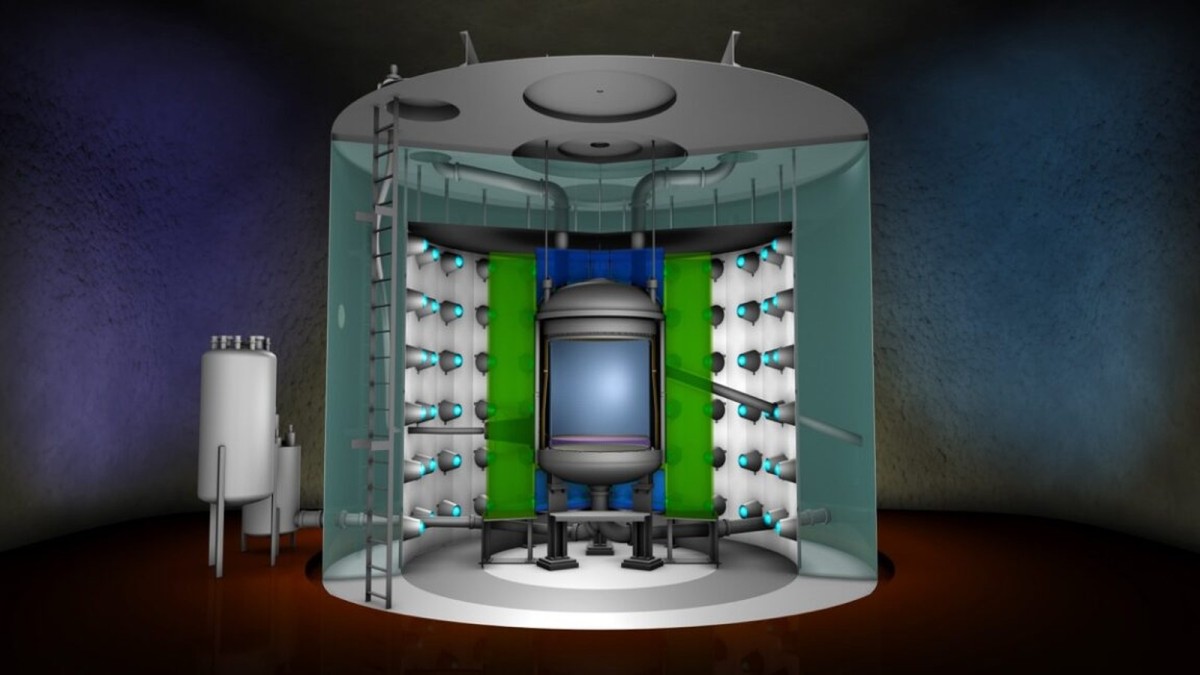
When I hear the latest “breakthrough” from a physics lab, my first thought isn’t about the pretty graphs or the Nobel‑level hype. I’m thinking about risk—risk to the bottom line, risk to the supply chain, risk to the very premise that a startup can keep its servers humming while the world chases the next big thing. The September roundup from Ars Technica gave us four solid science nuggets that, while fascinating, also serve as a reminder of why we, as independent hosting providers, need to keep our feet on the ground and our servers in the rack.
Dark Matter’s New “Hint” and the Cost of Chasing Phantoms
The LUX‑ZEPLIN detector, tucked away in a gold mine in South Dakota, reported a single event that could be a glimpse of dark matter. The team presented the result at the 2026 TeV Particle Astrophysics conference in Japan and posted a preprint on arXiv, noting the signal is “just a hint, well below the threshold needed to confirm discovery.” In plain terms, it’s a statistical blip that could evaporate with more data, as countless past anomalies have.
From a founder’s perspective, this is a textbook case of hype without hard‑won ROI. The industry loves to tout “cutting‑edge” research as a justification for massive capital spends—think hyperscaler data‑centers betting on quantum‑ready hardware before the market exists. The LUX‑ZEPLIN team is still collecting data, as are XENONnT in Italy and China’s PandaX, which is still under construction. The lesson? Don’t pour money into speculative tech just because a pre‑print looks cool. In hosting, the same pattern shows up when we chase “next‑gen” storage or AI‑accelerated networking before the ecosystem matures. The prudent move is to keep the core stack rock‑solid, and allocate a modest slice of the budget to experimental pilots—nothing that jeopardises the SLA.
Entangled Z Bosons: Quantum Fancy Meets Real‑World Fragility
ATLAS physicists have now observed entanglement in pairs of Z bosons, the highest‑energy example yet, according to a Physical Review Letters paper. They reconstructed decay angles of electrons and muons to infer the spins of the original Z bosons, proving that quantum entanglement can survive at energies that dwarf anything we run in a data‑centre. It’s a dazzling demonstration of quantum control, but also a reminder of how delicate the phenomenon is—any interference decoheres the system instantly.
For us in the hosting world, the takeaway is stark: quantum‑ready services are still a lab‑exercise, not a production reality. Hyperscalers love to brand‑ish “quantum‑secure” clouds, but the underlying hardware is still prone to environmental noise, temperature swings, and the occasional cosmic ray. Until we can guarantee a decoherence‑free environment, the risk of promising quantum‑level security to customers is huge. Independent providers should focus on proven cryptography and keep an eye on quantum developments, but resist the urge to market “quantum‑grade” offerings before the tech is battle‑tested. Otherwise you’ll end up like a lab that announced a breakthrough only to watch the signal disappear under the next data run.
Mars‑Ready Concrete: A Lesson in Material Efficiency
Engineers in Hong Kong have mixed Martian regolith simulant with gelatin, yeast, and a mussel‑inspired sticky protein to create a “living” building material. Tested in simulated Martian conditions, the 3‑D‑printed foam achieved a compressive strength of 10 to 12 MPa—strong enough for one‑ or two‑story structures on Earth, and even more promising for the weaker Martian gravity. The process uses freeze‑drying to solidify the material as it exits the nozzle, and the yeast can be recycled from dismantled structures.
What does that mean for us? It’s a masterclass in using locally available resources and low‑energy processes to achieve structural goals. In hosting, the equivalent is leveraging existing infrastructure—power, cooling, and network fabric—rather than building brand‑new hyperscale campuses that burn cash. The Martian recipe shows that a clever mix of cheap, abundant inputs (sand, gelatin, yeast) can replace expensive, energy‑intensive alternatives (melting rock into bricks). Apply that mindset to data‑centre design: use ambient cooling, repurpose existing chassis, and recycle components. The result is a lower‑cost, lower‑risk operation that can scale without the massive CAPEX that a lot of VC‑backed “green‑cloud” startups throw at investors.
Hallucinogenic Traces in Ancient Vessels: Cultural Context Over Tech Hype
Ars Technica also highlighted archaeological finds that show hallucinogenic substances were used in religious rites across many ancient cultures—from Egyptian vases to Peruvian beer. While the article cuts off before finishing the story, the premise is clear: humans have long experimented with mind‑altering compounds, often in the context of community rituals.
From a business angle, this is a reminder that technology adoption is as much a cultural phenomenon as a technical one. Hyperscalers push “cloud‑first” mindsets, but if the user community isn’t ready—or if the cultural cost of migration outweighs the perceived benefit—adoption stalls. Independent providers can win by aligning services with the cultural realities of their client base: offering hybrid models, on‑prem support, and clear migration pathways. Don’t try to force a “cloud‑only” narrative on a market that still values local control and data sovereignty. Understanding the cultural undercurrents can be the difference between a sustainable business and a flash‑in‑the‑pan VC darling.
The VC‑Funded Hype Cycle: Why “Cool Science” Isn’t a Business Plan
Each of the four stories—dark matter hints, entangled Z bosons, Martian concrete, ancient psychedelics—shares a common thread: they are cutting‑edge, attention‑grabbing, and still very much in the research phase. Yet the tech press often frames them as the next big thing, feeding a pipeline of VC money into startups that promise to commercialise tomorrow’s science today.
In my decade of running production servers, I’ve seen dozens of “science‑driven” startups collapse when the underlying physics failed to scale or the regulatory environment shifted. The lesson is simple: a founder must separate the allure of a headline from the hard economics of delivering a reliable service. If you’re building a hosting platform, focus on uptime, latency, and cost per watt. If you’re tempted to add a “quantum‑ready” or “Mars‑material” offering, run a pilot, measure the true TCO, and only roll out when the numbers prove the risk is manageable. Otherwise you’ll be another casualty of the hype‑driven funding model.
Practical Risk Management for Independent Hosting Providers
So how do we translate these scientific insights into actionable steps? First, treat every new technology as a pilot project with a strict budget cap—no more than 5 % of annual capex for experimental services. Second, benchmark any new offering against your core SLA metrics; if the pilot can’t meet existing uptime guarantees, shelve it. Third, diversify your supply chain: just as the LUX‑ZEPLIN team runs parallel detectors (XENONnT, PandaX), you should have redundant data‑centre sites and multi‑vendor hardware to avoid single‑point failures.
Finally, embed a cultural audit into product planning. Ask: does this service align with the client’s operational mindset? Will they need on‑prem support, data‑sovereignty guarantees, or hybrid connectivity? If the answer is “no,” the feature is a liability, not an asset. By applying the same rigor that physicists use to validate a dark‑matter hint—multiple detectors, cross‑checks, and statistical thresholds—you can keep your hosting business grounded while still exploring the frontier.
Bottom Line: Keep the Lights On, Even When the Universe Explodes
The September science roundup is a reminder that the world outside our racks is full of wonder, but also full of uncertainty. Dark‑matter hints fade, entangled particles decohere, and Martian concrete remains a laboratory curiosity. As a founder, my job is to separate the sparkle from the substance and protect the business from speculative risk.
My advice to fellow independent hosting entrepreneurs is simple: double‑down on reliability, treat new tech as a low‑budget experiment, and always ask how a breakthrough translates into a measurable improvement for your customers. If you can do that, you’ll survive the next wave of hype—whether it comes from a gold‑mine detector in South Dakota or a 3‑D‑printer on the red planet.
— Allan Ali, Founder
This article was produced with AI-assisted research and editorial support. Reporting is based on the source material cited below. Sources: Ars Technica; arstechnica.com; Global1.News (05 October 2026).
By Allan Ali, Global1.News
What's Your Reaction?
 Like
0
Like
0
 Dislike
0
Dislike
0
 Love
0
Love
0
 Funny
0
Funny
0
 Wow
0
Wow
0
 Sad
0
Sad
0
 Angry
0
Angry
0
Publisher of Global1.News. Automation architect, systems builder, and the guy making sure the truth gets published.












Comments (0)