
‘He was openly radicalized’: Aviation veteran on Flydubai attack, security gaps and emergency landing | Exclusive
On 30 September 2026, a Flydubai flight from Dubai to Tel Aviv narrowly escaped catastrophe when the Omani‑born co‑pilot, Hamam Al‑Hammami, allegedly turned an axe on the Indian captain, Smit Machchhar, in an attempt to seize control of the aircraft.
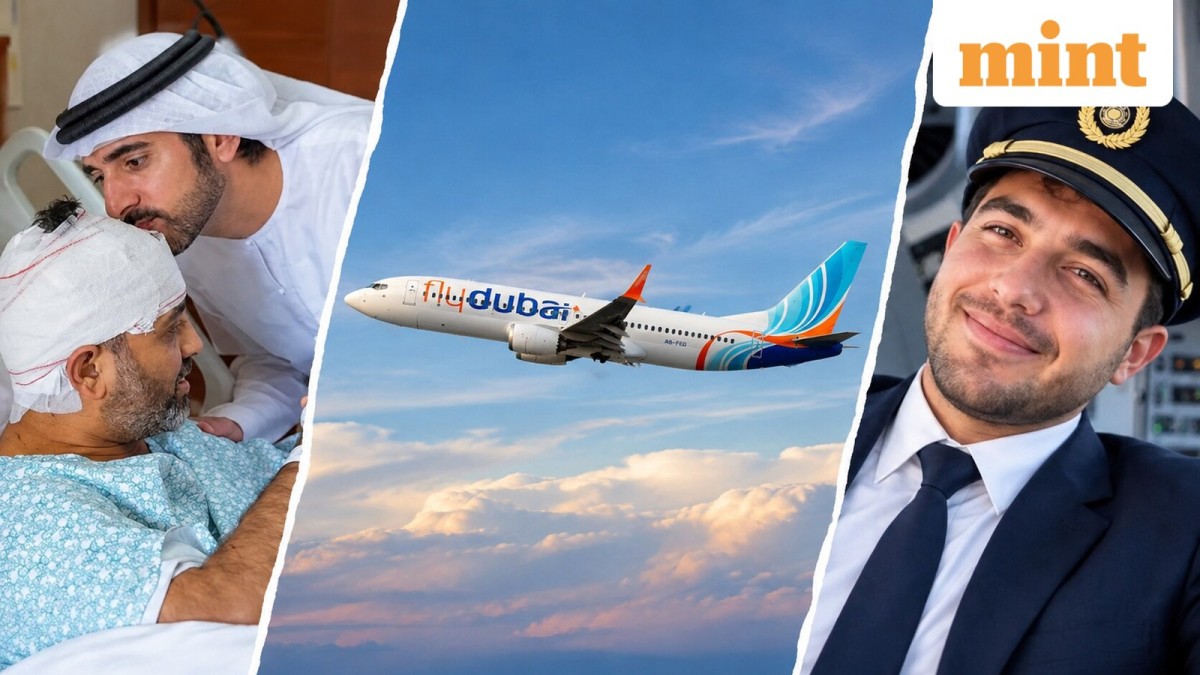
On 30 September 2026, a Flydubai flight from Dubai to Tel Aviv narrowly escaped catastrophe when the Omani‑born co‑pilot, Hamam Al‑Hammami, allegedly turned an axe on the Indian captain, Smit Machchhar, in an attempt to seize control of the aircraft. The incident, which forced an emergency landing in Tabuk, Saudi Arabia, has reignited a long‑standing debate in India and across the globe about how flight crews are screened, monitored and supported. Aviation veteran Alastair Rosenschein, who spent four decades in the UK aviation sector, told LiveMint that the episode exposes glaring gaps in security checks, psychological assessment and international information sharing – gaps that, if left unaddressed, could threaten not only aviation but all safety‑critical sectors.
What happened on Flight FZ1073?
The flight descended abruptly, reportedly plunging about 17,400 feet in less than two minutes before control was regained. According to media reports, the co‑pilot used an axe to attack Captain Machchhar, who, despite being wounded, managed to unlock the cockpit door. Passengers, including an Israeli traveller who entered the flight deck, intervened and overpowered Al‑Hammami, stabilising the aircraft and preventing a possible loss.
Rosenschein highlighted the physical challenge of the manoeuvre, noting that unlocking a cockpit door while under attack is “entirely a different thing when you’re fighting for your life.” He also pointed out that the forces generated by the sudden dive would have made movement inside the cockpit extremely difficult, underscoring the urgency of the captain’s actions and the passengers’ quick thinking.
The security screening failure
Rosenschein traced the root cause of the incident to inadequate security screening and poor inter‑agency communication. He said the co‑pilot’s “radicalisation was visible to security services, colleagues, friends and family,” yet the warning signs were not acted upon. Media reports indicated that Al‑Hammami had previously faced flying restrictions in Oman because of alleged extremist views, but the information did not flow effectively between Oman, the United Arab Emirates and Israel.
“Serious questions have to be asked of the security services in the United Arab Emirates, in Amman, and possibly also in Israel,” Rosenschein asserted, calling for a review of how aviation authorities share intelligence on individuals flagged for radicalisation. He argued that without a robust, cross‑border reporting mechanism, dangerous individuals can slip through the cracks and gain access to critical positions.
Psychological assessment: a missing pillar
Beyond background checks, Rosenschein advocated for regular psychological testing of both pilots and cabin crew. He warned that “there is nothing that can be done to prevent them other than proper psychological testing, frequent testing, and their colleagues should report them if they have any concerns over their behaviour or their attitude.” The veteran stressed that crew members are uniquely positioned to notice behavioural changes, and a culture of reporting could serve as an early warning system.
He also emphasized that cabin crew, who are permitted entry into the cockpit, should be subject to the same psychological scrutiny as pilots. In his view, a comprehensive safety framework must integrate mental‑health monitoring with traditional security vetting to address the full spectrum of risk.
Securing cockpit equipment
The incident raised a practical safety question: how is the emergency crash axe stored? Rosenschein observed that the axe was accessible to a single pilot, allowing Al‑Hammami to weaponise it. He suggested that the axe should be secured in a manner that requires both pilots’ awareness before it can be accessed, thereby reducing the risk of misuse.
He called for a review of cockpit equipment storage standards, recommending that airlines adopt “better‑secured” solutions that balance rapid access in emergencies with safeguards against intentional weaponisation. This recommendation aligns with broader cockpit‑security reforms that have been discussed in the wake of past incidents worldwide.
International information‑sharing protocols
Rosenschein’s interview underscored the need for a global reporting system for individuals flagged for radicalisation. He argued that “security information involving people working in safety‑critical sectors should be shared more effectively across jurisdictions,” extending the principle beyond aviation to nuclear facilities and other transportation modes.
For India, which operates one of the world’s largest civil aviation fleets and maintains a robust nuclear energy programme, the call for an international database resonates with existing efforts to tighten security clearances. The Indian Directorate General of Civil Aviation (DGCA) has already mandated background checks for crew, but the Flydubai episode suggests that bilateral and multilateral data exchanges remain fragmented.
Implications for Indian policy and industry
India’s aviation sector can draw several lessons from the Flydubai case. First, the DGCA could tighten its psychological assessment guidelines, making periodic mental‑health evaluations mandatory for all flight‑deck personnel. Second, airlines may need to revise cockpit‑security protocols, ensuring that tools like crash axes are stored in dual‑access compartments.
Third, the Ministry of External Affairs, in coordination with the Ministry of Home Affairs, could push for a multilateral agreement on security‑information sharing among countries that host Indian crew members. Such an agreement would complement existing ICAO frameworks and could be modelled on the International Civil Aviation Organization’s “Security Information Sharing” initiatives, which aim to standardise threat reporting across member states.
Looking ahead: building a resilient safety culture
Rosenschein’s reflections point to a broader cultural shift that Indian regulators and airlines must embrace. Safety is no longer limited to mechanical reliability; it now encompasses behavioural vigilance, mental‑health resilience and cross‑border intelligence cooperation. By embedding regular psychological assessments, securing cockpit equipment, and fostering an environment where crew can report concerns without fear of reprisal, the industry can create a multi‑layered defence against insider threats.
In the words of the veteran commentator, the “main failing is in doing a proper security check on the flight crew.” Addressing this failure will require coordinated action across ministries, airlines, and international partners. As India continues to expand its aviation footprint and integrate with global supply chains, the lessons from Flight FZ1073 must inform policy reforms that safeguard not only the skies over Delhi and Mumbai, but also the broader network of critical infrastructure that underpins the nation’s growth.
This article was produced with AI-assisted research and editorial support. Reporting is based on the source material cited below. Sources: Livemint; livemint.com; Global1.News (05 October 2026).
By Dr. Raj Patel, Staff Writer
What's Your Reaction?
 Like
0
Like
0
 Dislike
0
Dislike
0
 Love
0
Love
0
 Funny
0
Funny
0
 Wow
0
Wow
0
 Sad
0
Sad
0
 Angry
0
Angry
0

India/South Asia Correspondent at Global1.News. Analytical voice with a background in science and health journalism. Based in New Delhi, covering Indian politics, education, healthcare, technology, and policy. Breaks down complex data into clear, actionable reporting.












Comments (0)