
UK Regulator Probes British Charity Funding of Illegal Settlements
The UK Charity Commission has opened a statutory inquiry into British charities registered in England and Wales over concerns that funds may have supported illegal Israeli settlements in occupied Palestine. Serious allegations point to millions of pounds transferred to projects in these settlements, raising questions about compliance with charitable purposes. The regulator seeks to establish facts before considering any action.
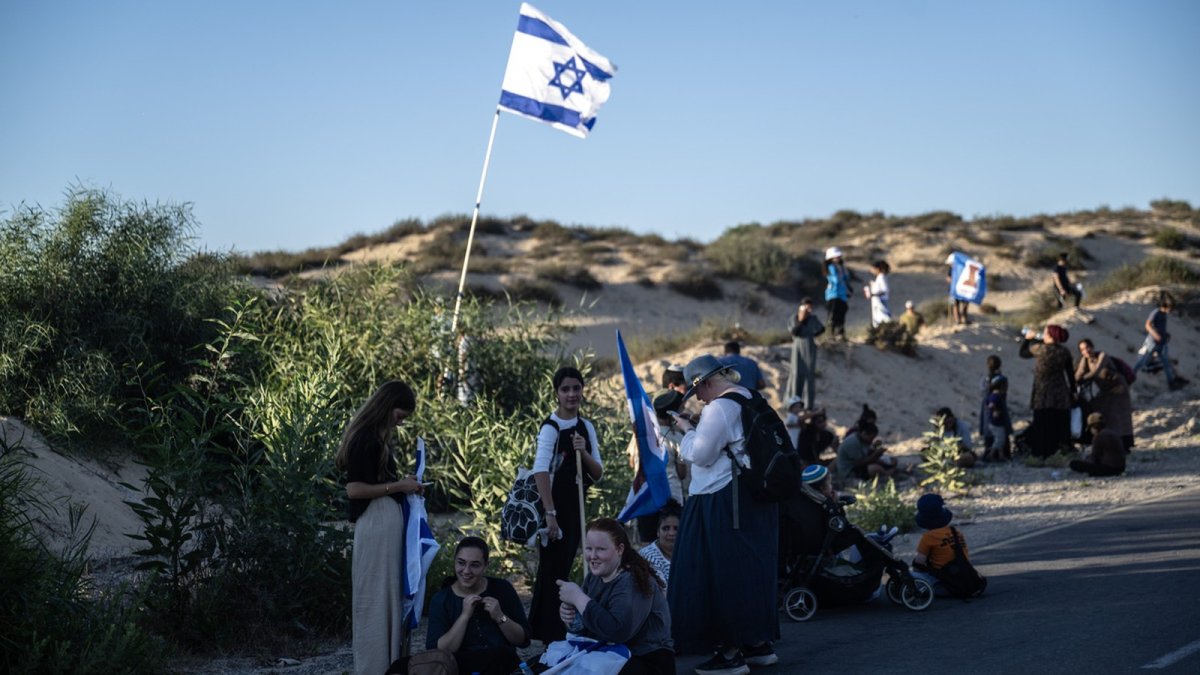
The UK Charity Commission has opened a statutory inquiry into British charities registered in England and Wales over concerns that funds may have supported illegal Israeli settlements in occupied Palestine. Serious allegations point to millions of pounds transferred to projects in these settlements, raising questions about compliance with charitable purposes. The regulator seeks to establish facts before considering any action.
UK Regulator Probes British Charity Funding of Illegal Settlements
London, United Kingdom — The Charity Commission has opened a statutory inquiry into charities registered in England and Wales over concerns that charitable funds have been directed to illegal Israeli settlements in occupied Palestine. The regulator will examine how much money charities have transferred to organisations or projects operating in the settlements, how recipients used the funds and whether the spending advanced the charities' declared purposes. It will also consider whether charitable assets or beneficiaries face risks and whether it should take regulatory action.
Scope of the Statutory Inquiry
The inquiry will initially focus on eight unnamed charities selected according to factors including the location of their partners and how recently the alleged activity occurred. The Commission said it may expand the investigation to include other charities suspected of directly or indirectly supporting activities in illegal settlements. The regulator may identify the organisations when it publishes its findings.
Stephen Roake, Assistant Director of High Risk Compliance at the Charity Commission, stated that serious allegations have been made about UK charities operating in illegal Israeli settlements in Palestine. He emphasised that the first step is to establish the facts before determining if regulatory action is required based on findings and evidence. The Commission has shared information about the scope of its investigation with the police and HM Revenue and Customs.
The Charity Commission’s decision to open a statutory inquiry reflects the gravity of concerns over how British-registered organisations may be channelling resources into territory where international law prohibits settlement activity. As the independent regulator for England and Wales, the Commission can compel trustees to produce documents and financial records, powers that allow it to examine whether funds have been used in ways that risk breaching charitable purposes or UK tax rules such as Gift Aid. This formal step signals that allegations of support for unlawful settlement infrastructure require more than routine monitoring.
Investigators will also consider the wider legal environment, including the Fourth Geneva Convention’s prohibition on population transfer and the International Court of Justice’s July 2024 advisory opinion that the occupation itself is unlawful. By examining whether charities have provided indirect assistance that sustains settlement expansion, the inquiry tests compliance with both domestic charity law and the UK’s international obligations not to recognise or aid an unlawful situation, as reaffirmed in UN Security Council Resolution 2334.
Complaint That Prompted the Investigation
Labour MP Melanie Ward submitted a formal complaint alleging that 32 charities in England and Wales had donated at least £28 million ($37.7 million) to illegal Israeli settlements. Ward also raised concerns that British taxpayers may have subsidised some of the transfers through the Gift Aid tax relief scheme. She and 140 Labour colleagues called for an outright ban on charitable funding for settlements rather than an inquiry alone.
The complaint questioned why the Commission had not acted sooner after concerns were raised in 2025. Ward highlighted the need for stronger measures to prevent any support reaching these settlements. The group of MPs argued that such funding lacks any legitimate charitable purpose and demanded decisive regulatory steps.
The complaint’s reference to Gift Aid carries particular weight. The scheme allows registered charities to reclaim basic-rate income tax on eligible donations, meaning a portion of the money reaching settlement-linked projects can effectively be subsidised by British taxpayers. Ward has argued that the public should not, even indirectly, underwrite activities in settlements that the international community regards as unlawful.
The political pressure behind the complaint is notable: more than 140 Labour MPs backed the call for an outright ban, framing settlement funding not as a niche regulatory concern but as a matter of public policy and international law. The response illustrates how the question of charitable flows to the occupied West Bank has moved from advocacy circles to the mainstream of British politics.
Previous Cases of Funding Transfers
Previous investigations revealed that two British charities transferred approximately £5.7 million ($7.7 million) to the Bnei Akiva Yeshiva high school in Susya, an illegal Israeli settlement in the occupied West Bank. The funding reportedly helped expand the school, which forms a significant part of the settlement's infrastructure. These transfers illustrate patterns of support that the current inquiry seeks to examine more broadly.
More recently, Friends of Yeshivat Shavei Hevron sent nearly £200,000 ($269,400) between 2019 and 2024 to a religious school at the centre of plans to expand the illegal Israeli settlement in Hebron. The project includes a new dormitory approved after far-right Israeli Finance Minister Bezalel Smotrich seized planning authority over the area. Such cases provide concrete examples of the flows under review.
Each documented case illustrates how British-registered money has helped build out settlement infrastructure — from classrooms in Susya to dormitories in Hebron — on land the international community regards as occupied territory where the settlements have no legal validity. The projects do not simply house students; they expand the physical footprint of settlements that Palestinian communities, and the International Court of Justice, say deepen an unlawful presence in the West Bank.
These cases demonstrate how funds originating in the UK can reach institutions embedded within settlement communities that face repeated legal challenges from Palestinian residents. Trustees may have believed their donations supported religious education; the inquiry will assess whether, in practice, those transfers helped sustain and expand settlements whose presence drives displacement and land loss across the occupied West Bank.
Political Reactions in the United Kingdom
In June, then foreign secretary Yvette Cooper told parliament that charity systems are abused to funnel support to illegal settlements and warned that available evidence suggested some organisations were breaking the rules. The Metropolitan Police's war crimes unit said it was not currently investigating charities over donations to illegal settlements.
Labour MP and Foreign Affairs Committee member Abtisam Mohamed welcomed the investigation but urged the regulator to examine all 32 charities identified in the complaint. She stated that funding illegal Israeli settlements is extremist activity linked to the violence and dispossession of Palestinians. Mohamed insisted that such support had no legitimate charitable purpose.
Impact on Palestinian Communities
Settlements in areas such as Susya and Hebron have expanded through infrastructure projects supported by external funding, leading to further land confiscation and restrictions on Palestinian movement. Residents in these regions face ongoing challenges from settlement growth that disrupts daily life and access to resources. The inquiry's findings could shed light on how charitable transfers contribute to these pressures.
Palestinian families in the occupied West Bank report increased incidents of violence and dispossession tied to settlement activities. The lived reality includes barriers to farming, education, and basic services as settlements encroach on traditional lands. These conditions underscore the human stakes involved in the Charity Commission's examination of fund flows.
Palestinian residents of Susya, a herding community in the South Hebron Hills, have lived under repeated demolition orders and the constant threat of forcible transfer, despite pursuing their claims through Israeli courts. Funding directed to settlement institutions in the same area can reinforce the infrastructure that underpins these pressures, limiting access to grazing land and water resources essential for traditional livelihoods. The cumulative effect deepens displacement risks already documented over many years.
In Hebron’s old city, heavy military control and settler presence have long restricted Palestinian movement, particularly around the Ibrahimi Mosque. Resources supporting settlement expansion there contribute to an environment in which daily life for Palestinian families is shaped by checkpoints, closures and loss of public space. Such outcomes illustrate the human consequences of sustained external support for settlements whose legal status has been rejected by the International Court of Justice and successive UN resolutions.
Next Steps and Broader Implications
The inquiry will assess risks to charitable assets and beneficiaries while determining whether spending aligned with declared purposes. Possible regulatory actions range from guidance to formal sanctions if violations are confirmed. The Commission may expand its scope beyond the initial eight charities based on emerging evidence.
Calls from MPs for an outright ban on funding settlements reflect a push to close loopholes that allow support to reach illegal activities. The process could influence how British charities operate in the occupied Palestinian territories going forward. Outcomes will depend on the evidence gathered over the coming months.
By Fatima Al-Rashid, Staff Writer
This article was produced with AI-assisted research and editorial support. Reporting is based on sources cited in the article.
What's Your Reaction?
 Like
0
Like
0
 Dislike
0
Dislike
0
 Love
0
Love
0
 Funny
0
Funny
0
 Wow
0
Wow
0
 Sad
0
Sad
0
 Angry
0
Angry
0

Gulf/MENA Correspondent at Global1.News. Based in Doha, covering Gulf politics, energy markets, diplomacy, and development across the Middle East and North Africa. Tracks the economic transformation of the Gulf states.












Comments (0)